🍁 Sassafras
Sassafras albidum · Lauraceae
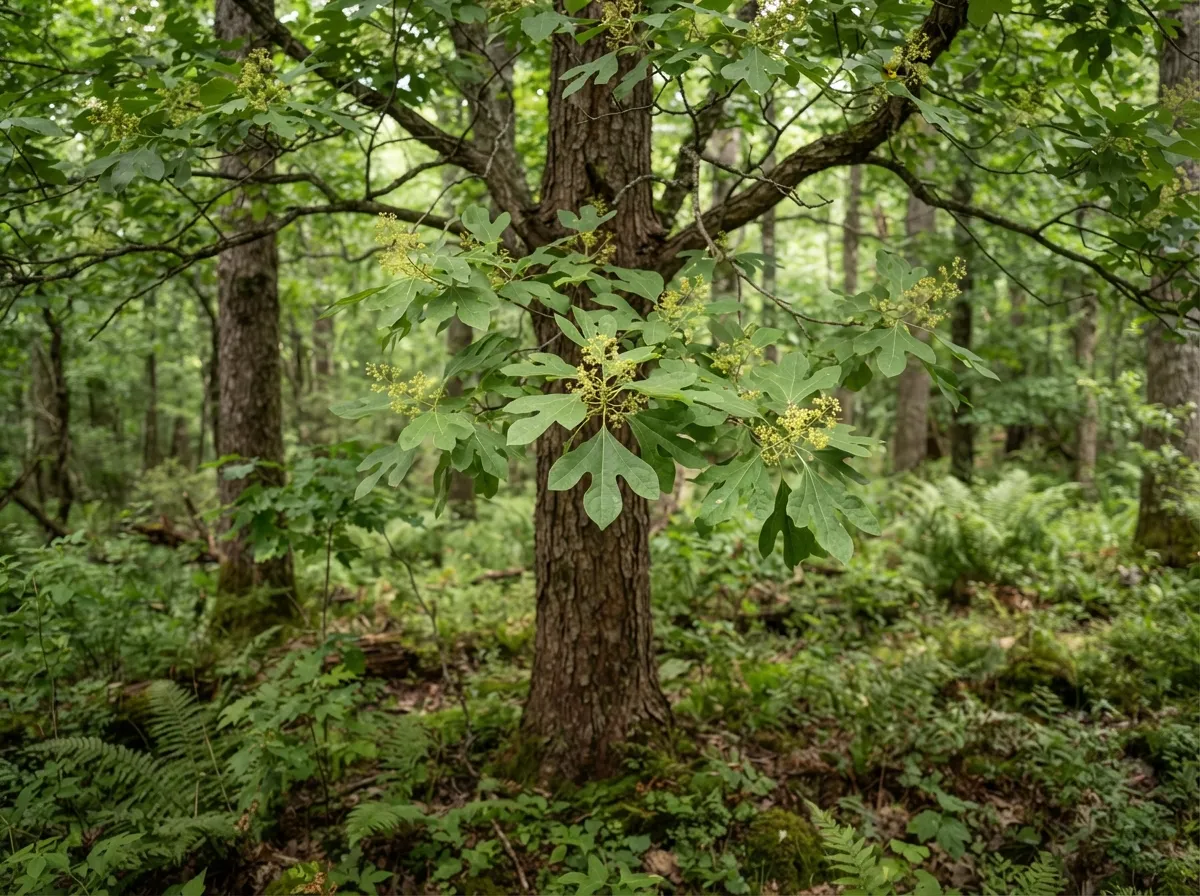
🔍 Identify it without mistakes
Small to medium tree easily recognizable by its polymorphic leaves on the same plant: some simple oval, others single-lobed (mitten-shaped), or two-lobed (three-fingered hand shape). The whole plant — bark, root, leaves — releases a distinctive strong aromatic smell when broken or crushed. Small yellow-green flowers in spring before the leaves, blue-black fruits on red stalks in summer.
- three different leaf shapes on the same tree (entire, mitten-shaped, three-lobed)
- strong characteristic aromatic smell when snapping a twig or root
- reddish-brown bark, furrowed with age
- blue-black fruit borne on a bright red stalk visible in summer
⚠️ Not to be confused with
To tell them apart: the three different leaf shapes on the same tree (entire, mitten-shaped, three-lobed) and the strong aromatic smell when breaking a twig identify sassafras without any possible ambiguity
🍽️ Eating it
Preparation : young dried leaves ground into powder yield filé powder, a traditional thickener for Louisiana Creole gumbo, unrelated to the root controversy; the root, historically boiled into an infusion to make "sassafras tea" and the traditional root beer flavor, contains safrole and its culinary use is now discouraged (see precautions)
💊 Healing with it
root bark traditionally used as a tea for spring tonic and blood purifier by several Eastern First Nations and early settlers; origin of the historical root beer flavor before the ban on safrole
Level of evidence : limited studies — FDA ; McGill University Office for Science and Society — The Root in Root Beer is Sassafras
⚠️ safrole, which makes up 80-90% of the root's essential oil, is a proven hepatocarcinogen in animals (FDA studies); its metabolite, 1'-hydroxysafrole, is an even more potent carcinogen; the FDA banned the use of safrole and sassafras oil in commercial food as early as 1960, and sassafras tea sales in 1976 — occasional, moderate consumption of traditional root tea remains debated in literature, but regular or concentrated use must be avoided; leaf filé (without the root) does not pose this issue and remains commonly used in Creole cuisine
🪓 Other bushcraft uses
- lightweight and rot-resistant wood used for fence posts
- root essential oil historically behind the flavor of root beer, now reproduced using artificial safrole-free flavorings
Sources (3)
No entry replaces a certain identification in the field, or medical advice. When in doubt: don't eat it. If ingestion is suspected: poison control or 112/911.