🌿 Arctic Willow
Salix arctica · Willow family
🔍 Identify it without mistakes
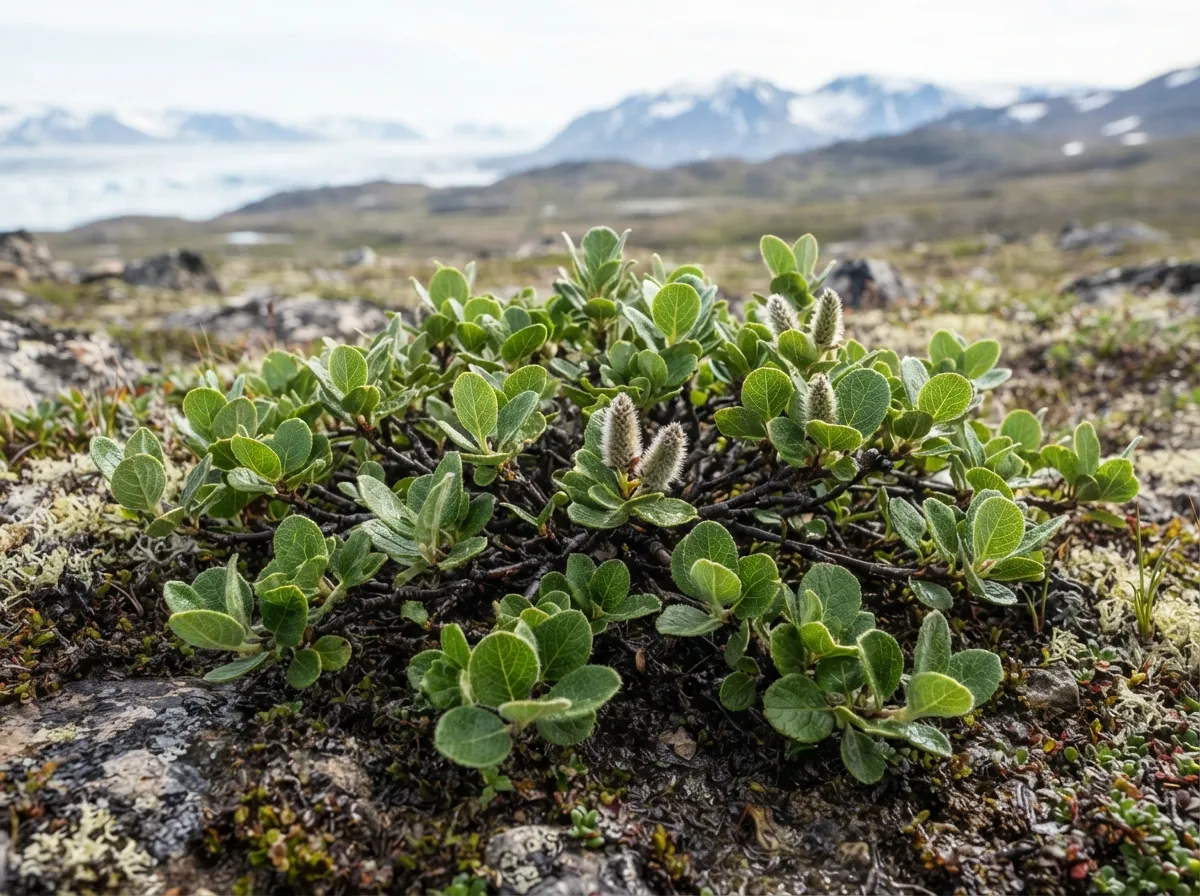
The northernmost tree on Earth: a true willow, but reduced by the extreme climate to a creeping growth habit flat against the ground, only a few centimeters tall, with its woody stems running horizontally just below the tundra surface. Oval leaves, often downy, erect catkins distinct on male and female plants.
- extreme creeping habit, just a few cm high despite a woody trunk that can sometimes be centuries old
- simple alternate oval leaves, often downy
- erect catkins typical of willows
- grows as far as the high Arctic, beyond the tree line of any other species
⚠️ Not to be confused with
To tell them apart: the extreme creeping habit just inches off the ground and the erect catkins typical of willows distinguish the Arctic willow from any other woody plant in the tundra
🍽️ Eating it
Preparation : young shoots and catkins eaten raw by Inuit peoples, inner bark scraped and eaten fresh or dried in times of famine
💊 Healing with it
bark traditionally chewed or infused to relieve minor pain and fever (contains salicin, the natural precursor to aspirin, like all willows)
Level of evidence : traditional use — Circumpolar ethnobotany, active ingredient salicin common to the Salix genus, well documented in pharmacognosy
⚠️ not recommended if you're allergic to aspirin (salicylates), or for children (risk of Reye's syndrome, just like aspirin)
🪓 Other bushcraft uses
- one of the rare sources of wood (even if tiny) available beyond the tree line, used as supplemental fuel by Inuit peoples
No entry replaces a certain identification in the field, or medical advice. When in doubt: don't eat it. If ingestion is suspected: poison control or 112/911.