☠️ Sea squill
Drimia maritima (syn. Urginea maritima) · Asparagaceae
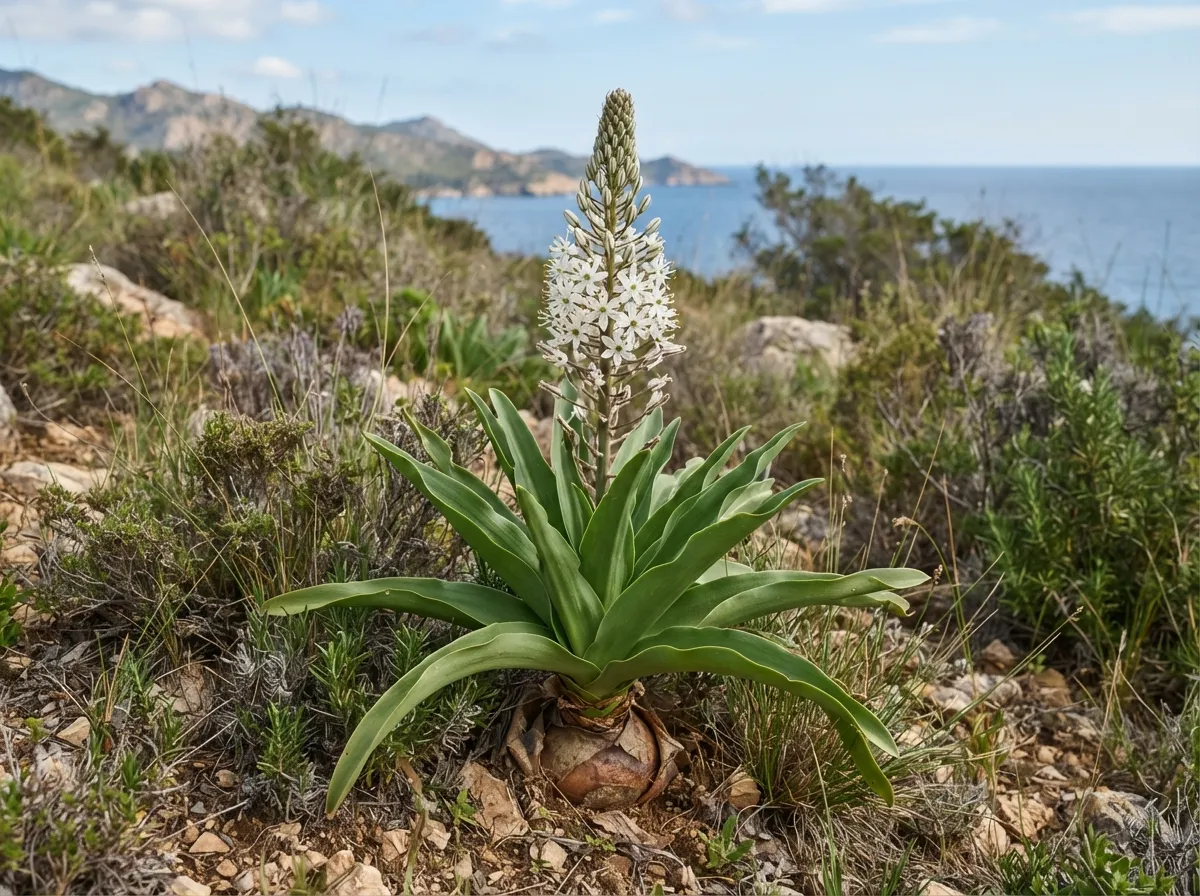
🔍 Identify it without mistakes
A large, spectacular bulbous plant with a bulb that can reach 20 cm in diameter, half-buried and visible at the surface, covered with reddish-brown tunics. Wide basal leaves forming a rosette that appear after flowering. A long, leafless flower stalk 0.5 to 1.5 m tall bearing an impressive, dense spike of small starry white flowers in late summer, on seemingly dry and bare soil.
- Huge reddish-brown bulb exposed at soil level
- Naked flower stalk appearing WITHOUT leaves (leaves only come after flowering)
- Dense spike of white starry flowers, highly visible from a distance
- Characteristic presence near the sea on dry, stony soils
💊 Healing with it
Historically used as a powerful cardiotonic and diuretic (proscillaridin, a cardiac glycoside similar to digitalis); medical use has been abandoned in favor of safer, better-controlled molecules
Level of evidence : traditional use — Toxiplante — Urginea maritima monograph; INCHEM PIM 479
⚠️ NO self-medication: the entire plant, especially the bulb, is toxic and causes cardiac arrhythmia that can lead to cardiac arrest, preceded by digestive and neurosensory disorders; handling the fresh bulb alone causes skin irritation (calcium oxalate raphides)
🪓 Other bushcraft uses
- Dried and crushed bulb traditionally used as a natural rat poison (especially the red squill variant), as rodents are more sensitive to it than other mammals
Sources (3)
No entry replaces a certain identification in the field, or medical advice. When in doubt: don't eat it. If ingestion is suspected: poison control or 112/911.