Skip to content

Your account

With an account, your progress (modules read, XP, badges, cards, notebook, pack, challenges) follows you on every device. Without one, it stays in this browser.

or
Toxic☠️ To avoid

🌼 Common ragwort

Jacobaea vulgaris · Astéracées
🧠 To remember it“Small yellow flowers, liver takes the blow” — ragwort's danger builds up dose after dose, not all at once.
Common ragwort — Jacobaea vulgaris

🔍 Identify it without mistakes

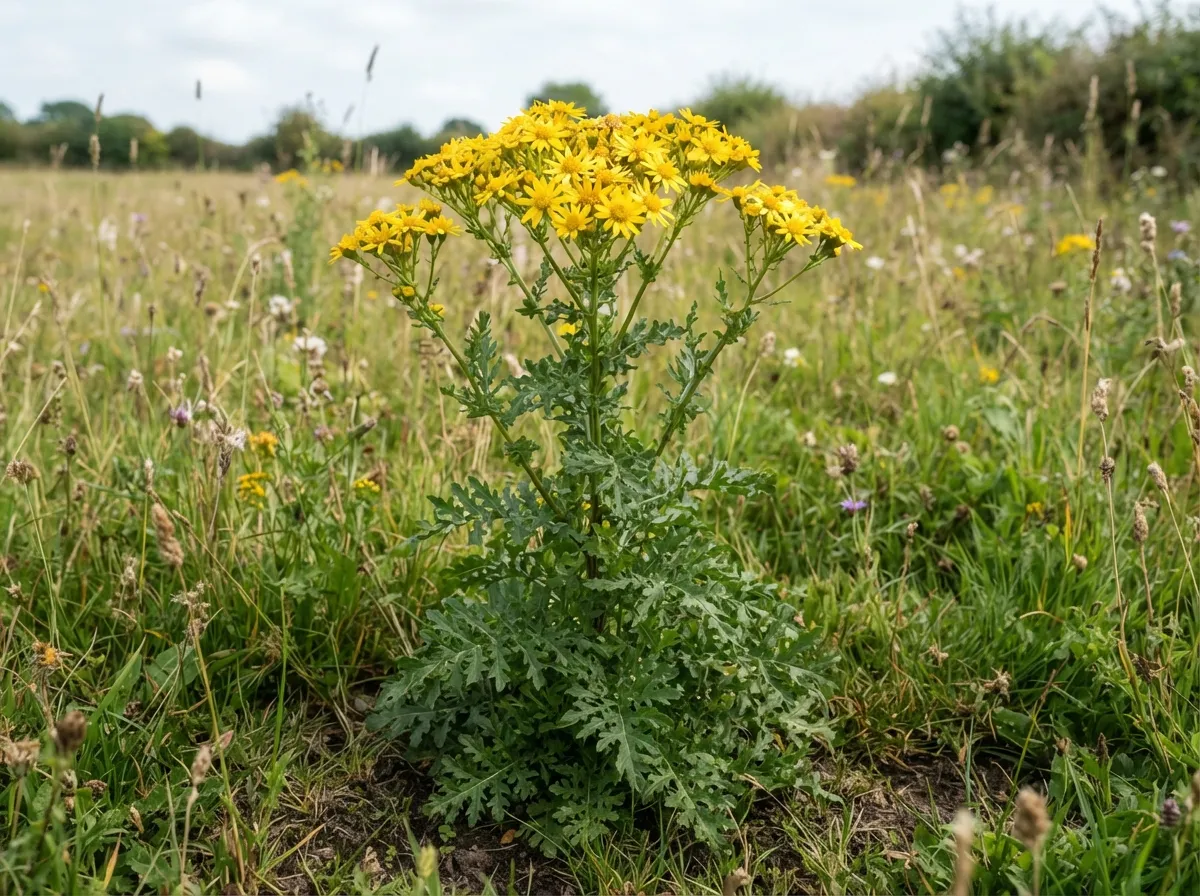
Tall biennial plant, very common in meadows and along paths, covered in summer with small, bright yellow flower heads in flat-topped clusters that look like miniature daisies. Its toxicity isn't acute but cumulative: eaten regularly in small amounts, especially via contaminated hay or honey, it causes irreversible long-term liver damage.

  1. bright yellow flower heads grouped in a flat corymb at the top of the stem, looking like small yellow daisies
  2. deeply divided, pinnatifid, dark green leaves
  3. erect stem, often reddish at the base, branched near the top
  4. typically found in grazed pastures, wasteland, and roadside verges
Size30-100 cm
Floweringjuin-octobre
Habitatmeadows, pastures, roadsides and path edges, banks

⚠️ Not to be confused with

Other ragworts and yellow Asteraceae (the whole genus shares comparable toxicity) (Senecio spp.)similar toxicity for most species in the genus

To tell them apart: no safety distinction is needed: keep any plant with small yellow flowers in corymbs from the Senecio/Jacobaea genus away from forage and herbal tea foraging

☠️ What kills

nomHepatotoxic pyrrolizidine alkaloids (jacobine, senecionine, and related compounds)
dose letale estimeetoxicity is mainly cumulative through repeated exposure (contaminated hay, herbal teas, or honey) rather than a single massive ingestion; no well-established acute lethal dose in humans (approx)
delaiacute effects (rare) appear within hours to days; chronic liver damage develops over weeks to months of repeated exposure
symptomeswith repeated doses: progressive liver damage that can evolve into hepatic veno-occlusive disease (abdominal pain, jaundice, ascites, liver failure); at high acute doses, digestive and neurological disorders
antidoteno specific antidote; stop exposure and seek hepatological care in case of confirmed damage
morts documenteesyes — hepatic veno-occlusive disease caused by pyrrolizidine alkaloids is documented in livestock (a major cause of agricultural loss) and in humans, particularly via traditional herbal teas or contaminated honey in several countries

First steps : Call poison control if you intentionally ingested it or suspect an issue with herbal tea or artisanal honey made from wild plants that aren't positively identified. Don't induce vomiting without acute symptoms. Report any suspected repeated consumption for liver monitoring.

Sources (3)

No entry replaces a certain identification in the field, or medical advice. When in doubt: don't eat it. If ingestion is suspected: poison control or 112/911.