🌿 Wild Thyme
Thymus serpyllum · Lamiaceae
🔍 Identify it without mistakes
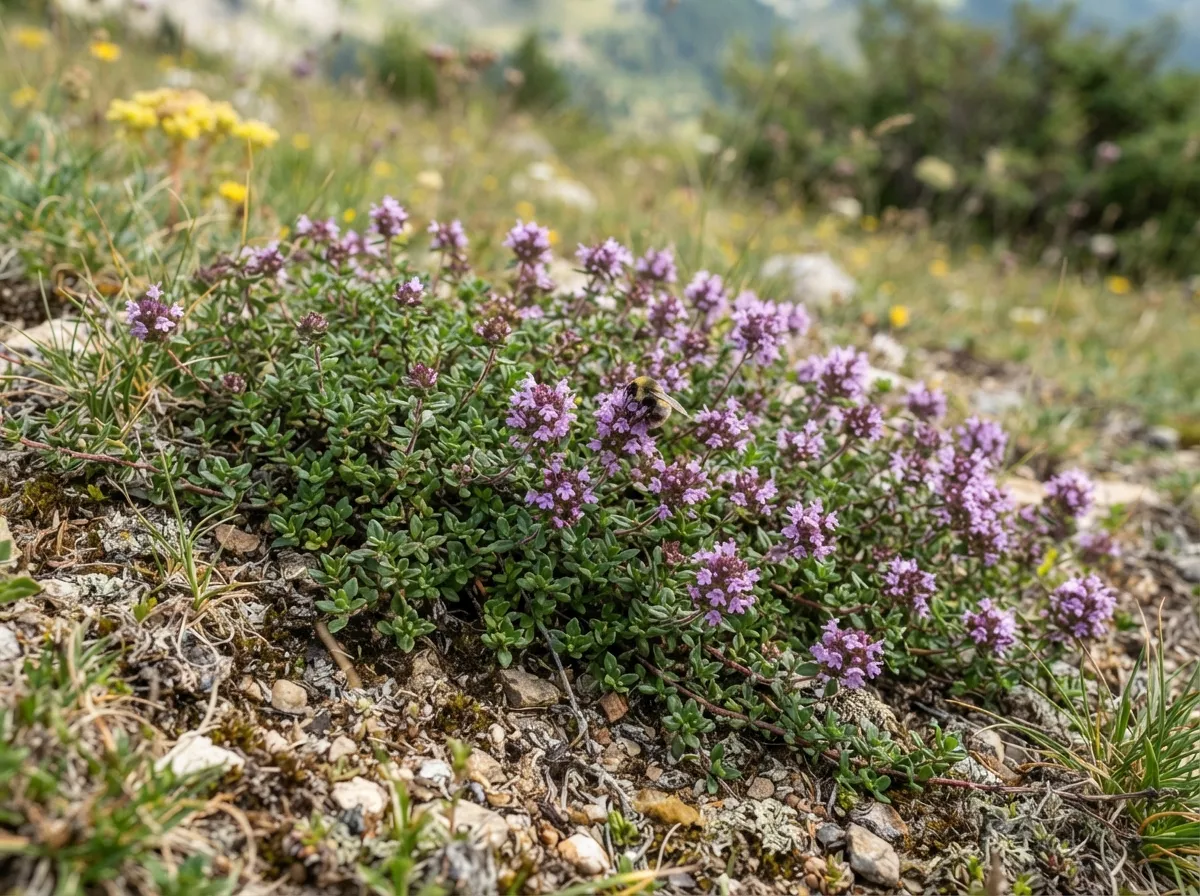
Small creeping thyme that carpets dry lawns and rockeries, low-growing stems forming dense mats that are highly aromatic when crushed. A low, creeping cousin of common thyme (Thymus vulgaris) which is more upright in the South, wild thyme tolerates temperate climates better and grows right up into the mountains.
- creeping stems, woody at the base, forming dense mats or cushions
- small opposite, oval, sessile leaves with a strong thyme scent when crushed
- pink-purple flowers in small whorls clustered at the top of upright stems
- stem with hairs arranged on two opposite sides only (fine key for identifying the genus Thymus)
- always grows flat against the ground in mats, never as an upright shrub
⚠️ Not to be confused with
To tell them apart: creeping and mat-forming habit, flat non-rolled leaves, milder scent
🍽️ Eating it
Preparation : fresh or dried leaves as a seasoning (identical to the culinary use of cultivated thyme), infusion of flowering tops
💊 Healing with it
traditionally used as an infusion for respiratory ailments (cough, cold) and as a mild digestive antiseptic, thanks to the thymol contained in its essential oil
Level of evidence : traditional use — ethnobotanical compilations (PFAF)
⚠️ pure essential oil is dermocaustic and must never be applied undiluted to the skin; avoid high doses during pregnancy
🪓 Other bushcraft uses
- traditionally planted in dry lawns and stone walls to perfume the air when walked on — a practice still alive in some traditional gardens
No entry replaces a certain identification in the field, or medical advice. When in doubt: don't eat it. If ingestion is suspected: poison control or 112/911.