🌳 Rowan
Sorbus aucuparia · Rosaceae
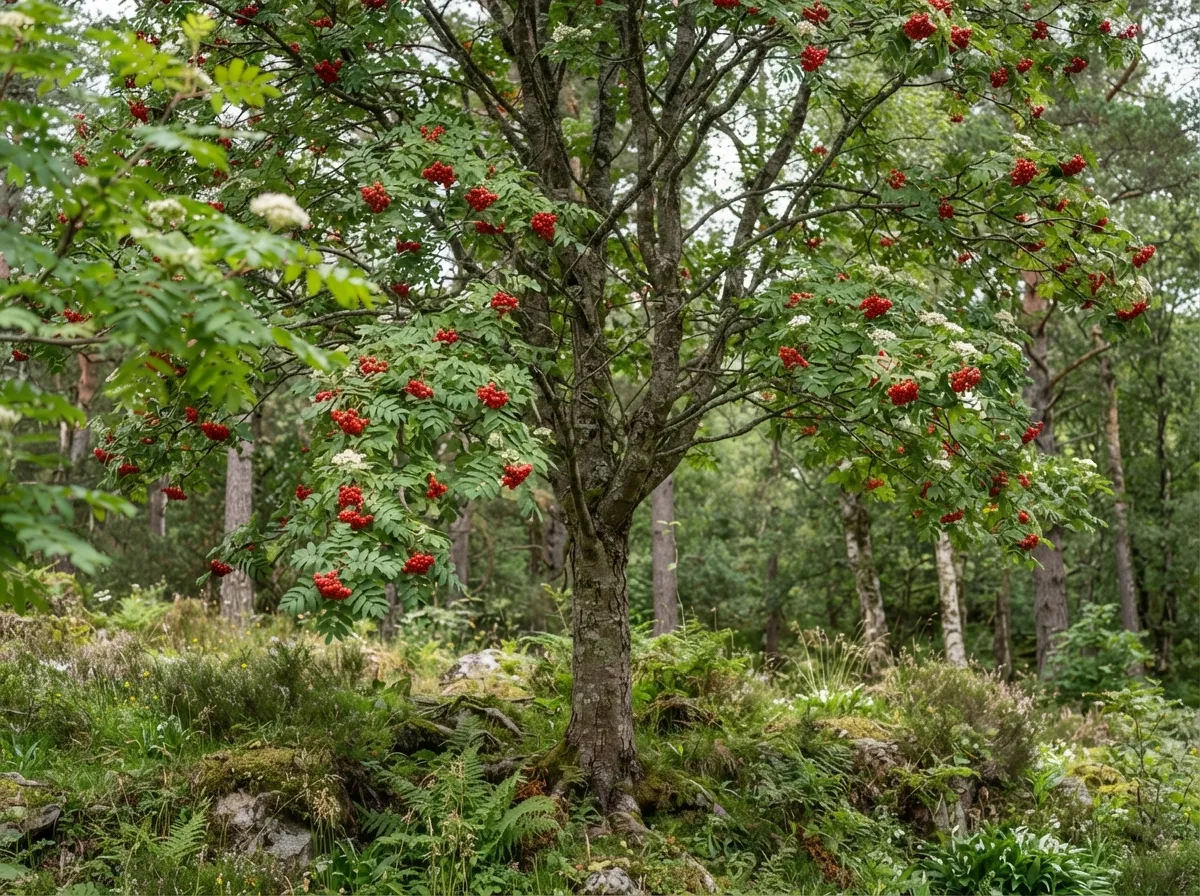
🔍 Identify it without mistakes
Small, slender tree, 5 to 15 m tall, with pinnately compound leaves (11 to 15 toothed leaflets), resembling a smaller ash leaf. Fragrant white flowers in broad corymbs in spring, followed by very showy clusters of bright orange to red berries in late summer, extremely popular with birds (especially thrushes, hence its French name).
- pinnately compound leaves with 11-15 toothed leaflets
- very showy clusters of bright orange-red berries
- smooth grey bark marked with horizontal lenticels
- found up to the tree line
⚠️ Not to be confused with
To tell them apart: rowan has much smaller round fruits (under 1 cm), bright red, leaflets toothed all the way to the base, and hairy buds, unlike the service tree
🍽️ Eating it
Preparation : NEVER eat them raw in quantity (parasorbic acid is a digestive irritant causing nausea): prolonged cooking or freezing/natural frost after the first freeze destroys a large part of the bitterness and acid, then make jam, jelly, or liqueur
🪓 Other bushcraft uses
- flexible wood traditionally used for tool handles
- good luck tree in Scandinavian and Celtic traditions, planted near homes to ward off bad luck
No entry replaces a certain identification in the field, or medical advice. When in doubt: don't eat it. If ingestion is suspected: poison control or 112/911.