🌿 Prickly saltwort (Russian thistle)
Salsola kali · Amaranthaceae (Chenopodiaceae)
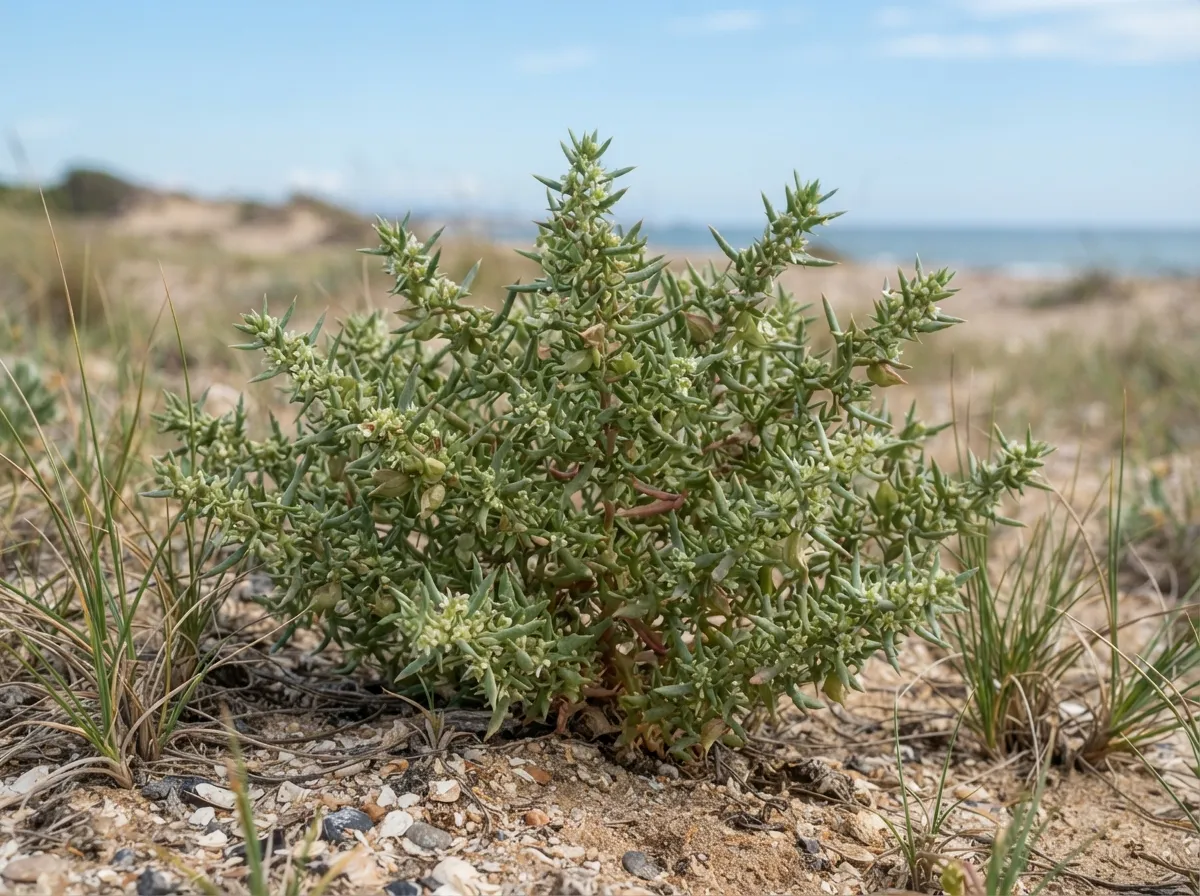
🔍 Identify it without mistakes
A small annual plant, sprawling or erect, with red-veined stems covered in fleshy cylindrical leaves, each ending in a sharp spine. This quickly makes it unpleasant to pick past the juvenile stage. Forms dense clumps on drift lines and dune tops.
- cylindrical or semi-cylindrical fleshy leaves, widened at the base and abruptly ending in a sharp spine
- branched stem, often veined or striped with red
- low, dense clumps on drift lines, upper beaches, and primary dune ridges
⚠️ Not to be confused with
To tell them apart: fleshy leaves ending in a sharp spine, on an often red-striped stem, are a sufficient criterion; the main risk is not confusion but getting pricked by older leaves, which become woody and sharp
🍽️ Eating it
Preparation : harvest strictly at a very young stage, when the leaves are still soft and non-spiky; eaten raw in salads or briefly cooked as a vegetable, exactly like its cultivated cousin Salsola soda (Italian agretti)
💊 Healing with it
no major documented medicinal use; historically burned in large quantities to produce soda ash (sodium carbonate) before the industrial Leblanc process
Level of evidence : traditional use — BioObs — Salsola kali, Soude brûlée
⚠️ only harvest very young and tender shoots, as older plants become prickly, fibrous, and unpleasant or even irritating to chew
🪓 Other bushcraft uses
- its name and that of soda (sodium) stem from its massive historical use: its ash, rich in sodium carbonate, was used to make soap and glass before industrialization
Sources (3)
No entry replaces a certain identification in the field, or medical advice. When in doubt: don't eat it. If ingestion is suspected: poison control or 112/911.