Harmless🏕️ Shelter
🟢 Sphagnum moss
Sphagnum spp. · Sphagnaceae (mosses)
🧠 To remember it"Sphagnum drinks twenty times its weight and almost never rots" — it's this dual property (absorption + preservation) that explains all its survival uses.
🔍 Identify it without mistakes
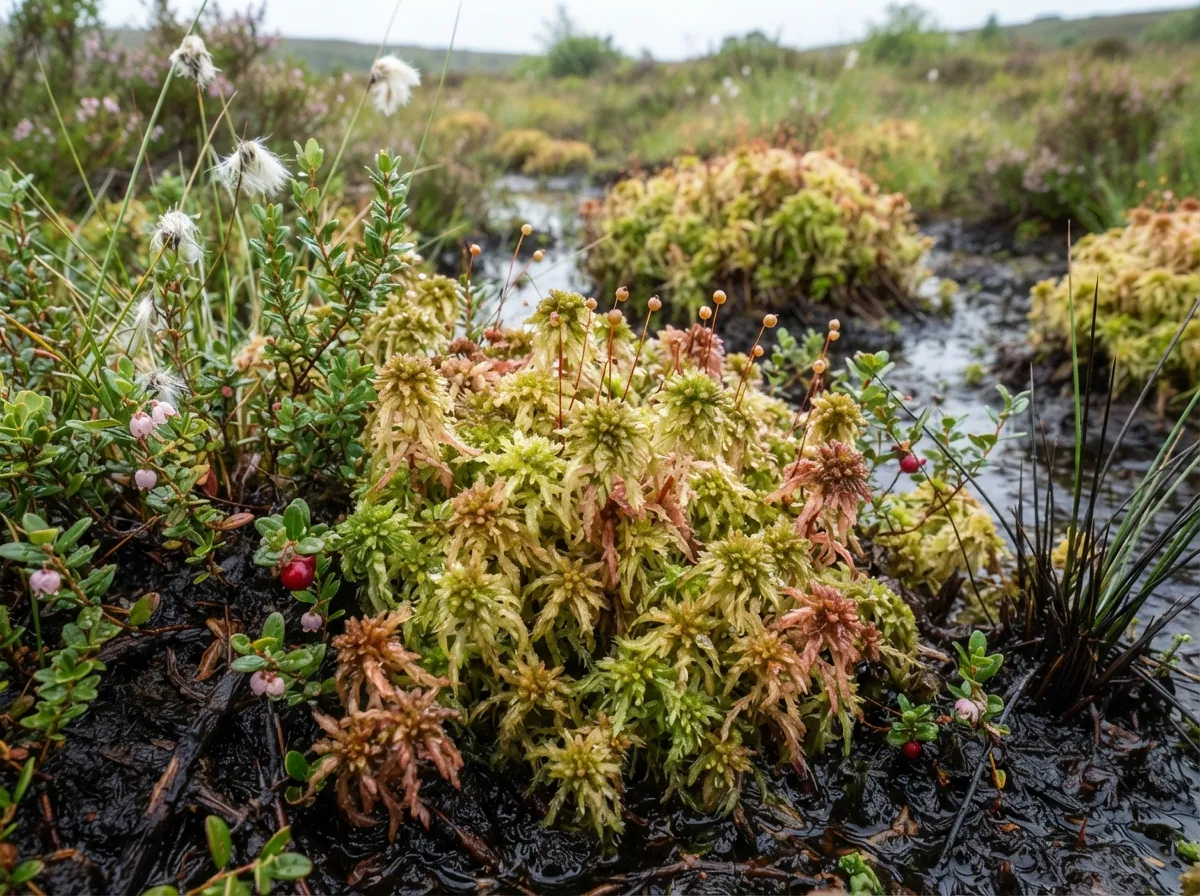
Moss forming thick, spongy cushions ranging from light green to reddish depending on the species and light levels. Its unique cellular structure allows it to absorb 16 to 26 times its dry weight in water. It forms the foundational matrix of boreal peat bogs, where it accumulates in successive layers over millennia to build up peat.
- highly absorbent spongy cushion, soaked with water to the touch
- light green to reddish color depending on light and species
- rosette-like cluster of branches at the top of each stem
- forms the actual ground layer of peat bogs
Size5-20 cm visible height (much deeper down into the peat)
Floweringhas no flowers (moss)
Habitatpeat bogs and acidic wetlands across the entire circumpolar boreal and subarctic belt
🪓 Other bushcraft uses
- antiseptic and highly absorbent natural dressing, used on a massive scale during World War I (over 1 million dressings per month in the UK) thanks to its natural antibacterial properties and absorption capability superior to cotton
- traditional insulation used to draft-proof cabins and insulate boots among Northern peoples
- traditional diaper material used by indigenous circumpolar peoples, replaced today by disposable diapers
No entry replaces a certain identification in the field, or medical advice. When in doubt: don't eat it. If ingestion is suspected: poison control or 112/911.