🍂 Poison sumac
Toxicodendron vernix · Anacardiaceae
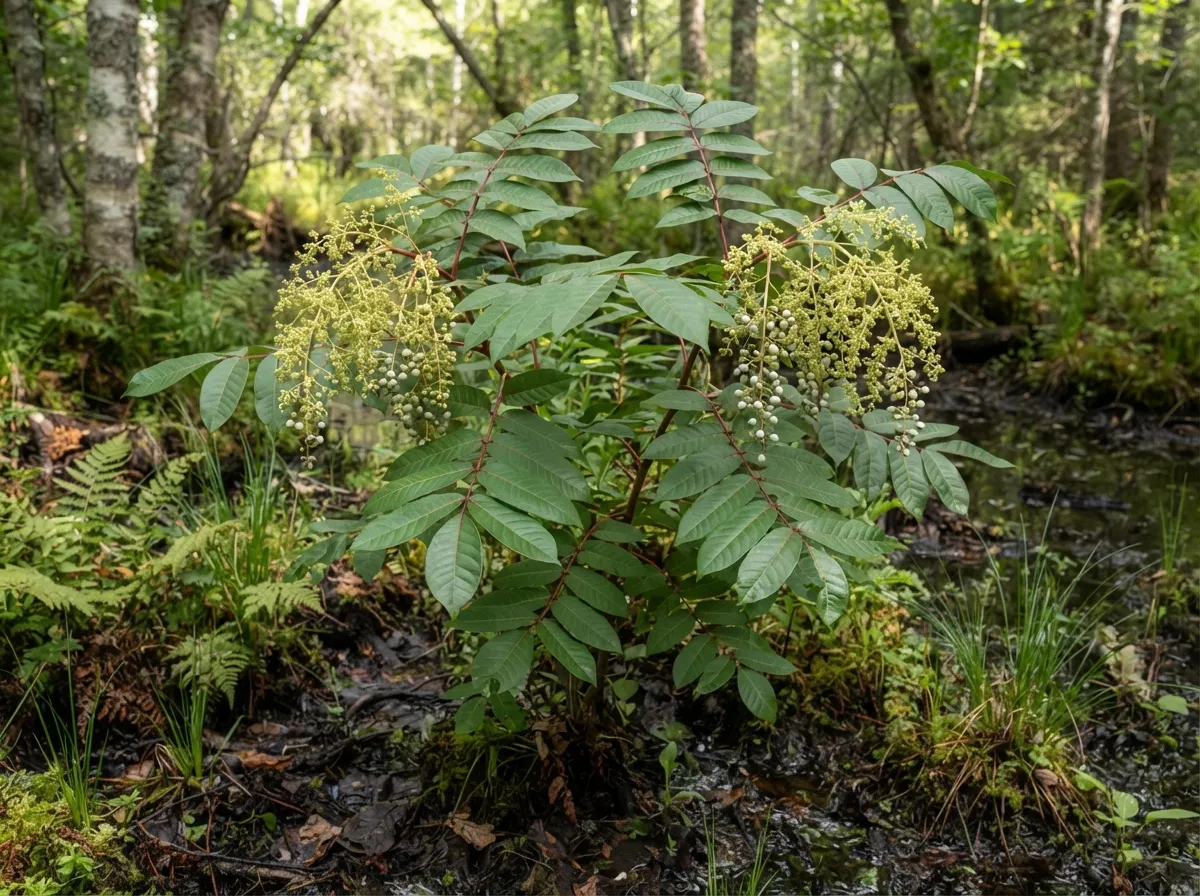
🔍 Identify it without mistakes
A cousin of poison ivy growing exclusively in North American wetlands and wooded swamps, considered by toxicologists as the most allergenic plant on the continent — its urushiol concentration is significantly higher than that of poison ivy. Unlike edible staghorn sumac which grows in dry soil, poison sumac can be identified by its drooping white berries and its systematically waterlogged habitat.
- shrub or small tree with compound leaves of 7 to 13 smooth leaflets arranged in pairs plus a terminal one
- fruit in small grayish-white berries, SMOOTH and DROOPING in loose clusters (never red nor upright)
- petioles and leaf veins often tinged with red
- grows exclusively with its roots in water or water-saturated soil (swamps, wooded bogs)
⚠️ Not to be confused with
To tell them apart: staghorn sumac bears RED, HAIRY fruit held upright in tight cones at the top of branches and grows in dry soil (wastelands, banks); poison sumac has WHITE, smooth, drooping fruit and always grows in wetlands
☠️ What kills
First steps : Immediately wash any exposed skin with cold water and soap. Never cut or burn the plant. Seek emergency medical care if coughing or experiencing breathing difficulty after exposure to smoke in wooded swampy areas.
No entry replaces a certain identification in the field, or medical advice. When in doubt: don't eat it. If ingestion is suspected: poison control or 112/911.