🌳 Staghorn sumac
Rhus typhina · Anacardiaceae
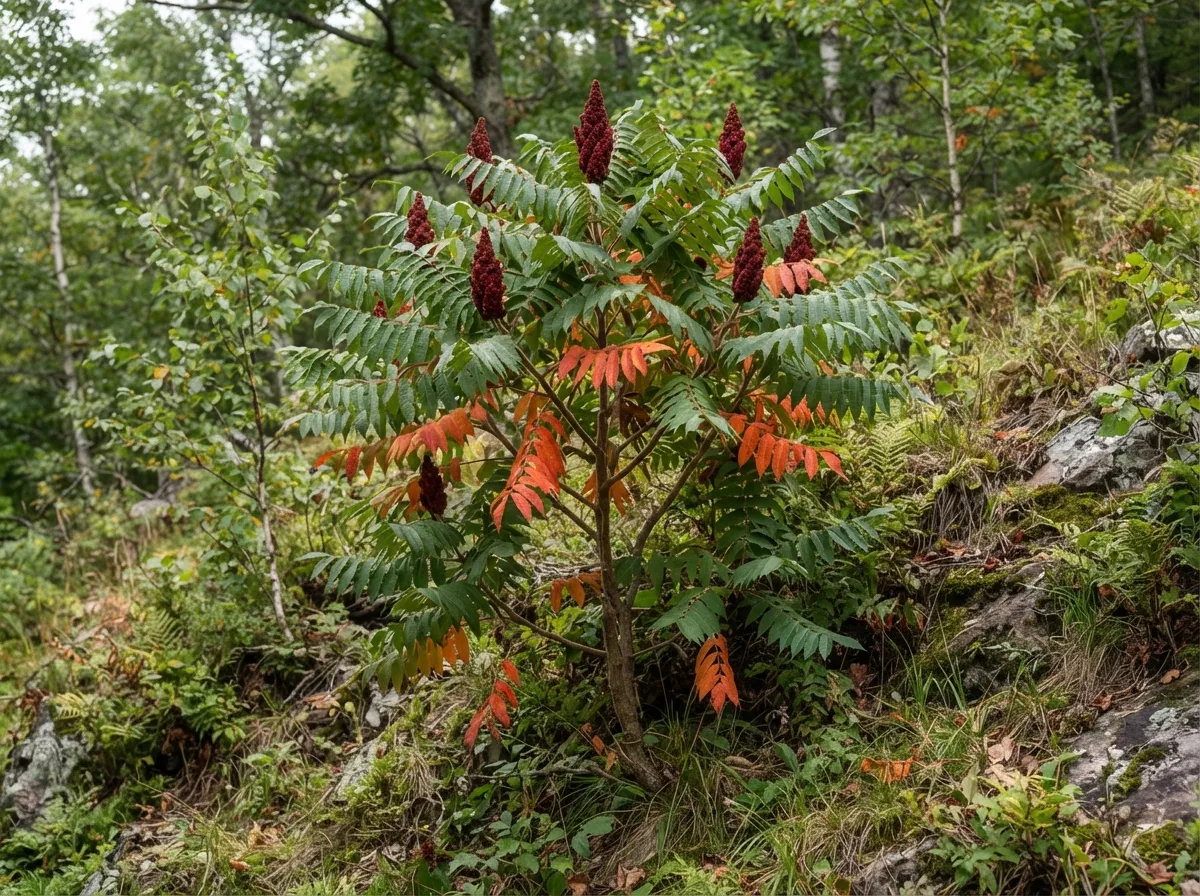
🔍 Identify it without mistakes
Small tree or large shrub forming dense colonies, with twigs covered in velvety hair resembling deer antlers in velvet (hence 'staghorn'). Large compound leaves with 11-31 toothed leaflets, turning spectacularly red in autumn. Velvety red fruits grouped in a compact, upright cone at the tips of the branches, persisting all winter.
- velvety hairy twigs resembling deer antlers in velvet
- compound leaf with numerous toothed leaflets arranged in a row
- velvety red fruits in a compact, upright cone
- milky white sap
⚠️ Not to be confused with
To tell them apart: cone of RED and upright fruits on staghorn sumac vs. clusters of WHITE and DROOPING berries on poison sumac; staghorn sumac grows in dry, sunny soil, poison sumac almost exclusively in marshes and bogs
To tell them apart: staghorn sumac has compound leaves made of numerous elongated, comb-like leaflets and upright, velvety red fruit cones, very different from the 3 simple leaflets of poison ivy
🍽️ Eating it
Preparation : steep crushed red fruit clusters in cold water (never hot, which releases bitter tannins) for 15-20 minutes, strain through cloth to catch irritating hairs, lightly sweeten: a drink known as 'Indian lemonade' or 'sumacade'; dried and ground fruits also yield the sumac spice used in Middle Eastern cooking (same genus Rhus, different species)
💊 Healing with it
bark or root tea traditionally used for sore throats, fever, and as a diuretic; fruits chewed or used as a gargle for mouth ulcers
Level of evidence : traditional use — Native American Ethnobotany Database (Moerman, University of Michigan)
⚠️ always use cold water to infuse the fruits, never hot
🪓 Other bushcraft uses
- hollow stems used as spouts (spiles) to collect maple sap
- bark and leaves rich in tannins used for leather tanning
- black dye extracted from the bark and leaves
Sources (3)
No entry replaces a certain identification in the field, or medical advice. When in doubt: don't eat it. If ingestion is suspected: poison control or 112/911.