🌳 Elderberry
Sambucus nigra · Adoxaceae (formerly Caprifoliaceae)
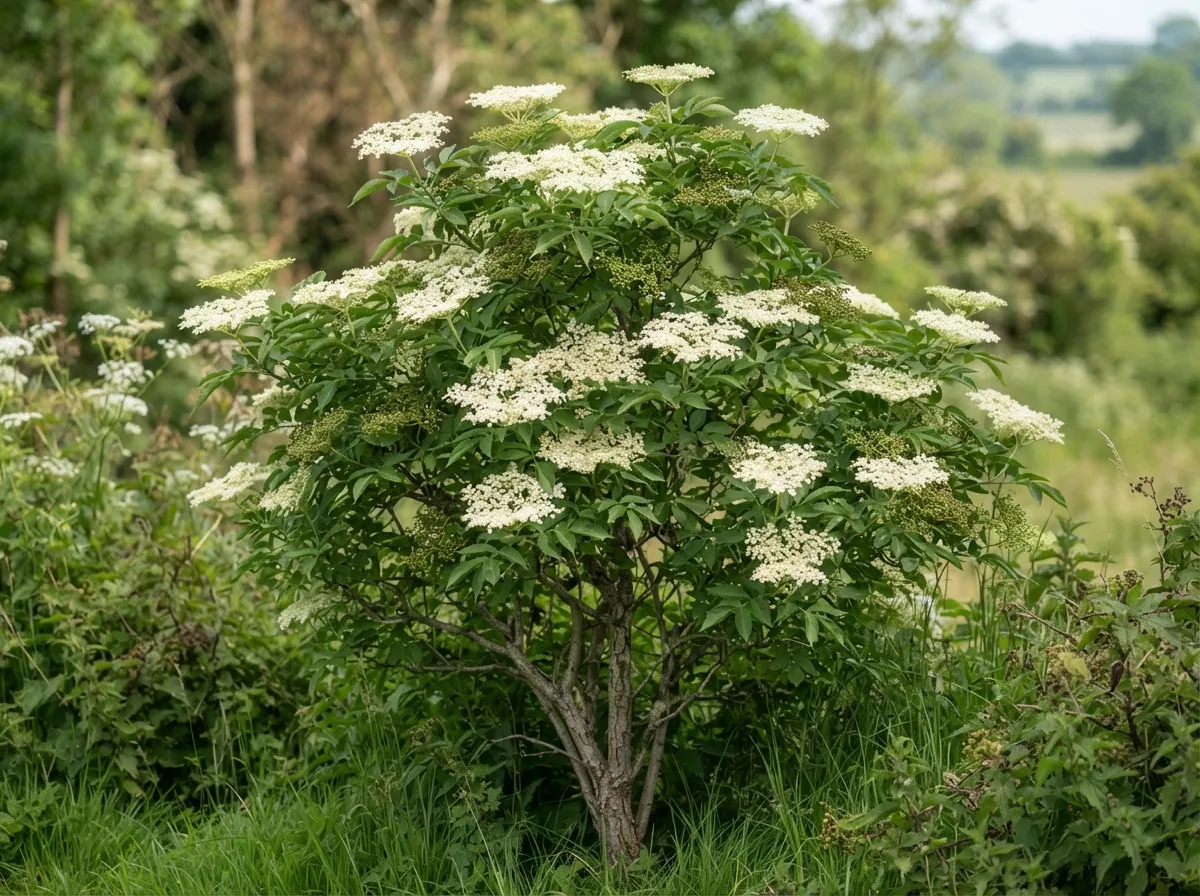
🔍 Identify it without mistakes
Fast-growing shrub or small tree, soft wood with abundant white pith inside the branches (very easy to spot in cross-section). Opposite compound leaves with 5-7 toothed leaflets that smell unpleasant when crushed. Large flat clusters of cream-white, highly fragrant flowers, followed by shiny purple-black berries, hanging in wide bunches when ripe.
- abundant spongy white pith inside young branches
- opposite compound leaves with 5-7 toothed leaflets
- large flat clusters of fragrant cream-white flowers
- shiny black berries in hanging bunches when ripe
- unpleasant smell from crushed leaves
⚠️ Not to be confused with
To tell them apart: dwarf elder is a non-woody herbaceous plant that dies back every winter (black elderberry is a perennial woody shrub), its berry clusters point upright instead of hanging, and its flowers have purple anthers instead of cream-yellow
To tell them apart: opposite pinnate compound leaves on elderberry versus simple leaves on dogwood; elderberry stems have soft white pith
To tell them apart: pokeweed berries grow on a single upright-then-drooping spike with a thick purple stem, while elderberry bears its berries in large compound flat-topped clusters on a branched woody shrub; pokeweed stems are never woody
🍽️ Eating it
Preparation : raw flowers in fritters or syrup (elderflower cordial); berries MUST be cooked (at least 65°C) because raw they contain sambunigrin, an irritating cyanogenic glucoside that causes nausea and diarrhea — cooking neutralizes it completely
approx, raw berry, closest available USDA item for Sambucus nigra; always consume cooked
💊 Healing with it
flowers are traditionally diaphoretic (promotes sweating) for flu-like symptoms and mild colds; berries are rich in anthocyanins, studied for shortening the duration of flu symptoms
Level of evidence : tradition for the flower (recognized EMA/HMPC); etudes-limitees for standardized berry extract on flu (small-scale clinical trials, promising results but not definitive) — EMA/HMPC, community herbal monograph Sambuci flos
⚠️ never consume raw berries, seeds, bark, or leaves (cyanogenic glucosides); always cook the berries
🪓 Other bushcraft uses
- stems hollowed of their pith were traditionally used to make rustic whistles and flutes
- hard wood once the pith is removed, used in small woodwork
- shrub considered protective in European folklore ("the witch's tree" that you wouldn't cut down without respect)
Sources (3)
No entry replaces a certain identification in the field, or medical advice. When in doubt: don't eat it. If ingestion is suspected: poison control or 112/911.