☠️ Dwarf elderberry (Danewort)
Sambucus ebulus · Adoxaceae
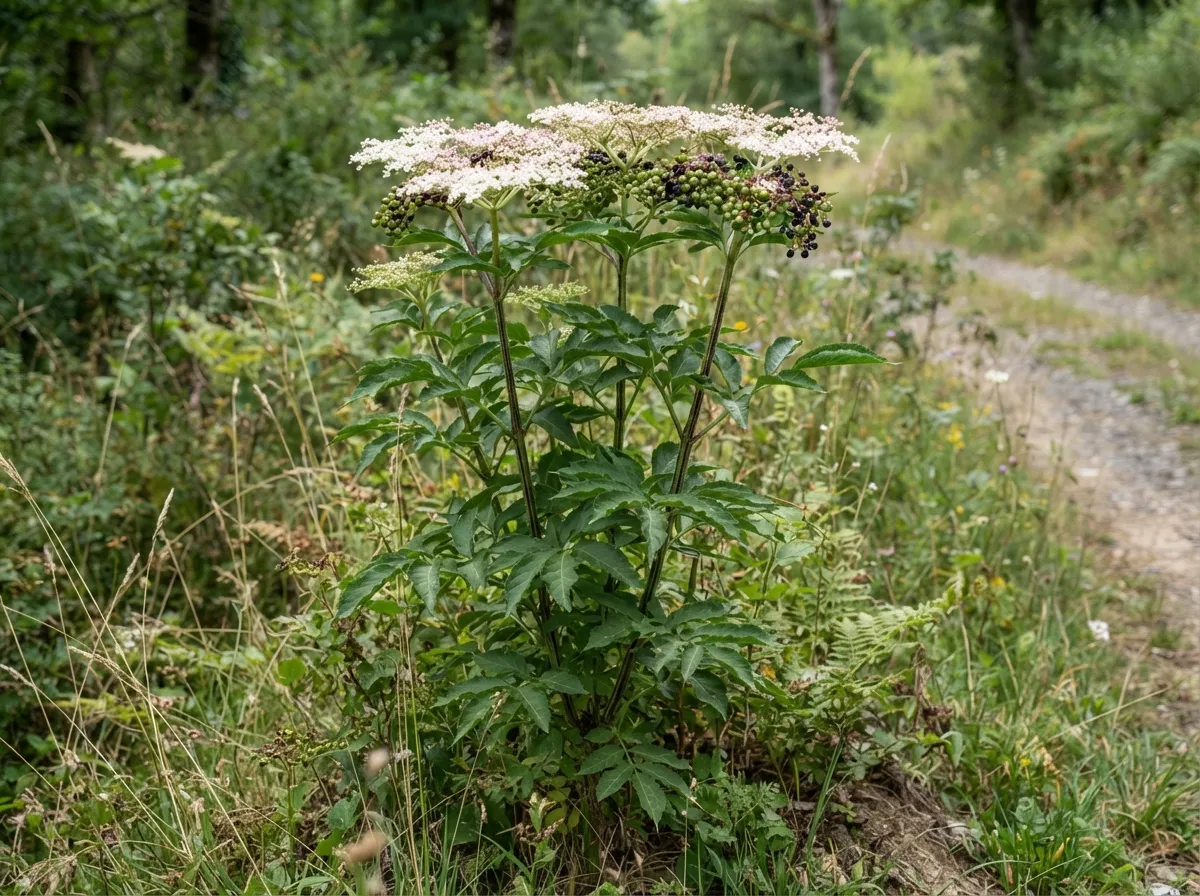
🔍 Identify it without mistakes
A large perennial herbaceous plant that you must never confuse with its cousin the black elderberry (a woody shrub), despite flowers and berries that look similar at first glance: dwarf elder dies back every winter like a typical herbaceous plant and regrows from rootstock, whereas black elder keeps persistent woody stems all year round. Its black berries, unlike those of the black elder, remain toxic even after cooking.
- herbaceous stem (non-woody), dying back every winter, growing in dense colonies via rhizomes
- flower anthers pink-red to purplish (yellow on black elder)
- flowers AND fruits held upright, never drooping (on black elder, ripe fruits hang downward)
- leaves with 7-13 leaflets with large leaf-like stipules at the base (5-7 leaflets and no large stipules on black elder)
- unpleasant smell when leaves are crushed
⚠️ Not to be confused with
To tell them apart: the decisive feature is the stem: herbaceous and soft on dwarf elder (never woody), woody and hard on black elder; dwarf elder also has UPRIGHT fruits, whereas those of ripe black elder HANG DOWN toward the ground
💊 Healing with it
used in old folk medicine (root, leaves) as a violent purgative and diuretic, an application now abandoned due to its hard-to-control toxicity
Level of evidence : traditional use — Cuisine Sauvage ASBL — Plant of the month: Danewort / Dwarf elder (TOXIC!)
⚠️ TOXIC: the whole plant, including berries even after cooking, causes severe vomiting and violent diarrhea; never confuse it with black elder when foraging berries for cooking
🪓 Other bushcraft uses
- its presence was traditionally considered an indicator of very nitrogen-rich soil, often linked to former human settlements or old manure sites
Sources (2)
No entry replaces a certain identification in the field, or medical advice. When in doubt: don't eat it. If ingestion is suspected: poison control or 112/911.