🫘 Tamarind
Tamarindus indica · Fabacées
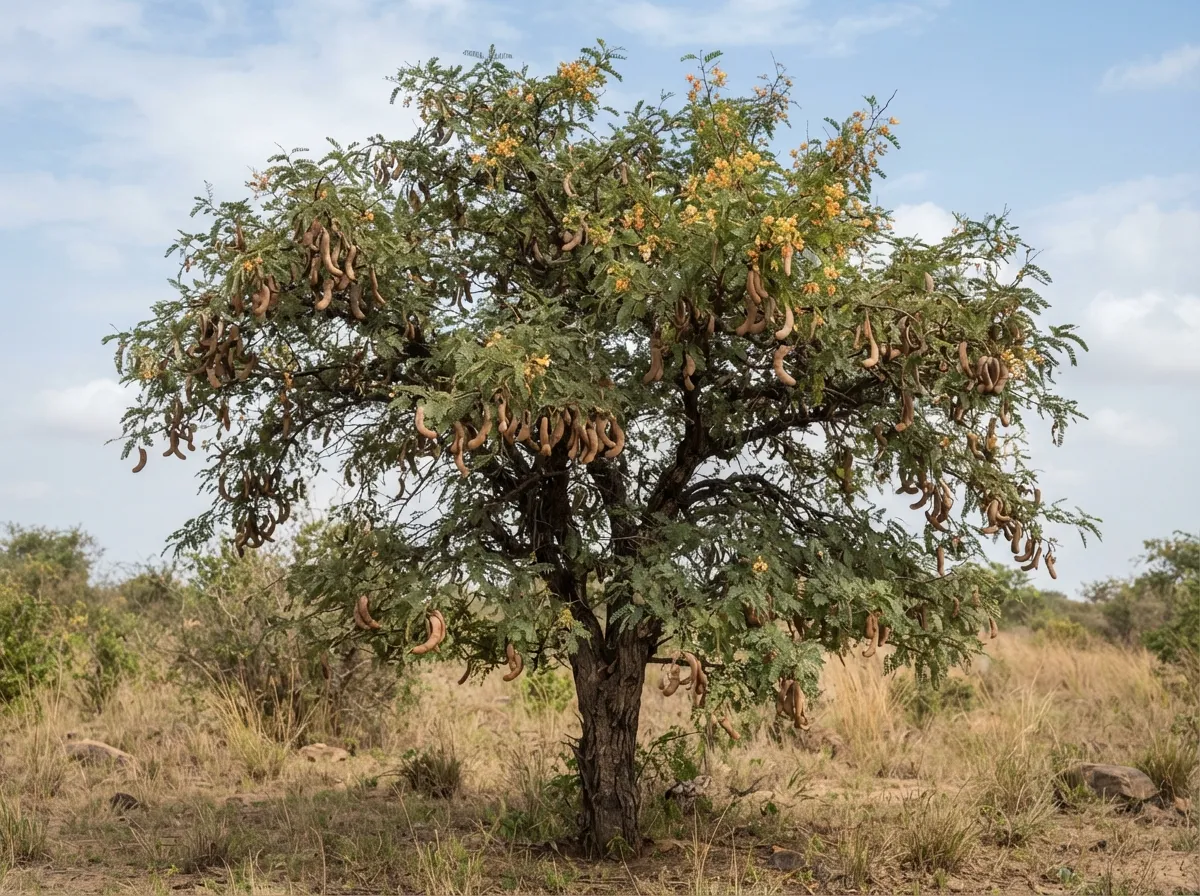
🔍 Identify it without mistakes
Large tree with a dense, shady crown, native to East Africa but now found throughout the tropical belt, featuring pinnately compound leaves that fold slightly at night. Its elongated, rough brown pods contain a sticky, reddish-brown pulp—sour then sweet—surrounding hard, shiny seeds.
- pinnately compound leaves with numerous small opposite leaflets that fold slightly in the evening
- elongated brown pods with a thin, brittle, slightly curved shell
- sticky reddish-brown pulp inside the pod, tangy and fibrous, surrounding hard, dark brown seeds
- large tree with a dense, rounded crown providing deep shade
⚠️ Not to be confused with
To tell them apart: the elongated brown pod with sticky tangy pulp and the dense, deeply shady crown are distinctive to the tamarind among large savanna trees
🍽️ Eating it
Preparation : crack open the thin shell and extract the sticky pulp; eat it raw, dilute it in water for a tangy drink, or cook it into sauces, chutneys, and confections
USDA FoodData Central, raw pulp, per 100 g
💊 Healing with it
the pulp is traditionally used as a mild laxative and to treat fevers; preclinical studies explore its antioxidant and hypoglycemic effects
Level of evidence : limited studies — Fruits journal (EDP Sciences) — Nutritional composition of tamarind (Tamarindus indica L.)
⚠️ no known toxicity at usual dietary amounts
🪓 Other bushcraft uses
- hardwood used in woodworking and for tool handles
- pulp used as a natural cleaning agent for copper and brass thanks to its acidity
Sources (2)
No entry replaces a certain identification in the field, or medical advice. When in doubt: don't eat it. If ingestion is suspected: poison control or 112/911.