🍃 Taro
Colocasia esculenta · Araceae
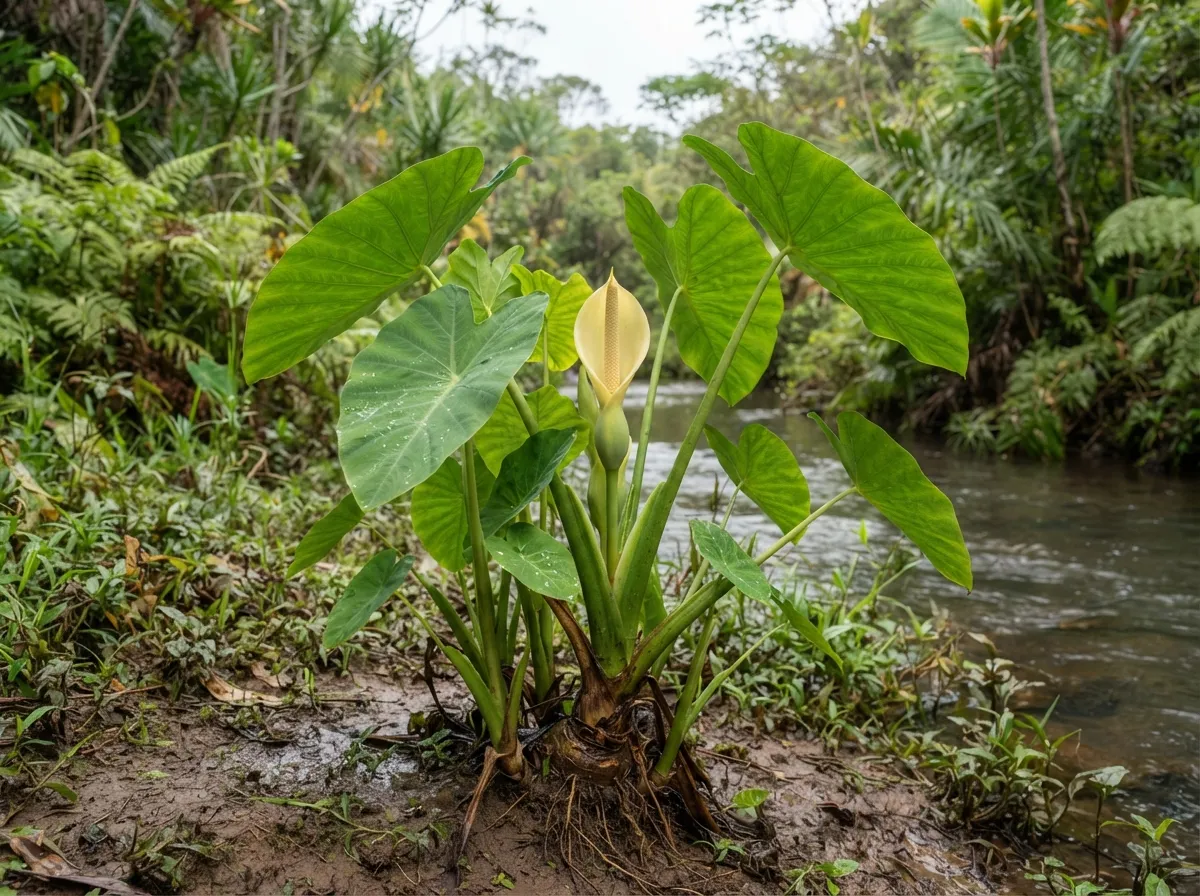
🔍 Identify it without mistakes
Herbaceous plant with large heart- or shield-shaped leaves ("elephant ears"), supported by long, erect petioles attached to the center of the leaf blade (peltate). The corm (tuber) is buried beneath a clump of leaves.
- heart-shaped peltate leaves, petiole attached to the middle of the blade and not the edge
- water droplets bead up without wetting the leaf (lotus effect)
- fibrous brown corm beneath the clump
⚠️ Not to be confused with
To tell them apart: petiole attached to the center of the blade in Colocasia (peltate), often at the edge in Alocasia; if in doubt, always cook thoroughly
🍽️ Eating it
Preparation : never eat raw: raw corms and leaves contain needle-like calcium oxalate crystals (raphides) that severely irritate the mouth and throat. Peel, then boil or steam thoroughly (30-45 min for the corm); discard leaf cooking water to further reduce soluble oxalates
USDA FoodData Central, raw corm, per 100 g
💊 Healing with it
no major validated medicinal use; traditionally used as an easily digestible staple food, including for infants in the Pacific (poi)
Level of evidence : traditional use — PMC - Impact of Cooking Duration on Calcium Oxalate Crystals in Taro
⚠️ people prone to kidney stones: limit undercooked leaves/petioles, which are rich in oxalates
🪓 Other bushcraft uses
- leaves used as plant food wrapping after cooking
- highly digestible starch used as baby porridge in the Pacific
Sources (2)
No entry replaces a certain identification in the field, or medical advice. When in doubt: don't eat it. If ingestion is suspected: poison control or 112/911.