⚠️ Labrador Tea
Rhododendron groenlandicum · Ericaceae
🔍 Identify it without mistakes
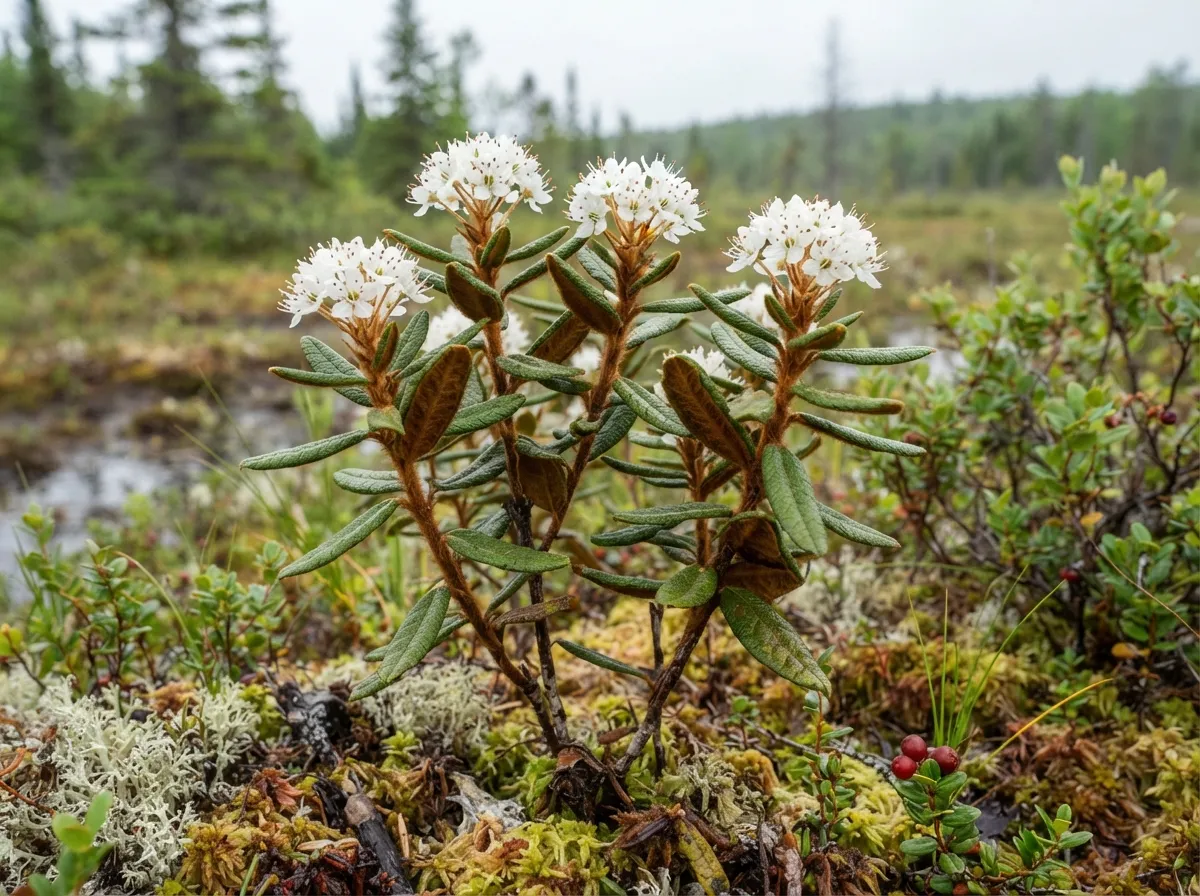
Low evergreen shrub, 30 to 100 cm tall, with alternate, leathery leaves rolled down at the edges. The underside of the leaves is covered with a very characteristic thick, rusty-orange woolly fuzz (unlike the shiny dark green upper side). White flowers grow in tight terminal clusters. The entire plant releases a strong aromatic, resinous smell when crushed.
- underside of leaves covered in dense rusty-orange woolly fuzz
- leathery evergreen leaves with rolled-down edges
- strong resinous scent when crushed
- grows in boreal bogs and acidic heathlands
⚠️ Not to be confused with
To tell them apart: visually very similar, but the woolly fuzz is less uniformly rusty; for safety, treat any plant of this type with the same caution as Labrador tea
💊 Healing with it
used as an infusion by North American Indigenous peoples (Cree, Dene, Athabaskans, Inuit) for colds, sore throats, digestive issues, and fatigue
Level of evidence : traditional use — Adipogenic Activity of Wild Populations of Rhododendron groenlandicum — PMC (James Bay Cree traditional pharmacopeia)
⚠️ contains low doses of ledol and grayanotoxins: never consume more than one cup per day, avoid prolonged use, not recommended during pregnancy; do not confuse with marsh Labrador tea (Rhododendron tomentosum), which is more toxic
🪓 Other bushcraft uses
- leaves traditionally used to flavor meat in decoctions (minor culinary use today)
Sources (2)
No entry replaces a certain identification in the field, or medical advice. When in doubt: don't eat it. If ingestion is suspected: poison control or 112/911.