🌿 Common thyme
Thymus vulgaris · Lamiaceae
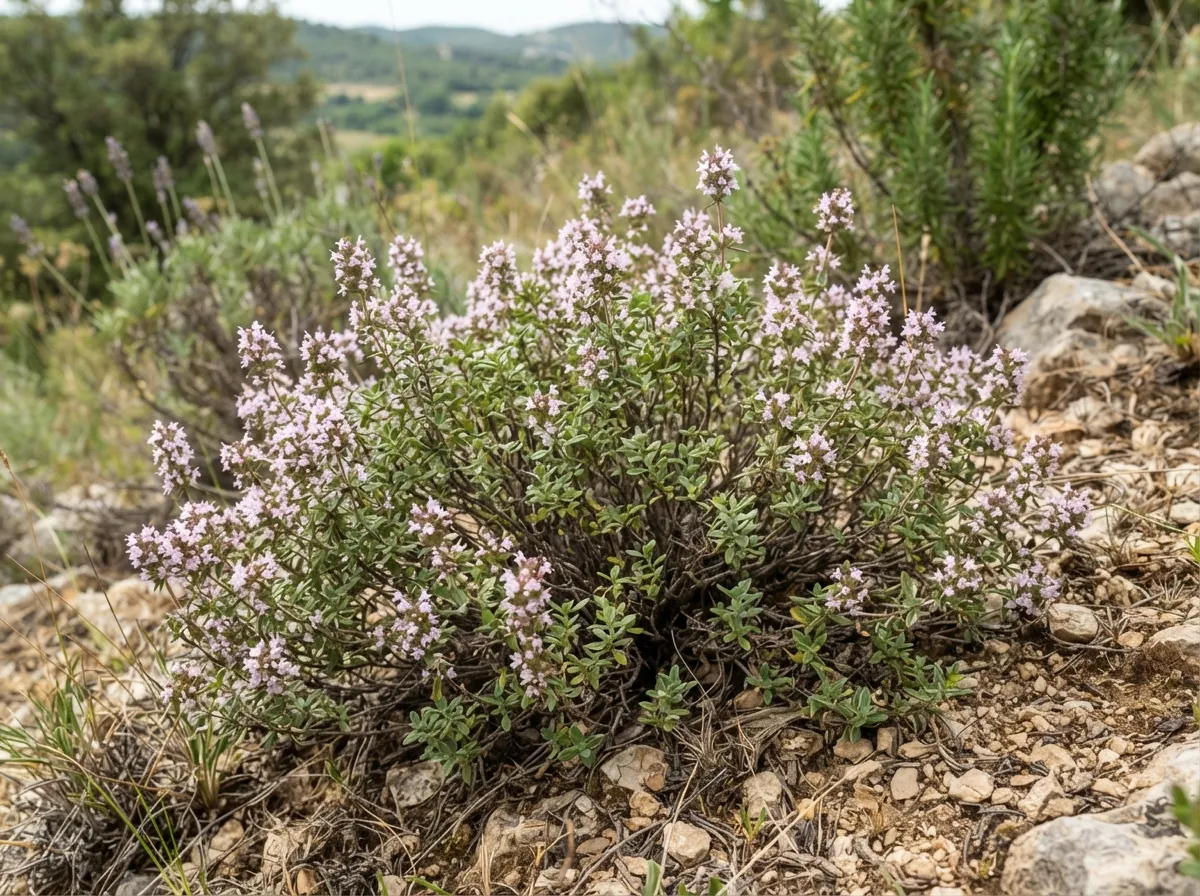
🔍 Identify it without mistakes
Small subshrub, woody at the base, forming dense cushions 10-30 cm high, with square woody stems and tiny, grey, tomentose leaves rolled at the edges. The camphor-lemon smell when crushed is the surest identifier, far more reliable than leaf shape. Pink to mauve flowers in small, tight whorls at the tips of branches, heavily visited by bees.
- square stem, woody at the base
- tiny grey leaves (5-8 mm) with rolled edges
- thymol scent when crushed
- low, dense cushion shape
⚠️ Not to be confused with
To tell them apart: creeping and mat-forming habit, flat leaves that aren't rolled, sweeter smell
To tell them apart: longer and more pointed leaves, scent more peppery than lemon-like
🍽️ Eating it
Preparation : fresh or dried in the shade; infusion, seasoning, preserving oils and vinegars
USDA FoodData Central, fresh thyme, per 100 g — leaves used in small quantities, values are indicative
💊 Healing with it
digestive spasms, coughs and respiratory tract catarrh (expectorant), mild antiseptic gargle
Level of evidence : limited studies — EMA/HMPC Monograph Thymus vulgaris (well-established traditional use, coughs and colds)
⚠️ essential oil (thymol) not recommended pure, never for pregnant women or young children; herbal tea made from flowering tops remains safe at culinary doses
🪓 Other bushcraft uses
- insect repellent (crushed foliage)
- food preservative (antibacterial thymol)
- traditional incense and fumigation
Sources (3)
No entry replaces a certain identification in the field, or medical advice. When in doubt: don't eat it. If ingestion is suspected: poison control or 112/911.