🌳 Linden (Lime tree)
Tilia cordata / Tilia platyphyllos · Malvaceae (formerly Tiliaceae)
🔍 Identify it without mistakes
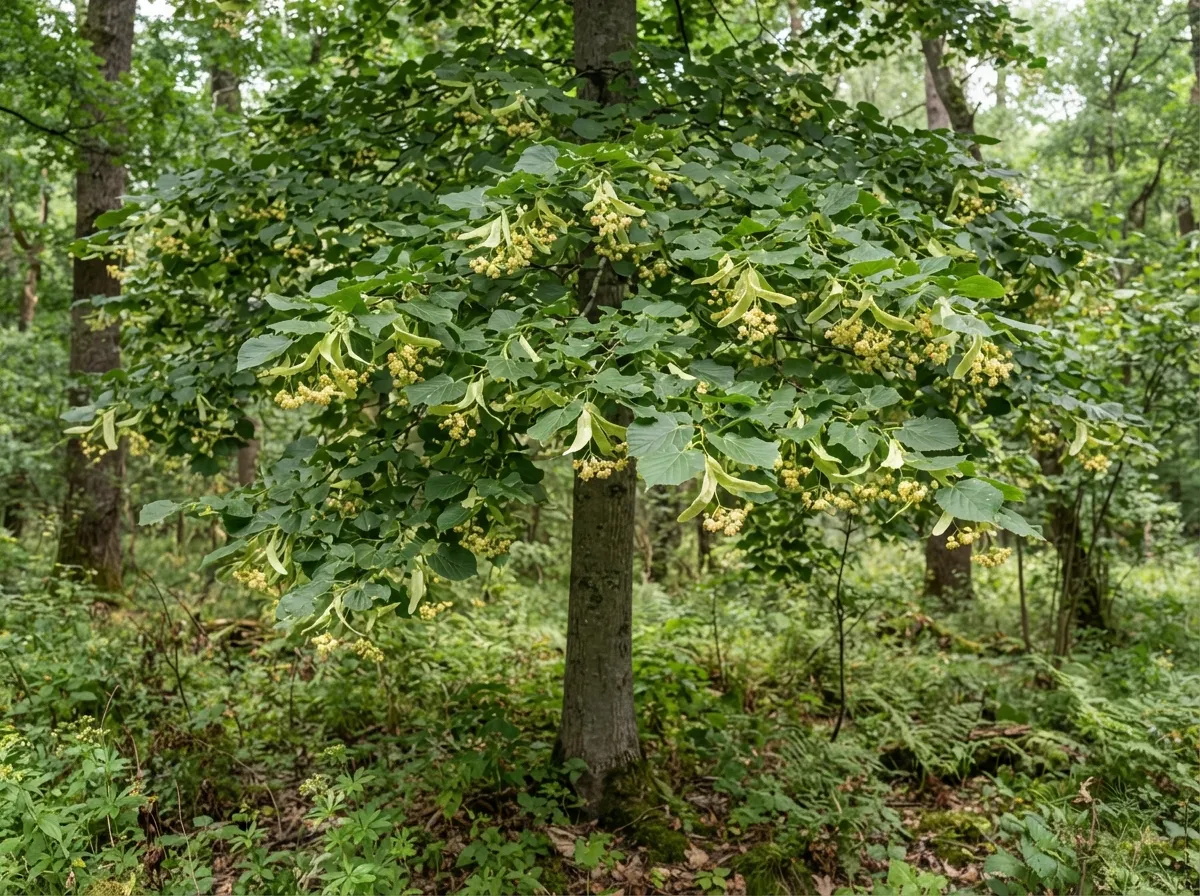
A large tree with leaves shaped like asymmetrical hearts at the base, finely serrated, and shiny green on top. The highly fragrant, pale yellow flowers bloom in small hanging cymes attached to a characteristic long, winged membranous bract that stays attached to the round, downy fruits after flowering — an unmistakable diagnostic feature.
- elongated tongue-shaped floral bract attached to the flower and fruit stalk
- heart-shaped leaf, asymmetrical at the base
- pale yellow, highly fragrant flowers in small hanging clusters
- small, round, downy fruits grouped in 2 to 5 under the bract
- smooth gray bark when young, becoming fissured with age
⚠️ Not to be confused with
To tell them apart: the winged bract attached to the flower cluster is unique among European trees
🍽️ Eating it
Preparation : dried flowers as a classic herbal tea (relaxing); raw young leaves in salads, featuring a mild and mucilaginous texture; grated sapwood edible in extreme survival situations
💊 Healing with it
traditionally used to relieve colds, mild feverish conditions, and stress or trouble falling asleep (flower infusion)
Level of evidence : tradition (recognized by EMA/HMPC for traditional use) — EMA/HMPC, community monograph Tiliae flos
⚠️ no major known contraindications at normal herbal tea dosages; excessive and prolonged consumption is sometimes linked to mild cardiac toxicity, though without strong evidence
🪓 Other bushcraft uses
- soft, lightweight wood prized for woodcarving (linden wood carving, German and Swiss tradition) and for artists' charcoal
- bast (inner bark) historically used to weave ropes and bindings (hence the German word "Linde")
- mucilaginous edible buds, sometimes used as a substitute for capers
No entry replaces a certain identification in the field, or medical advice. When in doubt: don't eat it. If ingestion is suspected: poison control or 112/911.