🍀 Clover and Daisy
Trifolium repens / pratense — Bellis perennis · Fabaceae (clover) — Asteraceae (daisy)
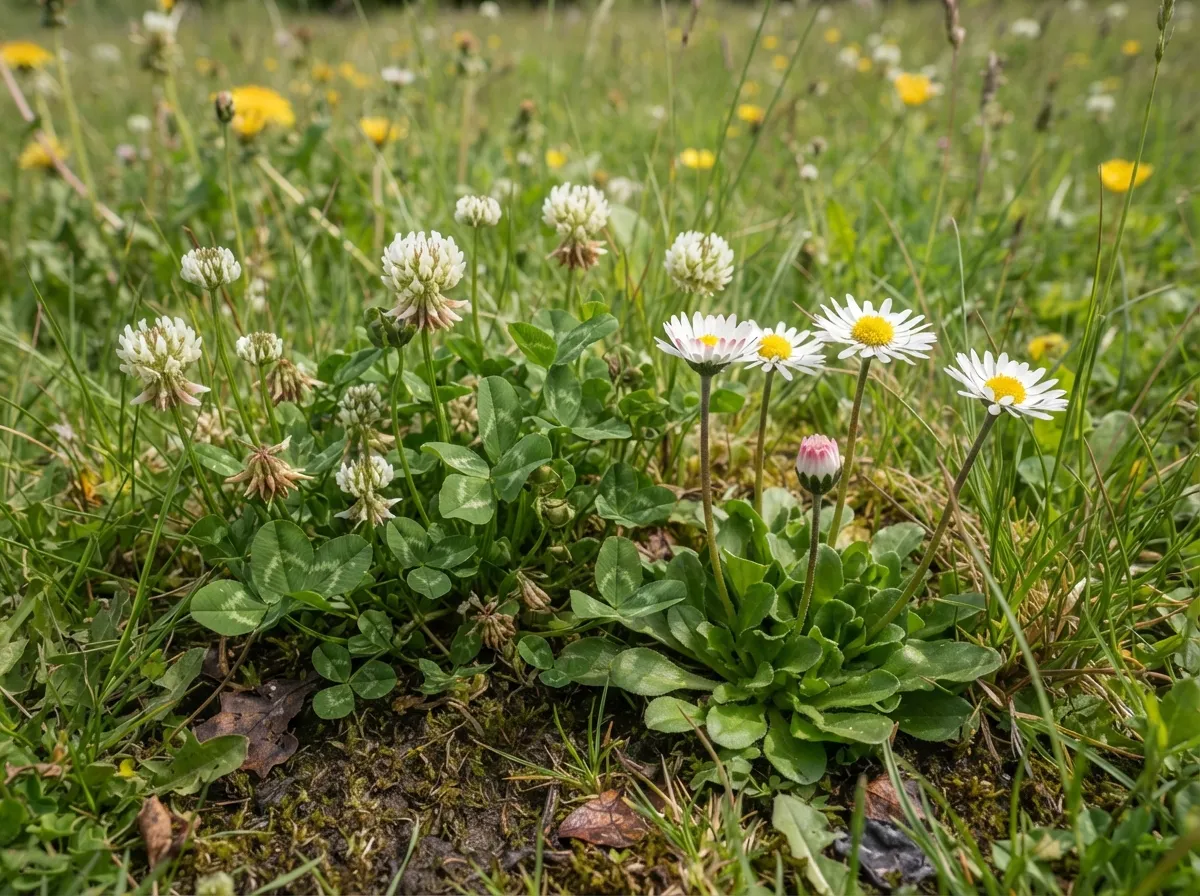
🔍 Identify it without mistakes
Two iconic and easy lawn plants. Clover (white or red) features the classic trifoliate leaf, each leaflet often marked with a pale crescent, and a globe-like white or pinkish-purple flower made of many small tubular florets. The daisy forms a tiny rosette of spatulate leaves flat on the ground, with a flower head showing a yellow center surrounded by fine white rays sometimes tinged with pink on the back.
- clover: 3 leaflets (rarely 4), often marked with a pale crescent
- clover: globe-shaped flower head made of numerous florets
- daisy: basal rosette of spatulate leaves, no leafy stem
- daisy: solitary flower head, yellow center, white rays
- both close or droop at night or during wet weather
⚠️ Not to be confused with
To tell them apart: wood sorrel leaflets are inverted heart-shaped and fold downward sharply in the evening, whereas clover leaflets are oval and entire
🍽️ Eating it
Preparation : raw clover flowers in salads or dried for tea; cooked young clover leaves (raw ones in large amounts can cause bloating and contain mild antinutritional compounds); whole raw daisy in salads, flower buds pickled as mock capers
💊 Healing with it
red clover traditionally used for mild menopausal complaints (isoflavones); daisy traditionally used as a wound healer and mild expectorant
Level of evidence : etudes-limitees regarding red clover isoflavones for hot flashes; tradition for the daisy — EMA/HMPC for Trifolium pratense; tradition for Bellis perennis (Commission E)
⚠️ red clover is not recommended in cases of hormone-dependent cancer or alongside blood thinners (estrogenic and mild antiplatelet effects); limit raw clover intake in livestock (bloat risk), no notable danger for humans at culinary doses
🪓 Other bushcraft uses
- clover: forage plant and nitrogen-fixing green manure — a good indicator of living soil
- daisy: indicator of regularly mown lawn
No entry replaces a certain identification in the field, or medical advice. When in doubt: don't eat it. If ingestion is suspected: poison control or 112/911.