🪨 Rock tripe
Umbilicaria spp. · Lichens (Umbilicariaceae)
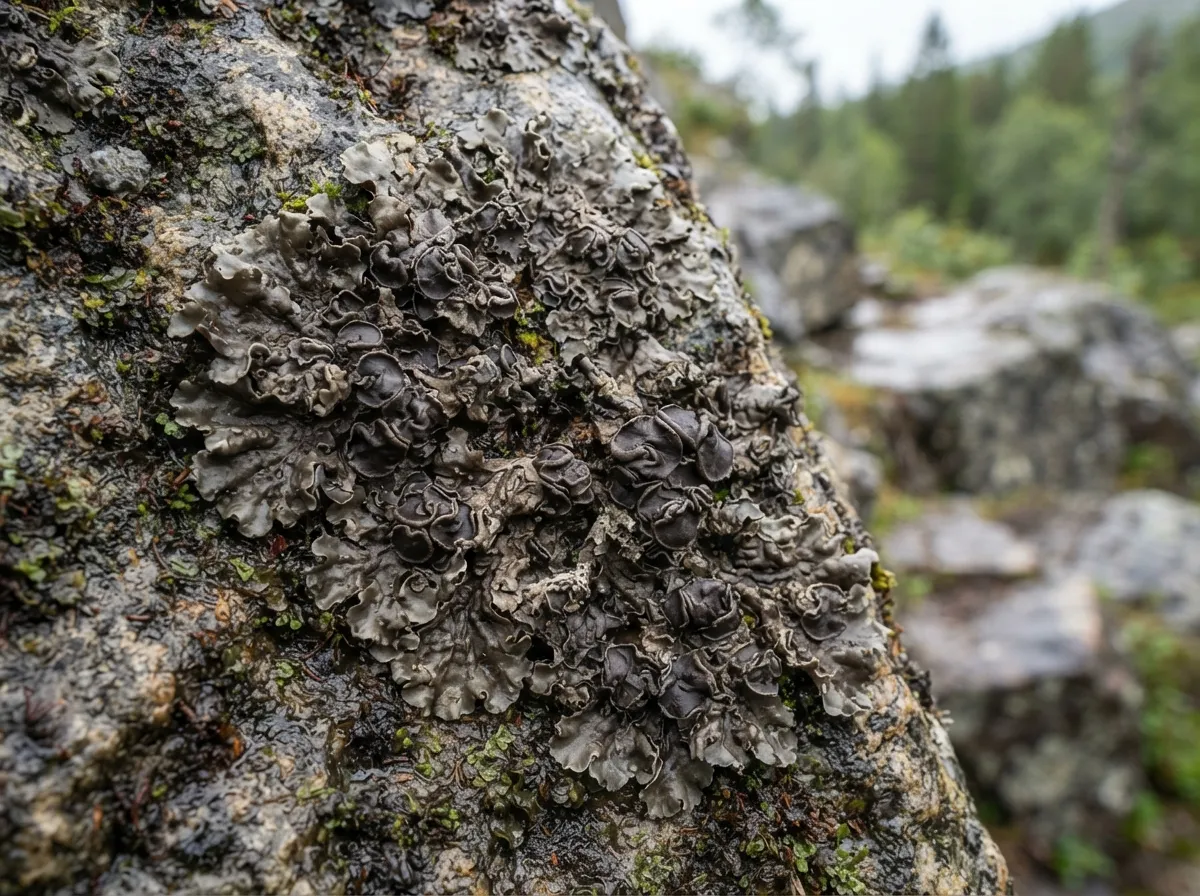
🔍 Identify it without mistakes
Foliose lichen (a symbiotic association between fungus and alga, not a plant) forming large, leathery circular lobes, gray to brown, attached to the rock by a single central point like a belly button (hence the name Umbilicaria). The underside is often blackish and rough. Grows directly on exposed rocks, especially granite, with extremely slow growth.
- circular foliose blade attached to the rock by a single central point
- rough, blackish underside
- leathery texture that becomes brittle when dry
- grows directly on bare rock, never on soil
⚠️ Not to be confused with
To tell them apart: the circular foliose blade attached to bare rock by a single central belly-button-like point, never on soil or wood, distinguishes this lichen from any dangerous species; soaking and prolonged boiling to eliminate gyrophoric acid remain mandatory
🍽️ Eating it
Preparation : famine food exclusively: prolonged soaking followed by several successive boilings, changing the water each time to eliminate the bitter and digestively irritating gyrophoric acid; the main carbohydrate (pustulan) is poorly digested by humans, so the actual nutritional value remains low despite the volume
🪓 Other bushcraft uses
- historically used in dyeing (certain Umbilicaria species yield purple or brown dyes)
No entry replaces a certain identification in the field, or medical advice. When in doubt: don't eat it. If ingestion is suspected: poison control or 112/911.