🍄 Horn of Plenty
Craterellus cornucopioides · Cantharellaceae
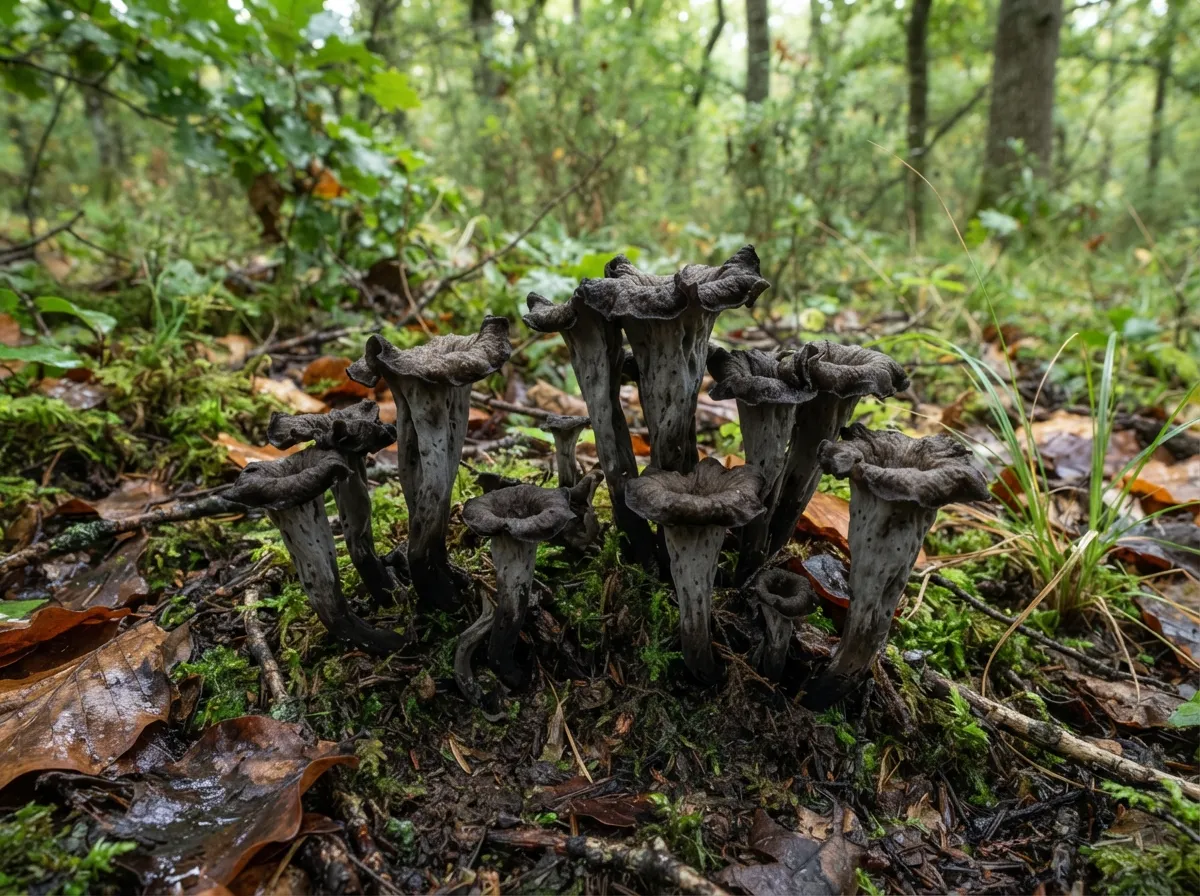
🔍 Identify it without mistakes
Despite its ominous French name ("trumpet of death"), it is an excellent edible with zero risk of deadly confusion: its black trumpet silhouette makes it one of the easiest mushrooms to identify with certainty in Europe. The name comes solely from its shape evoking a funeral horn, not from any toxicity.
- entirely shaped like a trumpet or flared horn, hollow from top to bottom, wavy margin
- exterior (fertile surface) smooth to slightly wrinkled, ash-grey to brown-black, NEVER true gills or pores
- interior (upper surface of the cap) brown-black to black, matte, felted
- no distinct stem, the "horn" extends all the way to the ground
- flesh thin, brittle, blackish
- spore print cream-white
⚠️ Not to be confused with
To tell them apart: its entirely black, smooth, and hollow trumpet silhouette, lacking gills or pores, makes it impossible to mistake for a dangerous species; confusion only exists with other close Craterellus species, all of which are equally edible
🍽️ Eating it
Preparation : always cooked; excellent dried (it gains flavor as it dries and can be ground into powder to season sauces and risottos); thoroughly clean the folds, which collect dirt and debris
Sources (2)
No entry replaces a certain identification in the field, or medical advice. When in doubt: don't eat it. If ingestion is suspected: poison control or 112/911.