🌼 Coltsfoot
Tussilago farfara · Asteraceae
🔍 Identify it without mistakes
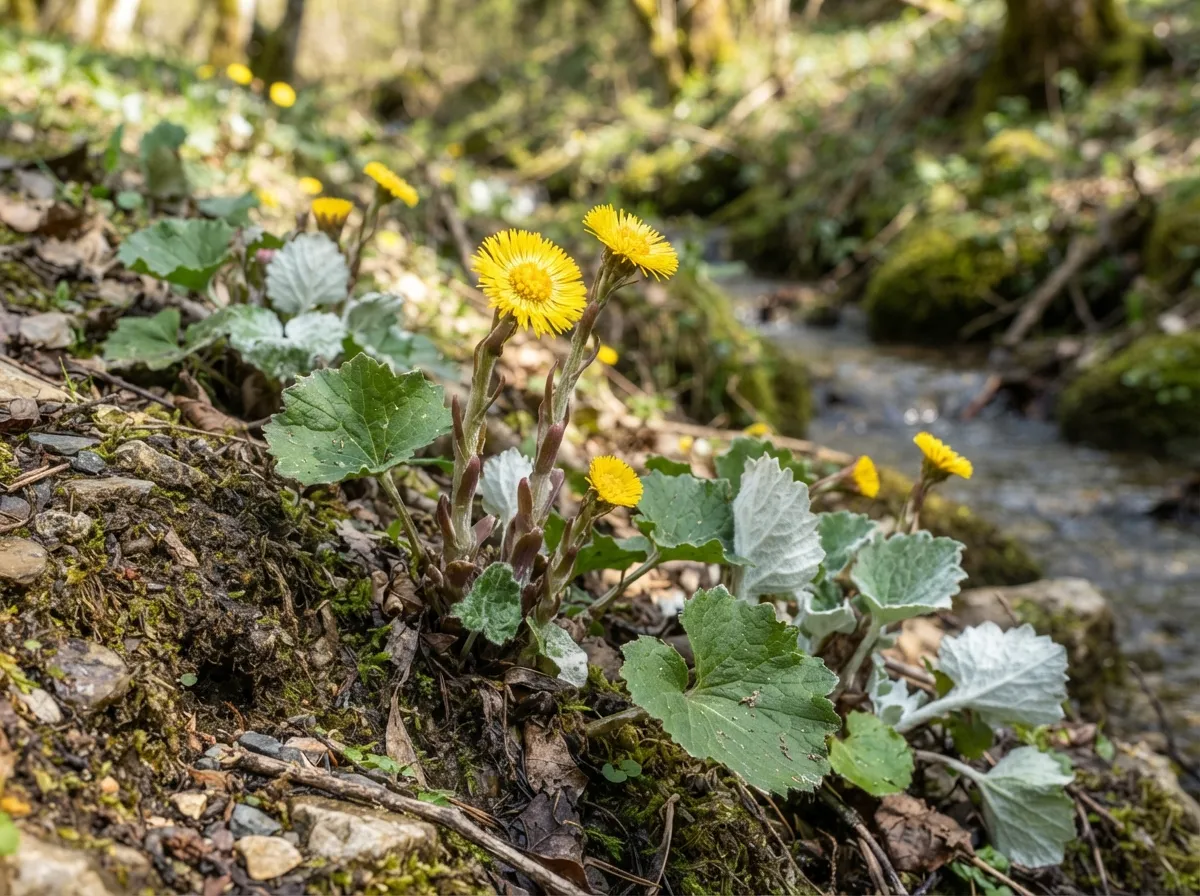
One of the very first spring flowers, emerging as early as February-March on bare soil or embankments, BEFORE its leaves: solitary yellow flower heads pop up alone from the ground on a scaly stalk. Only after flowering do the large leaves grow in the shape of a donkey's hoof (hence the name coltsfoot), green on top and white-woolly underneath.
- solitary yellow flower heads on a scaly stalk WITHOUT ANY VISIBLE LEAVES, in February-March
- heart-shaped leaves, shaped like a hoof or donkey footprint, appearing only AFTER flowering
- underside of leaves white and woolly, upper surface bright green, smooth
- preferentially colonizes bare, disturbed, clay, and chalky soils (embankments, scree, construction sites)
- flower heads close at night and in overcast weather, like dandelion
⚠️ Not to be confused with
To tell them apart: no other common plant in our regions blooms with solitary yellow flower heads completely devoid of visible leaves at the same time
To tell them apart: butterbur is a much larger plant in all its parts (leaves up to 1 m compared to a few cm for coltsfoot), pinkish-mauve flowers in a compact cluster rather than a single yellow head
💊 Healing with it
traditionally used since Antiquity as an expectorant and soothing agent for coughs (its very name, tussilago, comes from the Latin tussis, meaning 'cough')
Level of evidence : traditional use — Wikiphyto — Tussilage; clinical cases review of hepatotoxicity
⚠️ the plant contains hepatotoxic and potentially carcinogenic pyrrolizidine alkaloids (senecionine, senkirkine); prolonged use (more than one cumulative month per year) is discouraged, and internal use is prohibited during pregnancy, breastfeeding, and in children; a review of reported clinical cases notes that most poisonings attributed to coltsfoot actually resulted from confusion with other toxic plants — caution remains necessary with wild, uncultivated plants
🪓 Other bushcraft uses
- dried and rolled leaves were traditionally smoked in Europe as a tobacco substitute to treat coughs until the 19th century, before the risk of pyrrolizidine alkaloids was identified
No entry replaces a certain identification in the field, or medical advice. When in doubt: don't eat it. If ingestion is suspected: poison control or 112/911.