🌸 Valerian
Valeriana officinalis · Caprifoliaceae
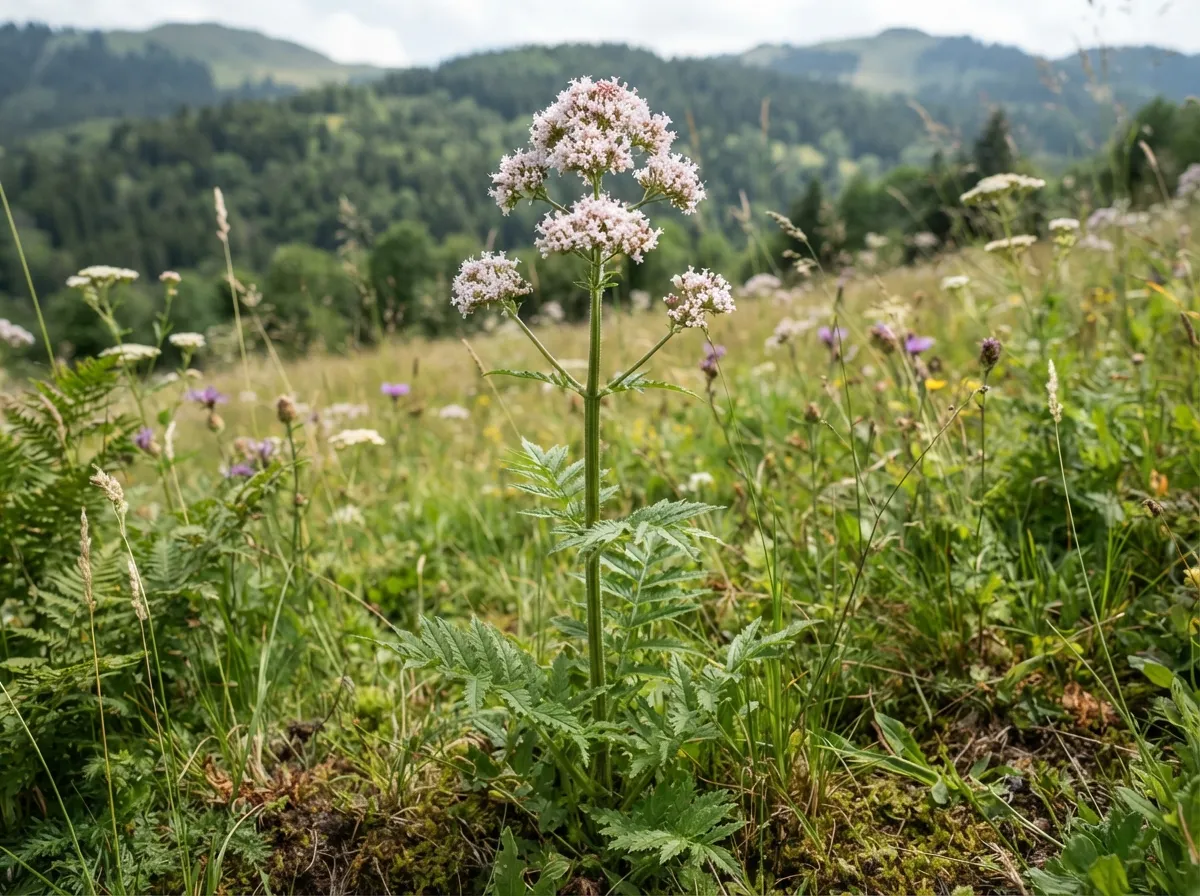
🔍 Identify it without mistakes
Tall plant of damp areas, with an erect, hollow, fluted stem, pinnately compound leaves with narrow toothed leaflets, crowned in summer by a dense corymb of tiny, highly fragrant pinkish-white flowers. It is the root, with its strong and peculiar smell (often described as "socks" or "old cheese"), that is used in sleep herbal medicine.
- erect, hollow, fluted stem, unbranched until the inflorescence
- opposite, pinnately compound leaves, 6-10 pairs of narrow toothed leaflets
- dense corymb of tiny pinkish-white flowers with 5 fused petals, highly fragrant, at the stem tips
- strong, distinctive dried root smell (often compared to an old sock), very different from the sweet floral scent
- grows in clumps in damp areas, meadows, and along riverbanks
💊 Healing with it
well-established medical use recognized by the EMA (HMPC monograph) for the relief of mild nervous tension and sleep disorders, using the dried root
Level of evidence : solid studies — EMA — monographie Valeriana officinalis L., radix
⚠️ can cause residual drowsiness the next day; avoid combining with alcohol or other sedatives; not recommended during pregnancy and breastfeeding due to lack of data
🪓 Other bushcraft uses
- cats are attracted to valerian root scent similarly to catnip, an effect linked to similar volatile compounds
No entry replaces a certain identification in the field, or medical advice. When in doubt: don't eat it. If ingestion is suspected: poison control or 112/911.