🌱 Common Vetch (Garden Vetch)
Vicia sativa · Fabaceae
🔍 Identify it without mistakes
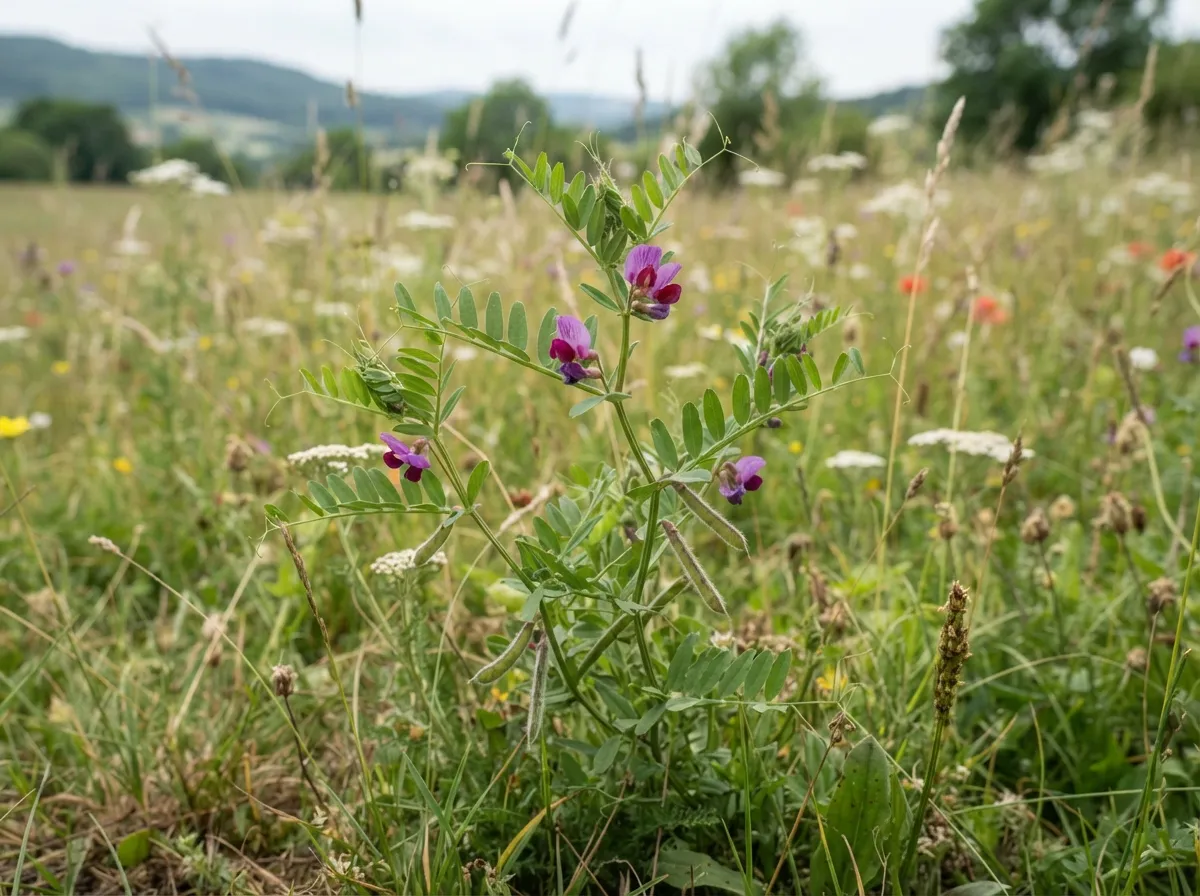
Small climbing legume found in meadows and wasteland, featuring an angular stem with pinnate leaves made of numerous leaflets ending in a tendril that clings to nearby plants. Pinkish-purple flowers, often solitary or in pairs in the leaf axils.
- pinnate leaves with 4-8 pairs of leaflets, ending in a branched tendril
- pinkish-purple flowers, solitary or in pairs in the leaf axils (not in upright clusters)
- slender, angular stem, climbing via its tendrils
- flat pods, hairy when young, containing 4-12 round seeds
- stipules at the base of the leaves marked with a characteristic dark spot
⚠️ Not to be confused with
To tell them apart: common vetch has leaves with numerous narrow leaflets ending in a branched tendril; meadow vetchling has leaves reduced to a single pair of broader leaflets, also ending in a tendril
🍽️ Eating it
Preparation : cook young green pods like peas; boil mature seeds thoroughly (like lentils) to reduce antinutritional compounds; cook young shoots as a leafy green vegetable
🪓 Other bushcraft uses
- cultivated as green manure and forage since antiquity for its ability to fix atmospheric nitrogen, like all Fabaceae, improving the fertility of poor soils
No entry replaces a certain identification in the field, or medical advice. When in doubt: don't eat it. If ingestion is suspected: poison control or 112/911.