🌸 Sweet Violet
Viola odorata · Violaceae
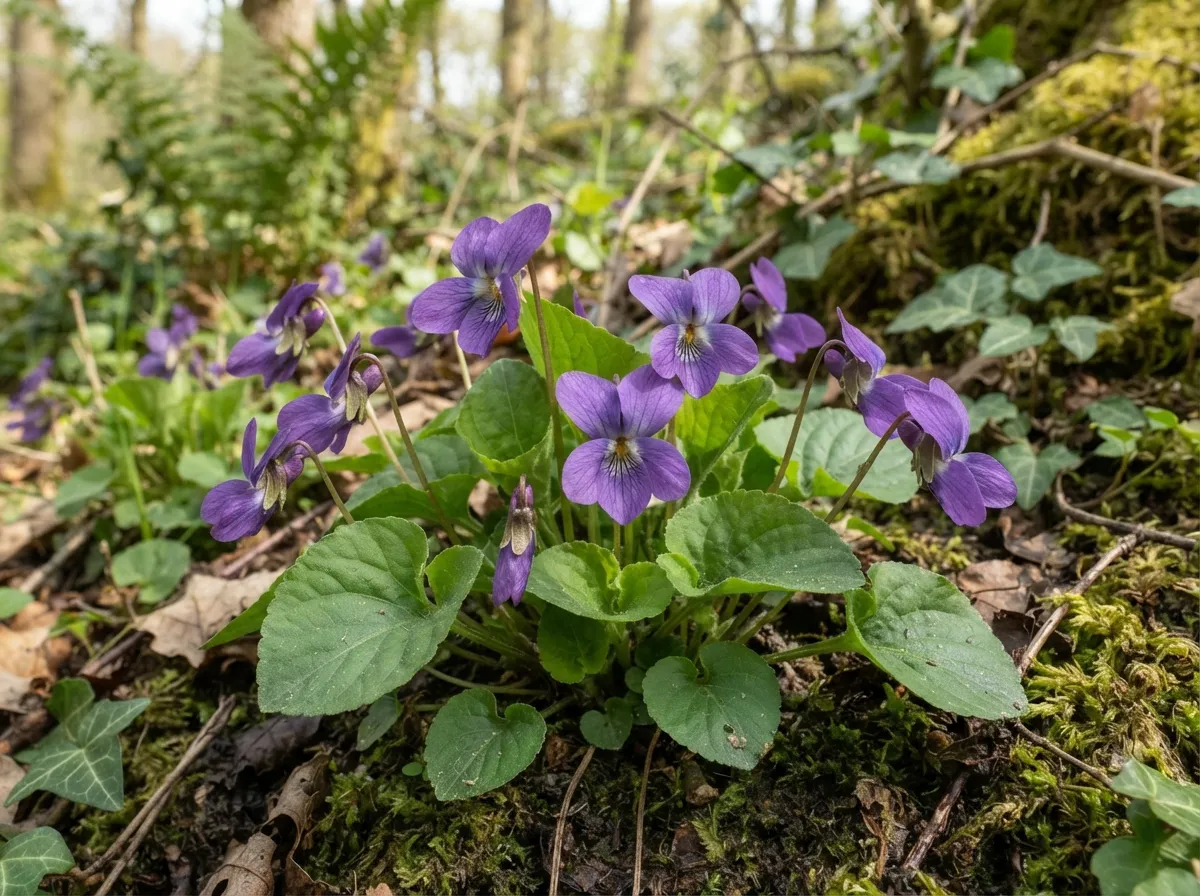
🔍 Identify it without mistakes
Small, low-growing plant with slightly toothed, heart-shaped leaves arranged in a basal rosette. In late winter to early spring, it produces highly fragrant flowers with 5 asymmetrical petals (the lower petal extended into a spur), usually deep violet but sometimes white.
- heart-shaped, toothed leaves in a basal rosette
- highly fragrant flower with 5 petals and a spur at the back
- creeping stolons forming dense colonies
- early flowering (as early as February-March)
- no upright aerial stem
⚠️ Not to be confused with
To tell them apart: flower without noticeable fragrance, lighter violaceous spur; no consequence as it is also edible
🍽️ Eating it
Preparation : raw flowers as a salad garnish, crystallized with sugar for pastries, or made into syrup; young leaves added in small amounts to salads or soups for their slightly mucilaginous texture
💊 Healing with it
traditionally used as a mild expectorant and emollient for coughs; roots have mild laxative properties (rarely used)
Level of evidence : traditional use — phytotherapy compilations (Fournier, Wikiphyto)
⚠️ no major known contraindications at culinary doses
🪓 Other bushcraft uses
- flowers used in perfumery since Antiquity (Grasse made it a specialty)
- natural violet-blue dye from the petals turns pink in an acidic environment (natural pH indicator)
No entry replaces a certain identification in the field, or medical advice. When in doubt: don't eat it. If ingestion is suspected: poison control or 112/911.