🔴 Guelder rose
Viburnum opulus · Adoxaceae
🔍 Identify it without mistakes
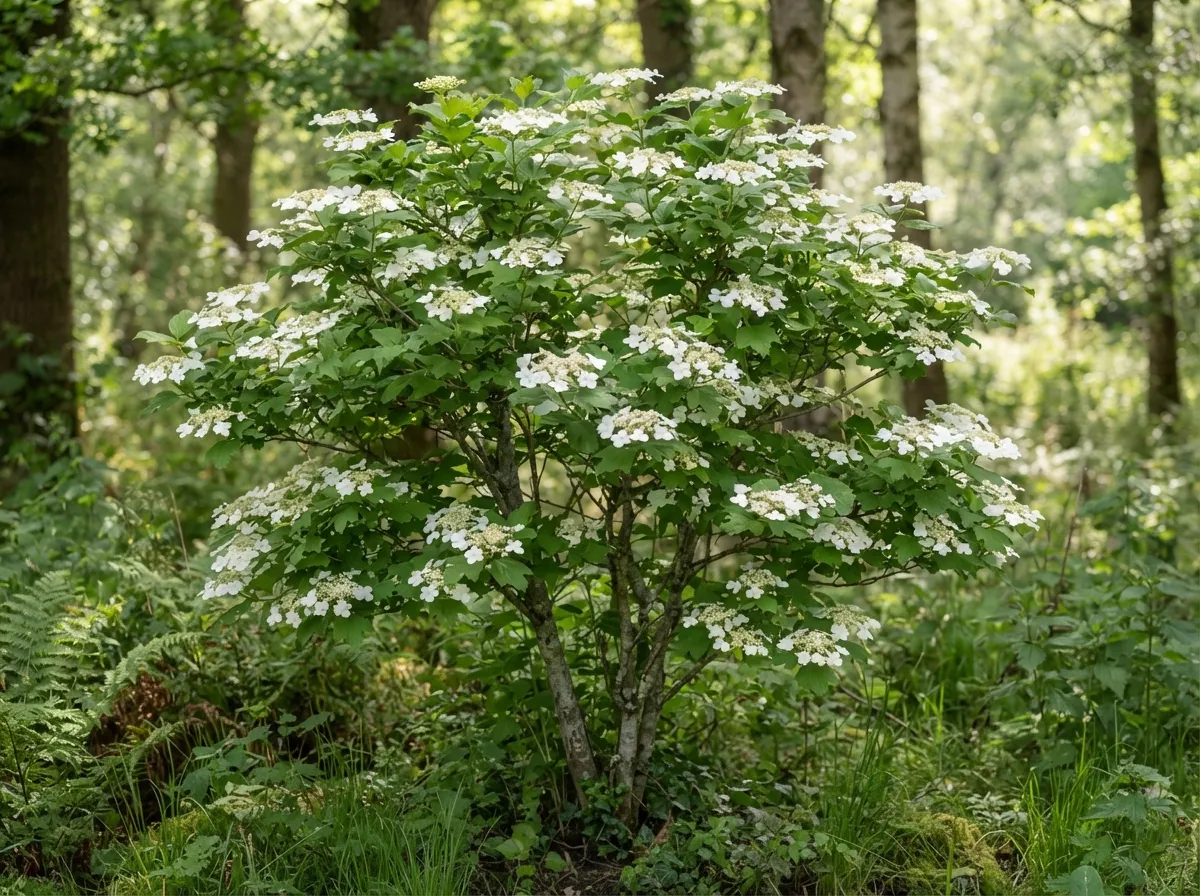
A shrub of damp hedgerows and woodland edges, easily recognized by its 3-lobed pointed leaves resembling maple leaves, and its clusters of translucent, bright red berries. Highly decorative, they often persist on the shrub all winter long — a clear sign that they aren't very appetizing when raw, even for birds.
- opposite leaves with 3 pointed, toothed lobes, resembling a maple leaf
- large, flat-topped flower clusters in spring, with showy white sterile flowers encircling small central fertile flowers
- translucent bright red berries in drooping clusters, often remaining on the shrub all winter
- smooth grey bark, twigs with white pith
- shrub of damp areas, hedgerows, and woodland edges
⚠️ Not to be confused with
To tell them apart: the leaf of the guelder rose has 3 maple-like lobes, whereas the redcurrant leaf is rounder with 5 less pronounced lobes; guelder rose berries are translucent and grow in loose, drooping clusters
🍽️ Eating it
Preparation : raw berries, especially unripe green ones, cause digestive upset in low doses (nausea, vomiting) and can lead to more serious issues (neurological and cardiac troubles) in high doses. Consume ONLY after prolonged cooking (jelly, jam), which destroys the irritating compounds and makes moderate consumption safe
🪓 Other bushcraft uses
- bark traditionally used in North America from the closely related species Viburnum prunifolium as a uterine antispasmodic ("cramp bark"); this usage is also documented in Europe for Viburnum opulus
Sources (2)
No entry replaces a certain identification in the field, or medical advice. When in doubt: don't eat it. If ingestion is suspected: poison control or 112/911.