🟤 Wakame
Undaria pinnatifida · Alariacées
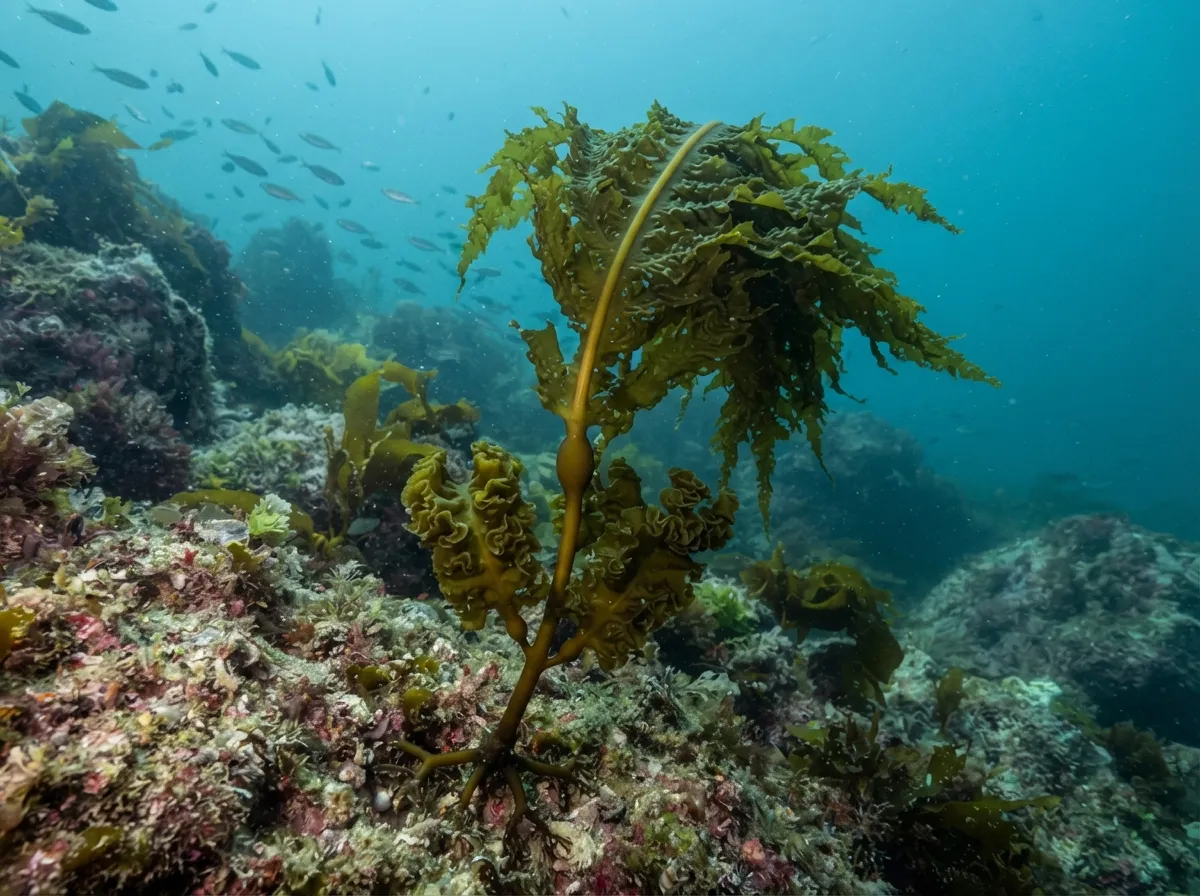
🔍 Identify it without mistakes
Brown seaweed native to the Northwest Pacific, accidentally introduced to France in the Thau Lagoon in 1971, then widely established on the Atlantic and Mediterranean coasts. Flat frond deeply divided into pinnate lobes along a thick midrib, with a characteristic and highly prized frilly sporophyll (mekabu) at the base.
- flat brown frond, deeply divided into pinnate lobes along a prominent midrib
- frilly sporophyll at the base of the stipe (the "mekabu"), unique among common brown seaweeds
- grows attached to rocks, docks, boat hulls, and harbor structures, often in dense, invasive stands
⚠️ Not to be confused with
To tell them apart: oarweed has an entire or digitate frond without a prominent midrib and without a frilly sporophyll at the base; wakame is recognized by its thick central rib and regular pinnate lobes on both sides
🍽️ Eating it
Preparation : eat rehydrated for a few minutes in lukewarm water after drying or salting, in salads (goma wakame), in miso soups, or stir-fried as a vegetable; the more gelatinous mekabu is finely chopped
💊 Healing with it
no established traditional medicinal uses in France; nutritional value as a mineral-rich sea vegetable
Level of evidence : traditional use — ANSES — Opinion on the risk of excessive iodine intake linked to seaweed consumption
⚠️ high iodine content like other brown seaweeds: limit intake if pregnant or suffering from thyroid disorders (ANSES advice); avoid harvesting near harbors and industrial zones (heavy metal accumulation); as an invasive species ranked among the world's 100 worst alien invasive species, harvesting it poses no ecological problem—quite the contrary
Sources (4)
No entry replaces a certain identification in the field, or medical advice. When in doubt: don't eat it. If ingestion is suspected: poison control or 112/911.