🌱 Wattleseed Acacia (elegant wattle)
Acacia victoriae · Fabaceae (Mimosoideae)
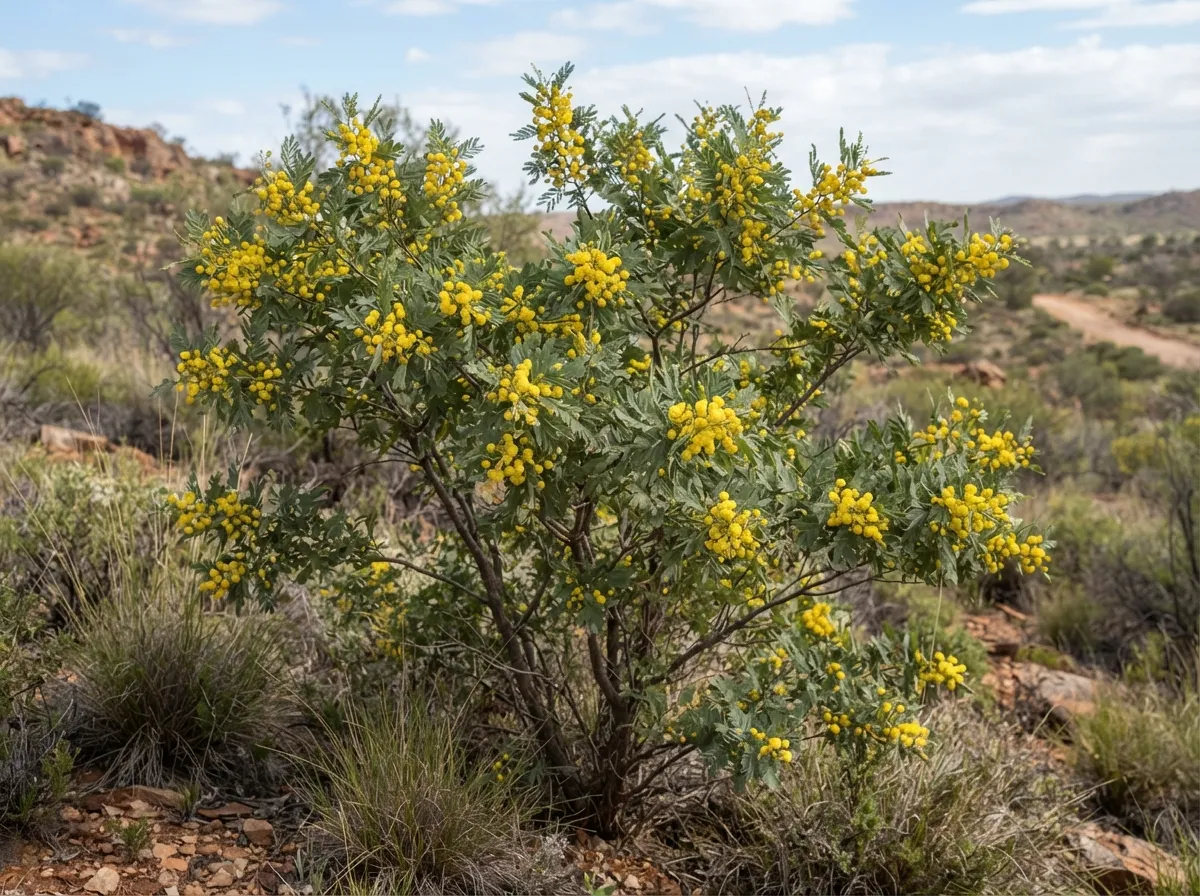
🔍 Identify it without mistakes
Prickly shrub 3 to 6 m tall, with branchlets bearing small spines around 1 cm long. Pale yellow, fragrant flowers form dense clusters of small balls along the branchlets from August to December, followed by flat, pale pods about 8 cm long containing small brown seeds. One of the few hundreds of Australian acacia species whose seeds are traditionally harvested for food.
- shrub with small 1 cm spines along the branchlets
- fragrant pale yellow flowers in dense balls, August-December
- pale flat pods about 8 cm long with brown seeds of 0,5 cm
- very extensive root system (up to 20 m) adapted to arid alkaline soils
⚠️ Not to be confused with
To tell them apart: Acacia georginae is a stockier, more gnarled tree with a characteristic fetid smell and narrowly elliptical phyllodes, growing along watercourses in the Georgina River basin (Northern Territory/Queensland) rather than on the broader alkaline plains where A. victoriae thrives
🍽️ Eating it
Preparation : pods gathered dry from the shrub, threshed by hand; seeds roasted then ground into flour (used in damper bread and pastries) or brewed like Aboriginal coffee; never eaten raw, as they are hard and hard to digest without roasting
💊 Healing with it
no major traditional medicinal use documented for this specific species
Level of evidence : traditional use — Wikipedia — Acacia victoriae
⚠️ harvest only with reliable botanical identification: several neighbouring Australian acacias are toxic or not documented as edible
🪓 Other bushcraft uses
- fodder for livestock during drought periods (foliage and seeds rich in protein)
- windbreak and soil stabilization in land rehabilitation programs
No entry replaces a certain identification in the field, or medical advice. When in doubt: don't eat it. If ingestion is suspected: poison control or 112/911.