🍑 Ximenia (African wild plum)
Ximenia americana · Olacacées
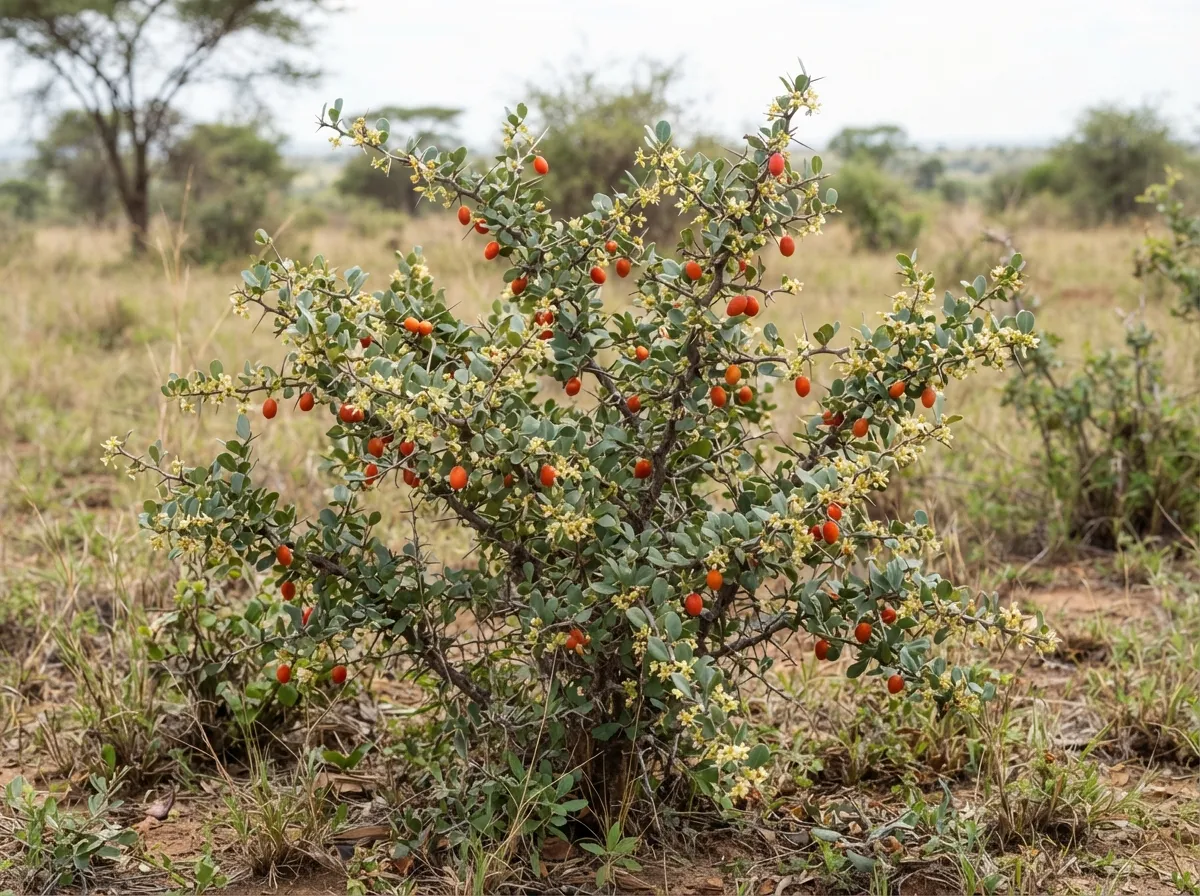
🔍 Identify it without mistakes
Spiny savanna shrub or small tree, with stems often zig-zagging and armed with straight spines, bearing a small oval fruit that turns yellow at maturity (sometimes orange-red once dropped on the ground), with flesh similar to a plum but with a seed containing a kernel you shouldn't chew in excess.
- spiny shrub or small tree, often zig-zagging branches
- simple, alternate, elliptical leaves, grey-green
- oval fruit, yellow when ripe (orange-red once fallen to the ground), single hard seed
- frequently found on savanna edges and degraded sandy soils
⚠️ Not to be confused with
To tell them apart: the risk is not confusion with another species, but with another part of the same plant: the yellow pulp is safe, but the seed and the kernel inside contain hydrocyanic acid and must never be chewed or consumed in quantity
🍽️ Eating it
Preparation : eat the fresh raw pulp once the fruit is bright yellow or has fallen to the ground, or press it into juice; never chew or swallow the seed, as its kernel contains hydrocyanic acid (industrially extracted kernel oil is made safe by the process and used for cosmetics, not direct food usage)
💊 Healing with it
bark and roots used in traditional African medicine for sore throats, wounds, and intestinal parasites; seed oil is used in traditional cosmetics for skin and hair
Level of evidence : traditional use — World Agroforestry Centre — Ximenia americana species profile
⚠️ never consume raw seed kernels in quantity (hydrocyanic acid); traditional uses are not standardized by modern clinical trials
🪓 Other bushcraft uses
- seed oil used in cosmetics (skin creams, hair care) in Angola and Southern Africa
- hardwood used for small tools and handles
Sources (2)
No entry replaces a certain identification in the field, or medical advice. When in doubt: don't eat it. If ingestion is suspected: poison control or 112/911.