🌵 Soapweed yucca
Yucca glauca · Asparagacées
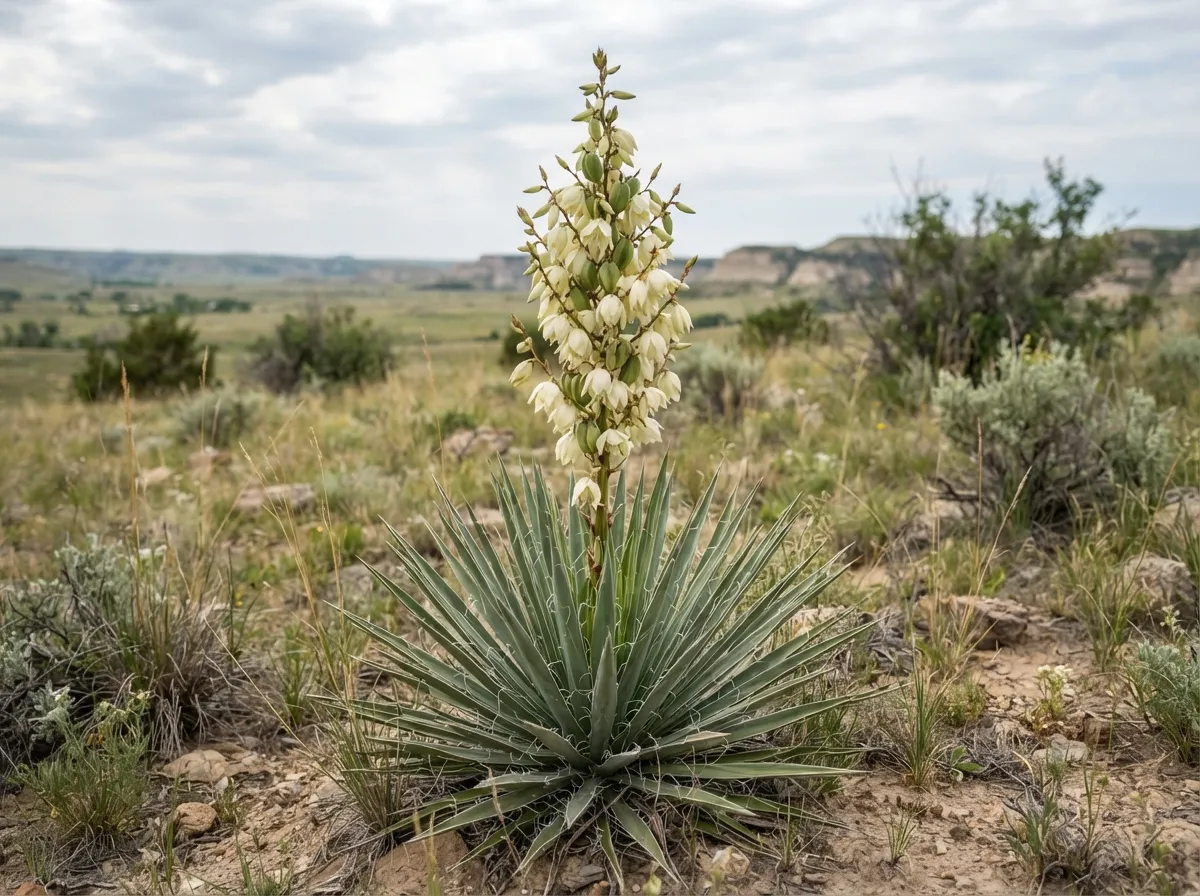
🔍 Identify it without mistakes
Plant with a rosette of rigid, narrow, blade-like leaves, bluish-green, ending in a hard, sharp point capable of piercing skin. Tall central flower stalk bearing a cluster of large, hanging, bell-shaped, creamy-white flowers, followed by capsules or fleshy fruits depending on the species.
- rosette of rigid blade-like leaves ending in a sharp point
- erect flower stalk with a cluster of white, bell-shaped flowers
- stringy fibers along the leaf margins in several species
- root rich in saponins, lathers abundantly when rubbed in water
⚠️ Not to be confused with
To tell them apart: the stringy fibers peeling off in loops along the leaf margins are unique to yucca and absent in agave, whose leaves feature hard marginal teeth instead; the root lathering when rubbed in water confirms identification
To tell them apart: the Joshua tree develops a true branched woody trunk that can reach up to 15 m, specific to the Mojave Desert, whereas soapweed yucca remains a low clump of leaves without a visible trunk, typical of the Great Plains and deserts further east
🍽️ Eating it
Preparation : the flower petals, bitter raw, should be blanched then sautéed or added in small amounts to salads; the young, unopened flower stalk is peeled and cooked like asparagus; the fleshy fruits of species that produce them can be roasted or dried
💊 Healing with it
crushed root traditionally used as a poultice on painful joints and inflammation (saponins with soapy and mild anti-inflammatory properties known empirically); traditionally used as a shampoo against dandruff and to stimulate hair growth
Level of evidence : traditional use — Native American Ethnobotany Database (Moerman, University of Michigan)
⚠️ root saponins irritate digestive mucous membranes in large quantities and are mildly toxic to fish (traditionally used as a fish poison by some nations) — keep the root for external use (soap, shampoo) rather than consumption
🪓 Other bushcraft uses
- crushed root beaten in water to produce a natural lathering soap, used for body, hair, and ritual washing by many Southwestern nations
- leaf fibers spun into cordage, sandals, baskets, and nets
- sharp leaf tips detached with their attached fibers to serve as a ready-to-use needle and thread
- pollination in exclusive symbiosis with the yucca moth (Tegeticula), a textbook example of obligate mutualism often cited in biology
Sources (3)
No entry replaces a certain identification in the field, or medical advice. When in doubt: don't eat it. If ingestion is suspected: poison control or 112/911.