🫒 Indian Jujube (Sahel Apple)
Ziziphus mauritiana · Rhamnaceae
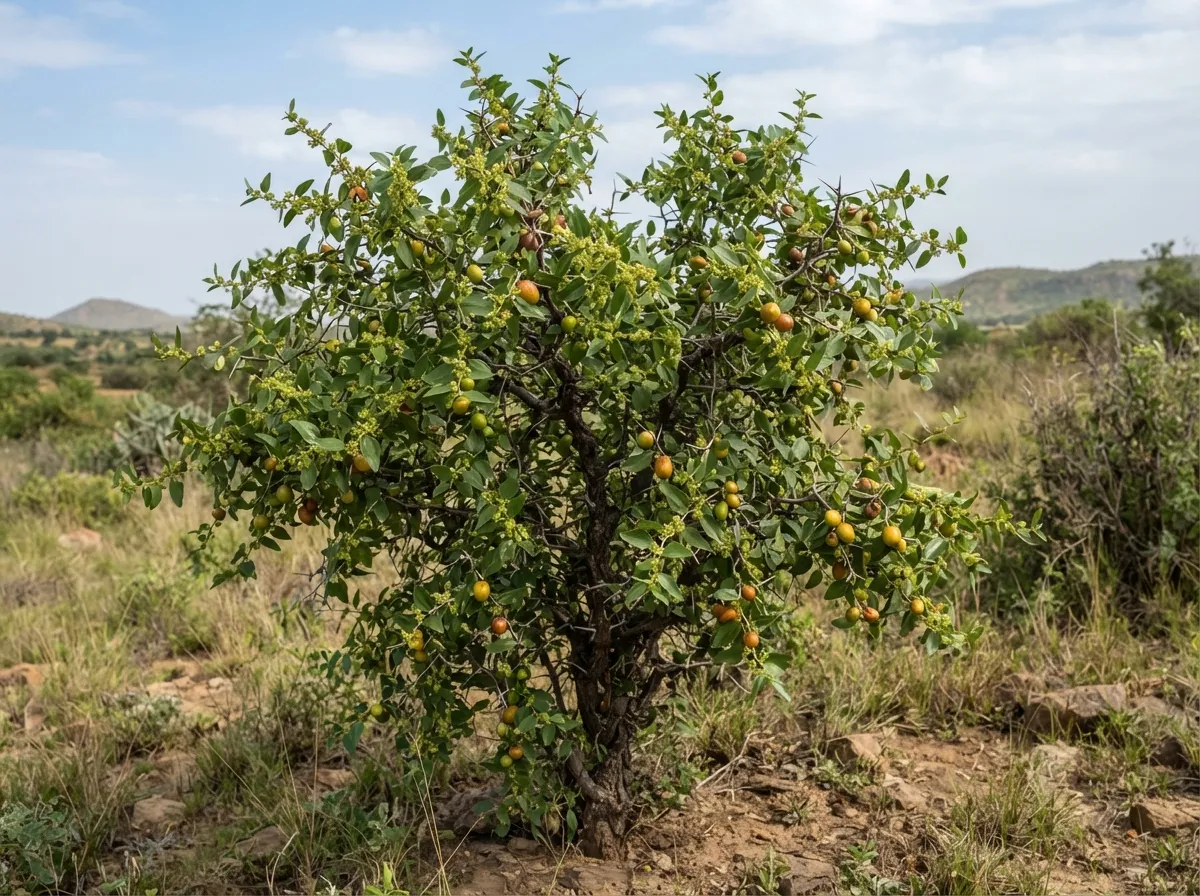
🔍 Identify it without mistakes
Spiny shrub or small tree with zigzagging branches, widespread from West Africa to India. It produces small, round to oval fruits, yellow-brown when ripe, with crunchy and sweet flesh similar to a miniature apple. It differs from Christ's thorn jujube, another dryland African Ziziphus, by its geographic range and thorn shape.
- spiny shrub with zigzag branches, paired thorns (one straight, one curved) at the base of each leaf
- simple, oval leaves with three distinct main veins starting from the base
- round to oval fruit, yellow-brown when ripe, crunchy and sweet flesh around a hard pit
- found from sea level to moderate altitudes, often forming natural thorny hedges
⚠️ Not to be confused with
To tell them apart: Ziziphus spina-christi is more typical of strict desert and Saharan areas, featuring longer, sturdier thorns and often smaller fruit. Ziziphus mauritiana, more common in Sahelian savannas and into Asia, has shorter paired thorns and generally larger, sweeter fruit. In practice, both are harvested and prepared the same way.
🍽️ Eating it
Preparation : Eat the fresh fruit raw once it turns yellow-brown and slightly soft, or dry it for storage. The dried fruit is sometimes ground into flour and mixed with millet or sorghum.
💊 Healing with it
Leaves and bark are used in Sahelian and South Asian traditional medicine for digestive disorders and wound healing.
Level of evidence : traditional use — Feedipedia — Indian jujube (Ziziphus mauritiana)
⚠️ no known toxicity from the fruit
🪓 Other bushcraft uses
- thorny living hedges protecting crops and livestock enclosures
- leaves used as fodder for livestock during the dry season
No entry replaces a certain identification in the field, or medical advice. When in doubt: don't eat it. If ingestion is suspected: poison control or 112/911.