Desert: water, shade, and keeping still during the day
It isn't 45 °C because there's no shade: it's 45 °C, and on top of that, there's no shade. The difference is paid in liters.
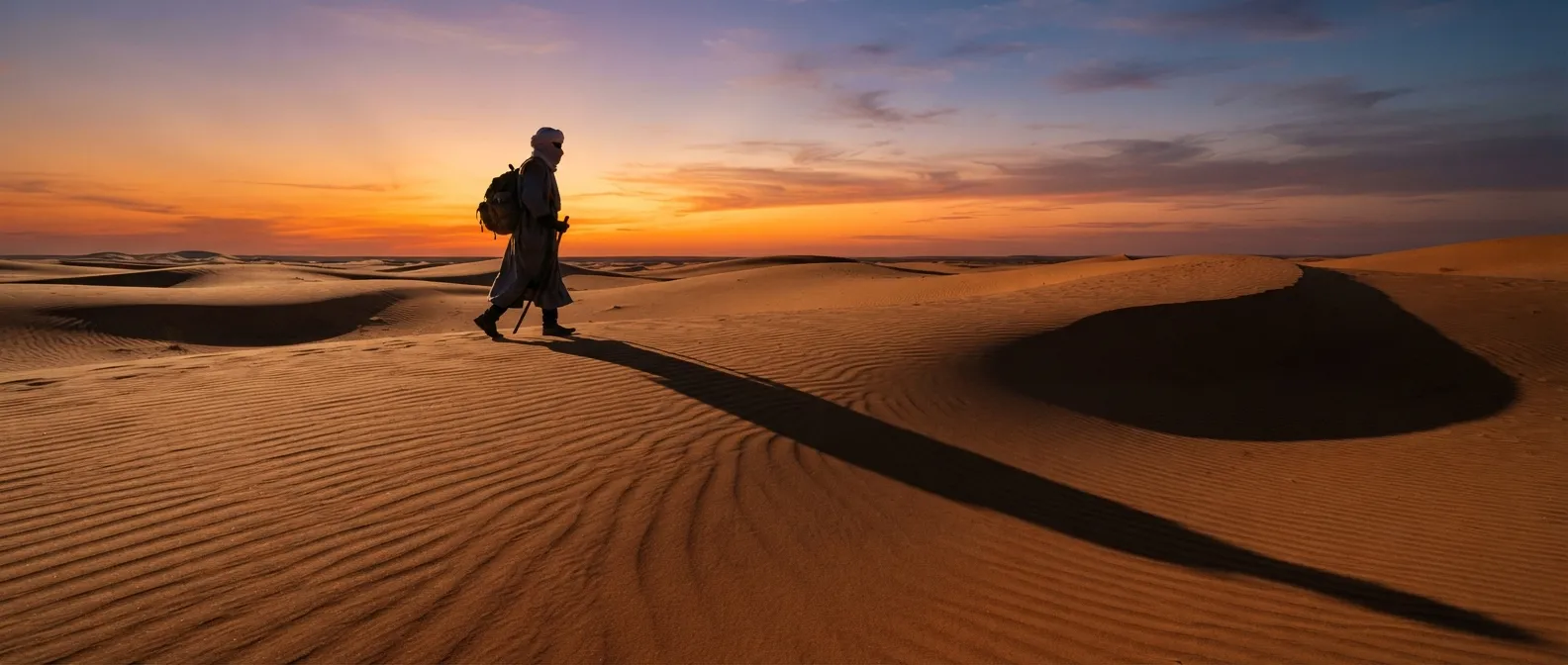
Noon, a dirt track shimmering under the heat, and your shadow shrunk to a spot right beneath your feet. You still have water in your canteen — maybe half full — and you tell yourself you’ll save it for later, just in case. That is the exact line of thinking that has left people dead with full water bottles. In the desert, it isn’t your canteen that determines how long you last: it’s what you do between noon and 4 p.m.
What actually kills in the desert
Nobody dies of “thirst” the way people imagine — a dry throat gradually worsening until you stop. What kills acts much faster and often disguises itself as something else.
Dehydration progresses through measured stages documented by the US Army (FM 21-76): a 5% loss of body weight in water causes thirst, irritability, nausea, and weakness; at 10%, dizziness, severe headaches, inability to walk straight, and tingling sensations; at 15%, blurred vision, a swollen tongue, numbness — and the threshold where the body cannot recover on its own starts long before that last number.
Heat stroke is faster and far more insidious: guidelines from the Wilderness Medical Society distinguish classic heat stroke, caused by mere exposure, from exertional heat stroke, triggered by physical effort. The critical threshold is an internal core temperature above 40 °C combined with confusion, seizures, or coma — and its mortality rate approaches 10%, jumping to 33% if accompanied by a drop in blood pressure. The warning sign that should alarm you even more than a thermometer reading: a person who stops sweating in blistering heat is no longer cooling down, they are baking.
Then there is the paradox that catches everyone off guard: the desert is cold at night. Sand, made of silicates, retains heat very poorly; without clouds or humidity to trap radiation, every single grain cools down rapidly the moment the sun drops. In the Sahara, an average day at 38 °C can plummet to −4 °C overnight — a swing of more than 40 °C in twelve hours. An exhausted, sweat-soaked person with no cover faces night-time hypothermia just as real as daytime heat stroke.
Finally, the least anticipated threat: flash floods in wadis. A dry riverbed left untouched for months can fill in a matter of minutes if a thunderstorm breaks dozens of kilometers upstream, without a single cloud visible above you. The hard-packed desert ground barely absorbs water, and the wall of water sweeps along rocks, branches, and debris with a force you would never suspect in an apparently dead gulch.
Your water budget: ration your sweat, not your water
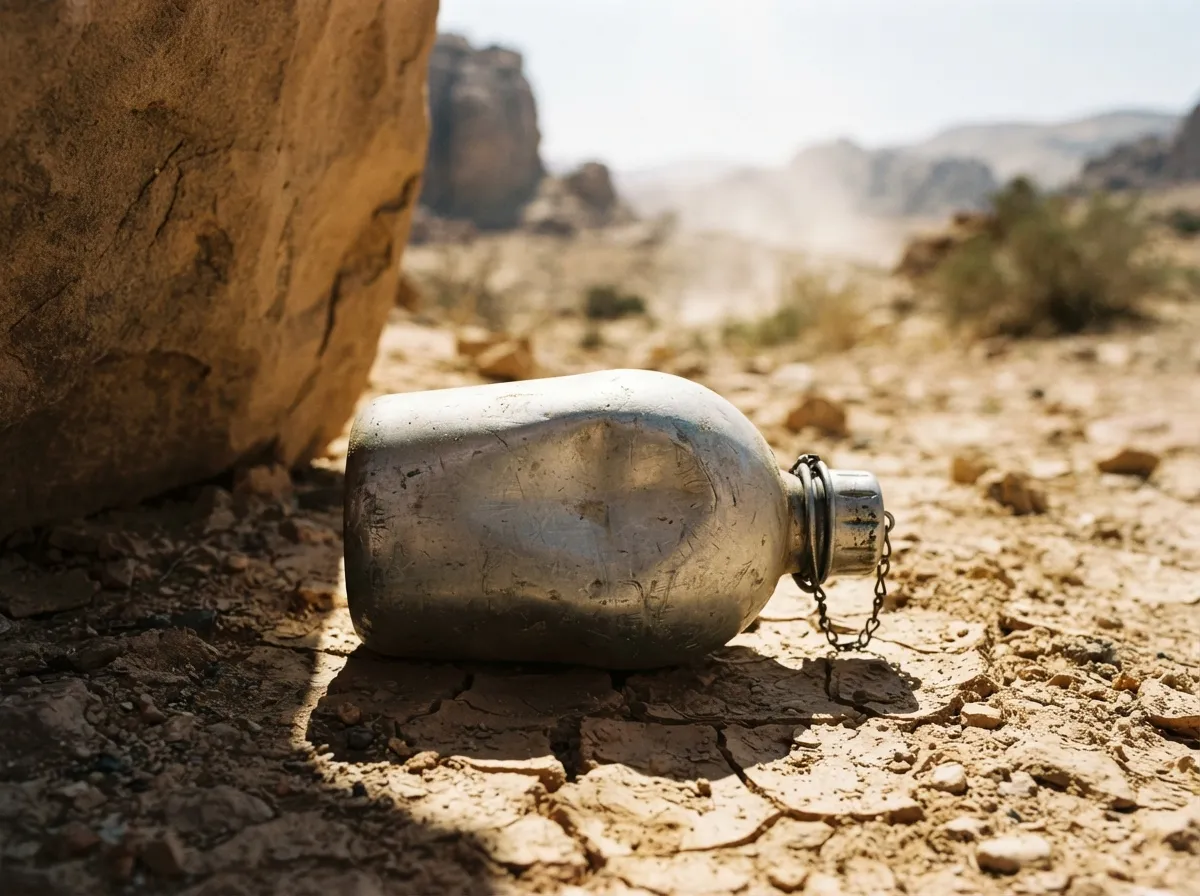
Walking in direct sunlight, you can lose 1 liter of sweat per hour as soon as the temperature crosses 32-33 °C, and up to 3-4 L/h at peak intense exertion in extreme heat. A military study tracking 91 men engaged in various desert activities measured an average loss of 4.1 liters per 24 hours, with individual rates ranging from 1 to 11 liters depending on intensity. FM 21-76 calculates that hard physical labor at 43 °C requires roughly 19 liters of water per day to stay balanced — a volume no canteen can carry.
Hence the rule hammered home by desert survival instructors, from the SAS to Australian expert Bob Cooper: “ration your sweat, not your water.” Your body needs a set volume of liquid to operate; withholding that volume doesn’t lower the requirement, it simply accelerates the moment severe distress hits — making it much worse. Hikers have been found dead from dehydration with water still left in their bottles because they were saving it “just in case.”
Rationing your sweat concretely means:
- Seek shade above all else: shade alone can cut your water requirement in half; it’s your most powerful lever.
- Stay covered, never strip down: sweat trapped against your skin under lightweight fabric continues to cool you through evaporation, whereas on bare skin in harsh sunlight it evaporates before cooling you, leaving bare skin to bake directly.
- Breathe through your nose with your mouth shut: exhaling through your mouth discards massive amounts of water vapor. Sucking on a smooth pebble, an old desert hand trick, keeps saliva flowing and prevents you from opening your mouth out of habit.
- Avoid tea, coffee, and alcohol: they are diuretics and make you lose more water through urine than they supply.
- Do not eat unless water is available: digesting food consumes water; an empty stomach conserves it.
Move at night, vanish during the day
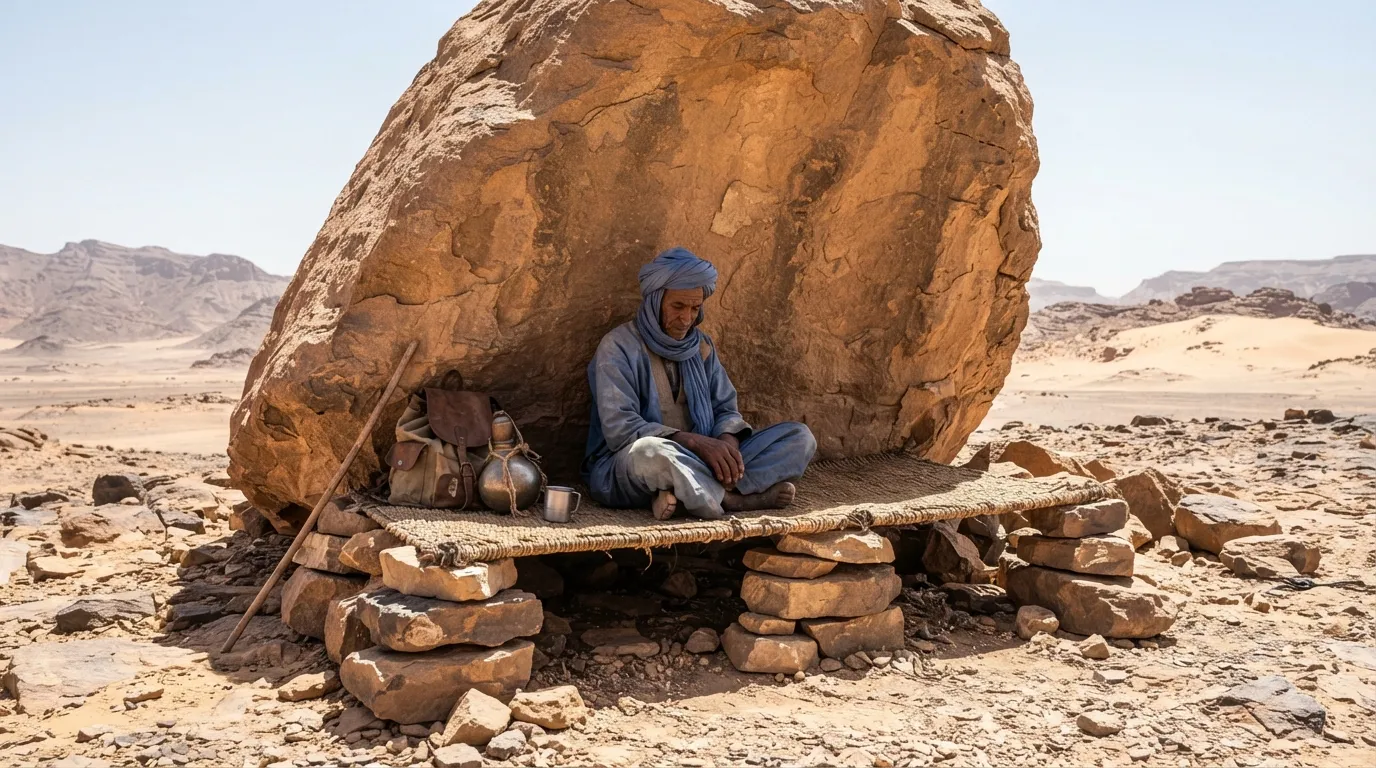
Desert ground gets 16 to 22 °C hotter than the surrounding air, and surface temperatures can spike past 70 °C. Lying flat on the sand in the middle of the day means cooking from below as well as from above. The golden rule: sleep and rest in the shade, raised about 30 cm off the ground — on a backpack, branches, or a sleeping pad propped on rocks — never directly on the scorching earth.
- At dawn, before the sun starts baking, set up or locate your shade for the day: a rock overhang, a depression, or a pitched tarp.
- From 10 a.m. to roughly 5 p.m., do not move. Stay fully covered, breathe through your nose, and sip water regularly in small amounts rather than gulping large quantities — your body absorbs it better and wastes less in urine.
- In the late afternoon, as temperatures fall, resume walking or any task requiring physical effort.
- At night, keep moving if visibility and terrain allow — under moonlight, stars, or on clear tracks — or rest well-covered against night cold that can drop below 0 °C.
Death Valley National Park, one of the hottest places on Earth, gives summer visitors the exact same directive: keep all outdoor activity to the early morning hours and be back indoors or under cover before 10 a.m.
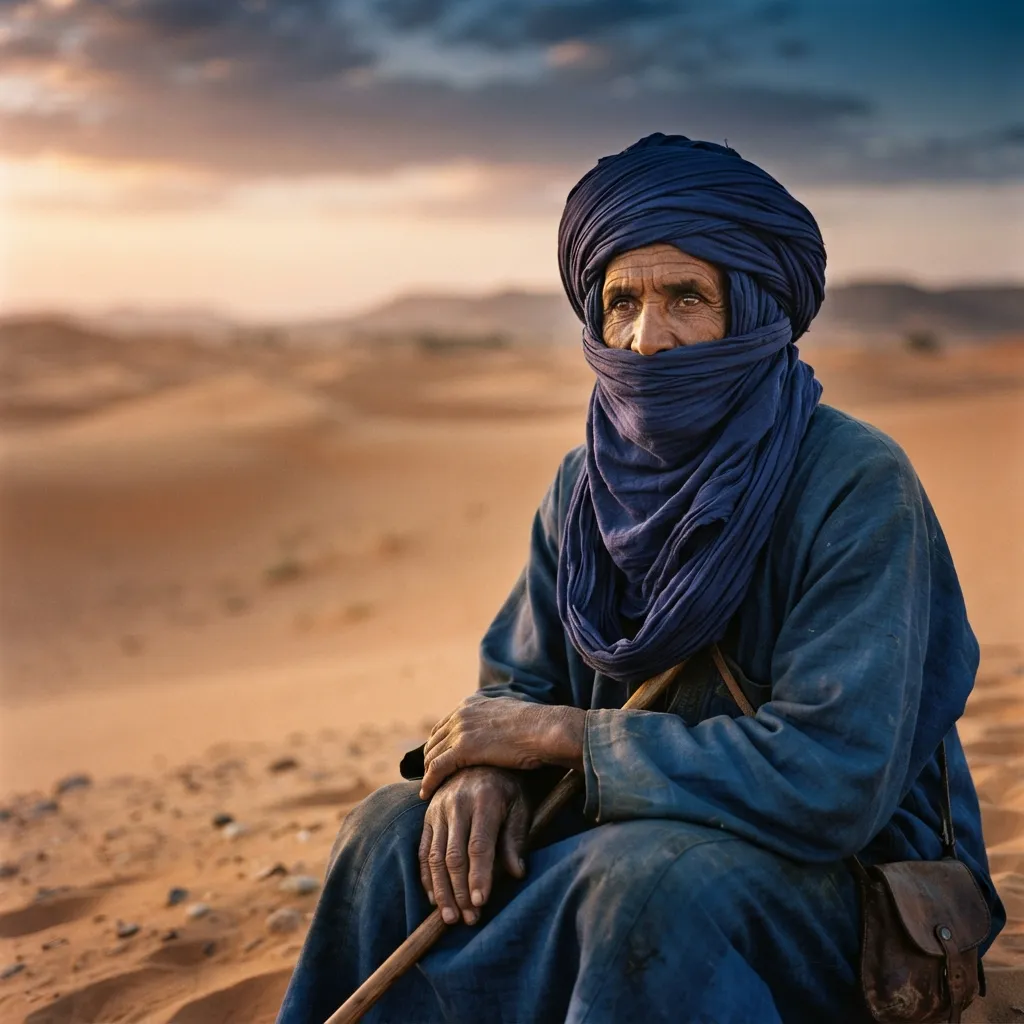
Keep your clothing on and fully covering you: lightweight long sleeves, loose trousers, and a scarf or turban to shield your head, neck, and face. The Tuareg tagelmust, a 4 to 10-meter strip of indigo-dyed cotton wrapped as a head-veil, blocks the sun, filters wind-blown sand, and regulates body temperature — to the point of keeping you warm at night using the same layers that insulated you from heat during the day.
Finding water: real leads vs. dangerous myths
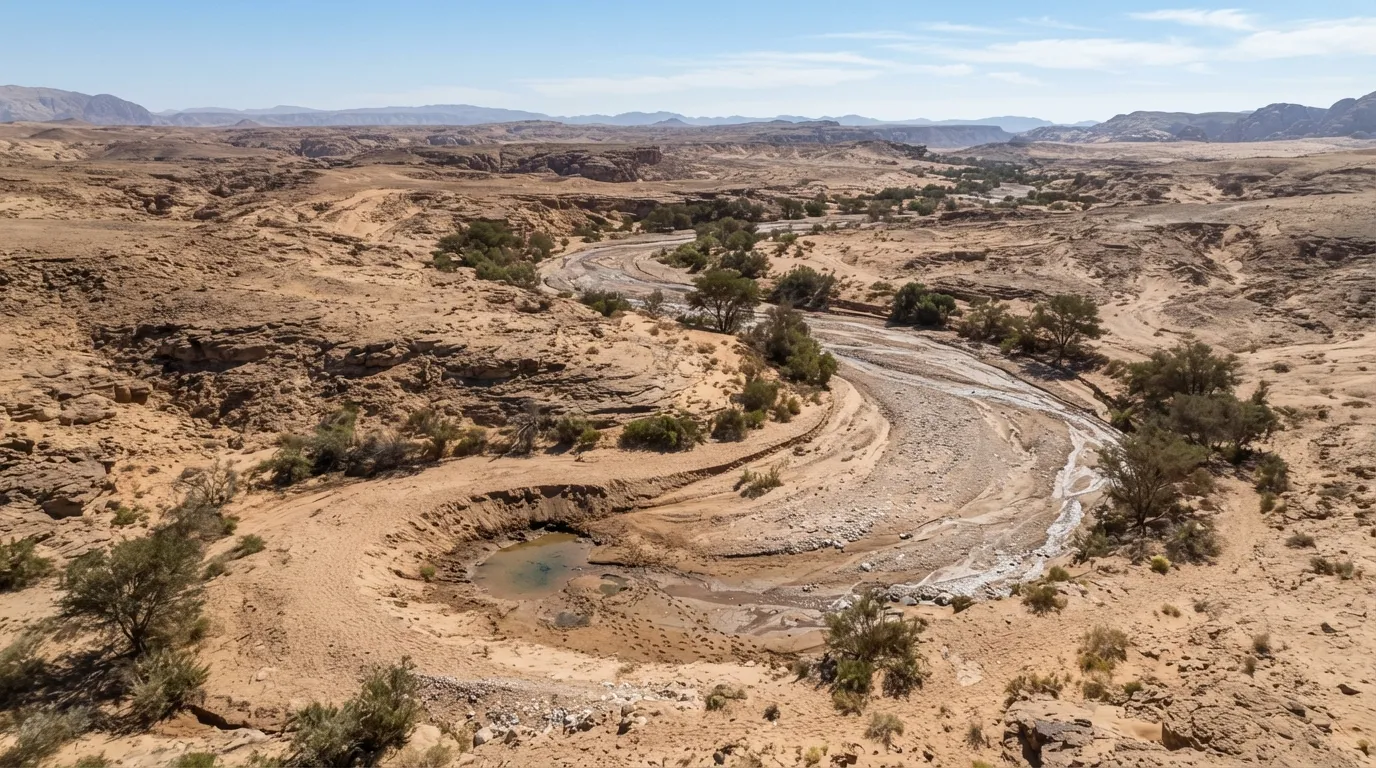
A dry wadi isn’t dead: the water that carved it can still be flowing under the sand. The technique that works, backed by expedition guides (Woodland Ways): dig at the outside bend of a sharp curve — that is where the flow slowed down the most, leaving behind the dampest sediment. Be prepared to dig down a meter or two; cover your hole to keep wildlife from fouling it, and let it settle for a few hours.
Other clues, ranked from most reliable to anecdotal:
- Dense, green vegetation, especially date palms: their roots rely on a water table within 9 meters of the surface. A palm grove almost always marks an accessible water source — the foundation of every oasis.
- Converging animal tracks: multiple game trails joining together like spokes on a wheel almost always point toward a water hole where they narrow down.
- Birds at dusk: seed-eating birds (pigeons, doves) stay close to water and fly low toward it at sunrise and sunset. Birds of prey and insect-eaters, however, give no reliable clues.
- Insects: bees rarely range more than 5 to 8 km from water; a steady, repeated flight path is worth following.
- Morning dew, gathered off rocks, metal, or any smooth object left out overnight: wipe it up with a cloth before the sun burns it off — it’s a modest amount, but it’s free water.
Wildlife: what stings, what bites, and what is harmless
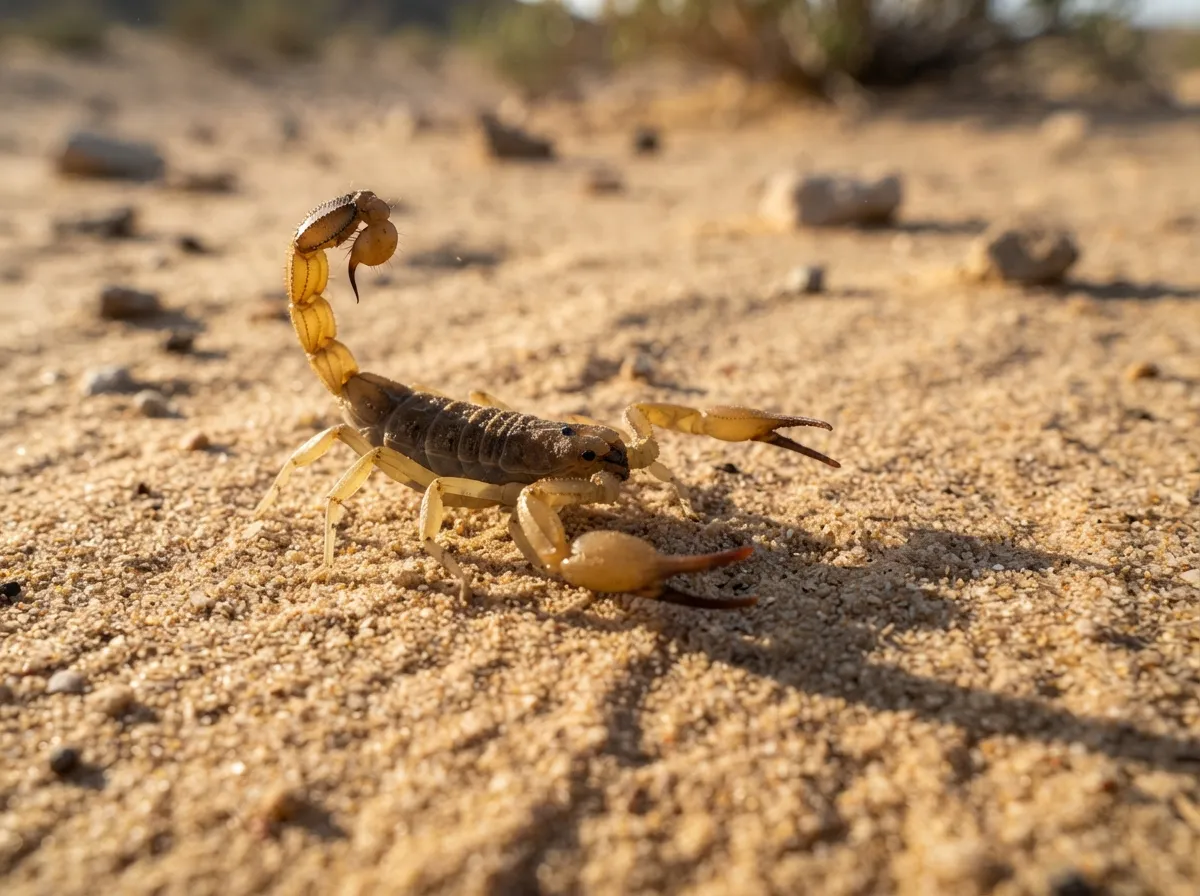
Scorpions hunt for cool, dark spots during the heat of the day — making the inside of a shoe left on the ground a prime home. The habit that prevents almost all stings: shake out your boots, clothing, and gear every single morning before putting them on, without exception. An ultraviolet flashlight lights up their exoskeleton, glowing bright green or blue in the dark — a fast way to sweep your campsite before sleeping.
Snakes to watch for vary by region: the sidewinder (Crotalus cerastes) in North America, recognizable by its distinct sideways crawling motion, and the horned viper (Cerastes cerastes) across the Sahara and Middle East, which buries itself in sand leaving only its eyes and small horns exposed. Both actively submerge themselves: never blindly thrust your hand into sand, and shake out your footwear.
Navigation: stars, dunes, and mirages
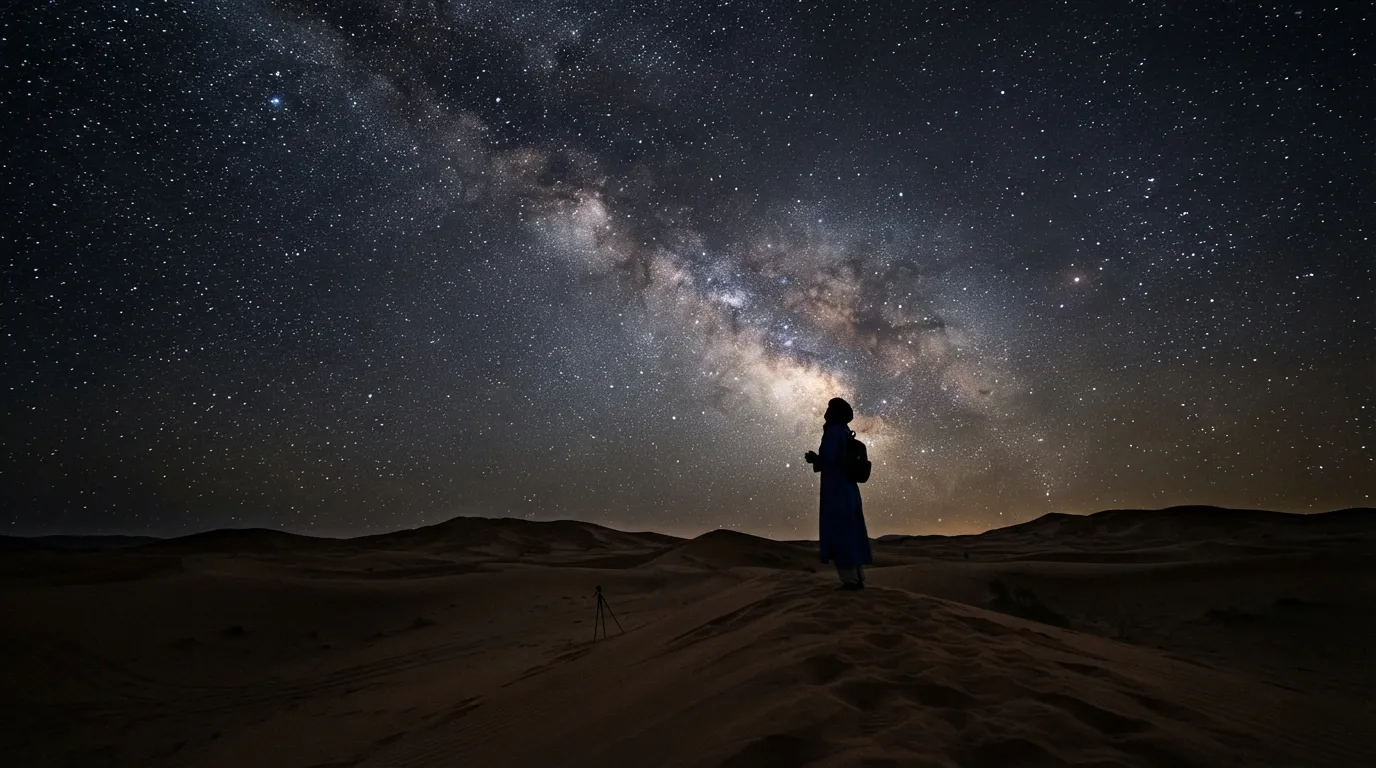
Without landmarks on the ground, the night sky is your most reliable compass. In the Northern Hemisphere, the Big Dipper points straight to Polaris (the North Star), which stays fixed all night; in the Southern Hemisphere, the Southern Cross highlights the southern celestial pole by following its long axis. Bedouins historically used these points to hold a steady bearing at night across featureless dune seas.
The dunes themselves tell you how the wind blows: longitudinal dunes stretch out parallel to the prevailing wind, while transverse dunes form perpendicular to it. Once you know the dominant wind direction of a region, the overall alignment of the dunes acts as a rough directional map when no other markers exist.
Vehicle breakdown: stay put or walk out?
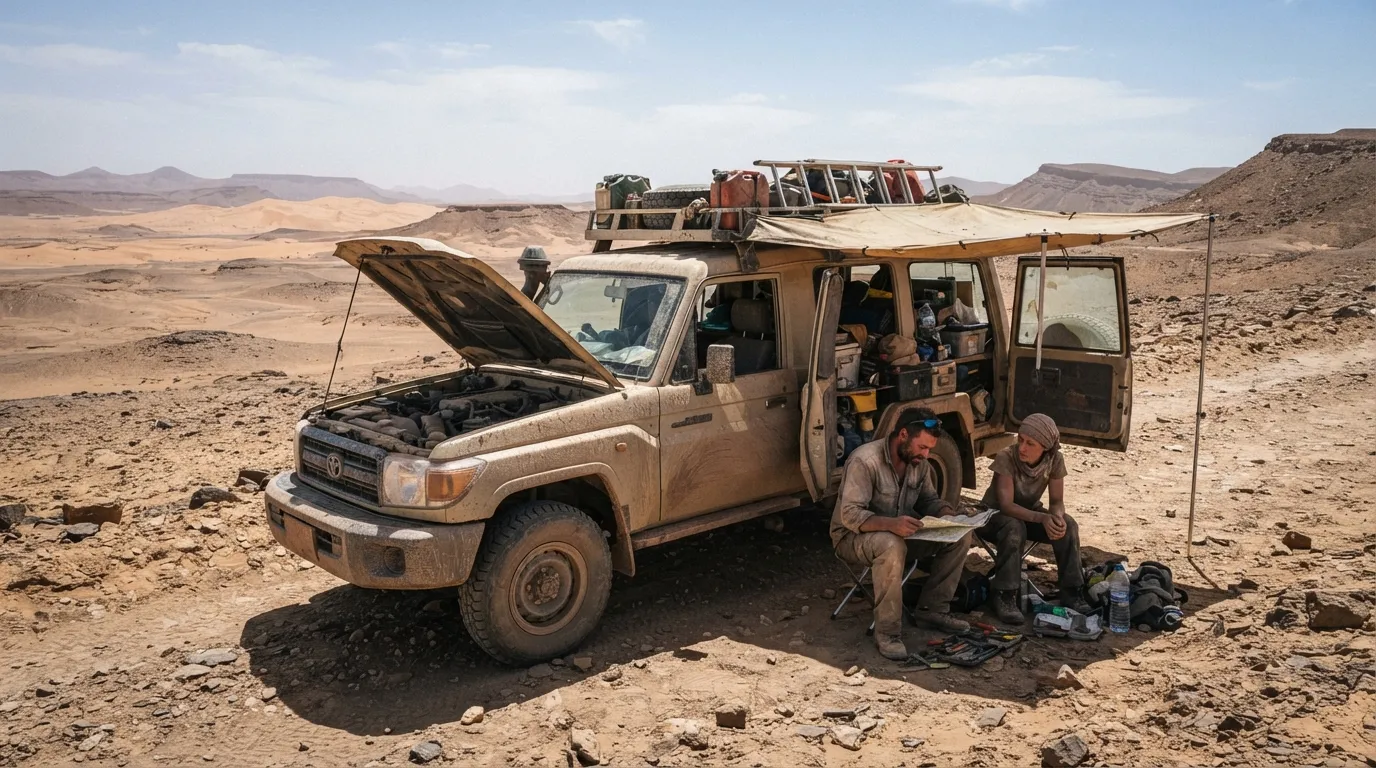
The rule featured in every desert survival manual, from FM 21-76 to US Park Ranger guides: stay with your vehicle. It is vastly easier to spot from the air or from a distance — chrome, glass, mirrors, tire tracks — than a single person walking alone, and it packs vital immediate resources: shade, a horn, headlights, floor mats, and motor oil to burn for thick black smoke. Popping the hood and trunk signals obvious distress to any pilot or ranger scanning the area.
Do not strike out on foot unless you are 100% certain of your destination and the exact distance; otherwise, every step in the wrong direction pulls you away from search parties, who will always focus on the vehicle’s last known track first. If you must leave, leave a clear note giving your date, departure time, and intended route.
Signaling: a mirror that flashes 80 km away
A signal mirror is, by far, the most effective tool to get spotted by an aircraft or search crew in open terrain: over flat ground under a clear sky, a quality mirror flash carries 15 to 20 km, and up to 50-80 km if signaled from high ground — with wartime rescue cases documented over 100 km away. It is frequently the first signal a pilot picks up, long before seeing a human silhouette or a bright tent — the sharp flash cuts through heat haze far better than any color.
- Spot the plane, helicopter, or search target with your eyes.
- Form a V-shape with the fingers of your free hand and extend it toward the target, looking through the gap.
- Tilt the mirror so the reflected bright spot of sunlight shines right onto your fingers in that V — that reflected beam is what flies toward the target, not the mirror glass itself.
- Sweep slowly back and forth across the target to maximize the odds of catching the pilot’s eye, even if the aircraft appears far away.
Sandstorms
A haboob — a massive wall of dust up to 100 km wide and several kilometers high — strikes when a cold, dense atmospheric front crashes to the dirt, blowing up dry topsoil in its path. When a sandstorm hits: cover your nose and mouth with cloth (dampen it if possible for better filtration), crouch down with your back to the wind instead of blundering forward blind, and do not seek shelter in low gullies or depressions — drifting sand collects in hollows much faster than on open ground.
Frequently asked questions
How long can you survive without water in the desert?
With zero water, under full sun and moving around, your margin is measured in hours rather than days — the US Army notes severe medical breakdown after just a single day of extreme exposure. In the shade, staying completely still and covered, that window stretches to several days. Heat and exertion, far more than the calendar, dictate your remaining time.
Should you drink your urine as a last resort?
No. Urine is packed with concentrated salts and metabolic waste your body was actively trying to flush out; re-drinking it forces your kidneys to process even harsher fluid, accelerating dehydration. Mauro Prosperi drank his urine while lost in the Sahara and ended up in near-total liver failure.
Can you really drink water from a cactus?
Almost never, and not at all outside the Americas since cacti aren’t native to Africa or the Middle East. Nearly all cacti protect their pulp with bitter compounds that trigger vomiting and severe diarrhea — a lethal trade-off in a survival scenario. The only cautious exception is the North American fishhook barrel cactus, in small amounts and as an absolute last resort.
Why does the desert get so cold at night when it’s so hot during the day?
Because sand holds onto heat poorly, and clear, dry desert air allows that thermal energy to radiate straight back up into space the moment the sun sets. Daily temperature swings can top 40 °C in dry desert zones, making a night without warm cover almost as dangerous as a day without shade.
Is it better to walk by day or by night in the desert?
At night, whenever terrain and light conditions allow: cooler night air drastically reduces sweat loss for the same amount of effort. Spend the day resting still in the shade between 10 a.m. and 5 p.m. — the hours when surface ground temperatures can pass 70 °C.
What should you do if your car breaks down in the desert?
Stay with the vehicle rather than walking off: it is infinitely easier to spot from the air than a walking person, and it offers shade, a horn, and signal options (pop the hood and trunk). Only walk away if you are 100% sure of your destination and route, and always leave a written note detailing your date, time, and direction.
Key takeaways
- What kills you is almost never plain thirst alone: it’s heat stroke, hyponatremia from drinking water without salt, or night-time hypothermia if you aren’t covered.
- Ration your sweat, not your water: drink what you have, and cut fluid loss through shade, protective clothing, and staying still during peak hours instead of skimping on drinks.
- Move at night, rest elevated off the ground in the shade by day — surface sand can exceed 70 °C.
- Water hides at the outer bends of dry wadis, under lush vegetation or palm trees, along converging game trails, and in morning dew — not inside cacti or solar stills, which return far too little for the effort spent.
- If your vehicle breaks down, stay put; for signaling, a simple mirror flash carries much farther than most people think.
Going further
- FM 21-76, US Army Survival Manual, desert chapter — available online at aircav.com, the most complete free reference available.
- W. J. McGee, Desert Thirst as Disease (1906) — the clinical case study of Pablo Valencia, who survived eight days without water in the Sonoran Desert in 1905.
- Wilderness Medical Society, Clinical Practice Guidelines for the Prevention and Treatment of Heat Illness — medical field standards on heat stroke management.
- DesertUSA, Survival in the Desert — practical field advice tailored to North American arid lands.
Sources for this module (20)
- FM 21-76, US Army Survival Manual — chapitre désert
- US Army — Desert operations, gestion de l'eau et de la chaleur
- Shkolnik, Taylor et al., « Why do Bedouins wear black robes in hot deserts? », Nature, 1980
- The Christian Science Monitor — Why Bedouins wear black in the hot desert (1980)
- W. J. McGee, « Desert Thirst as Disease » — le cas Pablo Valencia, 1905
- DesertUSA — Thirst, water and survival in the dry arid lands of the desert
- Woodland Ways — Desert survival guide: rationing water loss
- RECOIL OFFGRID — Alone in the Sahara: the survival story of Mauro Prosperi
- Wilderness Medical Society — Clinical Practice Guidelines for Heat Illness
- Scientific American — Strange but true: drinking too much water can kill
- Wikipedia — Lut Desert (température de surface record, 70,7 °C)
- Britannica — Can You Drink Water from a Cactus? Survival, Myth & Facts
- Solar still — Wikipedia (rendement réel vs besoins)
- africafreak.com — How to Find Water in the Desert (Kalahari, San)
- Australian Geographic — Water-holding frog (Cyclorana platycephala)
- Burke Museum — Myth: too many camel spider tall tales
- Wikipedia — Litham / Tagelmust (chèche touareg)
- Wikipedia — Wadi (crue soudaine)
- NPS Death Valley — conseils de sécurité chaleur
- primalsurvivor.net — 14 Ways To Find and Collect Water in the Wilderness
Continue in "By environment"
The temperate forest
The most generous environment in the world can also swallow you in ten minutes: here is how to read it instead of fearing it.
Mountains: Where the Weather Decides for You
The weather changes in thirty minutes, altitude works against you, the terrain is unforgiving: the signs to read before it's too late.
Snow, extreme cold, and the Far North: surviving at minus 30
Cold doesn't kill you: humidity, exhaustion, and panic do. What you need to know to stay alive below zero.