Am I allowed to? Bivouacking, fire, foraging, knives: the law on the ground
The number one question on every hiking forum, and almost nobody explains it clearly: what you actually risk, terrain by terrain.
You’ve been checking the guidebook for an hour, your tent is in your pack, and one single question keeps spinning in your head: do you actually have the right to pitch your shelter here? The forum you just read says “it’s tolerated”, the next one says “it’s forbidden”, and a third tells you about a fine a cousin got in 2019. Nobody ever distinguishes between bivouacking and camping, or between a national park and the state forest right next to it. The law, however, makes a clear distinction—and it changes as soon as you cross a municipal, park, or national border.
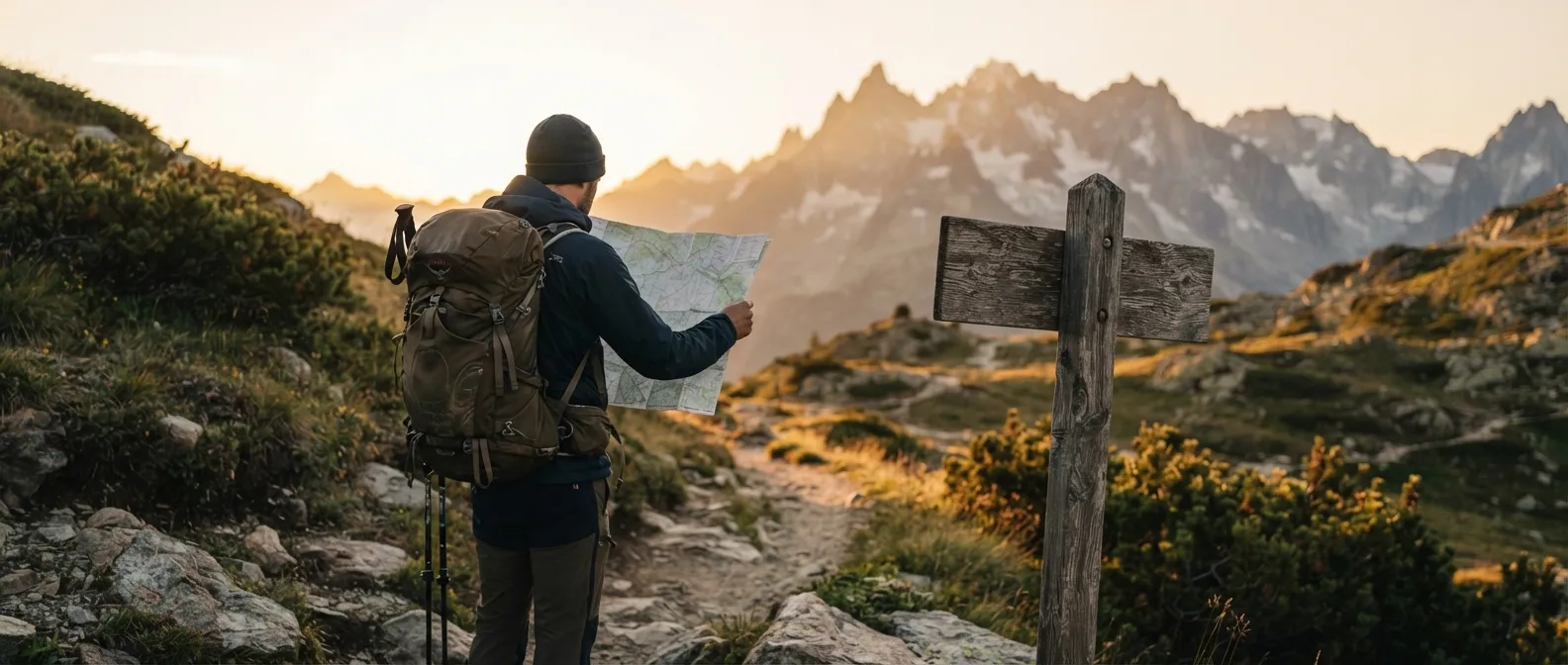
Information updated as of September 2026, sourced article by article where possible. One golden rule: a local municipal or prefectoral decree always overrides general regulations. This guide gives you the baseline framework; before setting off, checking with the local town hall, the prefecture website, or the signpost at the trailhead remains the only sure way to avoid bad surprises.
Decision tree: where am I?
Before diving into the details, here is the question to ask yourself as soon as you unroll your tent.
You are in a state or municipal forest (managed by the ONF)
Bivouacking is not forbidden by default, but it isn’t an automatic right either: it is a tolerance that depends on local municipal or prefectoral decrees. Fires, however, are strictly regulated by the French Forest Code across the entire national territory. Foraging and collecting deadwood follow precise rules, detailed further down.
You are in the core zone of a national park
Bivouacking there is regulated, never completely open: specific hours, distance from roads and mountain huts, tent dimensions, and often a total fire ban. Every park has its own rangers, its own hours, and its own fines—this is the first topic we cover in detail, because it’s where people make the most mistakes.
You are on the coast
Camping and bivouacking directly on beaches are strictly forbidden, with no seasonal exceptions. The 100-meter strip behind the beach is protected from development by the Loi Littoral; camping there is only allowed where it isn’t explicitly banned, which in practice leaves very few coastal spots available.
You are on private property
Three-quarters of French forests belong to private individuals. Nothing is allowed without the owner’s explicit permission—including fires, foraging, and bivouacking—even if the land isn’t fenced off or marked with signs. The absence of a “private property” sign is not a green light.
You are in the mountains, above the highest villages, outside parks and nature reserves
This is the most permissive zone: camping (under urban planning law) is authorized anywhere it isn’t explicitly forbidden. Mountain tradition—among mountain guides, the Alpine Club, and alpine route guidebooks—widely tolerates a single-night bivouac for foot travelers, without fires, far from motorized access. It’s not a specific law: it’s the absence of a ban, backed by a deeply ingrained mountain custom.
Bivouacking vs. wild camping: they are not the same thing
French law distinguishes between the two, and that distinction changes everything. Bivouacking means a basic, lightweight, temporary setup, pitched at sunset and packed up at sunrise—a small tent, a hammock, or just a tarp. Wild camping means staying in place: several days, heavy or motorized gear, or leaving a tent pitched while you go hiking without it.
The general principle comes from the French Urban Planning Code (Code de l’urbanisme): camping on unimproved land is allowed anywhere it is not explicitly forbidden. The following are banned by default: nature reserves and protected forests, roads and public thoroughfares, areas within 200 meters of a drinking water intake point, the seashore, the vicinity of classified historic monuments, and anything a municipality chooses to add by local decree. Camping for more than three months a year in the same spot requires authorization from the local mayor, valid for a maximum of three years. And on private land, owner consent remains mandatory regardless of local regulations.
National parks: each with its own rules
This is the most misunderstood point on hiking forums: there is no single “national park rule.” There are six distinct sets of regulations, written independently by each park’s authority, with their own schedules and exceptions.
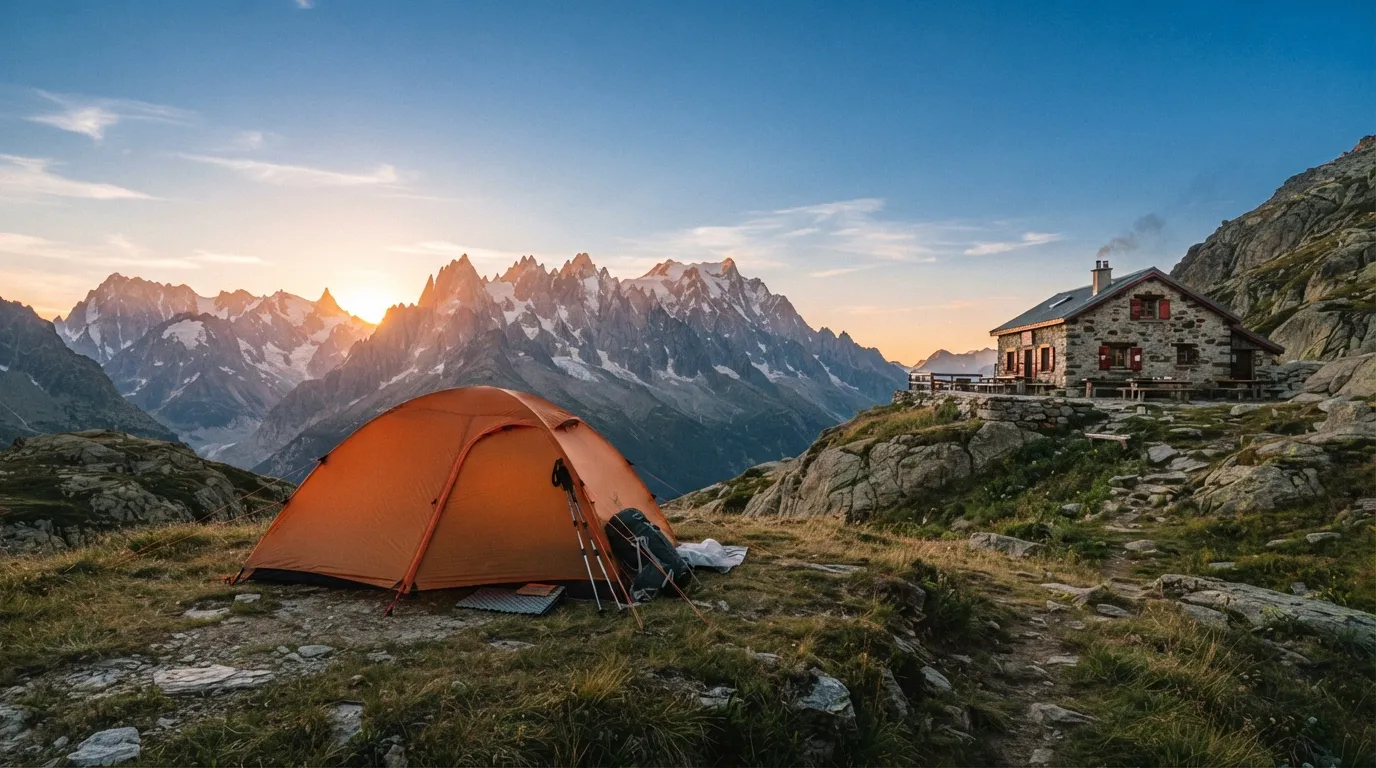
| Vanoise | Écrins | Mercantour | Pyrénées | Cévennes | Calanques | |
|---|---|---|---|---|---|---|
| Bivouacking in core zone | Designated areas near manned huts, summer only | Allowed, strict conditions | Allowed, strict conditions | Allowed, regulated | Forbidden | |
| Hours | 7 p.m. – 8 a.m. | 7 p.m. – 9 a.m. | 7 p.m. – 9 a.m. | Not specified, off direct access | According to local decree | — |
| Minimum distance | Near manned huts only, booking required | 1 hr walk from core boundary or parking | Over 1 hr walk from park boundaries | Over 1 hr walk from road access | Varies by zone | — |
| Dogs | Subject to local regulations | Not specified on this page | Forbidden, even on a leash or carried | Forbidden, even on a leash | Regulated | Forbidden |
| Fires | Forbidden, stoves tolerated | Forbidden, stoves tolerated | Forbidden, gas stoves tolerated with conditions | Forbidden | Forbidden | Strictly forbidden |
Vanoise: Bivouacking is not freely permitted throughout the park; during the summer season, it is restricted to designated areas adjacent to manned mountain huts, and booking with the hut warden is mandatory. This prevents toilet facilities from becoming overwhelmed and guarantees shelter in case of severe weather. Sleeping under the stars in the park core without a booking can result in a fine of around 68 euros during ranger patrols.
Écrins: The most detailed framework of the six. Small, low tents only, one night per spot, more than an hour’s walk from the park core boundary and parking areas. Open fires are strictly prohibited—gas stoves are tolerated, but wood and liquid alcohol stoves are banned. Dishwashing water must be disposed of at least 50 meters away from any water source, and quiet hours are strictly enforced. Around lakes Lauvitel and Muzelle, bivouacking is banned within 500 meters of the shoreline, except in designated areas. The regulations cited here were updated in June 2026, demonstrating how frequently these rules change and why checking ahead is essential.
Mercantour: Same time window (7 p.m. – 9 a.m.), over an hour’s walk from park boundaries. Campervans and rooftop tents are explicitly banned. Dogs are strictly prohibited throughout the park core—even on a leash or carried in a pack. The only exceptions are working livestock guardian dogs, guide dogs, and pets belonging to permanent residents of hamlets within the perimeter. Drone flights are banned across the entire park core without explicit professional authorization from the park director.
Pyrénées: Bivouacking is permitted beyond an hour’s walk from motorized road access. Campervans and open fires are strictly forbidden. Dogs are prohibited, even on a leash. Swimming and water sports are banned in all high-altitude lakes and streams within the park core, while mountain biking and 4x4s are restricted to specifically marked tracks. Hunting and carrying firearms are strictly prohibited without exception.
Cévennes: Core regulations stem from a December 2009 decree covering bivouacking, fires, dogs, vehicle traffic, foraging, hunting, fishing, construction, and airspace overflights in a single framework. The park core is marked on the ground with “Zone de protection” signs; outside these boundaries, general regulations apply.
Calanques: The only French national park where bivouacking and wild camping are completely banned across the entire land territory, along with any form of open fire, due to extreme wildfire risks in the Mediterranean climate. On high-risk days, prefectoral decrees may close pedestrian access to the massif entirely—a level of restriction unmatched by any other French national park.
The coastline, state forests, and private property
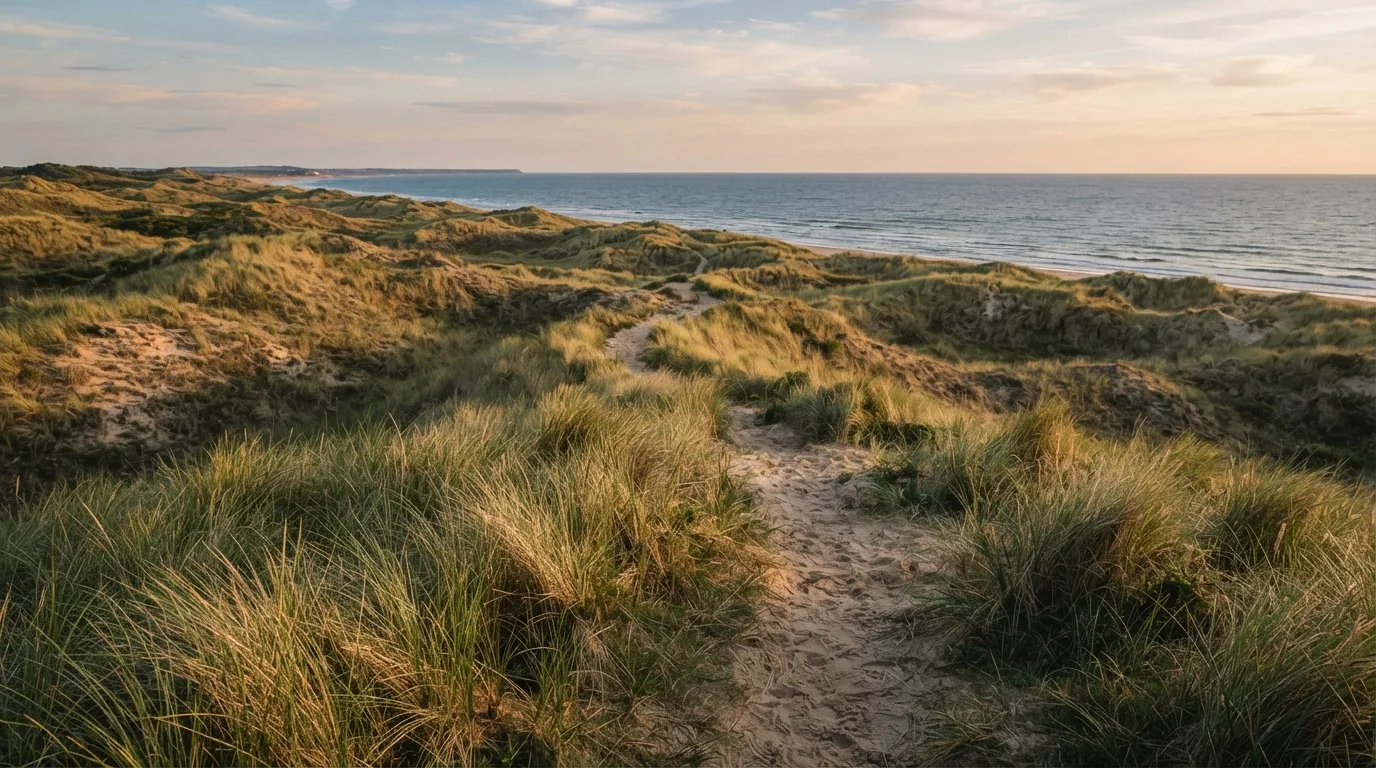
The French Loi Littoral (Coastal Law) of 1986 protects coastal environments by banning new construction within 100 meters of the shoreline outside existing urbanized areas, and forbidding new road developments across beaches, coastal dunes, or cliffs. Camping or bivouacking directly on beaches is banned without exception year-round. In designated “remarkable natural areas,” only lightweight, temporary, and reversible setups may be tolerated under strict conditions.
In state forests managed by the ONF, public access is a privilege rather than an absolute right. Foraging beyond standard personal thresholds (detailed below) can result in fines, collecting deadwood is forbidden because it sustains roughly a quarter of forest biodiversity, and lighting unauthorized fires constitutes an offense under the Forest Code. Sworn forest rangers hold full legal authority to issue citations for these infractions.
The remaining forested land is divided between state forests (10%, managed by the national government) and municipal forests (15%, owned by local communes). Consequently, there is a high probability that the woods you are walking through are privately owned, even in the absence of fences or warning signs. Nothing is permitted on private land without the owner’s explicit consent—including fires, foraging, and bivouacking. In practice, the absence of “No Trespassing” signs does not imply permission, and while many landowners tolerate hikers passing through, that tolerance does not automatically extend to camping or gathering resources.
Mountain huts and shelters
A manned refuge (refuge gardé) operates similarly to a small high-altitude hostel: reservations are strongly recommended or mandatory depending on the season, half-board meals are often available, and if the hut reaches capacity, the hut warden makes final logistical decisions. Priority is always given to individuals in genuine distress (injuries, severe storms, hypothermia) rather than arrival order.
An unmanned shelter (refuge non gardé or cabane) relies on long-standing mountain customs rather than formal legal codes: doors remain unlocked, access is open to all, visitors pay a small overnight fee via an honor box if available, the space must be left clean, and users should leave dry firewood behind for emergency arrivals. While not written into criminal law, this code of conduct is passed down by alpine clubs and wardens. Violating these norms—such as forcing open a locked private cabin—falls under standard property law.
Actual fines and penalties
Fires and campfires
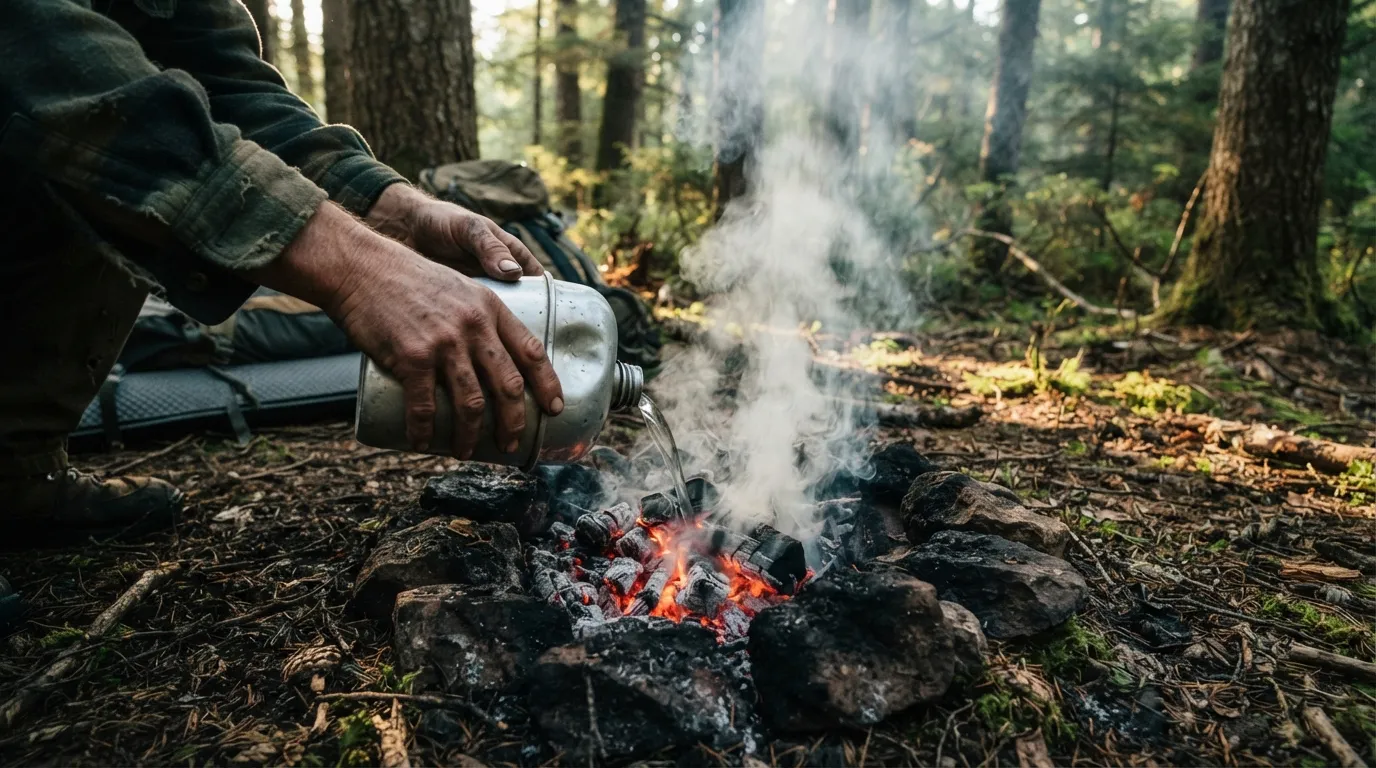
The French Forest Code forbids lighting or carrying open fires within 200 meters of woods, forests, heathlands, shrublands, and timber plantations—except for landowners on their own property, and even then under strict safety conditions. Every summer, prefectoral decrees tighten or temporarily suspend fire permissions across high-risk departments (from Var to Pyrénées-Orientales). Daily wildfire risk maps take precedence over general rules during high-risk seasons. Portable gas stoves are generally exempt from these bans, though severe drought conditions can prompt complete bans on all flame sources.
Accidentally starting a wildfire that causes forest damage carries heavy legal consequences under French law, regardless of intent. Criminal liability applies for involuntary destruction caused by reckless behavior (discarded cigarette butts, improperly extinguished embers, or unattended campfires), while civil liability requires compensating for property and environmental damage—costs that can reach hundreds of thousands of euros. Under the law, negligence does not excuse the outcome; it alters the legal classification of the offense without erasing liability.
Foraging, fishing, and hunting
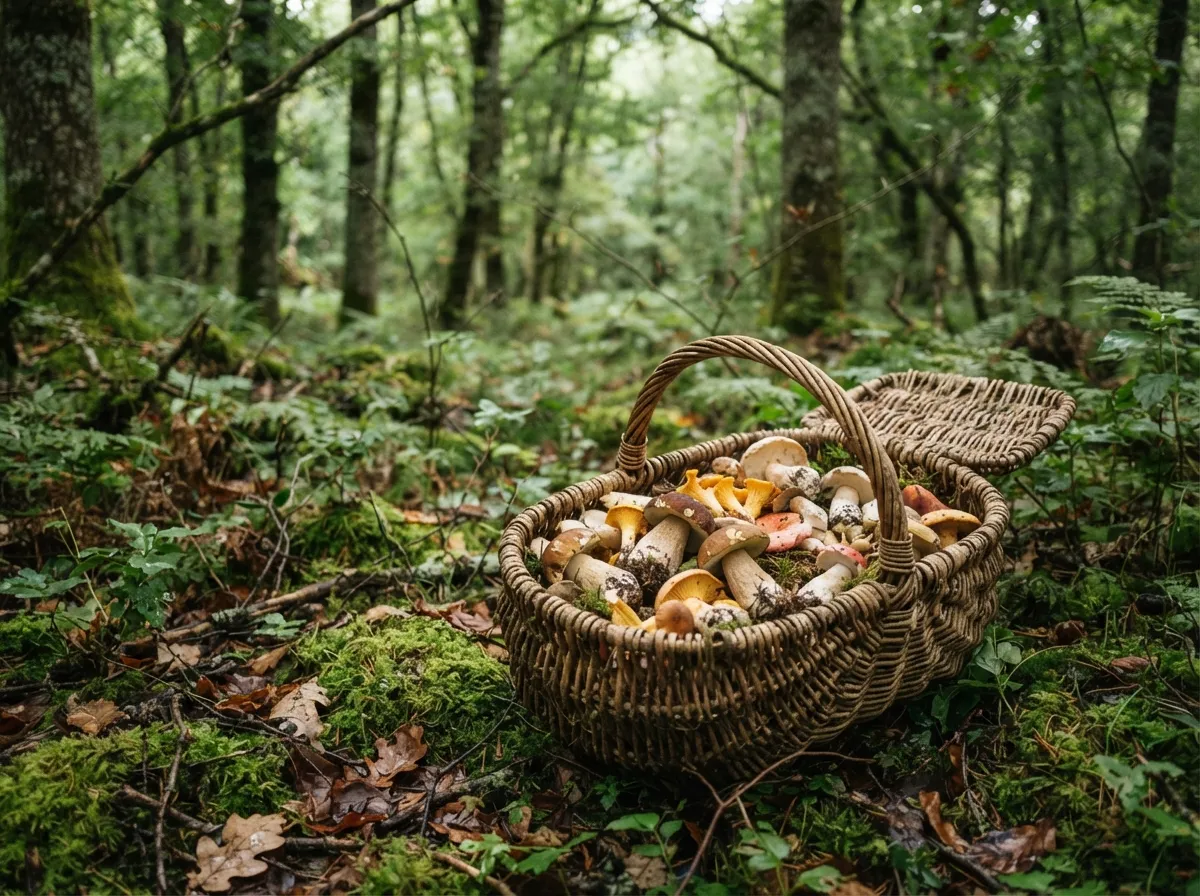
Mushrooms, berries, and wild plants
All forests in France have a designated owner, including state-owned land managed by the ONF. Consequently, foraging is legally regulated, although a customary allowance known as the “family basket” (panier familial) permits modest harvesting for personal consumption—typically defined as a small basket or a few liters, rather than commercial quantities. Exceeding these informal thresholds, or foraging in areas subject to local municipal bans (enforced in certain state forests during peak seasonal usage), can result in monetary fines.
Protected plant species
A national protection list safeguards several hundred plant species across France, supplemented by regional lists specific to individual administrative areas (a plant may be protected in Provence while remaining common elsewhere). Uprooting, picking, or transporting specimens of a protected species is illegal regardless of quantity. Wild garlic (Allium ursinum) is not nationally protected, but its leaves are easily confused with toxic autumn crocus (Colchicum autumnale) and lily of the valley (Convallaria majalis), which grow in similar habitats during spring. Certain municipalities restrict wild garlic harvesting to prevent ecological degradation of vulnerable plant populations. Mistletoe grows on trees rather than the forest floor; cutting it from trees on land you do not own requires owner consent, as with any other forest resource.
Deadwood collection
Collecting deadwood—even fallen branches on the ground—is illegal without permission from the landowner or managing authority. Article L.163-11 of the French Forest Code explicitly addresses unauthorized removal of forest products. Beyond legal ownership, deadwood provides essential habitat for roughly a quarter of forest biodiversity, including saproxylic insects and decomposer fungi. Gathering a small armful of small twigs for an authorized campfire is widely tolerated in practice; cutting down trees or hauling away bulk quantities of timber is treated as timber theft.
Fishing
Freshwater fishing in France requires a valid fishing permit (carte de pêche) issued by an authorized local angling association (AAPPMA). French law does not recognize “survival fishing” as an exception to standard licensing requirements. Fishing without a valid permit can result in fines, regardless of the circumstances.
Hunting and trapping
Hunting or setting traps without required licenses and permits constitutes poaching (braconnage), punishable by substantial fines and potential imprisonment for repeat offenses or targeting protected species. There is no legal “survival exception” for trapping wild game; setting snares in a forest remains illegal, even in emergency situations, unless an immediate threat to human life meets the legal criteria for necessity.
The state of necessity (Article 122-7 of the French Penal Code)
The state of necessity (état de nécessité) serves as a legal defense under French criminal law for actions that would otherwise be illegal, provided they are committed to avert an imminent danger. It does not automatically excuse illegal actions: the law strictly requires an actual or imminent threat to life or property, the absence of any reasonable legal alternative, and a response proportionate to the threat. Forcing open the door of an unmanned emergency shelter during an unexpected blizzard to prevent hypothermia meets these criteria; camping illegally in a nature reserve for convenience does not.
Knives, axes, and machetes
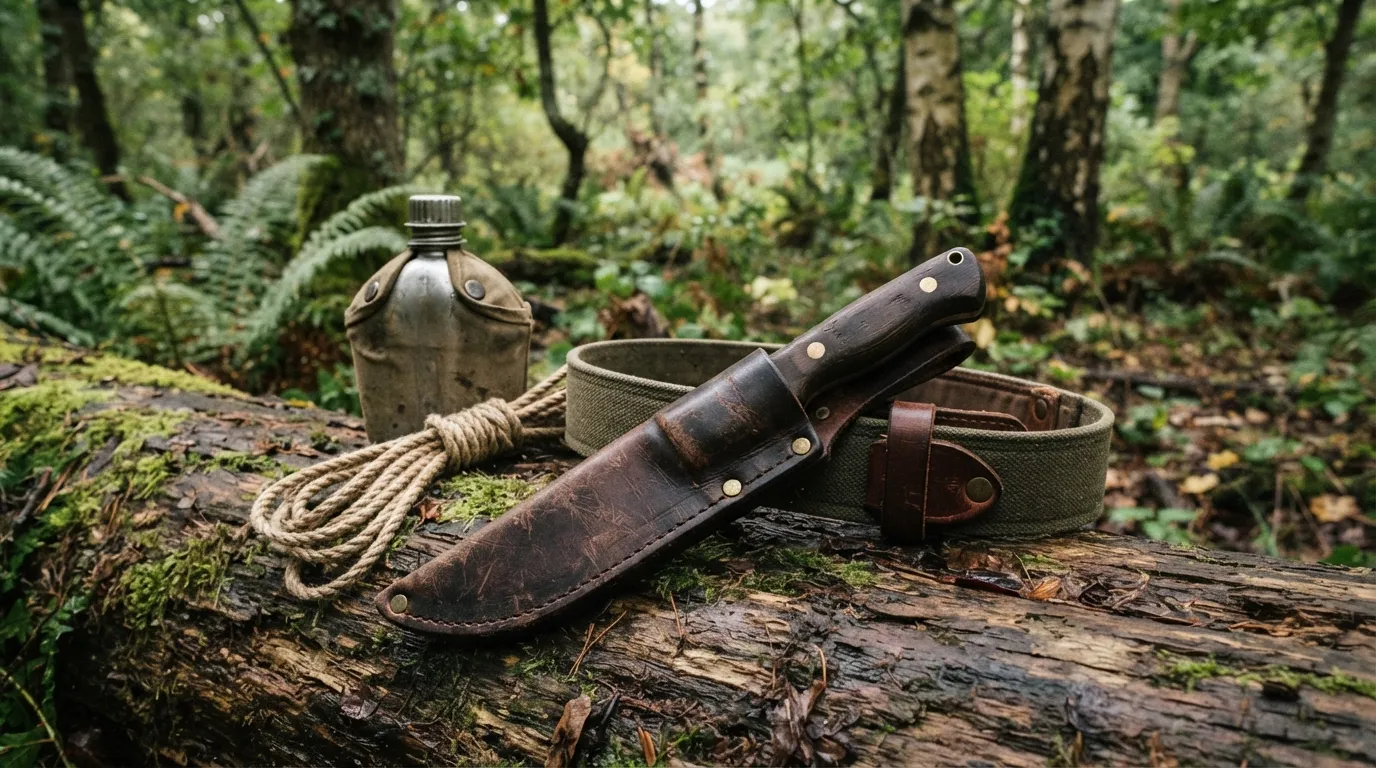
Under French law, knives are categorized as Category D weapons—objects that are not designed primarily as firearms or military weapons, but are legally classified as weapons if carried in public without a legitimate reason. Carrying a knife without a legitimate reason is a criminal offense (délit), not a minor civil infraction, regardless of blade length.
Legitimate reason (motif légitime) is not defined as an exhaustive list in French statutes; it is evaluated on a case-by-case basis by law enforcement and judicial authorities. Professional requirements (chefs, butchers, foresters), outdoor sports or recreational activities (hunting, fishing, hiking with tools suited for field tasks like processing firewood or preparing meals), or transporting tools directly to or from a place of use are recognized as legitimate reasons. Carrying a tactical knife in an urban environment without a clear connection to an outdoor activity is not considered legitimate.
Context plays a significant role in law enforcement evaluations: a bushcraft knife packed securely inside a backpack, with the blade sheathed, during an active hiking trip is easily justified. Carrying the same knife openly on a belt in a city center raises immediate legal concerns. Axes and machetes fall under identical legal standards: using them to process firewood or construct shelters during outdoor activities in appropriate locations provides a clear legitimate reason, whereas carrying them in urban or non-recreational settings carries no legal presumption of legitimate use.
Drones, mountain biking, horse riding, dogs, swimming, and caves
Drones: Drone overflights are banned in the core zones of most French national parks—this restriction is explicitly enforced in Mercantour and applied similarly across other national parks. Outside national parks, civil aviation authority regulations apply: flight bans around airports, military facilities, and sensitive infrastructure, maximum altitude limits, and mandatory landowner consent when flying low over private property.
Mountain biking and horse riding: Under ONF regulations, mountain bikes and horses must remain on designated forest tracks and trails to prevent soil erosion and wildlife disturbance. In strictly protected national parks, such as the Pyrénées National Park, mountain biking and motorized vehicles are confined exclusively to designated, signposted routes.
Dogs: Dogs must remain within 100 meters of their owner in state forests, and must be kept on a leash off marked trails between April 15 and June 30—the primary breeding season for ground-nesting birds and wildlife. Several national parks enforce complete bans on dogs within core park boundaries, even when kept on a leash or carried in a pack.
Swimming: Swimming is prohibited in high-altitude lakes and streams within the core zone of the Pyrénées National Park, and is frequently restricted in lakes that serve as drinking water reservoirs. Local municipal decrees regulate access to drinking water supply zones.
Caving and subterranean access: Caves fall under the property ownership of the land directly above them: access depends on landowner permission, and any archaeological artifacts discovered underground must be reported to the Regional Directorate of Cultural Affairs (DRAC). Numerous cave systems are seasonally closed to protect hibernating bat colonies.
Water extraction: Extracting small quantities of water from streams for immediate personal use (drinking, cooking) falls under common public usage rights. Diverting watercourses, pumping large volumes, or extracting water from protected municipal catchment zones falls under national water resource legislation (Loi sur l’eau).
Littering and waste disposal: Leaving trash in natural areas constitutes illegal dumping, subject to fines up to 1,500 euros. Environmental protection standards require that all materials brought into natural areas must be packed out upon departure.
International comparison: default rules by country
| France | Belgium | Switzerland | Quebec | United Kingdom | Sweden / Norway / Finland | |
|---|---|---|---|---|---|---|
| Single-night bivouac allowed outside protected areas | Yes, unless restricted locally | Limited, designated bivouac zones (bivakzones) | Yes, implicitly outside reserves | Varies by province/public lands | No by default, except Scotland and Dartmoor | Yes, constitutional or customary right |
| Extended wild camping | No by default | No | No outside designated zones | No, restrictive cantonal regulations | No outside Scotland | Limited to 1-2 nights depending on country |
| Campfires allowed | No, Forest Code + local decrees | No, regional regulations | No without authorization | Regulated (SOPFEU, seasonal bans) | No | No in Norway April-Sept; regulated elsewhere |
| Legal basis | Urban Planning Code, Forest Code | Regional Forest Codes (Wallonia/Flanders) | Public access rights + cantonal laws | Public Lands Act / provincial legislation | Land Reform Act 2003 (Scotland); landowner permission (England/Wales) | Allemansrätten / Allemannsretten / Jokaisenoikeus |
Belgium: Belgium does not have a Scandinavian-style general right to roam. Wild camping in forests requires explicit permission from the landowner or managing authority, governed by regional forest codes in Wallonia and Flanders. Belgium features bivakzones—designated forest clearings where primitive single-night camping is permitted free of charge, a system originally established for youth organizations and scouts.
Switzerland: Federal law does not explicitly ban bivouacking, except within protected nature reserves and national parks. Pitching a lightweight tent or bivouac bag for a single night is widely tolerated above the treeline under public access provisions, where ecological impacts are minimal. Extended multi-day camping remains restricted or prohibited in forested areas, nature reserves, and wetlands, with cantons and local municipalities imposing additional restrictions.
Quebec: On public lands (terres du domaine de l’État), dispersed wild camping is generally tolerated outside protected parks, though specific regulations vary across Controlled Harvesting Zones (ZECs), outfitting operations, and wildlife reserves. Within national parks managed by SEPAQ, camping is restricted to designated, reserved campsites, with no wild camping permitted within park boundaries. Travelers should verify specific access rules directly with SEPAQ or the Ministry of Forests, Wildlife and Parks prior to trips.
United Kingdom: Scotland’s Land Reform Act 2003 and the Scottish Outdoor Access Code grant broad access rights that include wild camping on most unenclosed land. In contrast, England and Wales operate under restrictive legal frameworks where wild camping without landowner permission is unlawful, except on Dartmoor Commons. The Countryside and Rights of Way (CROW) Act 2000 grants open access to designated heathlands, downs, and coastal areas, but specifically excludes camping privileges.
In Norway, the allemannsretten requires wild campers to maintain a minimum distance of 150 meters from inhabited houses or cabins, limiting stays to two nights in one spot without landowner approval. Open campfires are banned in or near forested areas from April 15 to September 15. In Finland, the legal concept of jokaisenoikeus permits temporary camping at a reasonable distance from homes, along with open gathering of wild berries and mushrooms, while open fires remain strictly prohibited without landowner consent.
Spain and Italy: In Spain, wild camping (acampada libre) is restricted across most autonomous communities, though high-altitude single-night bivouacking (vivac) above the treeline is often tolerated under specific regional rules. In Italy, single-night emergency bivouacking (bivacco)—defined strictly as setting up at dusk and packing up at dawn—is treated differently from multi-day wild camping (campeggio libero), which is generally illegal without municipal permits. In both countries, specific regulations are set by regional authorities and park administrations.
Frequently asked questions
Is bivouacking legal everywhere in France?
No. Bivouacking is generally tolerated on most unprotected public land provided it is lightweight, set up at sunset, and packed up at sunrise. However, it is strictly forbidden or heavily restricted in national park core zones, nature reserves, coastal areas, and on private property without owner consent. Certain areas, such as the Calanques National Park, prohibit bivouacking entirely.
What is the legal difference between bivouacking and wild camping?
Bivouacking refers to a temporary, lightweight single-night stay set up at sunset and dismantled at sunrise without motorized transport. Wild camping involves multi-day stays, larger tents, or heavy gear left pitched during the day. French regulations treat the two differently: bivouacking is frequently tolerated in mountain environments where wild camping is explicitly banned.
Can you light a campfire in a French forest?
The French Forest Code bans lighting fires within 200 meters of woods, forests, or heathlands without landowner permission. Prefectoral decrees routinely enforce total fire bans during summer months in high-risk areas, and most national park core zones prohibit open fires year-round, permitting only portable gas stoves.
Are you allowed to gather deadwood in French forests?
No, collecting deadwood—including fallen branches—is illegal without permission from the landowner or managing authority under Article L.163-11 of the Forest Code. Deadwood provides essential ecological habitat for forest species. While gathering small twigs for an authorized campfire is widely tolerated in practice, removing timber or cutting trees constitutes an offense.
Is carrying a knife legal while hiking in France?
Carrying a knife without a legitimate reason is a criminal offense under French weapon classification laws (Category D), regardless of blade length. A knife stowed securely inside a backpack for outdoor tasks (bushcraft, camp cooking, fishing) is generally accepted as legitimate equipment; carrying a knife openly on a belt in urban or non-recreational settings carries no legal presumption of legitimate use.
Can you legally force entry into a locked shelter during a life-threatening emergency?
Article 122-7 of the French Penal Code outlines the legal defense of necessity (état de nécessité), which can excuse an illegal act committed to avert an imminent threat to human life. Forcing entry into an unmanned shelter during an unexpected winter storm to treat or prevent hypothermia meets these criteria. However, inconvenience or uncomfortable weather conditions do not satisfy the strict legal requirements of imminent danger, lack of alternatives, and proportionate response.
Key takeaways
- Bivouacking (single-night, lightweight, sunset to sunrise) and wild camping (multi-day, heavy setups) are treated differently under French law; the former is often tolerated where the latter is prohibited.
- Every French national park enforces its own distinct regulations governing hours, distances, dogs, and campfires. Checking specific park rules prior to departure is essential.
- Open fires are prohibited within 200 meters of woodland under the French Forest Code, and summer prefectoral decrees frequently suspend fire permissions entirely.
- Foraging, gathering deadwood, fishing, and hunting are strictly governed by specific legal frameworks; the legal state of necessity defense applies strictly to genuine threats to life, not personal convenience.
- Carrying a knife in public requires a legitimate reason under French law; transport context, storage location, and intended use carry significant weight during legal evaluations.
Further resources
- Wikipedia FR, Camping sauvage — A comprehensive summary of French legal regulations across various land categories.
- Official regulations for French national parks: Écrins, Vanoise, Mercantour, Pyrénées, Cévennes — Official source documentation for park-specific rules.
- Wikipedia EN, Freedom to roam — An overview comparing Nordic access rights with British legal frameworks.
- ONF, Tous promeneurs citoyens — Official guidance on public conduct, foraging, and access within French state forests.
Sources for this module (21)
- Wikipédia FR — Camping sauvage
- Wikipédia FR — Bivouac
- Wikipédia FR — Loi littoral
- Wikipédia FR — Forêt en France
- Wikipédia FR — Braconnage
- Wikipédia FR — État de nécessité
- Wikipédia FR — Gentiane jaune (confusion avec le vératre, cueillette réglementée)
- Wikipédia FR — Spéléologie (déclaration des découvertes archéologiques)
- Wikipédia EN — Freedom to roam (Suède, Norvège, Finlande, Écosse, Angleterre)
- Wikipédia EN — Wild camping
- Wikipédia EN — Knife legislation (Royaume-Uni)
- Wikipédia EN — Dartmoor National Park (bataille judiciaire du bivouac)
- Wikipédia EN — Leave No Trace
- Wikipédia DE — Wildcampen (Suisse, Allemagne, Autriche)
- Wikipédia NL — Wildkamperen (Belgique, bivakzones)
- ONF — Tous promeneurs citoyens (cueillette, bois mort, chiens, circulation)
- Parc national des Écrins — Réglementation du bivouac
- Parc national de la Vanoise — L'art du bivouac responsable
- Parc national du Mercantour — La réglementation
- Parc national des Pyrénées — La réglementation
- Parc national des Cévennes — La réglementation du cœur
Continue in "Cross-cutting skills"
Knots and Cordage: The 10 That Actually Matter
3,857 knots listed in the reference book, and ten that are enough to pitch a shelter, scale a cliff, or save a life.
Knife, axe, saw: tools and the techniques that prevent injuries
The 'best knife' doesn't exist: only the one that fits your hand and your task—and the movements that keep you from getting hurt.
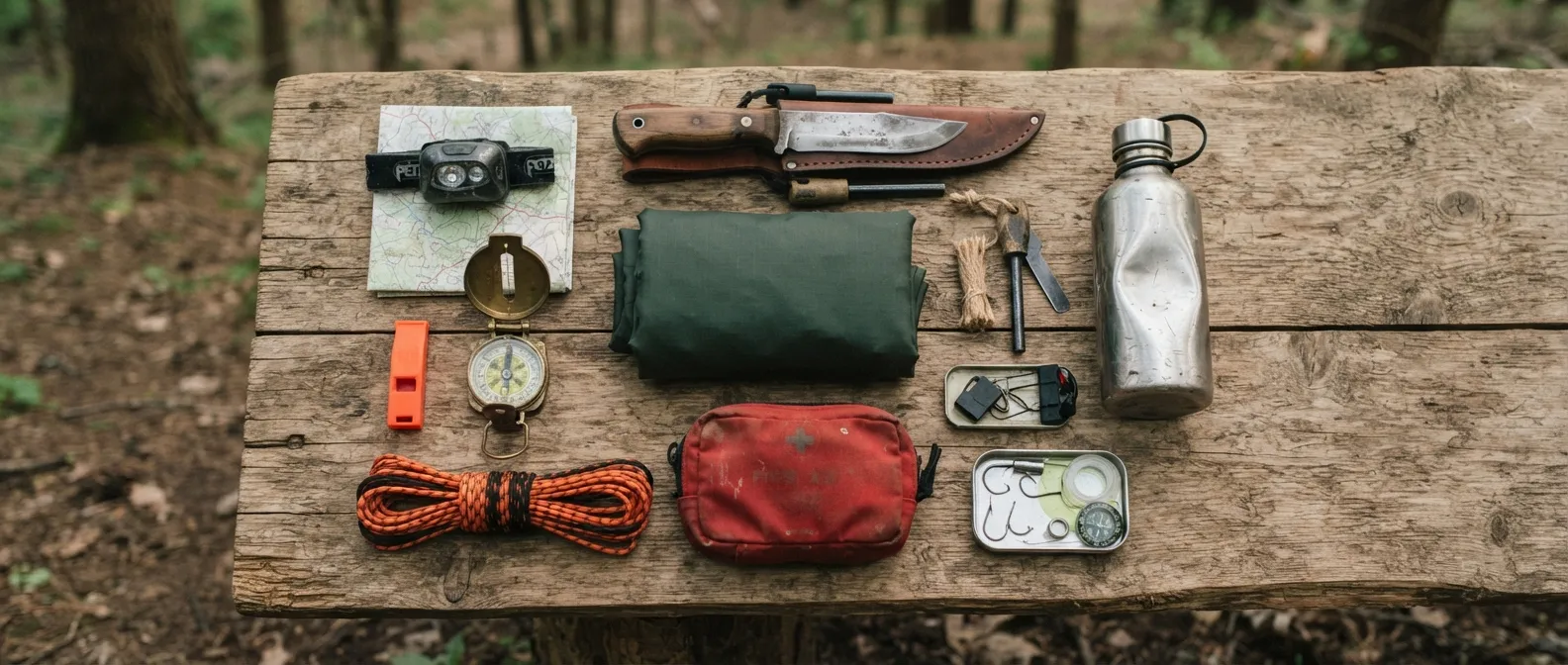
The Kit: What Should Be in Your Pockets, Backpack, and Car
What you carry on you saves you when you lose your pack: the kit hierarchy and essential checklists you shouldn't improvise.