The 40 beginner mistakes that kill (and how experts avoid them)
It is almost never weather or bad luck that kills in the wild: it's forty specific actions, documented accident after accident.
It’s 3:50 p.m., the summit is twenty minutes away, and the sky is just starting to turn dark to the west. Nothing alarming: just a half-second hesitation, quickly brushed off with “we’re so close.” It’s not that mountain that will kill you. It’s that half-second, and the thirty-nine others just like it, documented accident after accident in the reports no one reads before setting off.
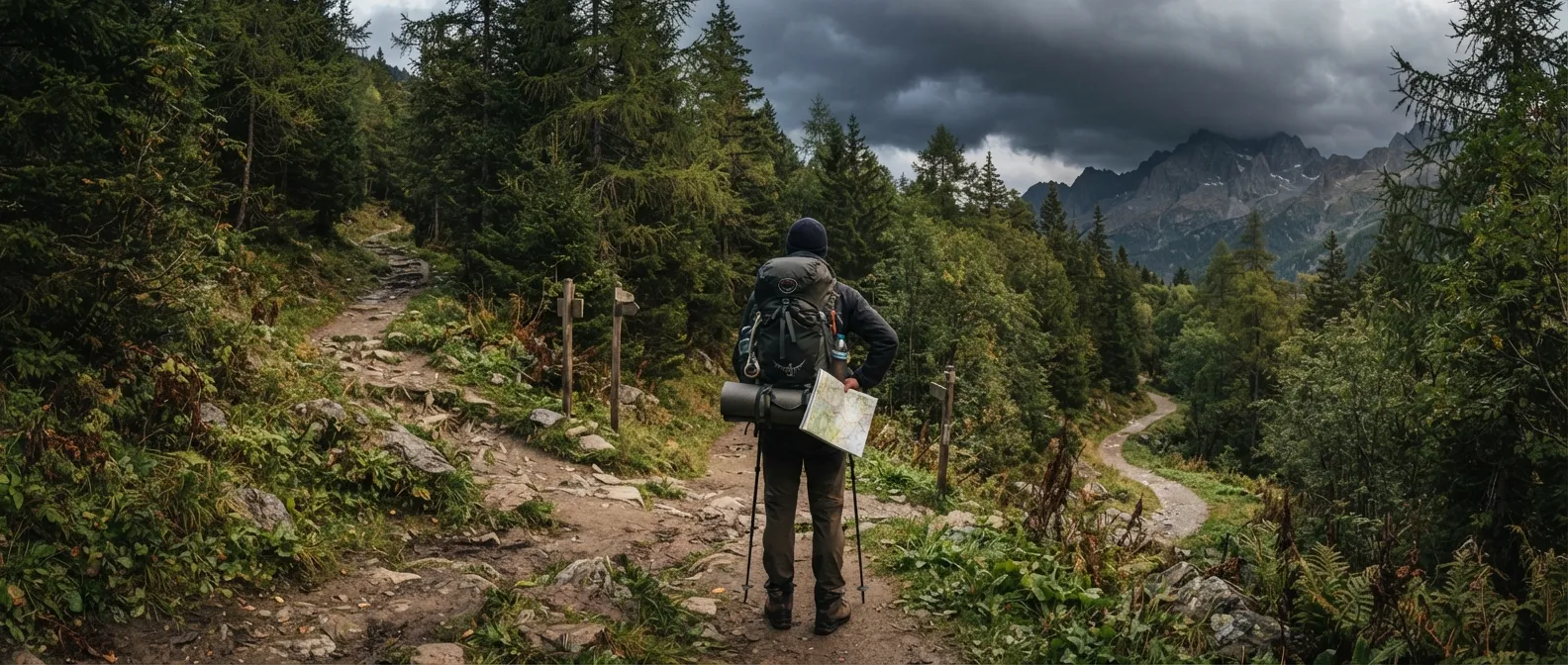
Accident reports all look the same, no matter the continent. Journalist Laurence Gonzales, who analyzed hundreds of rescue files to write Deep Survival, summarizes the finding: it is almost never a broken bone or an isolated avalanche that kills; it’s a chain of small, unreasonable decisions made by a competent person who refused to stop in time. Avalanche researcher Ian McCammon named these judgment traps heuristic traps: mental shortcuts that work nine times out of ten—and kill you on the tenth. This module gathers forty of them, split into eight families: for each one, the mistake, why it’s deadly, and what an expert does instead. The five deadliest, throughout the text, are marked with a danger warning.
Family 1 — Decision-making: what happens before the first step
The majority of deaths in the wilderness are not a technical problem: they stem from a decision made too late, when every signal was telling you to stop.
1. Leaving without telling anyone
Leaving your car or home without giving someone a precise route and return time seems harmless when everything goes right.
It’s precisely the day things go wrong that it kills: without that point of reference, no one knows when to worry, and the alarm might be raised a day, sometimes two, too late. Every hour counts when dealing with an open fracture or creeping hypothermia.
An expert leaves a written plan—route, return time, contact details—with a reliable contact, and notifies them upon return so as not to trigger an unnecessary search operation if plans change along the way.
2. Summit fever: “it’ll be fine”
The summit is close, you’re well past your planned turnaround time, but you keep going: this is “summit fever,” the inability to give up on a visible, nearby goal.
An expert sets their turnaround time before leaving, in writing if necessary, and treats it as a non-negotiable rule—regardless of how close they are to the summit.
3. Ignoring deteriorating clouds
Vertical, mushrooming cumulus clouds, a darkening base, a shifting wind: these are clear signals long before the first clap of thunder.
Continuing while ignoring them leaves you exposed—on a ridge, mid-crossing, far from shelter—at the exact moment the storm breaks, bringing lightning, hail, and a sudden drop in temperature.
An expert looks up every thirty minutes, knows the warning signs (cumulonimbus, sudden drop in light, strengthening and shifting wind), and turns back at the first doubt, not waiting for certainty.
4. Starting late, underestimating the descent
A start delayed by an hour “to catch a bit more sleep” directly eats away at the safety margin for the entire day.
Accident reports from mountain environments, published year after year by specialized organizations, point to the same pattern: the majority of fatal accidents occur during the descent, when fatigue combines with a late hour and declining alertness.
An expert calculates their schedule backward from the time they refuse to still be outside—dusk, or the time storms typically build—not from their departure time.
5. Overconfidence after a course
A wilderness survival or first aid course provides techniques and vocabulary; it doesn’t replace real field experience with its changing weather and cumulative fatigue.
This trap is well-documented in avalanche safety research: trained individuals sometimes take more risks on terrain that “looks” familiar or manageable because competence breeds a false sense of security—McCammon calls this the “expert halo.”
An expert knows that training changes the nature of the mistakes they can make, not the fact that they can still make them: they remain as cautious on their twentieth trip as on their first.
Family 2 — Water: neither too little, nor in the wrong place
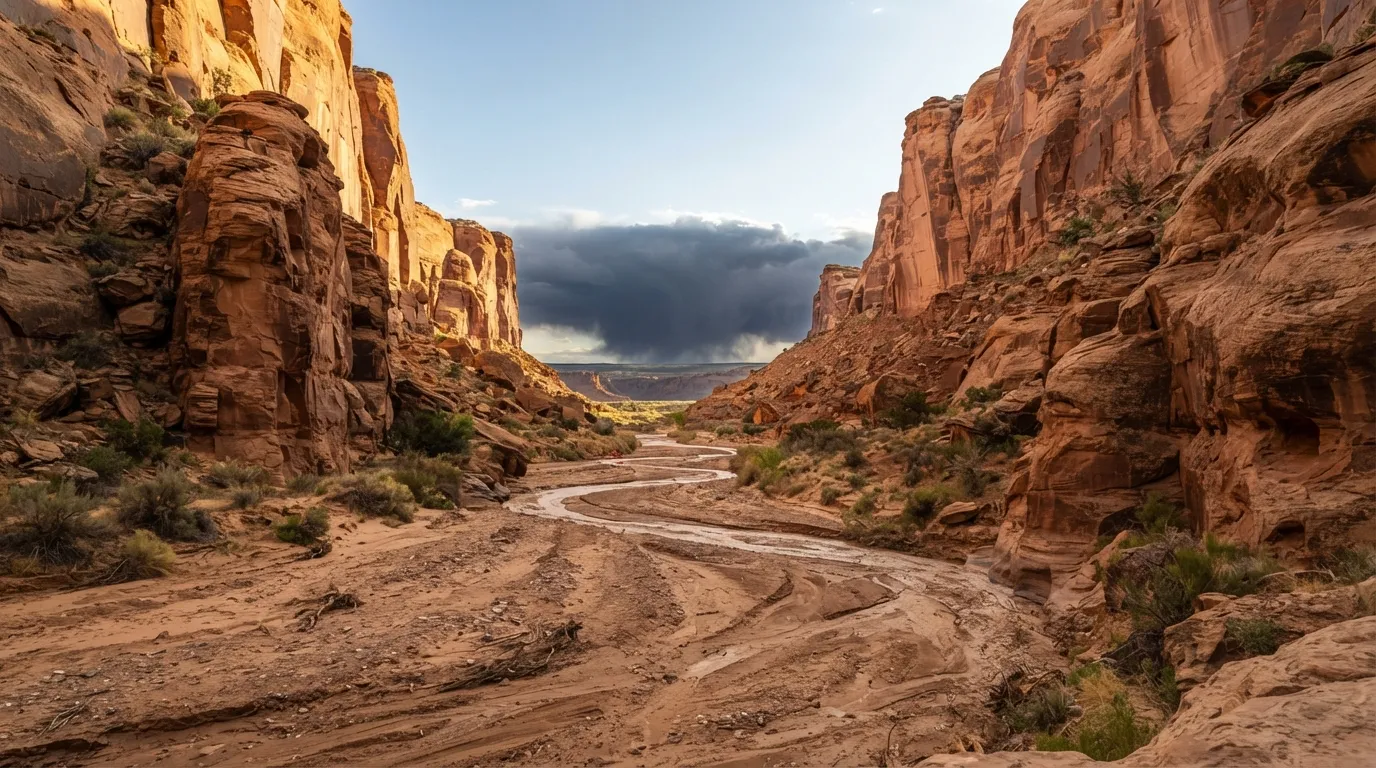
Water kills through scarcity just as it does through excess—and the second way is often much faster.
6. Rationing water instead of drinking normally
Making your water bottle last by taking small sips to “save it” in case things get tough comes from a logical intention.
The body cannot store the water you choose not to drink: rationing only speeds up dehydration, which in turn impairs judgment—leading to a cascade of other poor decisions.
An expert drinks their calculated intake based on exertion and heat, spending saved energy actively looking for new water sources rather than rationing current supplies.
7. Eating snow to hydrate
Munching on snow seems like an instant fix when you’re thirsty and surrounded by it.
It cools your core from the inside out, burns precious energy and body heat to melt it in your stomach, and repeatedly irritates your mouth and throat—all for a minimal water yield.
An expert melts snow before drinking it, over a fire or against their body, never consuming large amounts directly by mouth.
8. Crossing a flooded river
An expert never steps into swift, muddy water where they can’t see the bottom; they wait for levels to drop, look for a bridge or a wider, shallower crossing, or give up on crossing that day.
Family 3 — Fire: what puts it out, what makes it deadly
A missing fire is a problem; a poorly placed fire can become the danger itself.
9. Building a fire under a snow-laden tree
A snow-covered tree above a fire pit seems like a good shield against falling snow.
Heat from the fire melts the heavy snow packed on branches above, causing it to slide off and extinguish the flames all at once or dump right onto whoever is tending the fire—plus, catching a resinous tree on fire sends embers flying everywhere.
An expert clears a space far from any snow-laden canopy before lighting a fire, looking up before picking a spot, not after.
10. Burning a fire or stove inside an enclosed shelter
An expert never burns anything—fire, stove, or transport embers—inside a closed shelter, even if partially vented, and even “just for five minutes.”
11. Relying on a single fire-starting method
Carrying a single lighter in your pocket creates a single point of failure: frozen gas, a wet flint mechanism, or simply losing it.
The day that single method fails is usually the day you need fire the most—cold, rain, exhaustion—not a sunny day when failure carries no consequence.
An expert always carries multiple independent systems (lighter, ferro rod, stormproof matches) stored in separate pockets so that one accident doesn’t wipe out all options.
Family 4 — Shelter: where and how you set up camp
The best shelter in the world can kill you if placed in the wrong spot.
12. Camping in a flash flood zone
An expert never camps or lingers in a dry riverbed or narrow canyon if a storm is even remotely possible upstream, regardless of clear skies overhead.
13. Lying down directly on cold ground
Ground that feels merely “a bit cool” to the touch actively siphons heat away from your body much faster than ambient air through simple conduction.
A single night spent without insulation beneath you can easily trigger mild hypothermia, even inside a quality sleeping bag, because ground insulation matters just as much as overhead insulation.
An expert always insulates from the ground before worrying about ambient cold: using a sleeping pad, a thick bed of leaves or boughs, or an emptied backpack slid under the hips.
14. Cotton: the fabric that kills in cold, wet weather
A cotton t-shirt, comfortable and breathable in good weather, behaves completely differently the moment it gets soaked with sweat or rain.
When wet, it loses almost all its insulating ability and sticks to your skin, driving evaporation that continues to chill your body long after you’ve stopped moving. Wool, on the other hand, can absorb nearly a third of its weight in water while retaining warmth.
An expert wears wool or synthetic baselayers whenever an outing promises to be long, wet, or cold, leaving cotton for town.
15. Abandoning a vehicle stuck in the snow
An expert stays with their vehicle as long as situation permits: it’s visible from the air, shields against wind and ground cold, and is the primary target search teams look for first.
Family 5 — Navigation: getting lost, losing your footing
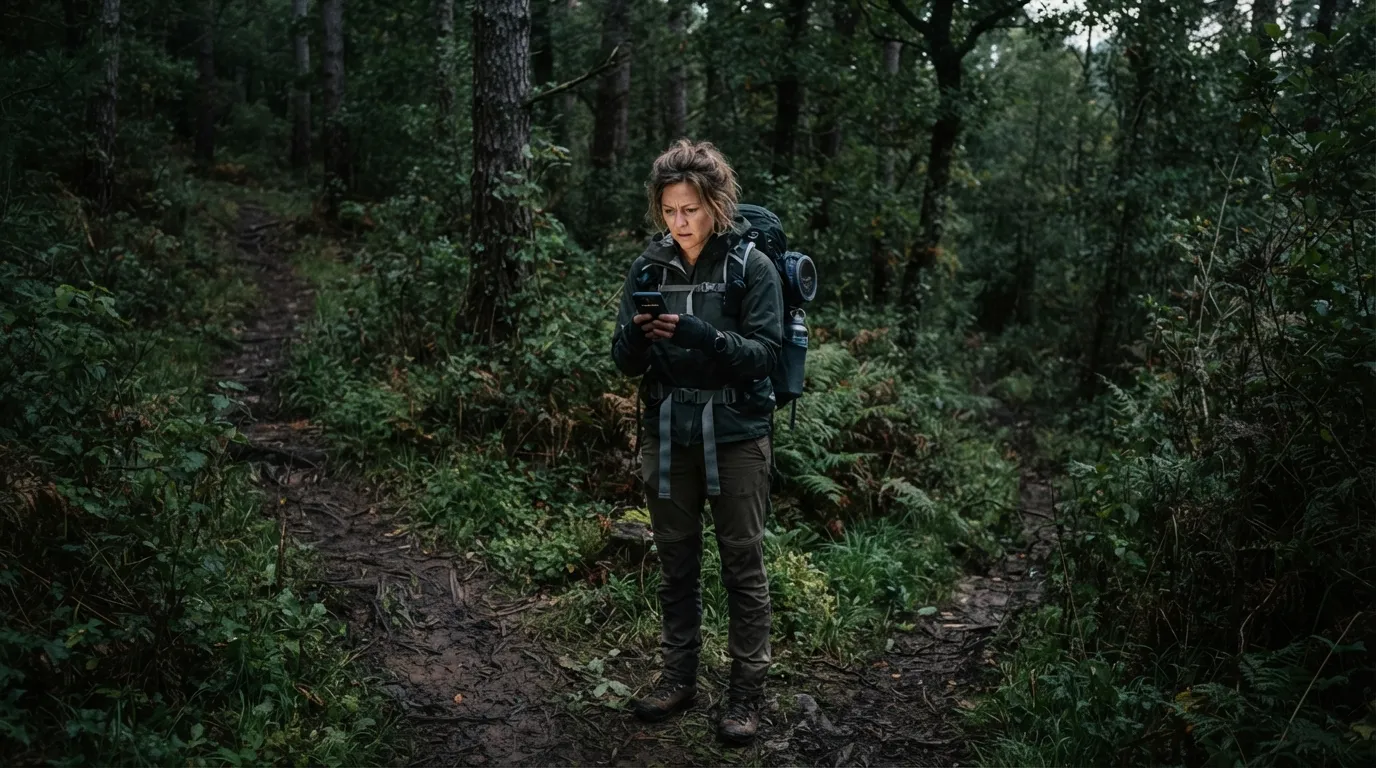
16. Following GPS blindly without a map or critical thinking
A blue dot moving across a screen offers a false sense of certainty, even when the path it displays no longer exists—or never did.
In 2011, a couple from British Columbia died after being misrouted by their GPS into a remote area of Nevada; in 2022, a North Carolina man drowned after his GPS directed him onto a bridge that had been destroyed years prior. Academic literature calls this phenomenon “Death by GPS.” Death Valley National Park now explicitly warns visitors that satellite navigation is “notoriously unreliable” within its borders.
An expert uses GPS to double-check a position already estimated on a map, never as a sole guide, and always carries a paper map and magnetic compass as backup.
17. Heading down a gully to take a “shortcut”
From above, a steep gully dropping straight toward the valley looks like a great way to cut down your travel time.
A narrowing gully frequently ends in an unseen waterfall, cliff face, or unstable scree slope impossible to spot from above: rescue teams call this getting “cliffed out”—reaching terrain you can scramble down, but cannot climb back up.
An expert stays on the known route even if it seems longer, and backtracks immediately if the slope becomes unusually steep before turning around becomes impossible.
18. “I know these woods”
Terrain crossed a hundred times during the day, in summer, under clear skies, can become unrecognizable at night, in thick fog, or simply when you’re exhausted.
This is precisely the cognitive trap researchers call the “familiarity heuristic”: the more familiar a setting feels, the fewer active precautions you take—map checks, compass readings, caution—even though the physical danger of the terrain hasn’t changed at all.
An expert applies the same foundational habits—informing others, checking forecasts, carrying a map—even on trails they know like the back of their hand.
19. Running when lost
Panic urges you to move quickly, as if speed can make up for a complete lack of direction.
Running drains energy and water supplies faster, causes heavy sweating that cools you down dangerously later, blurs what few landmarks remain, and often carries you farther and faster in the wrong direction.
An expert stops dead in their tracks, sits down, breathes, and applies a simple framework before taking a single step: Stop, Think, Observe, Plan—and only then decides where to move, if moving is even necessary.
20. Splitting up the group
“I’ll catch up,” “I’ll scout ahead”: the phrase sounds logical in the moment, especially if the group is tired or pressed for time.
Splitting a group instantly doubles the number of targets search teams must locate if things go wrong, and forfeits safety in numbers—an injured solo hiker can neither easily self-rescue nor send for help.
An expert keeps the group together, matching the pace of the slowest member rather than catering to the urge of the fastest.
21. Not knowing how to use a compass
A compass buried at the bottom of a pack, never taken out of its packaging, is useless when fog rolls in.
Basic skills—orienting a map to north, taking a bearing, following a line—are quickly forgotten without regular practice, and are hard to figure out under the stress of an already deteriorating situation.
An expert practices beforehand, on familiar terrain and in daylight, long before needing the skill for real.
22. Failing to signal your position properly
A distress call that fails to provide clear coordinates or obvious landmarks wastes precious time as search teams scour the wrong valley.
Simple, universal distress signals have existed for decades—three whistle blasts or three fires in a row, a large X marked on the ground for aircraft—yet remain unknown to most casual hikers.
An expert learns these signals, notes down GPS coordinates or a map grid reference before dialing emergency services, and communicates them clearly from the very first moment of contact.
Family 6 — Gear: what fails when you need it most
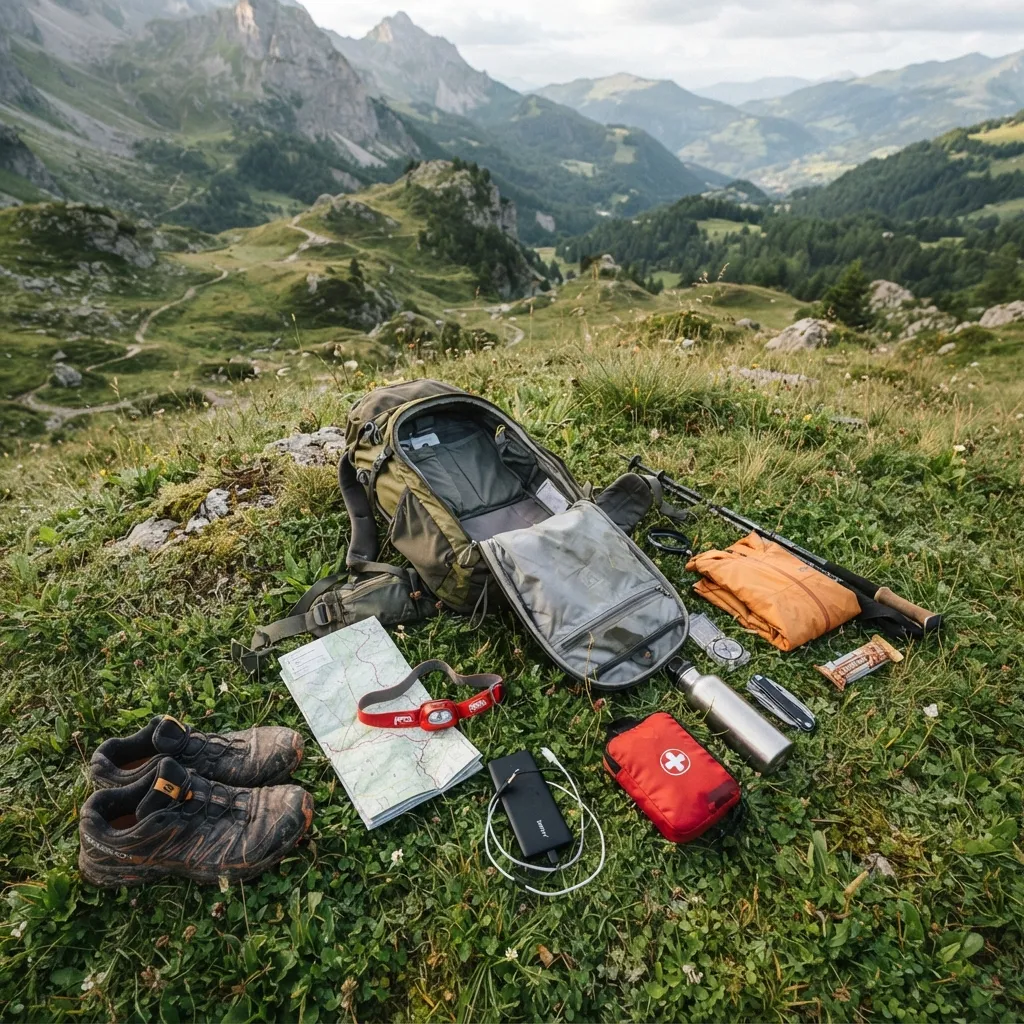
23. Heading out without a headlamp
Night always falls faster than expected, especially in dense woods, under heavy cover, or simply because your day ran long.
Without light, basic tasks become difficult or dangerous: pitching a tent blindly, reading a map, treating a wound, or simply placing one foot in front of the other on a rocky trail.
An expert always packs a headlamp with fresh batteries or a backup power bank, even for a simple “day hike”—precisely because “day hikes” are where people never prepare to spend the night.
24. A phone at 30% without a power bank
A phone showing a third of its battery remaining offers a false sense of security.
Cold temperatures drain batteries much faster than expected, and a dead phone instantly cuts off your primary line to emergency services and, often, your only backup GPS navigation.
An expert leaves with a 100% charged phone, switches to airplane mode to conserve energy between uses, and carries a portable power bank on any outing lasting longer than a day trip.
25. Brand-new, unbroken-in boots
Wearing a crisp new pair of boots for a long trek seems like a great way to test them out.
Unbroken footwear rubs in unpredictable spots; a raw, open blister in cold or wet conditions can easily become infected and compromise your mobility, turning a simple hike into an emergency evacuation.
An expert breaks in new boots over several short walks before heading out on a trip, never the other way around.
26. An overpacked, poorly organized bag
Packing everything “just in case” quickly pushes your backpack weight well beyond a sensible limit.
An overloaded pack causes rapid fatigue, slows your pace, and tempts you—in an effort to make up lost time—to skip breaks or take dangerous shortcuts, completely defeating the purpose of carrying all that extra gear.
An expert weighs their pack before leaving, prioritizes water, shelter, and first aid over comforts, and knows their realistic limit for distance and elevation gain.
27. An untested survival kit
An unused ferro rod, a water filter never assembled out of the box: the moment an emergency hits is not the time to be reading instructions.
In the cold, under pouring rain, with trembling hands, every unfamiliar task takes three times longer—and can easily fail altogether, even if it would have taken ten seconds at home.
An expert tests every single piece of gear at home under simulated stress (in the dark, wearing gloves) before relying on it in the field.
Family 7 — Animals and plants: reading wildlife without misjudging
28. Petting a livestock guardian dog
A large, calm white dog standing among sheep might look harmless—until you step too close to the flock it is bred to defend.
In France, numerous hikers have been bitten by Patous (Pyrenean Mountain Dogs) after approaching working livestock too closely; in 2021, a livestock owner in the Hautes-Alpes was fined €2,500 after his guard dogs bit several hikers.
An expert never approaches working livestock, gives the herd a wide berth, speaks in a calm voice, avoids running, and does not stare the dog down—allowing the dog to step between them and calm down on its own terms.
29. Feeding a bear
Tossing a piece of a sandwich to a bear lingering near camp seems harmless, maybe even kind.
A fed bear quickly connects humans with food, loses its natural wariness, and turns into what park rangers call a “problem bear”—which often ends up having to be euthanized, all because a careless hiker fed it weeks prior.
An expert stores all food out of reach (using bear canisters or hanging bags well away from camp) and never allows a bear access to human food, even accidentally.
30. Approaching a bison for a photo
A bison grazing peacefully a few meters off the trail can give a deceptive impression of docility.
An expert maintains a safe distance—parks recommend staying back dozens of meters—never steps between an animal and its escape route, and puts the phone away instead of walking backward while recording.
31. Copying survival tactics from TV (the Bear Grylls effect)
A reality survival show makes for great entertainment, but it’s filmed with an off-camera medical team, backup gear within arm’s reach, and a script tailored for television ratings.
Drinking your own urine, for instance, often touted as a dramatic last resort, concentrates metabolic waste your body is trying to flush out, worsening dehydration rather than relieving it.
An expert separates reality TV from field manuals, cross-checking techniques against reliable sources that highlight real-world limitations and risks.
32. Universal edibility tests and “lookalike” mushrooms
Tasting a tiny piece, waiting a few hours, increasing the dose if nothing happens: the protocol sounds systematic, and has been printed in manuals for decades.
Yet it fails to catch toxins that take hours or days to cause organ failure—long after the tester deems the plant or mushroom “safe” and consumes a full meal. The Death Cap (Amanita phalloides), the world’s deadliest mushroom, closely resembles the edible Caesar’s mushroom; it accounts for roughly 90% of mushroom-related fatalities worldwide, and cooking does not destroy its toxins.
An expert never eats a wild mushroom or plant based on general appearance alone: they require multiple matching identification criteria and abstain if there is any doubt whatsoever.
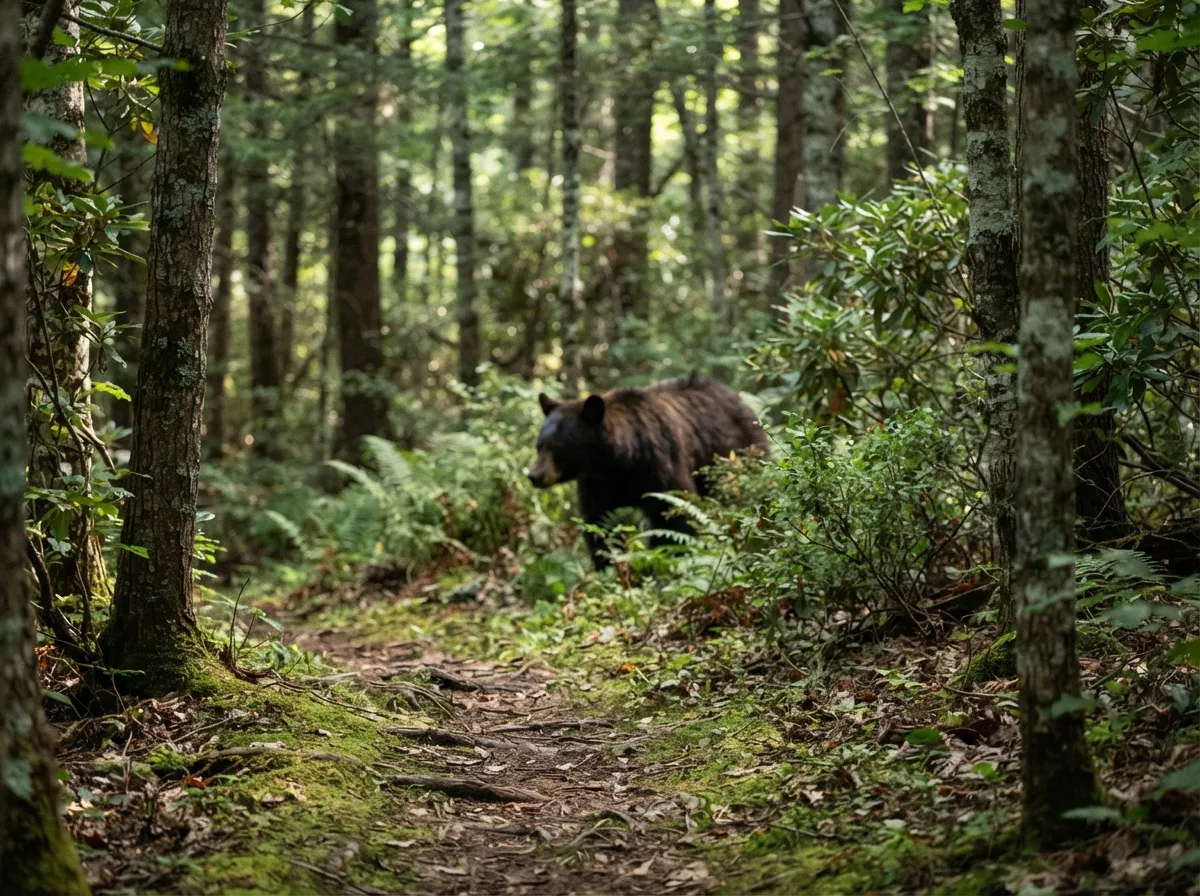
33. Playing dead with a black bear
An expert fights back aggressively with everything available—sticks, rocks, fists, bear spray—when attacked by a black bear, reserving passive submission strictly for defensive grizzly encounters.
| Grizzly Bear (Defensive Attack) | Black Bear (Predatory Attack) | |
|---|---|---|
| Warning signs | Charges, huffs, huffs loudly, swats ground | Approaches silently, persistent, stalks |
| Best response | Play dead, flat on stomach, hands over neck | Fight back aggressively, target nose and eyes |
| Worst response | Run (it is faster), climb trees (it can climb) | Play dead or submit |
| Bear spray | Effective in 9 out of 10 cases according to studies | Effective in 9 out of 10 cases according to studies |
Family 8 — Rescue: actions that save, actions that kill
34. Jumping off rocks into water or to “shortcut” a slope
A ledge or deep pool viewed from above rarely provides an accurate picture of what lies beneath the surface or at the bottom of a slope.
Hidden rocks, shallow water, submerged logs: all remain invisible from a jump point. A bad landing on dry ground adds a broken bone to an already difficult situation far from rapid medical aid.
An expert always inspects on foot, checking water depth or slope conditions first before committing to a jump—or simply walks around.
35. Applying a tourniquet with string or a shoelace
Faced with severe bleeding, instinct urges you to tie something tightly around the limb—often picking a shoelace, cord, or thin string.
Thin materials cut into skin and tissue without applying enough broad surface pressure to collapse deep arteries and stop arterial blood flow: it inflicts tissue damage, cuts nerves, and fails to stop the bleeding.
36. Sucking venom out of a snakebite
It’s a classic movie trope: kneel down, slice the wound, and suck out the venom by mouth to “save” the victim.
Medical research shows that suction applied even three minutes post-bite removes a clinically insignificant amount of venom—less than one-thousandth of the injected dose—while introducing mouth bacteria directly into an open wound. No major medical organization recommends this practice.
37. Rubbing frostbite with snow
The idea of “warming by friction” seems intuitive when dealing with white, frozen fingers.
Rubbing frostbitten skin with snow or harsh friction grinds abrasive ice crystals into delicate, frozen tissue, causing severe mechanical damage instead of healing it—doing the exact opposite of what’s needed.
Field medical guidelines recommend gentle rewarming in clean water maintained strictly between 37 and 39 °C, never rubbing, and only if there is no risk of the tissue refreezing afterward.
38. Rewarming a hypothermia victim too fast
Plunging a shivering victim into a hot bath or aggressively rubbing their skin to “get blood flowing” comes from good intentions.
In moderate to severe hypothermia, cold, acid-laden blood trapped in the extremities can suddenly rush back to the heart (afterdrop) during rough handling or rapid external heating, triggering fatal cardiac arrhythmias.
An expert handles a hypothermic victim with extreme care, focuses rewarming on the torso first—never arms and legs—and avoids rough movement or rapid temperature changes.
39. Using alcohol to warm up, or letting a hypothermic person sleep
An expert avoids alcohol entirely, keeps the victim awake and monitored, insulates them from the ground and wind, gently warms their core first, and never leaves them to sleep alone while danger persists.
40. Jumping into cold water without acclimating
Leaping straight into freezing water, especially headfirst, triggers a physical response your willpower cannot override.
An expert enters cold water slowly, splashing water on their neck and face first, allowing the initial gasping phase to pass while focusing on slow breathing, and never dives headfirst into unverified cold water.
Frequently asked questions
What single mistake kills the most hikers and mountaineers?
There isn’t just one, but accident reports consistently point to the same root cause: continuing forward when weather, time, or physical exhaustion clearly signaled to turn back. “Summit fever” combined with miscalculating descent times accounts for a massive share of documented fatal mountain accidents every year.
Should you ever suck venom from a snakebite?
No, never. Studies have proven that suction removes less than one-thousandth of injected venom while introducing mouth bacteria into the wound; it is a Hollywood trope, not a medically recognized first aid practice.
Why should you never camp in a dry riverbed?
Because a flash flood can originate from a thunderstorm miles away under clear blue skies above you, filling a narrow canyon or dry bed in a matter of minutes. This exact scenario killed eleven people in Lower Antelope Canyon in 1997 and seven in Zion in 2015.
What should you do if you encounter a livestock guardian dog while hiking?
Never approach the herd it protects. Slow down, talk in a calm voice, avoid eye contact, and do not run. Let the dog place itself between you and the livestock until it sees you are moving away. Hikers are bitten every year for getting too close to working flocks.
Should you play dead during a bear attack?
It depends entirely on the species: against a defensive grizzly bear, playing dead reduces the severity of an attack. Against an attacking black bear, which is almost always predatory, your best chance of survival is to actively fight back with everything you have.
Why doesn’t a GPS replace a paper map?
Because a GPS unit can route you onto nonexistent trails, drain its battery, or lose satellite signal at the worst possible moment without providing the terrain context of a topo map. Multiple documented fatalities follow this exact pattern, even in well-traveled places like Death Valley National Park.
Key takeaways
- Most deaths in nature stem from poor decision-making rather than a lack of survival skills: failing to turn back, stop, or call for help in time.
- TV shows and movies teach terrible first aid habits—sucking venom, improvised thin tourniquets, rubbing frostbite—always verify techniques against modern medical standards.
- Water poses as much of a threat through excess (flash floods, cold shock) as it does through scarcity (rationing): never underestimate a dry riverbed or cold currents.
- Bear encounters require species-specific responses: playing dead works against defensive grizzlies, but actively fighting back is vital against predatory black bears.
- The gear that saves your life is the gear you’ve practiced using before leaving home, not the gear you unbox in the middle of an emergency.
Going further
- Laurence Gonzales, Deep Survival: Who Lives, Who Dies, and Why (2003) — The seminal book exploring the psychology behind survival and fatal accidents in the wild.
- Robert Koester, Lost Person Behavior (2008, dbS Productions) — The definitive guidebook used by search and rescue teams worldwide to locate missing individuals.
- Wikipedia — Death by GPS — A detailed overview of accidents linked directly to satellite navigation errors.
- Wikipedia — 1996 Mount Everest disaster — A step-by-step account of the tragedy that emphasized non-negotiable turnaround times.
Sources for this module (20)
- Wikipedia — Slot canyon
- Wikipedia — Zion National Park
- Wikipedia — Flash flood
- Wikipedia — 1996 Mount Everest disaster
- Wikipedia — James Kim
- Wikipedia — Death by GPS
- Wikipedia — American black bear
- Wikipedia — Grizzly bear
- Wikipedia — American bison
- Wikipedia — Bear spray
- Wikipédia — Chien de montagne des Pyrénées
- Wikipedia — Amanita phalloides
- Wikipedia — Wilderness survival
- Wikipedia — Snakebite
- Wikipedia — Frostbite
- Wikipedia — Hypothermia
- Wikipedia — Cold shock response
- Wikipédia — Noyade
- Wikipedia — Wool
- CDC MMWR — Carbon Monoxide Poisoning Deaths Associated with Camping, Georgia 1999
Continue in "Cross-cutting skills"
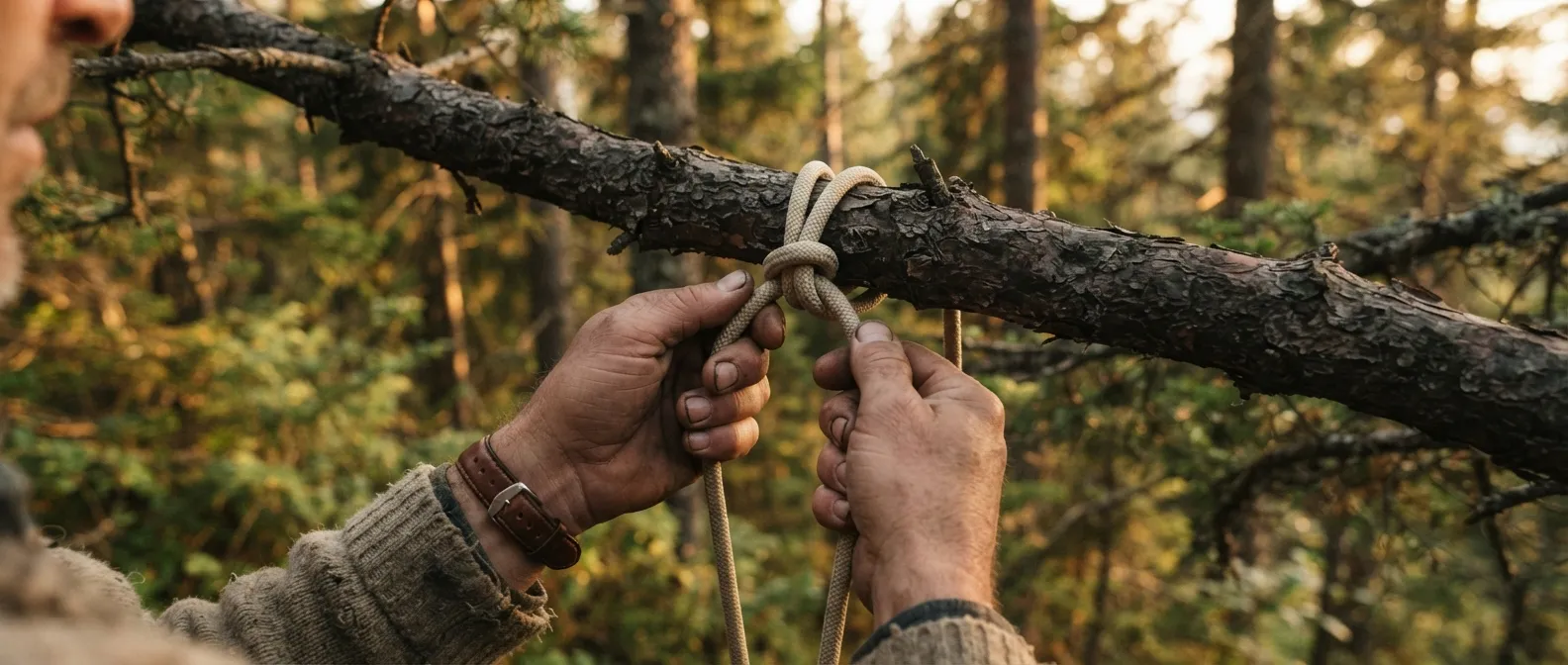
Knots and Cordage: The 10 That Actually Matter
3,857 knots listed in the reference book, and ten that are enough to pitch a shelter, scale a cliff, or save a life.
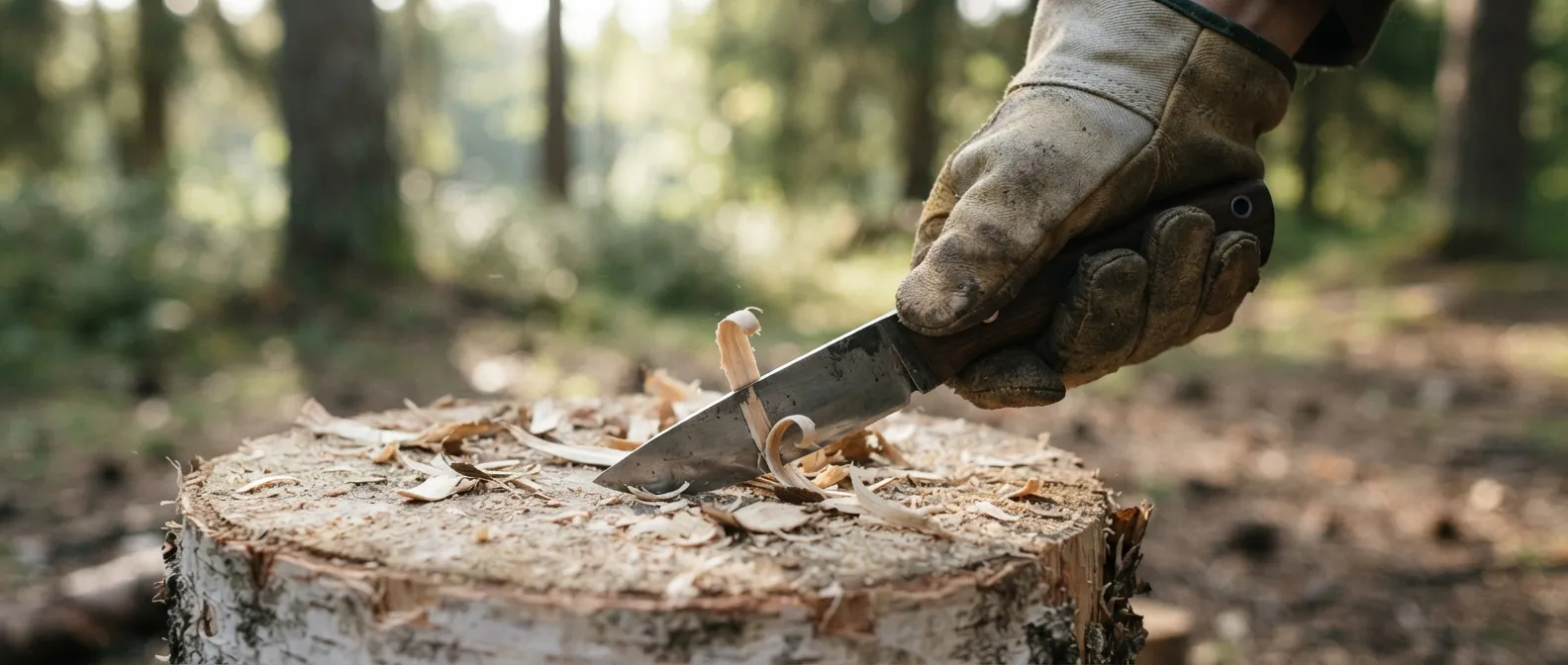
Knife, axe, saw: tools and the techniques that prevent injuries
The 'best knife' doesn't exist: only the one that fits your hand and your task—and the movements that keep you from getting hurt.
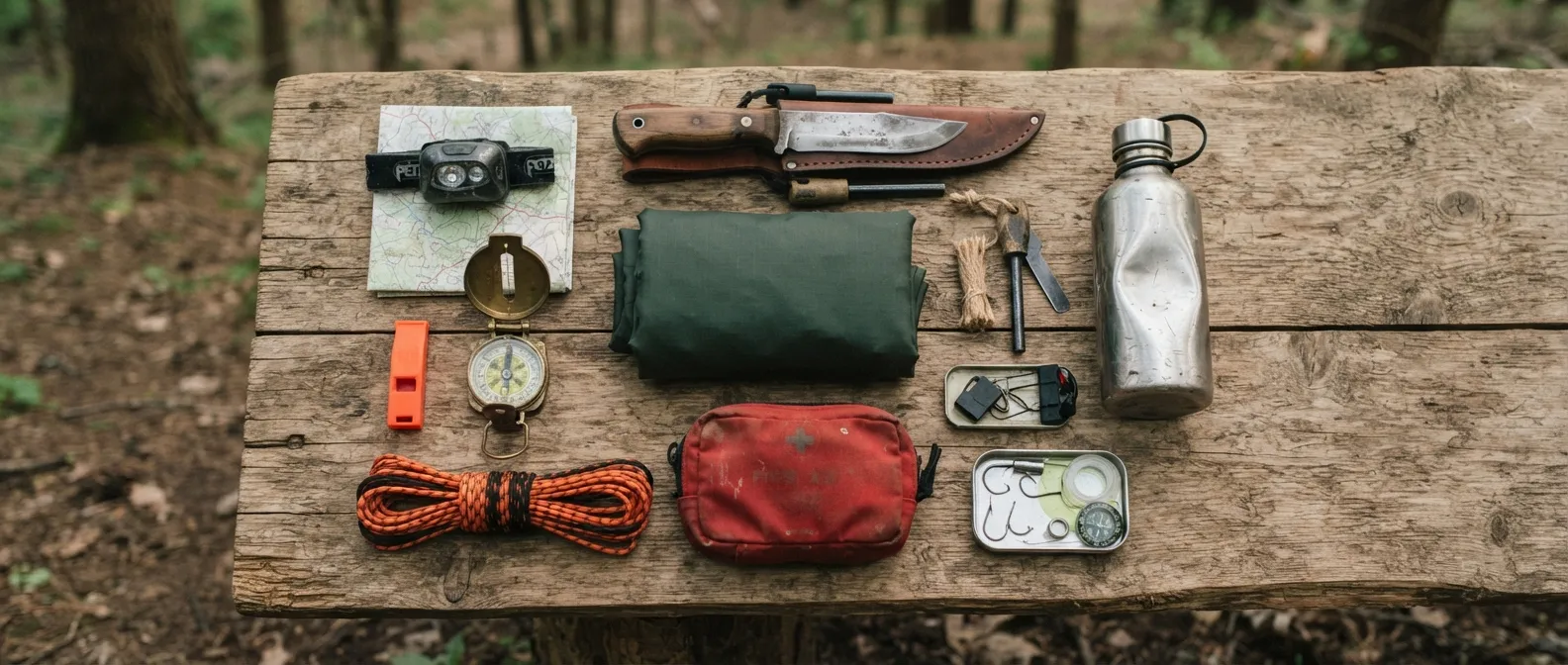
The Kit: What Should Be in Your Pockets, Backpack, and Car
What you carry on you saves you when you lose your pack: the kit hierarchy and essential checklists you shouldn't improvise.