Hygiene and Off-Grid Health: Lasting Weeks, Not Hours
It's almost never a bear that sends you home early: it's diarrhea, an infected tooth, or a rotting foot in a wet sock.
Day twelve. You haven’t seen a single dangerous animal since you started, you haven’t been cold, you haven’t been hungry. But your hands are chapped, you have a blister that turned hot red under your heel, and since this morning, abdominal cramps force you to stop every fifteen minutes behind a tree. This module isn’t about what could kill you in a second. It’s about what gets you airlifted home after three days, silently, for a stupid reason.
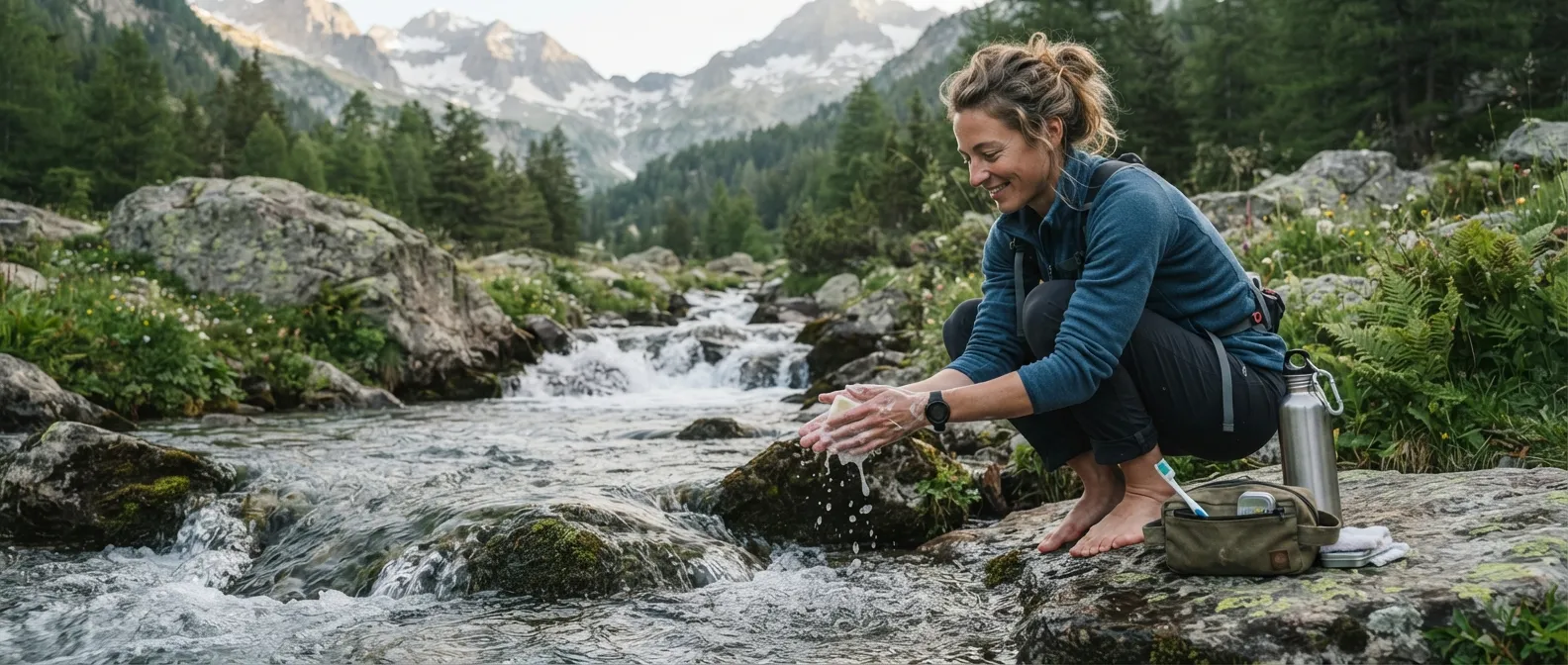
Why poor hygiene kills more people than bears
On expeditions, multi-day treks, or after a shipwreck, the most common danger has no fangs. The World Health Organization links roughly 2.2 million deaths a year worldwide to diseases related to contaminated water—such as cholera and dysentery—and the transmission mechanism has a specific name: the fecal-oral route. It is the contamination, either direct through dirty hands or indirect through tainted food or water, that carries microorganisms from feces to the mouth. Viruses (hepatitis A, rotavirus), bacteria (cholera, salmonella, E. coli), and parasites (worms, giardia) all follow the exact same path. It’s so short it’s often called “hand-to-mouth”—touching something contaminated, then touching your eyes, nose, or mouth, or preparing food without washing your hands.
In mountain environments, human feces pose a much higher environmental risk than urine due to their significantly higher pathogen load. This detail explains why this module opens on hands and toilets rather than blisters: in field medicine statistics, digestive issues and contact infections show up year after year far more often than bites or falls. An expedition rarely ends with a dramatic accident; it ends, much more frequently, because your stomach gives out and your morale goes with it.
Hands: your first line of defense
The CDC is clear on the hierarchy: soap and running water remain the gold standard, rubbed together for at least twenty seconds, paying special attention to under the nails and between the fingers—where microbes cling. Alcohol-based hand sanitizer with at least 60% alcohol is the backup when water and soap aren’t available, not the primary choice: it sanitizes, but it doesn’t remove dirt or organic matter, and it remains ineffective against certain non-enveloped viruses like norovirus, which only mechanical washing truly dislodges.
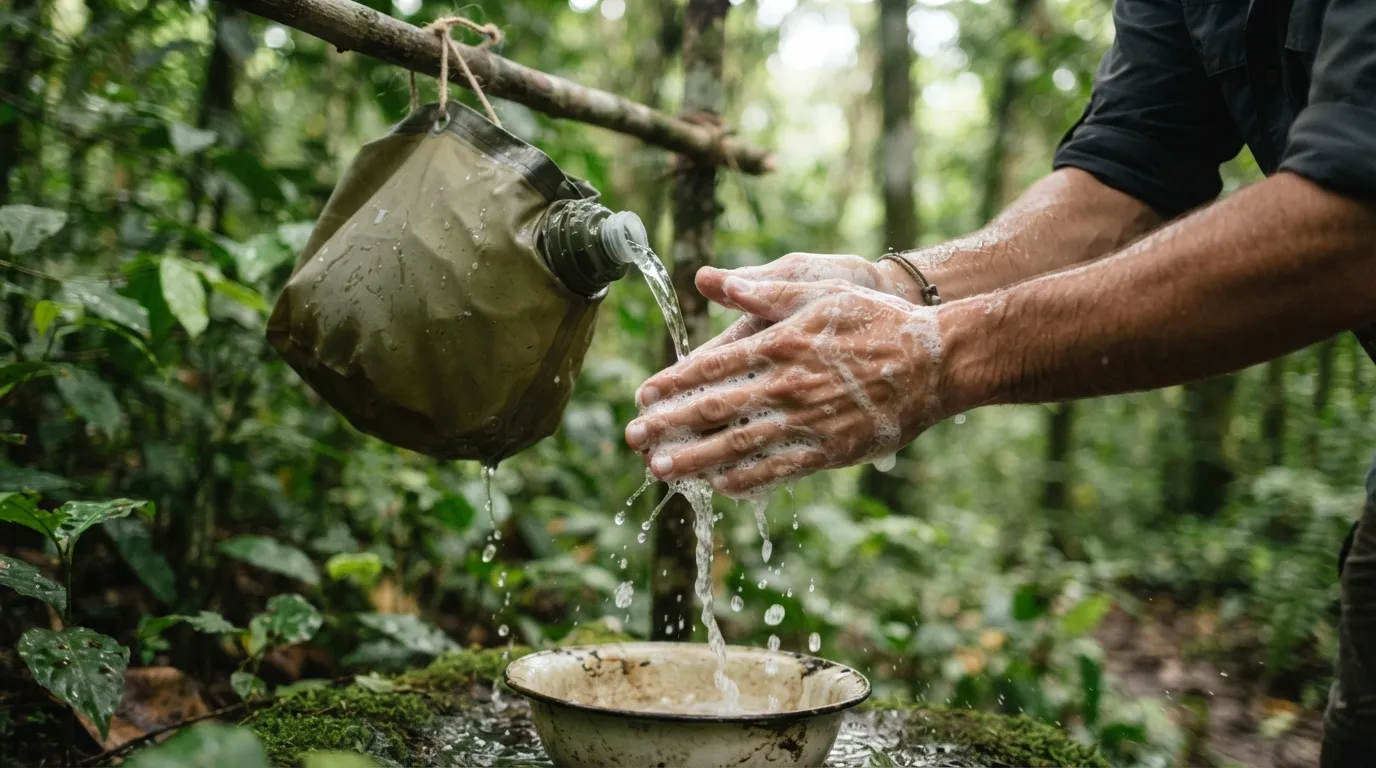
- Pour a trickling stream of water from a bottle or flexible bladder rather than dipping your hands into a shared supply: you avoid contaminating the whole group’s water.
- Lather for a full twenty seconds—long enough to hum a short chorus twice in your head—palms, backs of hands, between fingers, under nails.
- Rinse with the rest of the stream, hands pointing down so dirty water doesn’t run back onto clean wrists.
- Air-dry or use a dedicated clean cloth: wet hands transport microbes just as easily as dirty hands.
- Repeat before every meal, after using the bathroom, and after touching an animal, a bandage, or soil.
Water: the non-negotiable rule
This module won’t cover water purification all over again—the site’s Water module details boiling, filtration, and the myths around urine and seawater. Just one reminder belongs here because it directly affects hygiene: Giardia, the most common parasite found in clear mountain water, forms cysts that remain infectious for up to three months in cold water. Symptoms—persistent diarrhea, cramps, nausea—take one to three weeks to appear, making it hard to link them to the water you drank weeks earlier. Any river or lake water, even crystal clear, must be treated before drinking.
Bathrooms: the question nobody wants to ask
It’s the topic nobody talks about before leaving, and the first one that comes up in the field.
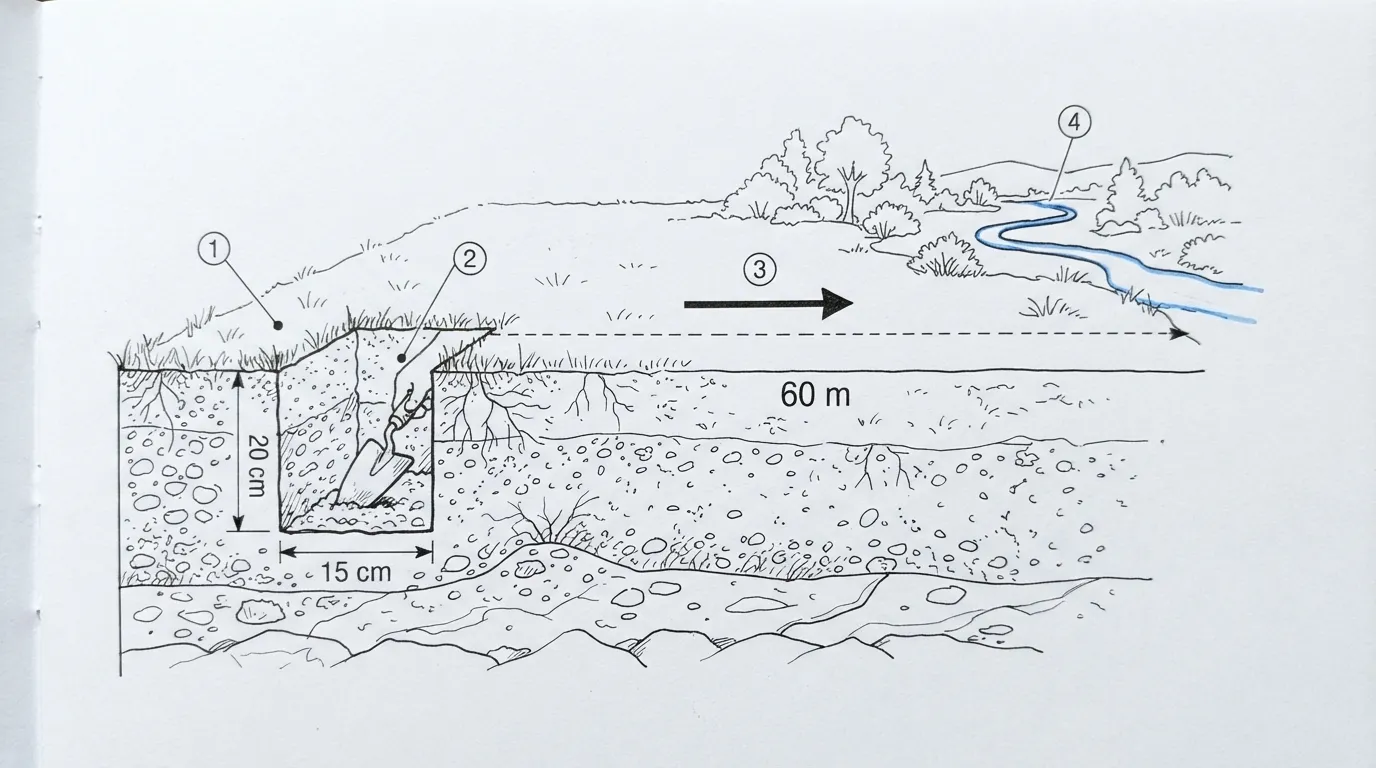
- Choose a spot at least 60 meters (200 feet, a good one-minute walk) away from any water source, campsite, or trail—a standard from Leave No Trace, adopted by bushcraft schools worldwide.
- Dig a hole 15 to 20 cm deep (6 to 8 inches): this top layer of soil contains the highest density of microorganisms that break waste down quickly; it shouldn’t be too close to the surface or too deep.
- Use it, then fill it back up with soil and disguise it with leaves or stones—a cathole you can’t find again is a successful cathole.
- Toilet paper: ideally, pack it out in a separate sealed bag (it decomposes very slowly); otherwise, bury it deep with the waste, but never burn it on-site in a dry forest.
- In a group or staying in one spot for days: change areas every time, like a cat avoiding the same digging spot.
No trowel, no toilet paper
| Moss (sphagnum) | Large soft leaves | Snow | Smooth stone or stick | |
|---|---|---|---|---|
| Availability | wetlands, peat bogs | underbrush, forest edges | winter, high altitude | almost everywhere |
| Comfort | excellent, very absorbent | good if leaf is identified | cold but effective | decent if well-chosen |
| Risk | none known | irritation if wrong plant | none | cuts if poorly chosen |
| Extra step | check for insects | never use three shiny leaflets (poison ivy/oak) | pack into a tight ball | test on skin of your arm first |
Mullein (Verbascum thapsus), a tall plant with fuzzy leaves found on embankments and cleared land, earned the nickname “cowboy toilet paper” in the American West for good reason: its leaves are soft, broad, and absorbent—the Zuni people also used them as poultices on wounds. The rule that trumps all others: never use an unidentified plant, with shiny three-leaf clusters leading the list of plants to avoid.
Managing periods on expedition
Managing your period far from civilization isn’t a minor detail: it’s a matter of hygiene, pack weight, and, for many hikers, peace of mind over time. The menstrual cup tops expedition recommendations for three practical reasons: it can be worn for 4 to 12 hours depending on flow before needing to be emptied, it creates zero waste to pack out, and a single cup lasts up to ten years. Documented risk of staphylococcal toxic shock syndrome is similar to or lower than that of tampons or pads. Tampons require specific caution: toxic shock syndrome is linked to high-absorbency tampons worn for longer than 4 to 8 hours—on an expedition where it’s easy to lose track of time, this is a real risk to monitor actively, not an outdated precautionary principle.
Teeth: the pain that catches you off guard
People underestimate dental health in survival situations, yet an infected tooth isn’t just painful: the infection can enter the bloodstream and become a life-threatening emergency, miles from any dentist. Brushing your teeth every night, even without toothpaste, remains one of the highest-yield hygiene habits for the weight it adds to your pack.
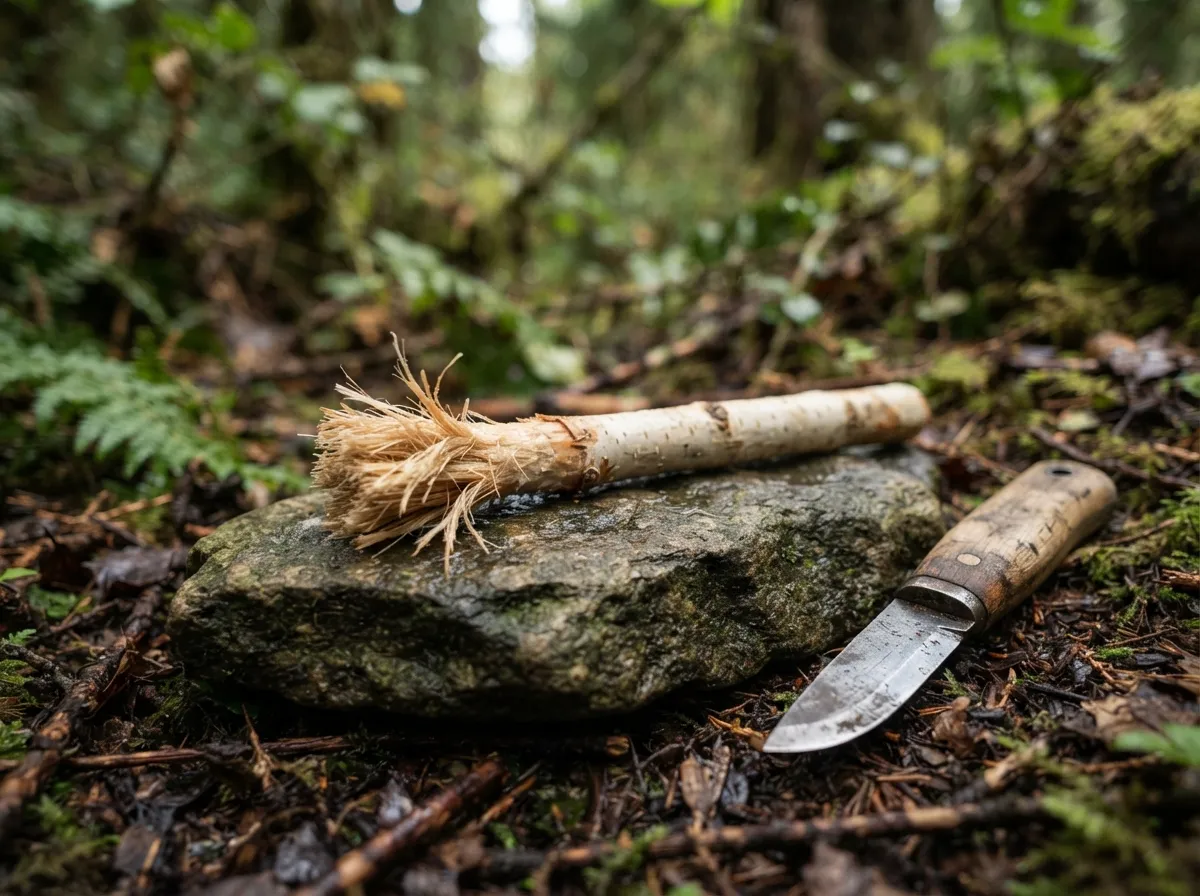
- Miswak, a stick cut from the root or branch of Salvadora persica, chewed until the tip frays into brush-like fibers, has been used for oral hygiene across the Middle East for centuries and was recommended by the World Health Organization in 1986. It contains salvadorine and benzyl isothiocyanate with documented antibacterial properties, alongside healthy levels of fluoride. Studies on Sudanese and Saudi populations showed better periodontal health among regular users compared to non-users—though in laboratory settings, its activity remains weaker than antiseptics like chlorhexidine. In a pinch, a fresh twig of willow or hazel, chewed into a brush, works on the same mechanical principle: it scrapes away plaque, even without the active compounds of Salvadora.
- Salt dissolved in warm water makes an effective mouthwash that cleans and calms irritated gums through simple osmotic action and mild antiseptic properties.
- Crushed charcoal, currently popular on social media for “whitening” teeth: Wikipedia sums it up bluntly—there is no established evidence of safety or effectiveness for this use, and its abrasiveness can wear down enamel over time. It’s not a survival emergency, but it’s not the miracle solution it’s made out to be either.
Skin care for the long haul
Your skin is your final barrier against everything else. On a long expedition, it’s rarely a dramatic cut that slows you down: it’s the buildup of minor damage ignored because no single flaw seems serious on its own.
Blisters: long-distance enemy #1
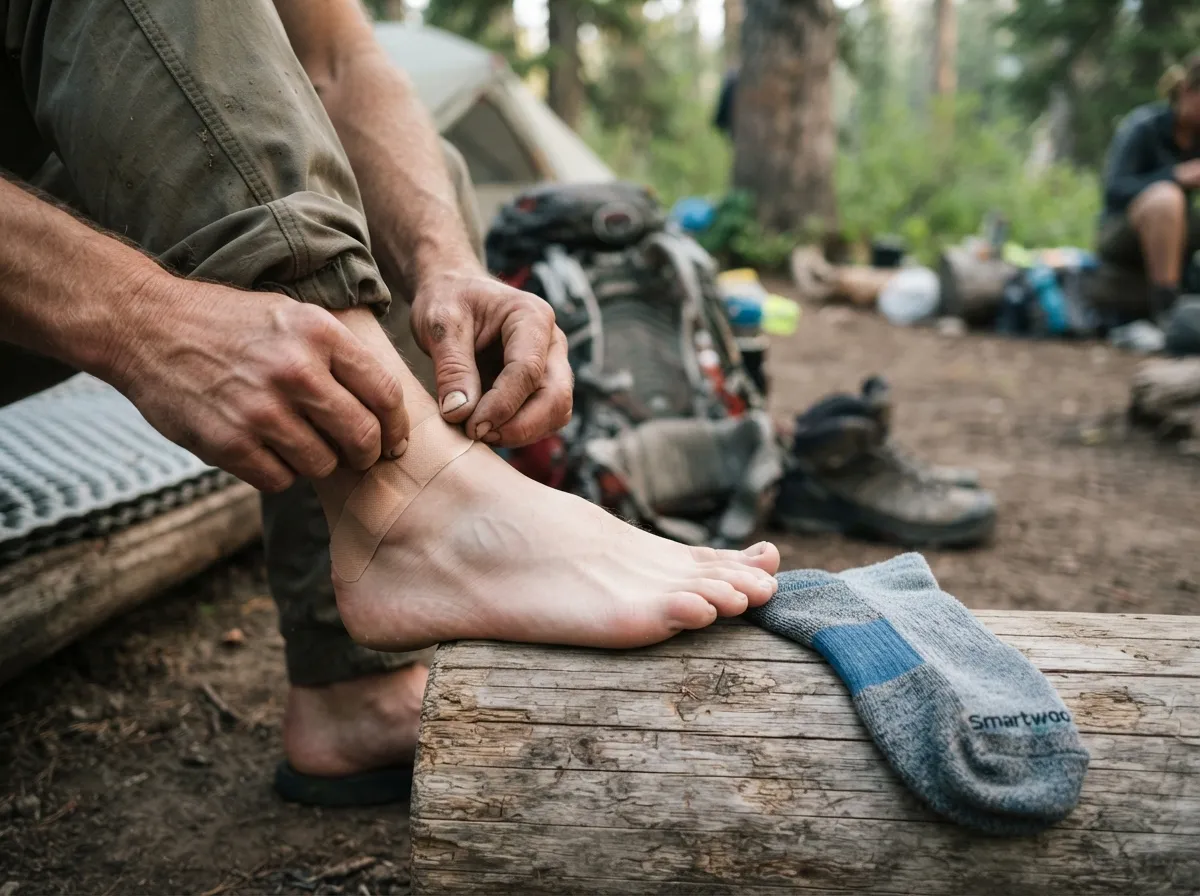
A blister is caused by repeated friction that separates layers of skin, creating a fluid-filled pocket between them. Prevention beats treatment every single time: well-fitting boots and socks, moisture-wicking fabrics (wet skin rubs much faster), and especially applying Leukotape or adhesive tape beforehand on known hotspot areas (heel, big toe) before redness even shows up.
- Identify hotspots at the very first sensation of heat or rubbing—don’t wait for a blister; act on the “hot spot.”
- Clean and dry the area: tape won’t stick to damp skin.
- Cut a strip without creases, rounding the corners so they don’t catch on your sock.
- Apply without excessive tension, smoothing from the center out to push air bubbles out.
- Leave it on for several days if needed: unlike standard bandages, Leukotape stands up to hiking and moisture.
Once a blister forms, the classic debate (to pop or not to pop) comes down to size and pain: a small, painless blister should be taped over and left to heal naturally, as the intact roof protects the dermis underneath. A large blister that prevents you from walking should be popped hygienically at the edge using a needle sterilized with a flame or alcohol, keeping the skin flap intact, and then covered.
Keeping dry is self-care
Trench foot shows what prolonged moisture can do to the body without freezing temperatures: exposure to cold, damp conditions—even at temperatures as mild as 16°C (60°F)—can damage tissue in as little as thirteen hours due to poor circulation. World War I turned it into a major crisis—affecting around 75,000 British soldiers—but the root cause remains a threat today for long-distance hikers in non-stop rain. Prevention comes down to three things: keeping feet warm, dry, and clean, changing socks multiple times a day if possible, and inspecting them regularly.
What tropical literature often calls “jungle rot” in veteran slang covers several conditions: trench foot in hot, humid environments, skin fungal infections, and tropical ulcers—polymicrobial infections that often start from a simple, neglected scrape in warm, humid climates, aggravated by poor nutrition. Medical literature describes it as a disease of “the poor and the malnourished.” Prevention is identical everywhere: proper footwear, and above all, treating every minor scrape on your legs and feet immediately before it becomes infected.
Fungal infections and chafing
Athlete’s foot, a fungal infection between the toes, thrives in the warm, damp conditions of enclosed footwear. Changing socks often, wearing sandals at camp, and keeping nails short will prevent the infection and speed up recovery if it has already set in. Hiker’s chafing follows a similar mechanism to diaper rash in infants: prolonged moisture combined with friction breaks down the skin’s barrier. A barrier cream (zinc oxide) protects the area while you wait for a chance to dry out and air the skin.
Uninvited parasites
Ticks
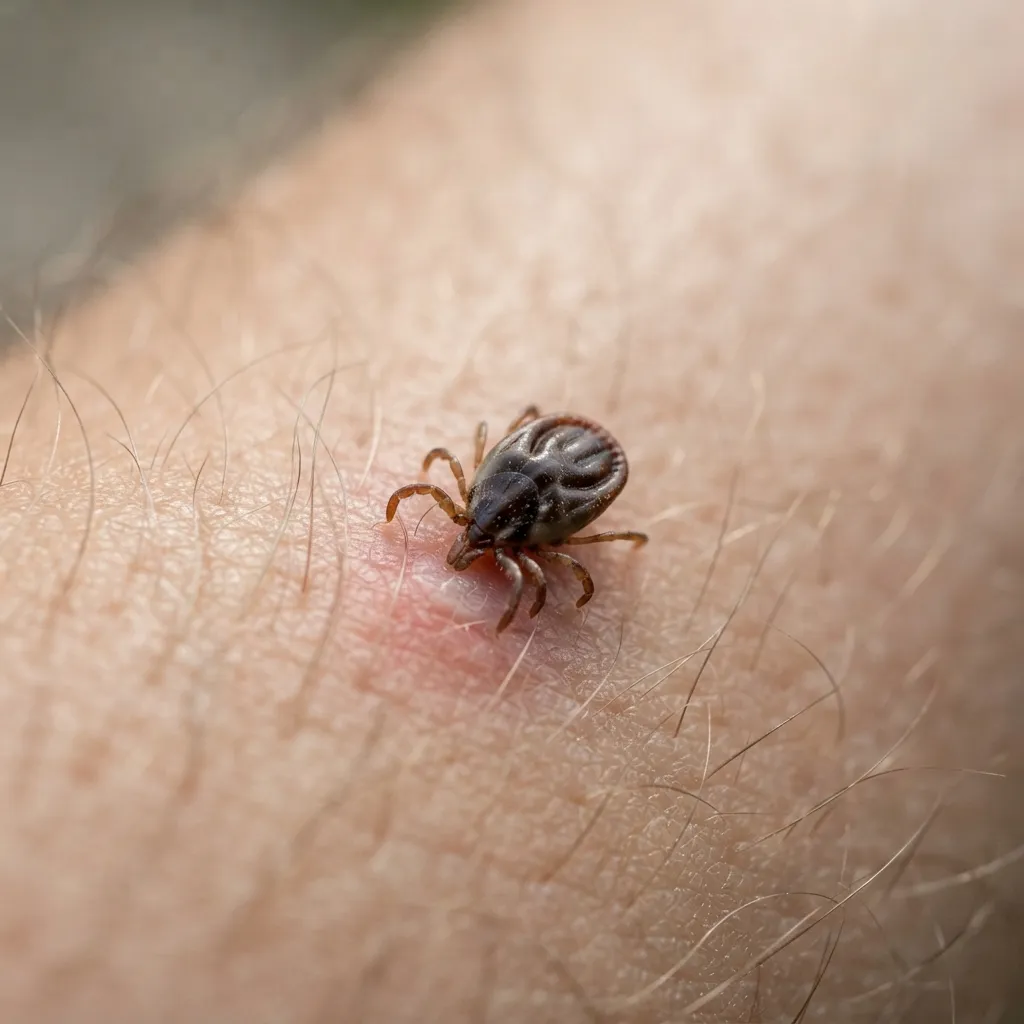
The proper technique: use fine-tipped tweezers (or a tick remover tool) to grasp the tick as close to the skin as possible, then pull straight up with steady, even pressure, without twisting or crushing the body. Chemical tricks (alcohol, gasoline, petroleum jelly) are ineffective and often backfire, as they can cause the tick to regurgitate, increasing infection risk. In certain areas of the US, 30% to 50% of adult ticks carry Lyme disease bacteria—a rate that varies widely by location, making local awareness essential. The key sign to watch for in the following weeks: erythema migrans, a expanding “bullseye” red rash spreading outward from the bite, accompanied by fever or unusual fatigue—a clear reason to seek medical evaluation for early antibiotic treatment, which is highly effective when caught early.
- Grasp the tick with fine tweezers or a tick tool right at skin level, never by the engorged body.
- Pull upward with a steady, straight motion without twisting or squeezing.
- Disinfect the bite site thoroughly once the tick is fully removed.
- Log the date somewhere (a notebook or photo) to track the timeline if a bullseye rash develops later.
- Monitor the area for several weeks; any expanding rash or fever warrants a doctor’s visit.
Lice and fleas
Body lice don’t jump or fly: they spread through direct contact or shared clothing and bedding. They are the only lice species known to transmit severe diseases—epidemic typhus (fatal in roughly 30% of untreated cases), relapsing fever (10% to 40%), and trench fever. In long-term camps without hot water, regularly changing, airing out, and washing clothes above 50°C (122°F) breaks their lifecycle. Head lice, by contrast, spread almost exclusively through direct head-to-head contact—not by sharing hats, despite popular belief—and are best managed with a fine-toothed nit comb, removing eggs individually over several days.
Giardia, roundworms, larva migrans
Three parasites that all rely, one way or another, on the fecal-oral route. Giardiasis (“beaver fever”) comes from untreated water. Ascariasis (roundworms) comes from soil, vegetables, or hands contaminated with microscopic eggs—over 85% of infections show no symptoms, but the cycle is broken by the same basic habit: washing hands before eating. Cutaneous larva migrans, a hookworm larva that migrates under the skin creating an intensely itchy, red winding line, comes from cat or dog hookworm larvae shed in sand or soil through animal waste. Walking barefoot on beaches frequented by pets is the classic scenario—simple footwear is enough to prevent it.
Eating long-term without getting sick
The Field Proteins module details survival hunting, fishing, and protein poisoning (“rabbit starvation”) in depth: a diet that is too lean, completely lacking fat, leads to diarrhea, severe headaches, and an intense craving for fat within about a week, based on Arctic observations by explorer Vilhjalmur Stefansson. Here, the nutrient deficiency to keep in mind is different: it stems from time, not a lack of fat.
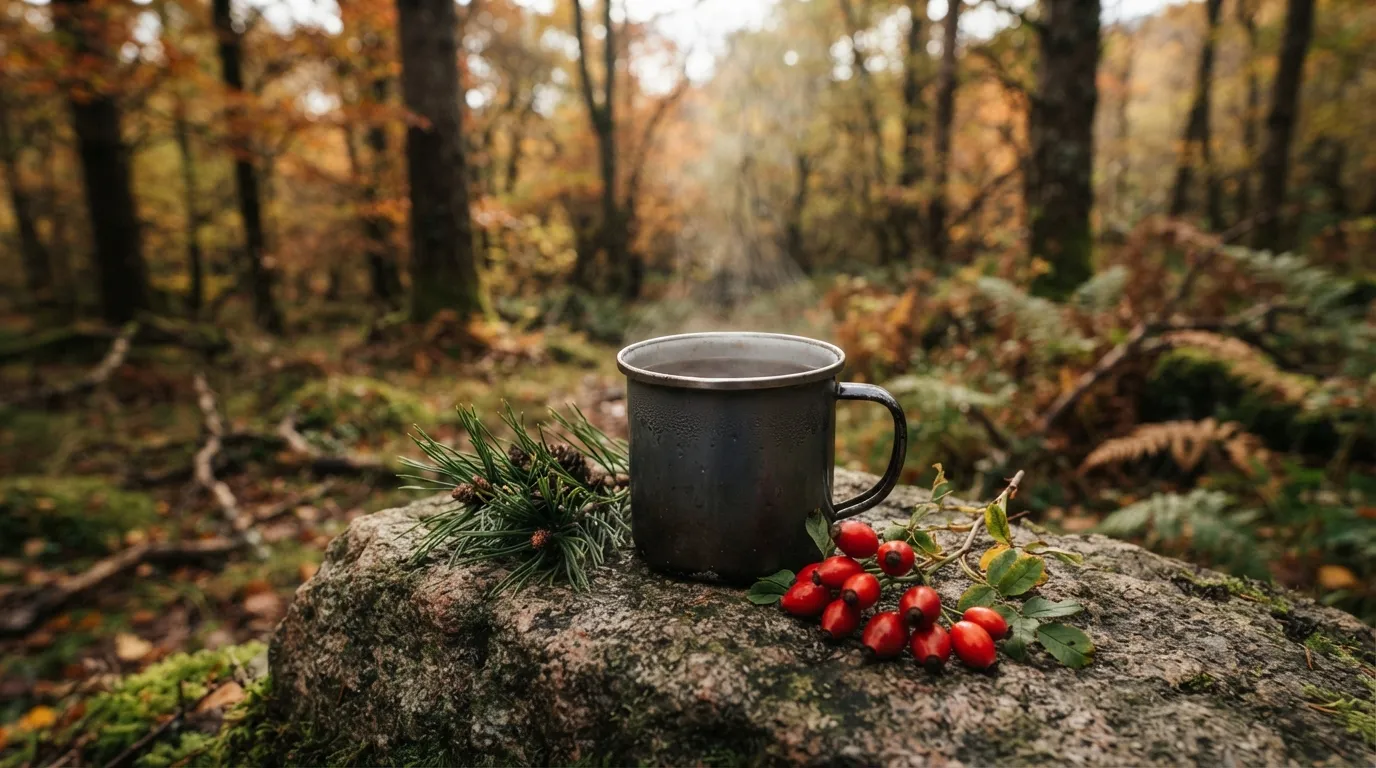
It takes at least a month without any vitamin C intake for the first signs of scurvy to show up—bleeding gums, fatigue, unexplained bruising—though this timeframe varies depending on your body’s initial reserves: participants in clinical trials took six to eight months to display clear symptoms. Polar history provides the best-documented examples: during his 1902 Antarctic expedition, Robert Falcon Scott saw his crew recover from scurvy in just two weeks by switching to a diet of fresh seal meat—“hardly a trace of it remains,” noted contemporary reports. The Inuit, whose traditional diet consists almost entirely of meat and fish, avoid scurvy because raw or lightly cooked meat retains its vitamin C, especially organ meats like liver; Stefansson himself lived on an all-meat diet for a full year under medical supervision in 1928 without developing the disease. In the field, without fresh meat, pine or eastern white cedar needles, brewed as tea, provide roughly 50 mg of vitamin C per 100 g—the exact remedy Jacques Cartier’s crew received from Indigenous peoples in 1536 to treat their outbreak. Rose hips (the fruit of wild rose bushes), harvested in autumn, are among the richest natural sources of vitamin C in temperate regions.
Two other critical references for long-term health: salt, which you lose in large amounts through sweat and must intentionally replace alongside water—drinking massive amounts of water without replenishing salt dilutes blood sodium levels and can lead to severe hyponatremia; and oral rehydration salts (ORS) (water, sugar, and salt mixed in precise ratios), which WHO and UNICEF estimate reduce diarrhea-related mortality by up to 93%—a single ORS packet weighs a few grams and is worth every bit of space in your pack during a severe stomach bug.
Sleep and mental endurance
Fatigue and morale aren’t separate from physical health: they drive your decision-making. Medical interns sleeping less than four hours a night make more than double the errors of those sleeping over seven hours (whose error rate drops to around 11%)—data sourced from hospitals, but the underlying mechanism, impaired judgment under sleep deprivation, applies directly to navigation, campsite safety, and last-minute call-making on expeditions. Research on sleep deprivation also reveals an increasing inability to weigh long-term consequences of choices, even when routine decisions feel normal—the exact psychological trap that leads people to keep hiking into the night or cross a swollen river “because it looked okay.”
Sleeping warm in a sleeping bag rated for actual temperatures—not just the advertised limit—and reducing noise (earplugs, pitching a tent away from loud rivers) protects sleep that is already disrupted by outdoor discomfort. The site’s Mental module details routines and micro-goals that sustain morale over time; remember here that hygiene itself functions as a mental routine—brushing your teeth, changing your socks, and packing your sleeping bag in the exact same order every morning are small actions that restore a sense of control when everything else feels chaotic.
Keeping camp clean: dishes, laundry, waste
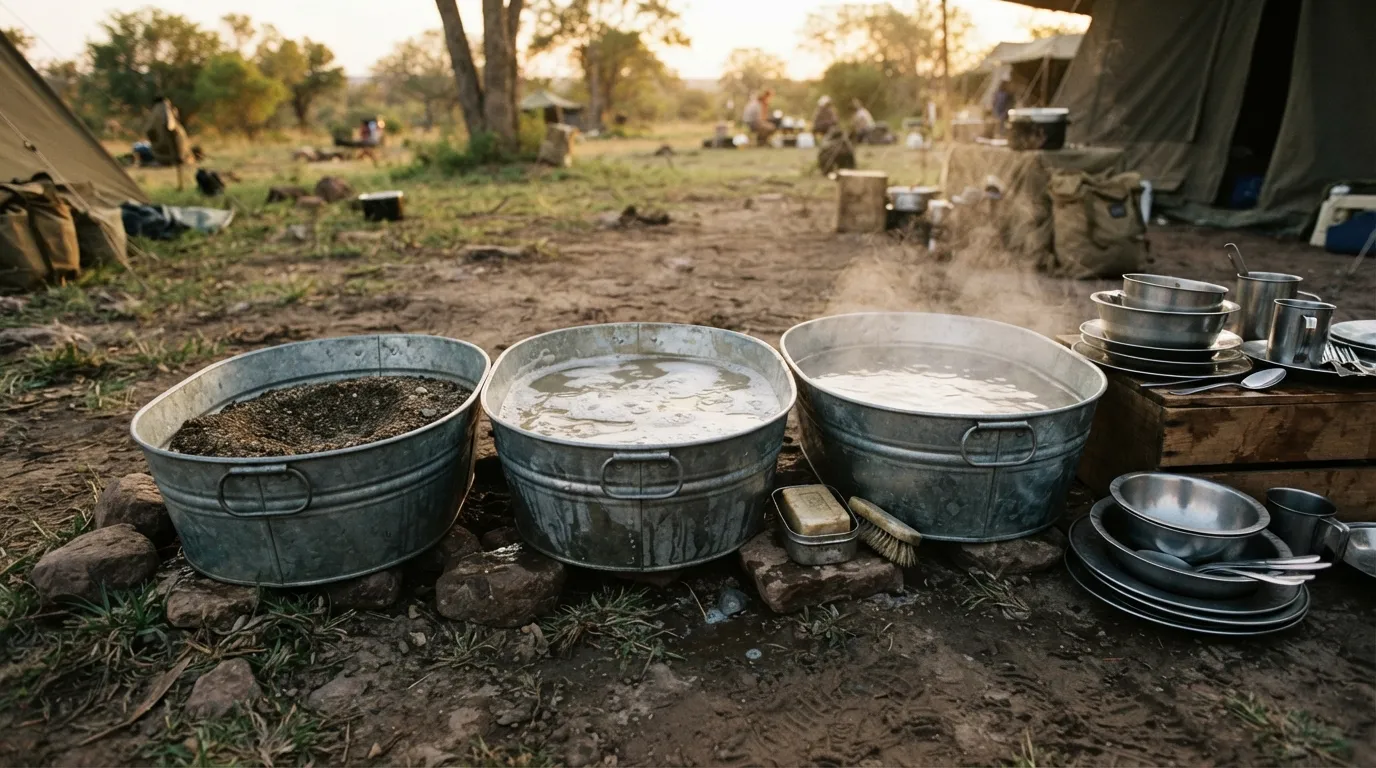
Professional kitchens use a three-sink system—wash, rinse, sanitize—and the principle translates perfectly to camp life: a first container filled with sand or fine ash to scrub away greasy residue through abrasion, a second with a bit of soapy water if available, and a third with water as hot as possible for a final rinse, which kills a large portion of remaining bacteria. Washwater should be dumped far from any water sources (the same 60-meter rule applies as for catholes), ideally strained through a mesh or cloth to avoid scattering food bits that attract wildlife.
A clean camp is essential for wildlife safety: store food and scented waste well out of reach (hung high or sealed in bear-proof canisters), never inside your tent. Keep your cooking area at least 50 meters away from your sleeping area when terrain permits. This goes back to the lessons of the 1967 Glacier National Park bear attacks: bears aren’t drawn by blood; they are drawn by poorly managed food waste.
Doing laundry without soap
Before modern detergents, clothes were washed through beating—rubbed and pounded with wooden paddles against flat stones or in running streams, removing dirt mechanically without chemicals—then rinsed thoroughly and dried in direct sunlight, where UV rays act as a natural disinfectant on surface pathogens. Wood ash (ash lye) served for millennia as an alkaline degreaser before true soap existed. Another clever solution comes from plants: roots of species like soapwort or yucca (used by several Indigenous North American tribes) contain natural saponins that lather when agitated in water—a plant-based soap growing right along the trail.
Survival hygiene kit and wild plants
Without diving into medical dosages, which require professional guidance, a long-term expedition medical kit typically covers these essentials: an antidiarrheal, oral rehydration salts, an antihistamine (bites, allergic reactions), a skin antiseptic, pain relievers, and an antifungal ointment. Two wild plants appear in almost every bushcraft manual for minor daily ailments: broadleaf plantain (Plantago major), whose crushed leaves have long been used in folk medicine as a poultice for insect bites and minor scrapes—modern research looks at its compounds (allantoin, aucubin) though evidence remains preliminary—and yarrow (Achillea millefolium), the classic field styptic. Modern clinical data for both remains limited: these are traditional field workarounds, not substitutes for actual medical antiseptics.
Hot water: a simple comfort that heals
A sip of hot water or herbal tea offers no extra calories over cold water, but it affects the body in ways numbers can’t easily measure: it warms your core from the inside out and boosts your spirits. In historical accounts of polar exploration, rations of hot tea or cocoa hold a massive psychological place out of all proportion to their actual caloric value—because they mark a break, a ritual, a moment where the physical grind stops. Heating water consumes fuel, so it isn’t free; but when dealing with cold, exhaustion, or sinking morale, it is often the most worthwhile investment you can make.
Considerations for women and children
Urinary tract infections (UTIs) affect women roughly four times more often than men due to simple anatomy (a shorter urethra located closer to the rectum). Two field factors significantly increase this risk: dehydration and holding in urine for too long because of inconvenient conditions. Staying properly hydrated and not delaying bathroom breaks are primary preventive steps.
For children, focus on two factors made critical by their physiology: a higher skin surface area-to-body mass ratio, which accelerates heat loss and dehydration, and a lower ability to communicate discomfort before it escalates. In practice, this requires more frequent, mandatory hygiene breaks rather than waiting for them to ask, along with active monitoring of their feet, hands, and fluid intake—a child won’t always tell you when something is chafing or itching.
Frequently asked questions
Why is poor hygiene more dangerous than wild animals on an expedition?
Because the fecal-oral route (unwashed hands, untreated water) spreads diseases that evacuate far more people every year than animal bites or attacks. The World Health Organization estimates that contaminated water contributes to approximately 2.2 million deaths annually worldwide.
How deep and how far from water should you dig a cathole?
A cathole should be dug 15 to 20 cm (6 to 8 inches) deep—in the most biologically active soil layer—and at least 60 meters (200 feet) away from any water source, camp, or trail, following Leave No Trace guidelines used by outdoor educators worldwide.
Are bears really attracted to menstrual blood?
No. This myth stems from unproven speculation following two fatal attacks in Glacier National Park in 1967. A 1991 study demonstrated that test bears showed no special interest in menstrual odors; the actual cause of the attacks was improper food waste management at the campsites.
How do you spot and prevent scurvy on long trips?
Scurvy appears after at least one month without any vitamin C, causing bleeding gums and severe fatigue. Fresh or raw meat (especially liver), pine needle tea, and rose hips are effective field sources of vitamin C, as proven by both polar explorers and traditional Inuit diets.
What is the correct way to remove a tick?
Use fine-tipped tweezers or a tick tool to grasp the tick right at the skin line, then pull straight up with steady pressure without twisting or crushing its body. Chemical methods (alcohol, petroleum jelly) are ineffective and increase infection risk by prompting the tick to regurgitate.
Can you wash yourself with wood ash instead of soap?
Partially: wood ash alone acts as an alkaline abrasive that cuts through some grease, but it isn’t real soap, which requires saponification with a fat. Mixed with melted animal fat, ash approaches a primitive soap; used alone, it is better than nothing, but limited.
Key takeaways
- The fecal-oral route, spread via dirty hands or contaminated water, causes far more expedition failures than wildlife: wash your hands before eating and after using the bathroom, every single time.
- Dig catholes 15–20 cm deep and at least 60 meters from water sources; pack out toilet paper or bury it deep—never burn it in dry environments.
- Dry your feet every night and tape high-friction areas before blisters form: it’s the easiest way to prevent lost trail days.
- Remove ticks using a steady, straight pull—never twist or burn them; watch for an expanding bullseye rash over the following weeks.
- Scurvy sets in after a month without vitamin C: pine needles, rose hips, and fresh or raw meat are reliable field defenses.
Going further
- Leave No Trace, The 7 Principles — the authority on human waste management and minimizing outdoor impact.
- NOLS (National Outdoor Leadership School), co-creators of Leave No Trace—trainings and guides on expedition self-reliance.
- CDC, Clean Hands Save Lives — clear research on handwashing efficacy.
- Wilderness Medical Society — gold-standard guidelines on wilderness medicine, water treatment, and field wound care.
Sources for this module (30)
- CDC — Clean Hands, why handwashing matters
- Wikipédia FR — Péril fécal
- Wikipedia — Human waste
- Wikipedia — Leave No Trace
- Wikipedia — Night of the Grizzlies
- Wikipedia — Menstrual cup
- Wikipedia — Toxic shock syndrome
- Wikipedia — Scurvy
- Wikipedia — Miswak
- Wikipedia — Charcoal
- Wikipedia — Blister
- Wikipedia — Trench foot
- Wikipedia — Tropical ulcer
- Wikipedia — Athlete's foot
- Wikipedia — Tick bite
- Wikipedia — Body louse
- Wikipedia — Pediculosis
- Wikipedia — Giardiasis
- Wikipedia — Ascariasis
- Wikipedia — Cutaneous larva migrans
- Wikipedia — Maggot therapy
- Wikipedia — Sphagnum
- Wikipedia — Oral rehydration therapy
- Wikipedia — Protein poisoning (rabbit starvation)
- Wikipedia — Sleep deprivation
- Wikipedia — Urinary tract infection
- Wikipedia — Soap
- Wikipedia — Verbascum thapsus
- Wikipedia — Achillea millefolium
- Wikipedia — Plantago major
Continue in "Cross-cutting skills"
Knots and Cordage: The 10 That Actually Matter
3,857 knots listed in the reference book, and ten that are enough to pitch a shelter, scale a cliff, or save a life.
Knife, axe, saw: tools and the techniques that prevent injuries
The 'best knife' doesn't exist: only the one that fits your hand and your task—and the movements that keep you from getting hurt.
The Kit: What Should Be in Your Pockets, Backpack, and Car
What you carry on you saves you when you lose your pack: the kit hierarchy and essential checklists you shouldn't improvise.