Savanna and bushveld: the land of big game
Lions kill fewer people than hippos, and mosquitoes kill more than all other animals combined: the savanna shouldn't be read through the lens of popular fears.
The grass is yellow all the way to the horizon, it’s 4 p.m., and the heat is just beginning to take the edge off. A herd of impalas raises their heads simultaneously for no visible reason, then goes right back to grazing. You’ve been walking for two hours without spotting a single lion—and ironically, the animal on your mind the least is the one most likely to kill you today: the hippo lying in wait at the waterhole you planned to walk along, or the mosquito that will bite you tonight. The savanna follows its own rules, and they look nothing like nature documentaries.
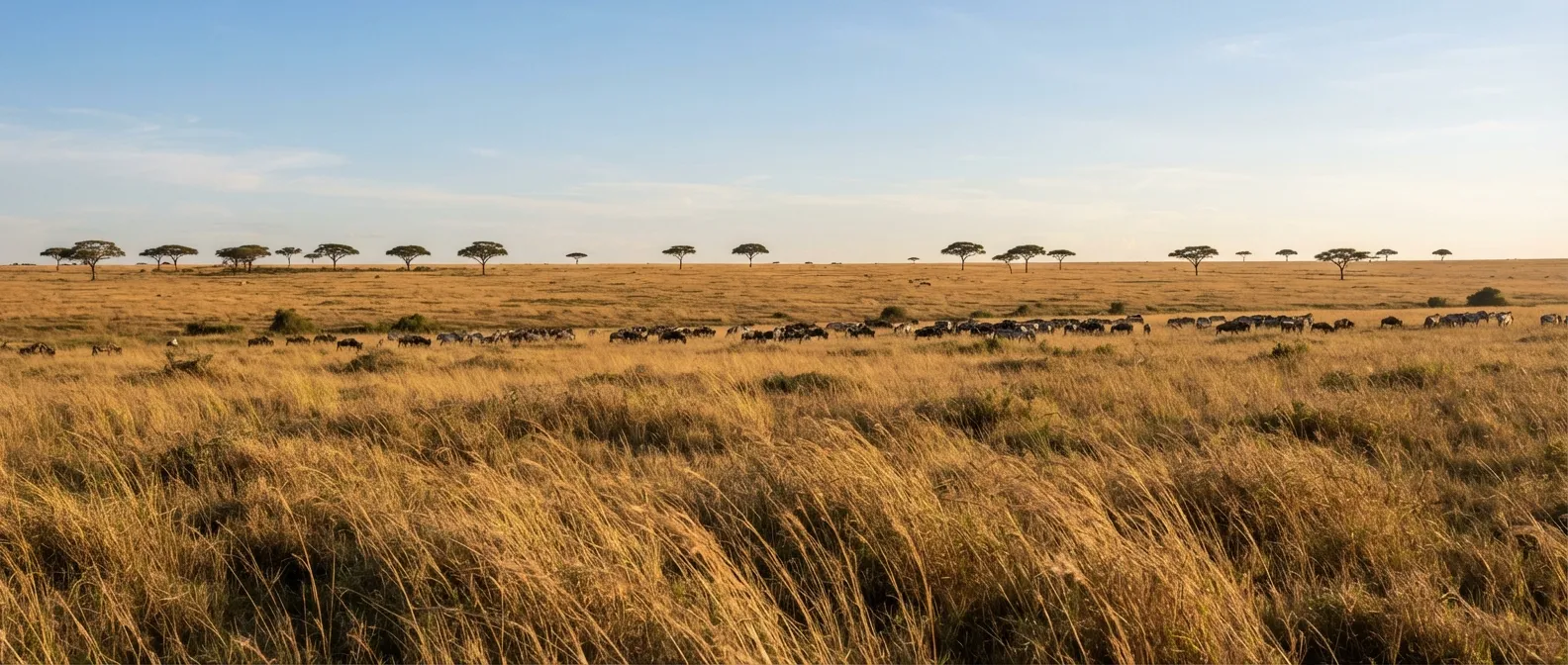
The real killers of the savanna
Lions grab our imagination, but statistics paint a very different picture—even if, as with most wildlife data, exact numbers vary across studies and remain difficult to confirm with absolute certainty from country to country.
| Mosquito (malaria) | Stray dog (rabies) | Hippopotamus | Buffalo | Snake (puff adder) | Lion | |
|---|---|---|---|---|---|---|
| Estimated deaths/yr | ~580,000 in Africa | ~59,000 globally, 95% in Africa/Asia | hard to pinpoint, massive isolated events (e.g., ~10 deaths reported, Niger 2014) | overestimated in popular culture | #1 cause of snakebite deaths in Africa | a few dozen |
| Mechanism | bite, parasite | bite, virus | charge, capsizing dugout canoes | charge from a solitary bull ('dagga boy') | bite, does not flee | direct attack, rare |
| How to avoid | mosquito net, repellent | vaccinate any bite | never stand between it and water | climb, never approach a lone bull | boots, watch where you step | stand tall, do not run |
The Anopheles mosquito, vector of malaria, remains the continent’s top killer—causing roughly 610,000 malaria deaths worldwide in 2024, 95% of which occurred in sub-Saharan Africa. Stray dogs, through rabies, claim nearly 59,000 more lives globally each year, overwhelmingly across Africa and Asia. Among large mammals, the hippopotamus is widely considered deadlier than lions and leopards combined in East African culture—a single dugout canoe capsizing attributed to a hippo, reported by the press in Niger in 2014, reportedly claimed over ten lives alone—even though precise, standardized cross-country stats are lacking and this specific event could not be cross-referenced with a primary source. The African buffalo, nicknamed “The Black Death,” owes its fearsome reputation mainly to solitary bulls kicked out of the herd (“dagga boys”), which are unpredictable and known to stalk or charge a hunter who wounded them. As for snakes, it’s the puff adder—not the rarer, more skittish black mamba—that causes the most snakebite fatalities in Africa: it relies on camouflage, never flees, and strikes when accidentally stepped on.
The rules of animal encounters
The basic rule for bears or wolves applies here too: never run from an animal faster than you, which includes pretty much everything living in the savanna. Full details on posture and species-specific reactions can be found in the dangerous wildlife guide; in Africa, four specific cases come up constantly.
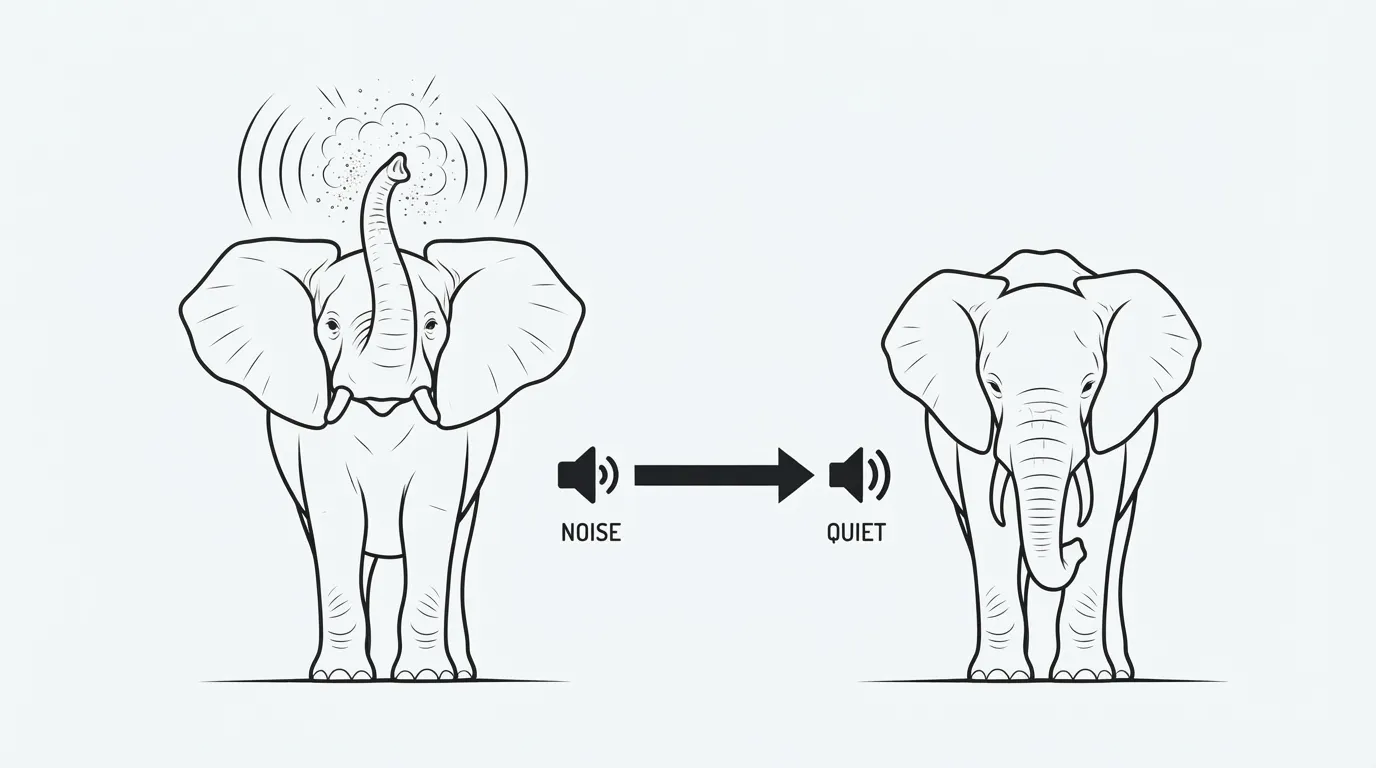
- Elephant: a mock charge, which is the most common, involves wide-flared ears, a raised trunk, and loud trumpeting—it almost always stops before making contact. A real charge, far rarer, features ears pinned back against the body, a tucked trunk, and near-total silence. In both cases: never run in a straight line directly away (an elephant is faster over short distances); back away diagonally toward cover or a sturdy tree.
- Lion: stand tall, make yourself look big, speak loudly and firmly, and slowly back away without ever turning your back. A lion watching a running back triggers a chase reflex it won’t trigger against a stationary silhouette.
- Buffalo: climbing is your best bet if a suitable tree is nearby—buffalos cannot climb, unlike lions which sometimes can. A lone “dagga boy” spotted by himself late in the dry season should be given a wide berth: field guides consider him the single most dangerous animal profile on the continent.
- Hippopotamus: never put yourself between a hippo and open water, which is its primary escape route, or between a mother and her calf. Hippos defend aquatic territories ranging from 50 to 500 meters depending on the setting (lake or river)—skirting a waterhole well back from the edge significantly reduces your risk.
Trekking through the bush
The ultimate rule, repeated by every professional guide, isn’t a fancy piece of gear: never walk alone without someone who knows the terrain. The cooler hours (early morning, late afternoon) are both the most tolerable for your body and the exact times when large herbivores and predators are most active—that’s a tradeoff to be aware of, not a contradiction. Use a walking stick to probe tall grass before stepping forward (snakes), and make regular noise—talk or clap at intervals. This avoids far more surprise encounters than it causes: most large animals would much rather avoid a human they heard coming than be startled at close range.
Water: waterholes and sand rivers
A savanna waterhole draws herbivores—and the predators waiting for them. Approaching one requires the same caution as any wild game watering spot: never at dawn or dusk, never in a straight line through thick brush where an animal could be lying low, and always scan the surface before stepping up to the edge—that motionless log might be an ambushing crocodile. Stagnant water also carries schistosomiasis (bilharzia), transmitted by freshwater snails and present in most permanent waterholes across sub-Saharan Africa. The disease affects over 236 million people worldwide, the vast majority on the continent: always purify your water, even if it looks clear and calm.
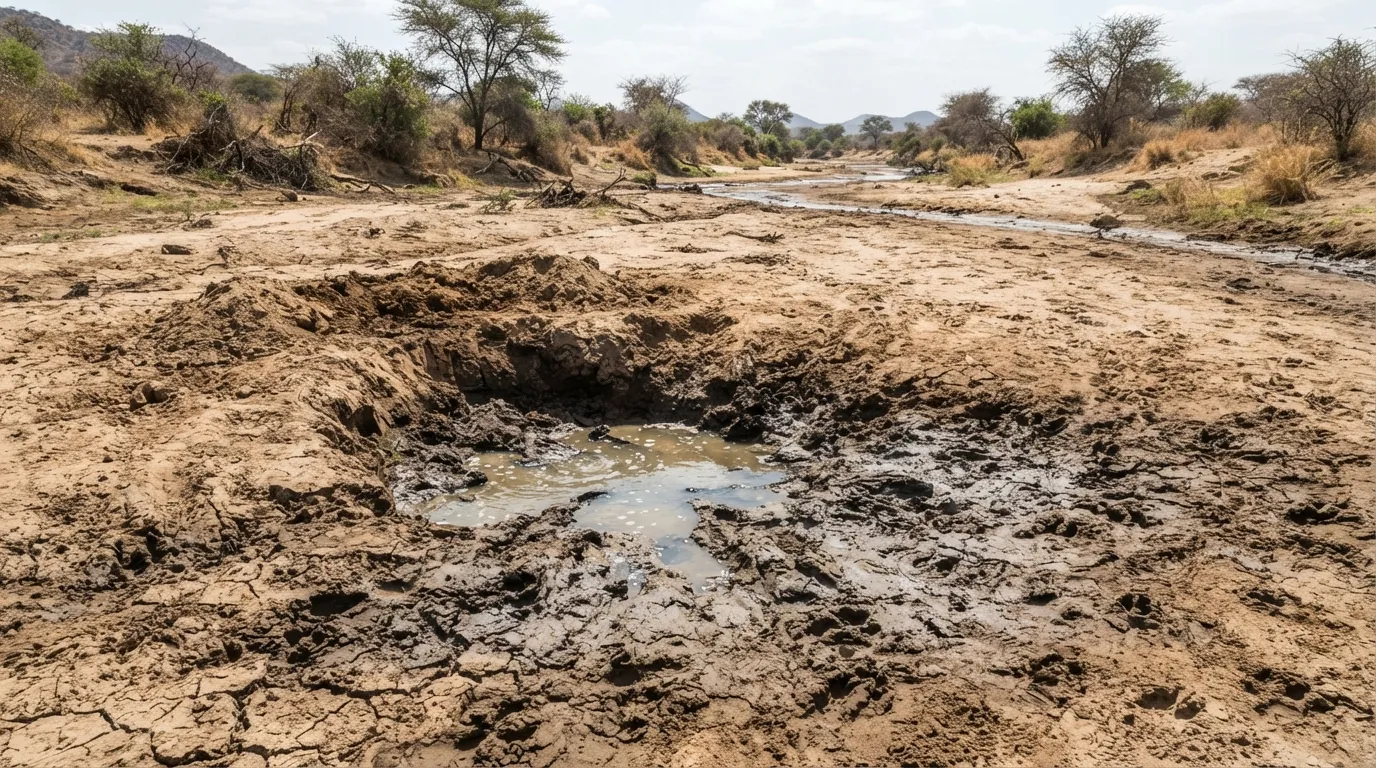
During the dry season, when a river looks completely dry on top, water often keeps flowing beneath the sand in the riverbed. This is the secret behind “sand rivers,” used for millennia by the Kalahari San: dig a shallow pit directly into the sandy bed, often right where you spot digging marks left by elephants—they use their tusks and front feet to do the exact same thing. The San refine this with “sip wells”: a shallow hole in damp sand, a hollow reed pushed down into it, used to suck water directly up into a hollowed ostrich eggshell that serves as both a canteen and a buried cache.
Bushfires: speed and shelter
Dry savanna grass burns fast—up to 22 km/h across open plains, faster than a human can run over any distance. If a bushfire is coming your way, your best move is almost always to sprint into a burned area rather than running ahead of the wind: fire needs unburned fuel to keep moving, and charred ground won’t catch twice. Ridges and dry riverbeds devoid of tall grass also provide relative shelter.
Shelter: the thorn boma
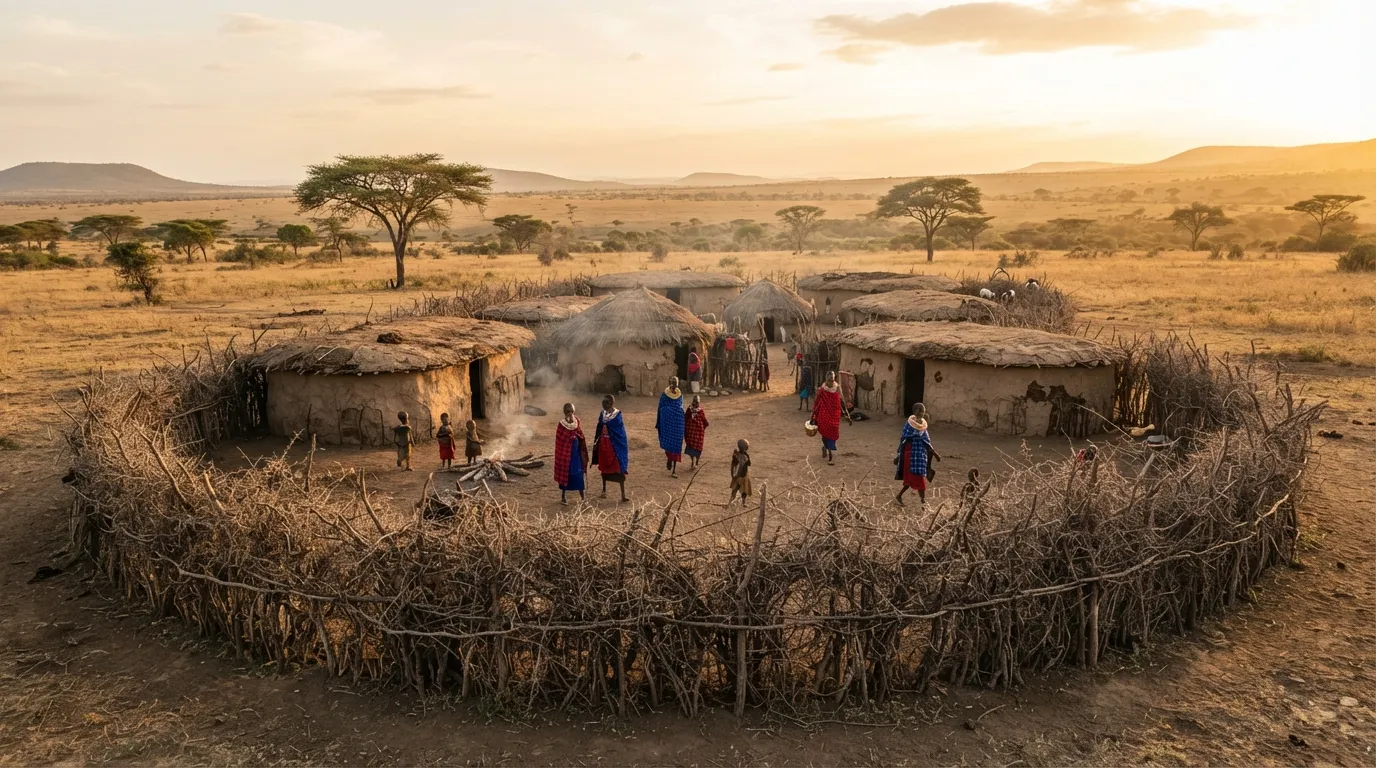
Traditional Maasai homesteads, known as an enkang or boma, rely on a simple, brutally effective concept: encircling the camp with a thick fence of woven, thorny acacia branches. It’s dense enough to stop lions and hyenas from forcing their way in without risking severe injury. Livestock is kept safely in the center at night, with huts built around them. A wilderness bivouac can replicate this on a smaller scale: sleeping off the ground (a elevated platform, vehicle, or sturdy tree) is always safer than sleeping on the dirt, and even a rough thorn hedge offers far better protection than relying solely on a campfire you hope will keep animals at bay.
Foraging in the bush
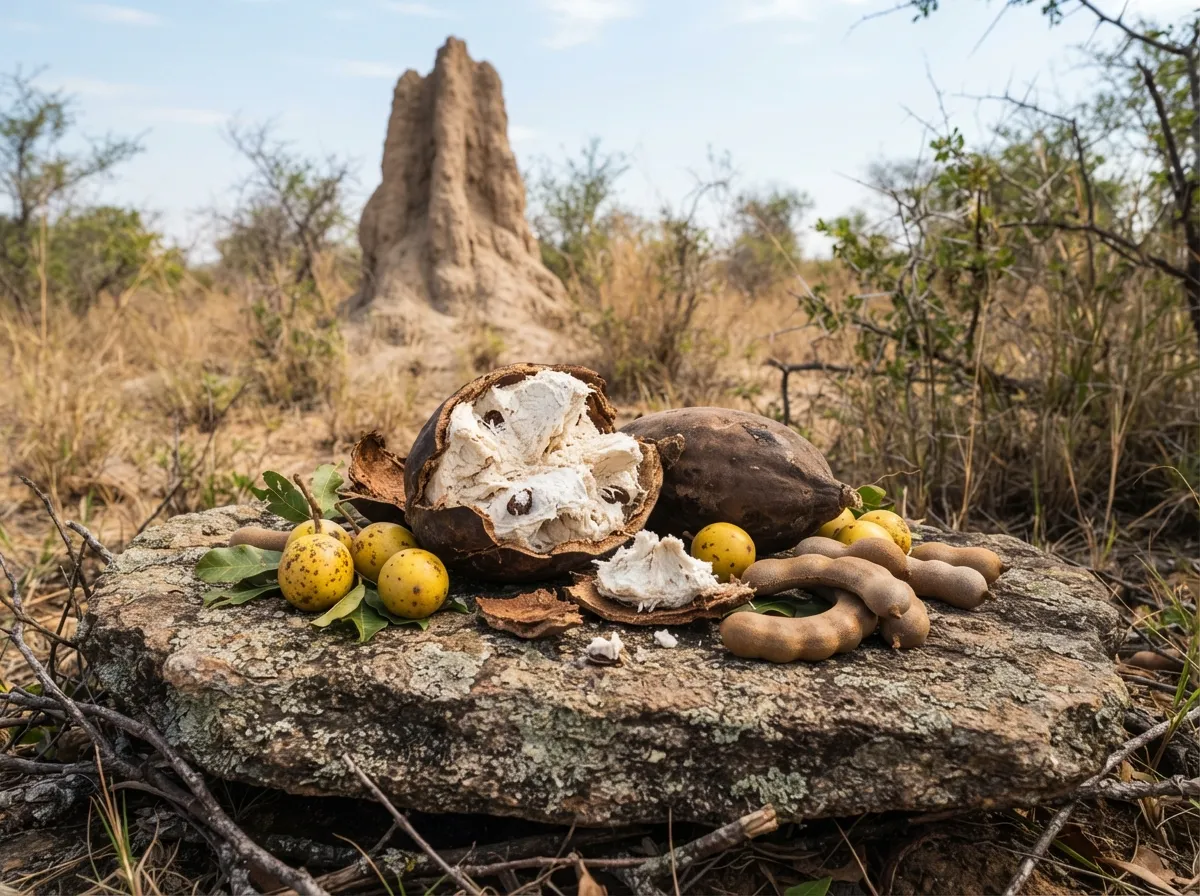
The baobab produces fruit with a mealy pulp rich in vitamin C and potassium, eaten raw or mixed into drinks. Its trunk can store up to 120,000 liters of water—a massive asset for the tree itself, though not easily accessible to humans without heavy tools. The marula, whose fruit naturally ferments after falling to the ground, feeds humans and elephants alike; its inner nut, though tough to crack out of its hard shell, provided a critical winter food reserve for hunter-gatherers. The tamarind offers tart pulp and edible leaves packed with calcium. Termites and locusts, rich in protein, are widely eaten across the continent—roughly 80% of countries globally practice some form of entomophagy, with Africa leading the way. The African plant guide breaks down the exact identification steps for these resources, species by species.
Tsetse flies, malaria, and bilharzia
Malaria is spread by Anopheles mosquitoes, which bite mainly between dusk and dawn: insecticide-treated nets, long sleeves at night, and prophylactic medication remain the most dependable protections for travelers—a properly pitched mosquito net cuts infection risk by over 70%. The tsetse fly, vector for sleeping sickness, is strongly attracted to dark colors, especially navy blue; wearing light-colored clothing significantly cuts down on bites in high-risk zones, mostly concentrated in Central Africa. Bilharzia (schistosomiasis), mentioned earlier in connection with stagnant water, rounds out this trio of invisible killers that claim far more lives than any apex predator ever will.
Cold nights and prowling hyenas
Despite the popular image of a continent that’s scorching hot 24/7, savanna nights can plummet to around 5 °C during the austral winter (June–August in the Southern Hemisphere)—a brutal drop from daytime highs of 30 °C or more. Hyenas, active and far bolder under the cover of darkness, frequently target anything sleeping out in the open unprotected: an open bivouac without a boma or raised platform in deep bush is the highest-risk setup you can choose. Keeping a small fire burning all night goes a long way toward deterring nocturnal scavengers.
Indigenous wisdom of the bush
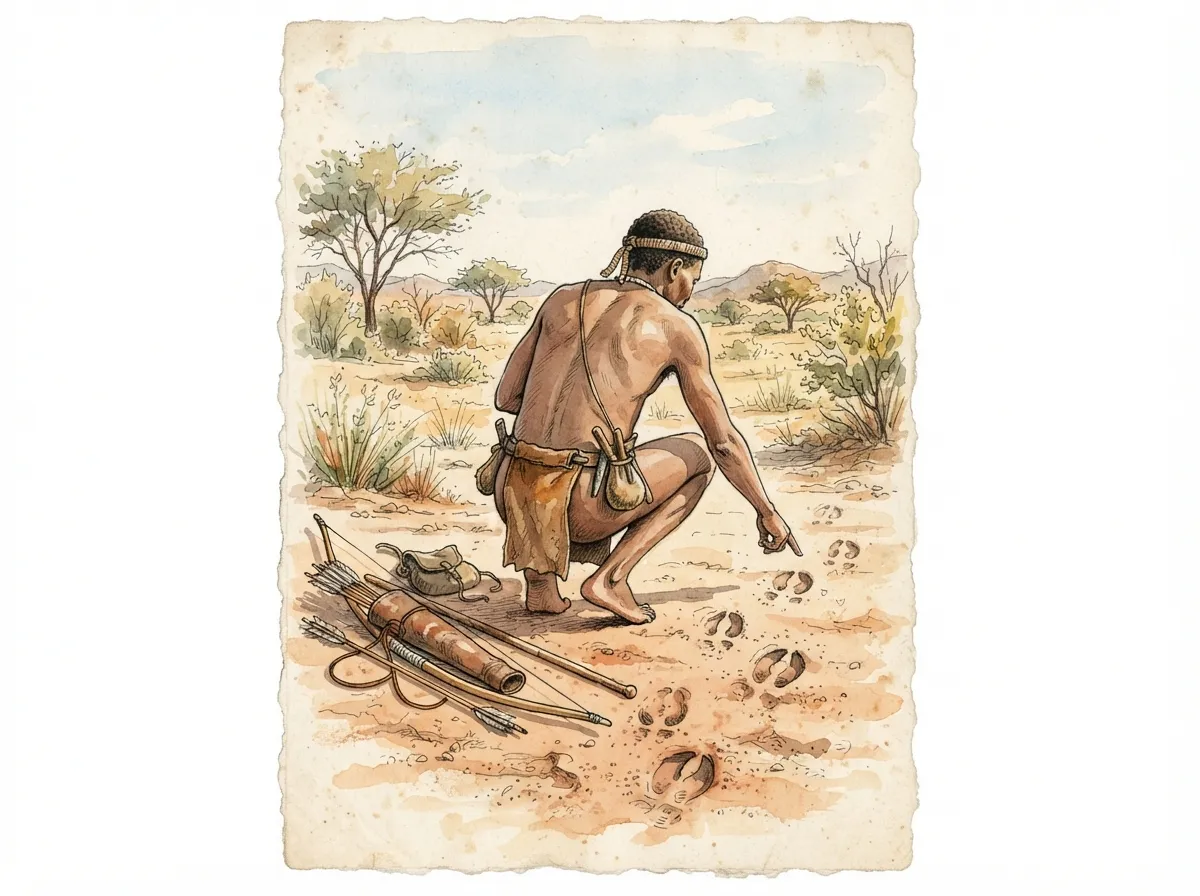
Over tens of thousands of years, the Kalahari San developed an unmatched understanding of the desert and dry savanna: expert tracking skills that allow them to follow an antelope’s trail for hours, and persistence hunting—leveraging the fact that humans are the ultimate endurance runners thanks to our unique ability to dump heat through sweat, literally running faster prey to exhaustion over long distances. They also mastered finding water-storing tubers and wild melons. The Maasai, semi-nomadic pastoralists of East Africa, built their entire social structure around cattle and their protection—with the thorny boma being its most iconic symbol. The Hadza of Tanzania, among the last true hunter-gatherers on earth, still get up to 20% of their calories from wild honey. They locate hives using a extraordinary partnership with a wild bird, the honeyguide: the bird leads the human to a bee nest, and the human leaves behind the beeswax as a reward.
Savannas around the globe
The savanna ecosystem isn’t unique to Africa. The Australian Outback, arid and scorching, shares more in common with deserts than African bushveld—check out our Desert guide for specialized survival tactics there. In South America, Brazil’s Cerrado—the country’s second-largest biome—is home to jaguars, maned wolves, and giant anteaters living on nutrient-poor soil shaped by regular natural fires. Meanwhile, the Llanos of Venezuela and Colombia flood under a meter of water during the wet season, transforming into a kingdom for anacondas, caimans, and capybaras. The word “savanna” covers wildly different reality on the ground: while the intense heat is universal, available water, wildlife hazards, and key survival instincts shift dramatically from one continent to the next.
Walking safaris: rules and real cases
A walking safari should never be attempted alone. Across Southern Africa, field guides undergo rigorous training and certification—FGASA (Field Guides Association of Southern Africa), the benchmark organization since 1990, sets strict qualification tiers and enforces safety protocols. In major game reserves like South Africa’s Kruger National Park, walking unescorted off designated trails without a certified, armed guide is strictly illegal. Kruger spans over 19,600 km² and is densely populated by the Big Five (lion, leopard, rhino, elephant, African buffalo)—a term coined by colonial hunters to identify the five most dangerous animals to track on foot.
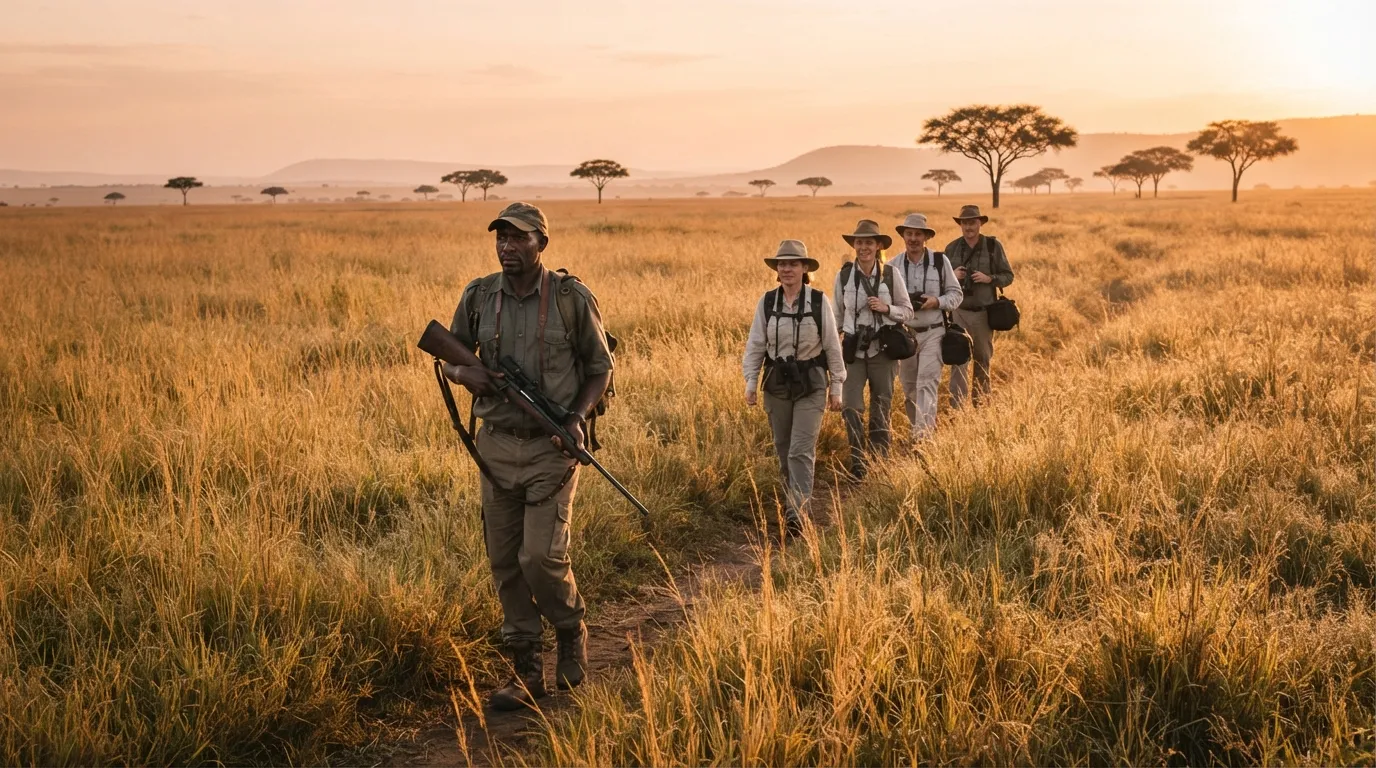
Real-world incidents prove these regulations aren’t just bureaucracy. Despite strict enforcement, poachers in Kruger have been trampled by elephants or killed by lions inside the park boundaries; certified FGASA guides exist precisely to ensure visitors never find themselves in those situations. The golden rule taught in every southern African guide academy comes down to one sentence: it isn’t the most aggressive animal that kills you, it’s the distance you failed to respect.
Frequently asked questions
What is the most dangerous animal in Africa?
The mosquito, by a huge margin, due to malaria—causing roughly 610,000 deaths a year worldwide, 95% of them in Africa. Among large animals, hippos and buffalos are widely considered deadlier than lions in East African culture, though exact, standardized data remains hard to compile.
What should you do if an elephant charges?
First, identify the type of charge: a mock charge features wide-flared ears, a raised trunk, and loud trumpeting, almost always stopping short of contact. A real charge, which is far rarer, happens in silence with ears pinned back—in both scenarios, never run straight back; back away diagonally toward cover.
How do you find water in a dry riverbed in the savanna?
Dig straight into the sandy bed, ideally where round depressions show where elephants have already dug. Water frequently continues flowing beneath the sand long after the surface dries up completely.
Can you do a walking safari without a guide?
No. In virtually all major African game reserves, including Kruger National Park, walking unescorted without a certified, armed guide is strictly prohibited. This rule exists because encounters on foot with the Big Five go wrong far more easily than encounters from inside a vehicle.
Do elephants really get drunk on fermented marula fruit?
No, that’s a myth made famous by a 1974 documentary. Scientific studies show an elephant would have to consume an impossibly massive quantity of fermented fruit to feel any alcoholic effects.
How do you protect yourself from malaria without medication?
Using an insecticide-treated mosquito net properly reduces your infection risk by over 70%. Wearing long sleeves and pants around dusk and dawn, when Anopheles mosquitoes are most active, provides crucial additional protection.
Key takeaways
- Mosquitoes and stray dogs claim far more lives than lions: malaria and rabies remain the real statistical threats in the savanna.
- If confronted by an elephant, buffalo, lion, or hippo, never run—each species requires a specific backing-off strategy detailed in our predators guide.
- During the dry season, water hides under the sand of dry riverbeds—often right where elephants dig for it.
- Bushfires travel faster than a human can sprint: escaping into an already burned area saves lives, while fleeing downwind is deadly.
- A walking safari must always be conducted with a certified, armed guide—never go alone, and never trek without local knowledge of the land.
Going further
- Louis Liebenberg, The Art of Tracking: The Origin of Science (1990)—the definitive work on Kalahari San tracking techniques.
- FGASA, Field Guide Certification Program—to learn what professional wilderness guiding actually involves.
- SANParks, official Kruger National Park website—for updated safety guidelines and approved walking safari zones.
- African Parks, conservation management organization across the continent—to research protected reserves before traveling.
Sources for this module (30)
- Wikipedia EN — Hippopotamus
- Wikipedia EN — African buffalo
- Wikipedia EN — African bush elephant
- Wikipedia EN — Nile crocodile
- Wikipedia EN — Black mamba
- Wikipedia EN — Puff adder
- Wikipedia EN — Spitting cobra
- Wikipedia EN — Rabies
- Wikipédia FR — Lions mangeurs d'hommes de Tsavo
- Wikipedia EN — Malaria
- Wikipedia EN — African trypanosomiasis
- Wikipedia EN — Schistosomiasis
- Wikipedia EN — San people
- Wikipedia EN — Maasai people
- Wikipedia EN — Hadza people
- Wikipedia EN — Baobab
- Wikipedia EN — Sclerocarya birrea (marula)
- Wikipedia EN — Tamarind
- Wikipedia EN — Termite
- Wikipedia EN — Entomophagy
- Wikipedia EN — Wildfire
- Wikipedia EN — Kalahari Desert
- Wikipedia EN — Big Five game
- Wikipedia EN — Hoodia
- Wikipedia EN — Persistence hunting
- Wikipedia EN — Ostrich
- Wikipedia EN — Cerrado
- Wikipedia EN — Llanos
- Wikipedia EN — Kruger National Park
- FGASA — Field Guides Association of Southern Africa
Continue in "By environment"
The temperate forest
The most generous environment in the world can also swallow you in ten minutes: here is how to read it instead of fearing it.
Mountains: Where the Weather Decides for You
The weather changes in thirty minutes, altitude works against you, the terrain is unforgiving: the signs to read before it's too late.
Snow, extreme cold, and the Far North: surviving at minus 30
Cold doesn't kill you: humidity, exhaustion, and panic do. What you need to know to stay alive below zero.