Ticks, mosquitoes, hornets: the tiny creatures that actually kill
No European snake, bear, or wolf kills as many people as insects do: nature's true threat weighs just a few milligrams.
You’re on all fours in the tall grass searching for a geocache, or just sitting in a t-shirt having a drink in the garden on a July evening. Nothing makes a sound, nothing shows its teeth, nothing looks like a danger. And yet, worldwide, these very creatures—not snakes, not bears, not sharks—kill the most people every year. Nature’s danger doesn’t have fangs: it has six or eight legs, and it’s already on you before you even notice it.
The ranking that defies all expectations
The WHO and CDC have agreed on this point for years: the deadliest animal on the planet is neither the shark (around ten deaths per year), nor the snake (around 100,000), nor even human beings themselves outside of wartime—it’s the mosquito. Malaria, dengue, yellow fever, chikungunya, encephalitis: mosquitoes alone cause several hundred thousand deaths every year, the overwhelming majority from malaria in sub-Saharan Africa. The mosquito doesn’t bite with fangs: it transmits, and that’s what makes it statistically unbeatable.
In France, the tick occupies a different spot. It almost never kills directly, but it transmits Lyme disease to roughly 50,000 people per year—an estimate that has varied between 25,000 and 68,500 diagnosed cases depending on the year, according to Santé publique France and the Sentinelles network. Meanwhile, hymenoptera—wasps, bees, hornets—kill about fifteen people each year in France through anaphylactic shock: more than all of Europe’s snakes, bears, and wolves combined, which together account for only one or two deaths per decade on the continent.
Ticks: questing, biting, waiting
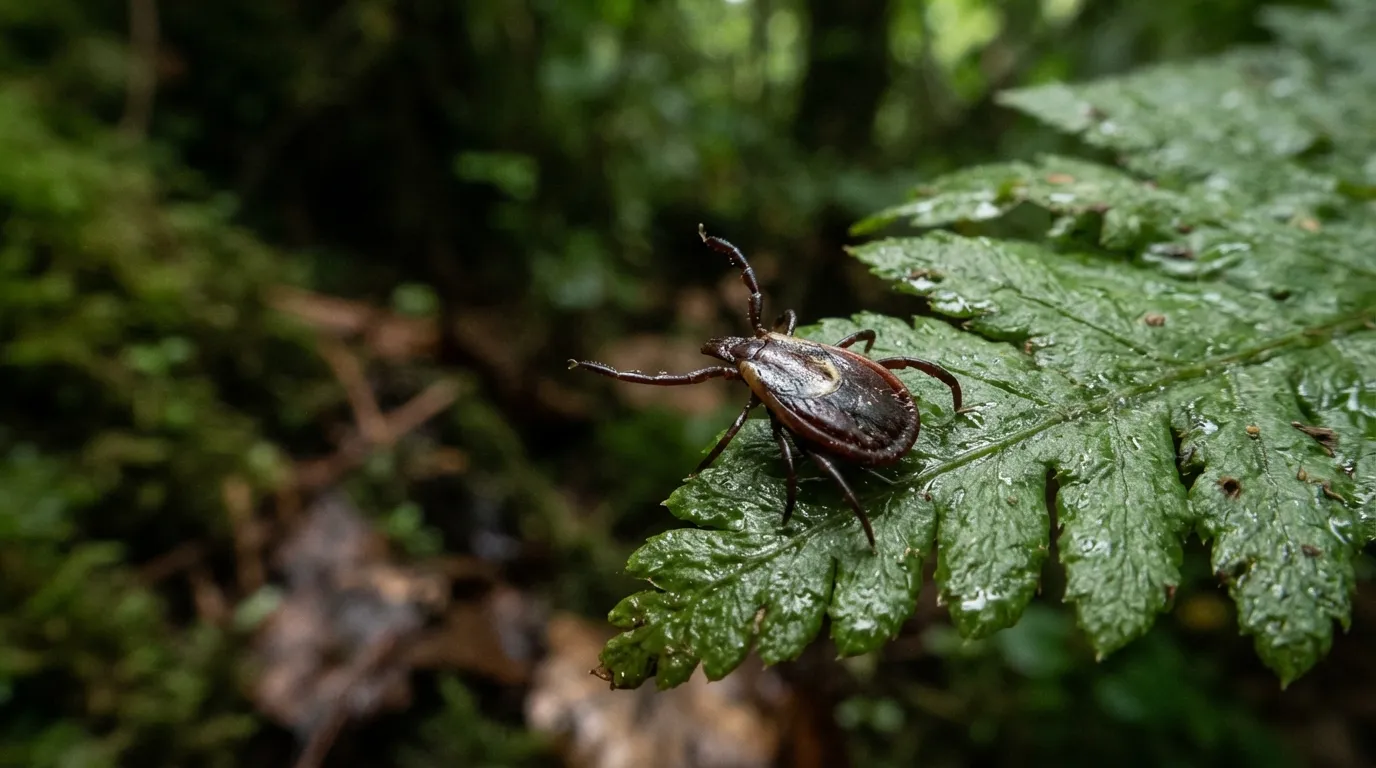
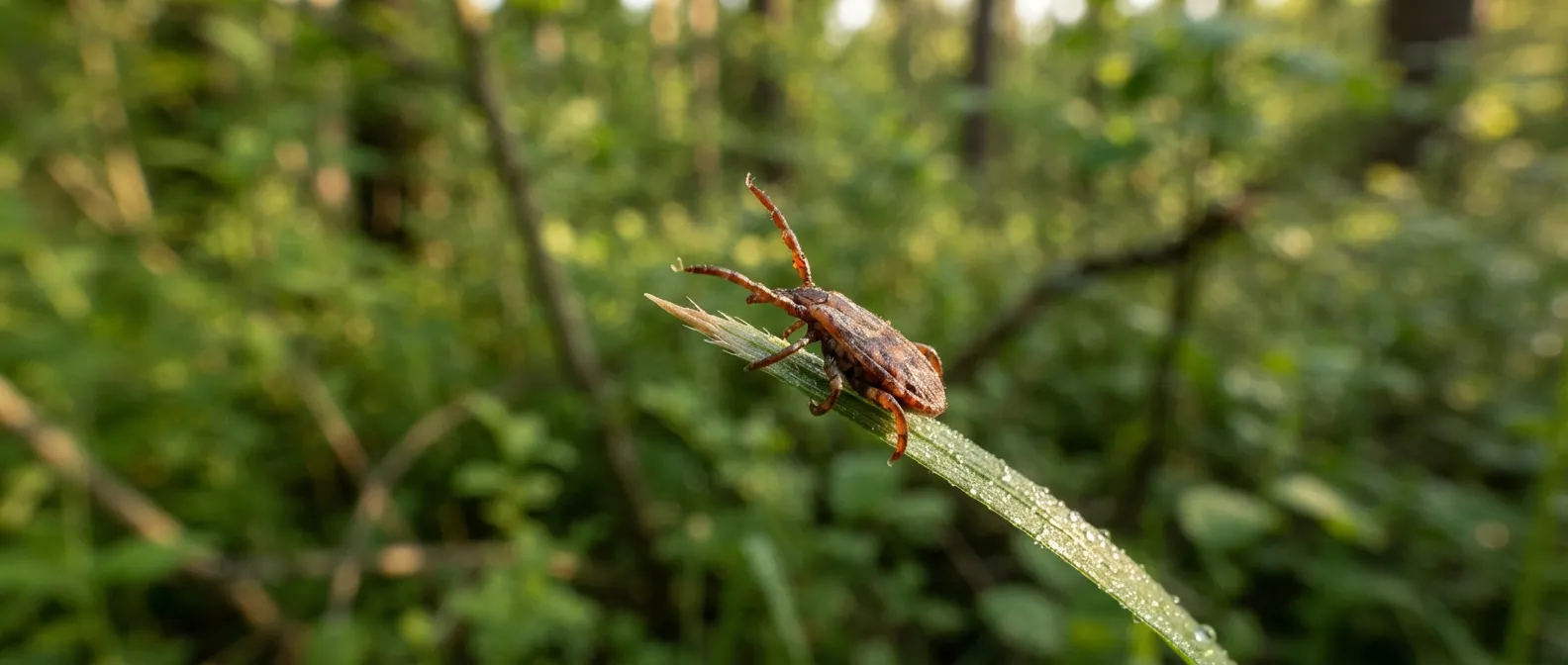
Ticks don’t jump, don’t fly, and don’t drop from trees—that’s an immortal myth. They practice what entomologists call questing: clinging to the tip of a blade of grass, a fern, or a low bramble (rarely higher than 1.5 m), they extend their front legs and wait. They detect CO₂, heat, and vibrations from a passing host, hooking on upon contact—a pant leg, a sock, a calf. They then climb toward a warm, moist area (groin, armpit, scalp, behind the knees) before biting, which can take several hours.
Their preferred habitat: forest edges, tall grass, brush, piles of dead leaves—anything that holds moisture. They become active as soon as the temperature exceeds about 7 °C, with two peaks in France: April–June and September–October. Winter doesn’t kill them; it puts them into dormancy. A warm spell in February can reactivate them.
Removing a tick: the only right method
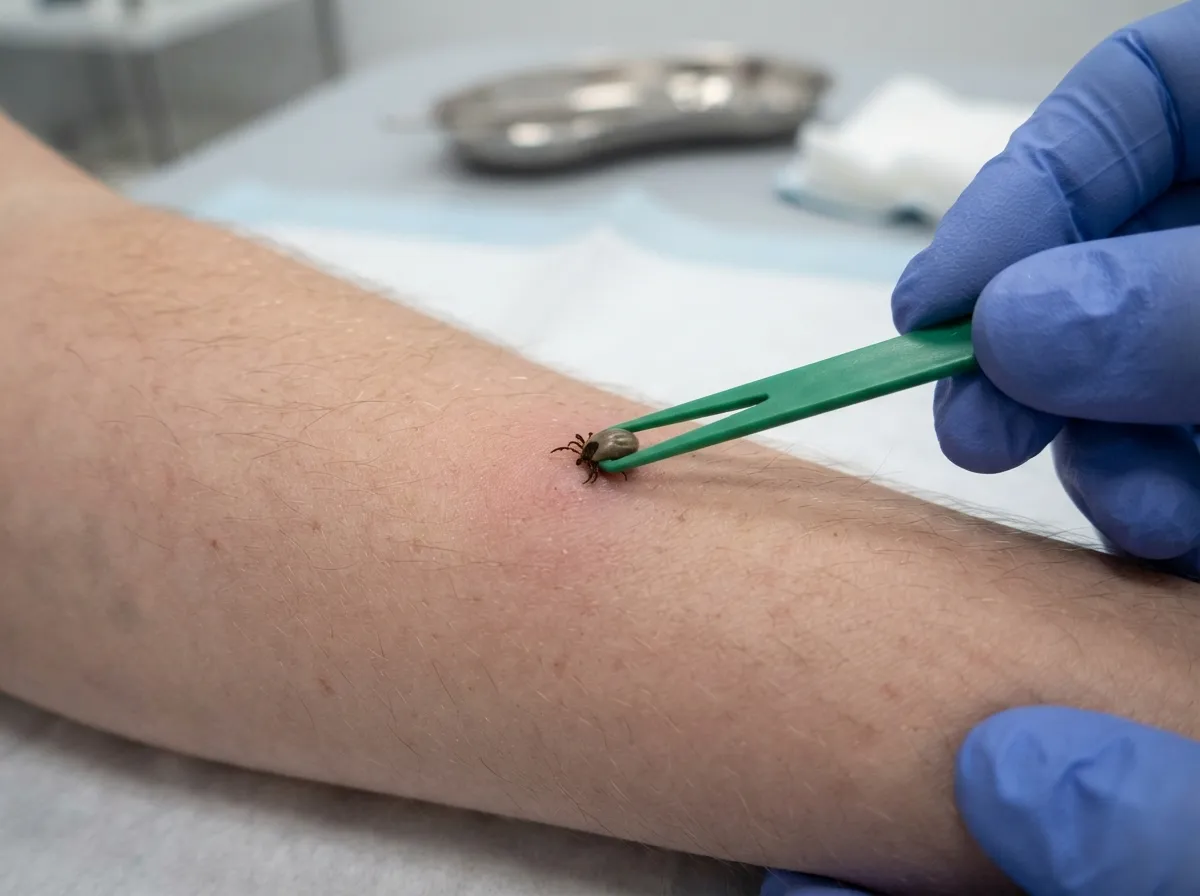
- Use a tick remover (the small slotted hook sold in pharmacies) or, failing that, fine-pointed tweezers. Never use your fingers or wide tweezers that crush the abdomen.
- Slide the tool between the skin and the tick, as close to the skin as possible, without squeezing the animal’s body.
- Twist gently, always in the same direction, without jerking upwards. The tick unhooks in a few seconds, mouthparts included.
- Disinfect the area with an antiseptic and wash your hands.
- Note the date of the bite on your phone or in a notebook—this will allow you to tell, thirty days later, whether a red patch is new or not.
After the bite: the 30 days that matter
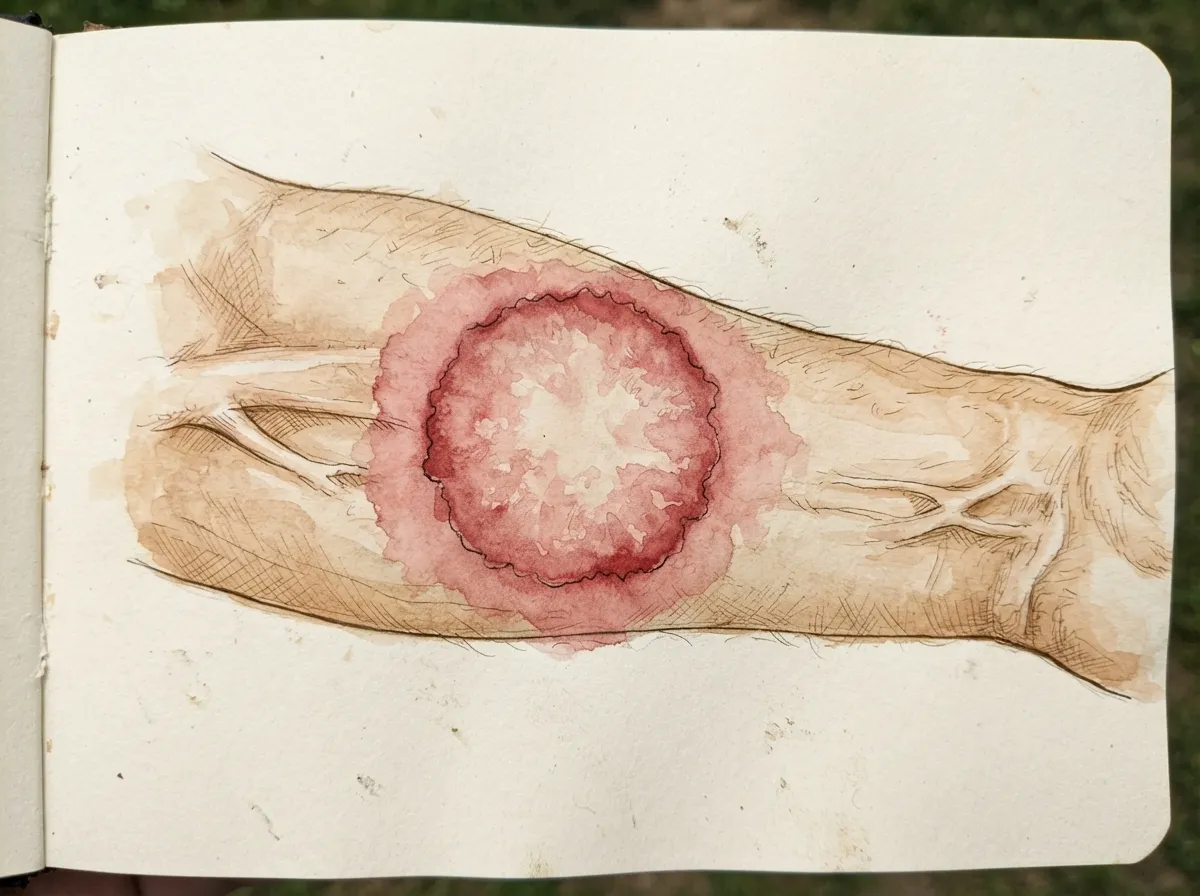
Monitor the bite site for 30 days. What you’re looking for: erythema migrans, an expanding red rash around the bite mark, often featuring a lighter center—the classic “bullseye” described in all textbooks, even though not all Lyme cases present this exact shape. Take photos of the area regularly to compare day by day: it’s the simplest diagnostic tool available, and it’s free.
Consult a doctor if: the redness appears or expands after a few days, if a fever, joint pain, or severe fatigue follows the bite in the coming weeks, or if the tick remained attached for more than 24 to 48 hours. Lyme disease, when treated early with antibiotics, almost always cures without long-term effects; left untreated, it can progress to joint, neurological, or cardiac complications months later.
TBE: the cousin you can vaccinate against
Less known than Lyme, Tick-Borne Encephalitis (TBE) is a viral disease, not bacterial: antibiotics have no effect on it, making prevention key. In France, it remains rare but is rising—62 cases diagnosed in 2024, a 60% increase compared to 2023—mainly concentrated in the east of the country (Alsace, Haute-Savoie) with expanding reach into other regions. An inactivated vaccine exists, over 90% effective, recommended for residents and travelers in rural or wooded areas of Central and Eastern Europe up to 1,500 m altitude, from spring to autumn.
Protecting yourself: permethrin, DEET, and checks
| Permethrin (clothing) | DEET (skin) | Icaridin (skin) | Evening check | |
|---|---|---|---|---|
| Target | Ticks and mosquitoes on contact with fabric | Mosquitoes, ticks | Mosquitoes, ticks | Ticks already attached |
| Duration of effect | Up to 30 washes with factory treatment | 4-8 hrs depending on concentration | 4-8 hrs depending on concentration | Immediate, to be repeated after each outing |
| On skin | ❌ (clothing and fabrics only) | ✅ | ✅ | ❌ |
| Rain resistant | ✅ | fades with sweat | fades with sweat | not applicable |
Permethrin treats clothing (not skin) and kills or repels ticks, mosquitoes, wasps, and spiders on contact; factory-impregnated gear retains around 80% of its effectiveness after 30 washes, compared to just a few washes for DIY spray applications. DEET and icaridin are applied to exposed skin; the landmark study by Fradin and Day, published in the New England Journal of Medicine in 2002, compared seven plant-based repellents, various concentrations of DEET, and an IR3535 product by exposing forearms to caged mosquitoes: high-concentration DEET provided long-lasting protection (several hours), whereas citronella oil lasted no longer than 20 minutes. Icaridin, a newer alternative, matches DEET in effectiveness without its odor or solvent effect on plastics.
Mosquitoes: beyond the itch
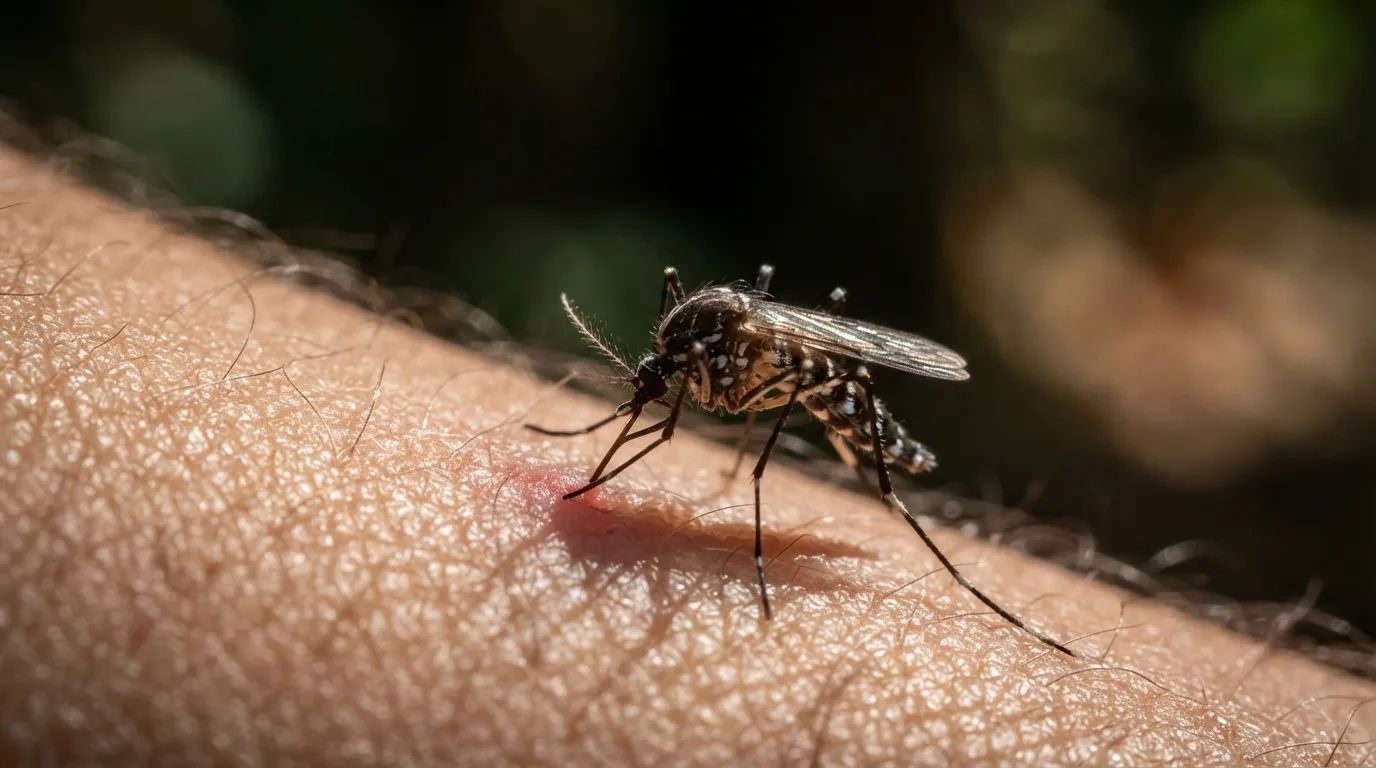
Outside Europe, the mosquito remains the world’s top killer via malaria, transmitted by mosquitoes of the Anopheles genus, active mainly at dusk and night. In tropical zones, it also transmits dengue, chikungunya, and West Nile virus, these via mosquitoes of the Aedes genus, active during the day. In Europe, the situation is evolving rapidly: the tiger mosquito (Aedes albopictus) is now established in 83 French departments, and in 2025 mainland France recorded 809 locally acquired cases of chikungunya—an unprecedented level—30 locally acquired cases of dengue, and 60 West Nile virus infections, transmitted this time by Culex mosquitoes from bird reservoirs.
How to stay safe: use an insecticide-treated bed net for sleeping (the most effective measure against malaria, according to the WHO), wear light-colored long clothing in the evening, apply repellent to exposed skin, and avoid peak activity hours of the local vector (dusk for Anopheles, daytime for Aedes). Altitude helps: above 2,000 m, malaria-vector mosquitoes almost completely disappear due to insufficient temperatures for parasite development; wind also significantly reduces their flight activity, which caps out around 2-3 km/h airspeed.
Hymenoptera: the real fatal threat in Western Europe
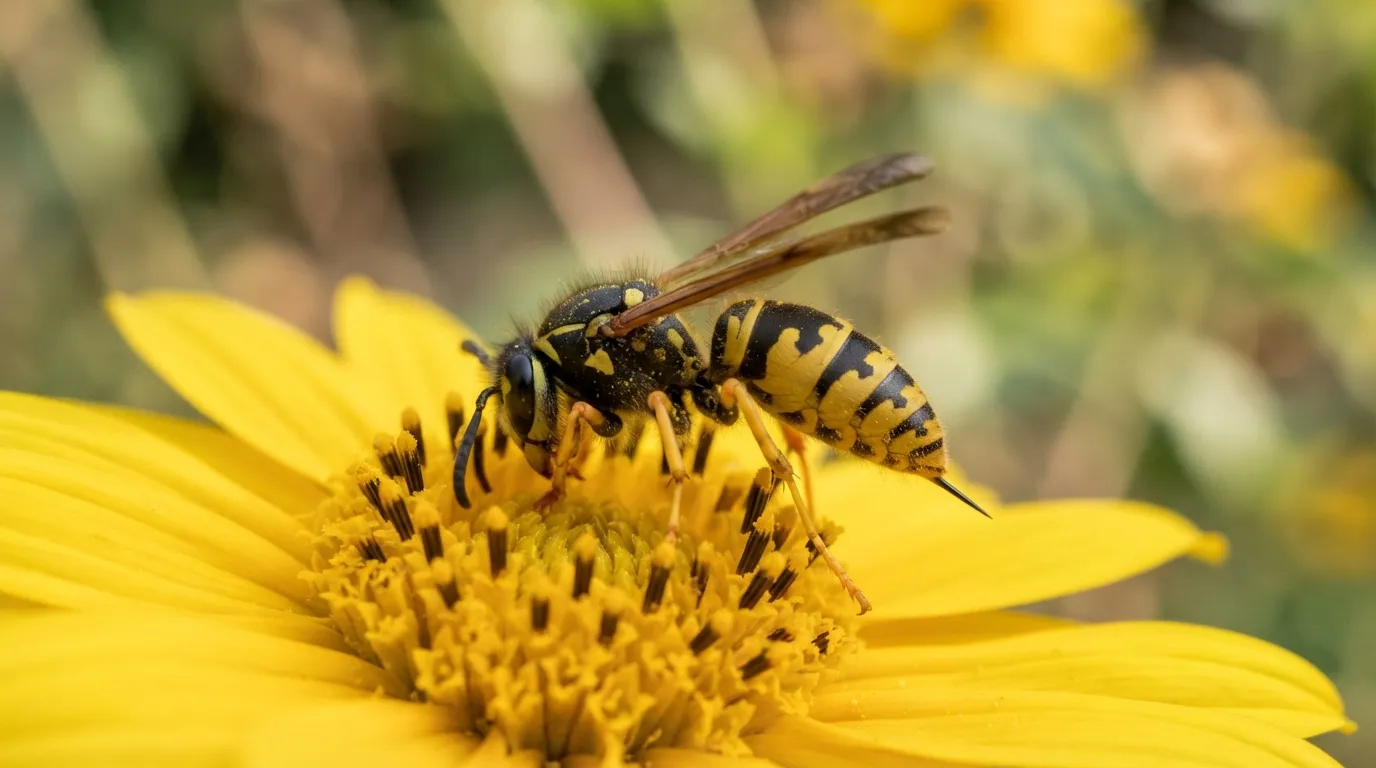
Here lies the chapter’s paradox: the most visible and loudest insects are statistically the deadliest in France, causing around fifteen deaths per year, almost all due to anaphylactic shock in allergic individuals—not from venom toxicity itself, except in cases of mass stings (beyond 10 to 20 simultaneous stings, even without an allergy, severe systemic poisoning becomes possible).
Removing the stinger (only for honeybees, which leave it behind—wasps and hornets fly off with theirs intact): scrape it off using a fingernail or a credit card. Never pinch it with your fingers or tweezers, as this squeezes the attached venom sac and injects more venom into the wound.
The Asian hornet
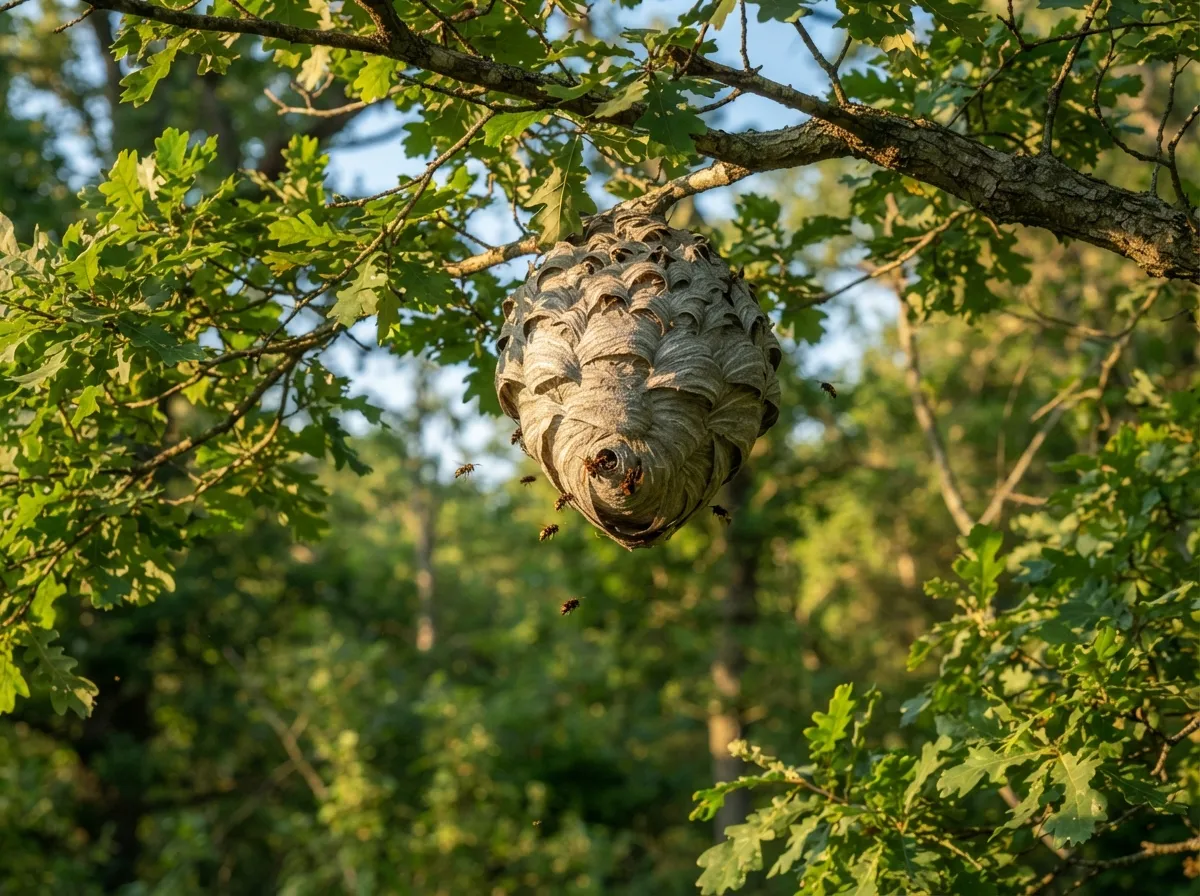
The Asian hornet (Vespa velutina), which arrived in France in 2004, builds secondary nests that can reach 80 cm in diameter, often perched 10-15 m high in trees. Its venom is no more toxic than that of the European hornet, but the species defends its nest collectively: approaching within 5 meters can trigger a swarm attack, accompanied by spraying an irritating liquid toward the eyes. The rule is simple and non-negotiable: spot it, report it, never approach it—leave nest destruction to equipped professionals.
Other biting and stinging pests
| Chigger | Horsefly | Sandfly | Leech | |
|---|---|---|---|---|
| Size | 0.2 mm (larva) | 1-2.5 cm | 2-3 mm | a few cm |
| Transmits | nothing (just extremely itchy) | rarely a local infection | leishmaniasis (Southern Europe) | nothing in Europe |
| Immediate pain | delayed itch | sharp, immediate | mild | almost none (anesthetic) |
| Right reaction | shower + short nails | disinfect, do not scratch | repellent at night, fine mesh net | gently peel off or wait for it to drop |
Chiggers (harvest mites) attach to the skin (ankles, skin folds) and inject saliva that causes intense itching hours after the bite—too late to remove them, but a quick shower after walking through tall grass washes many away before they settle. Horseflies and blackflies bite aggressively in broad daylight and direct sunlight, causing immediate pain—unpleasant, but in the vast majority of cases in Europe, they carry no disease. Sandflies, tiny midges active at dusk from April to October, transmit leishmaniasis in southern Europe—a disease affecting around one million dogs in France and, less commonly, humans; a fine-mesh mosquito net (finer than standard mosquito nets) offers effective protection at night. Leeches in freshwater attach painlessly thanks to a natural anesthetic in their saliva—detach them by sliding a fingernail under the sucker closest to their mouth, never by pulling abruptly, which can leave mouthparts embedded in the skin.
Along the coast: jellyfish and weeverfish
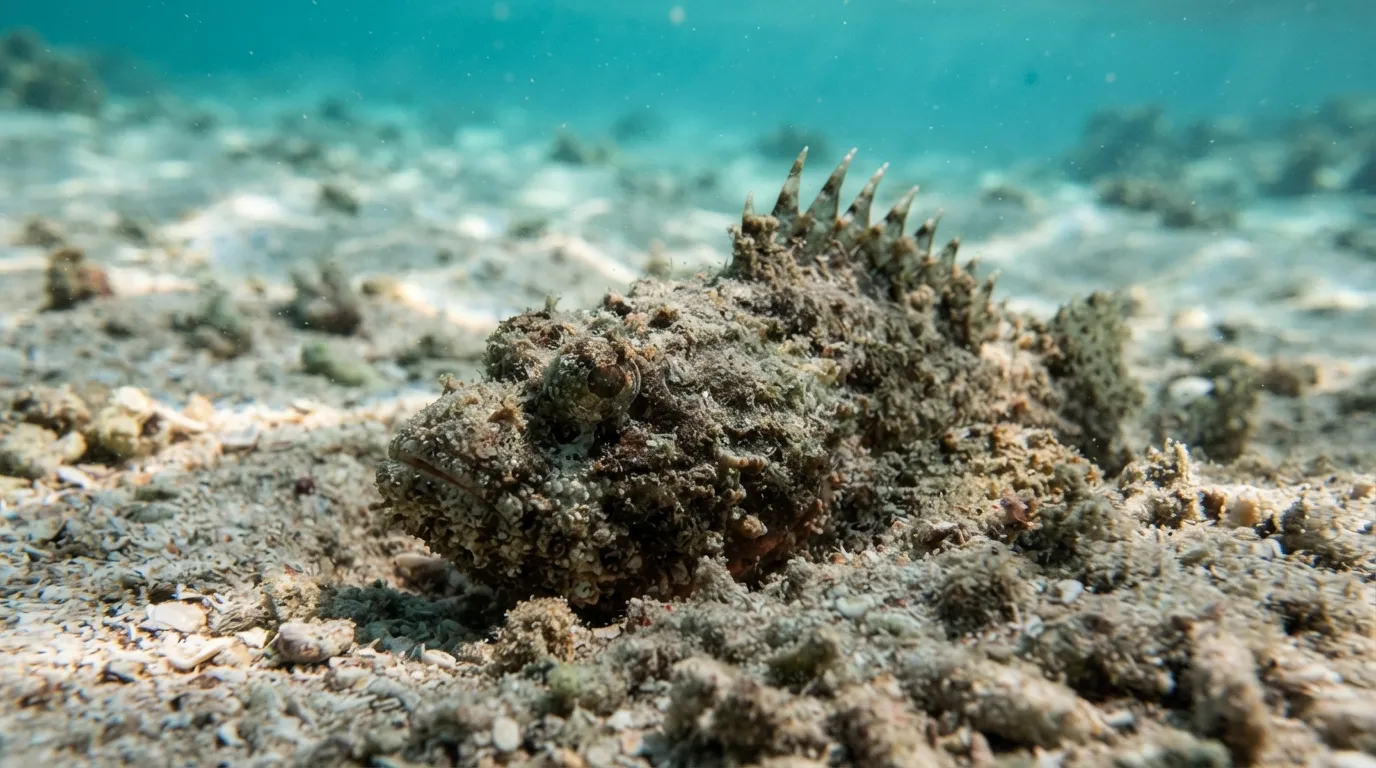
The weeverfish, a fish that buries itself in the sand of shallow coastal waters, delivers one of the most painful stings on European beaches via its dorsal spines when stepped on barefoot. The venom of both jellyfish and weeverfish is heat-labile: it degrades when exposed to heat. The proven treatment consists of soaking the stung area in water as hot as tolerable, around 45 °C, for 20 to 40 minutes—never apply ice, which constricts blood vessels and traps the toxin locally instead of neutralizing it.
Frequently asked questions
How do I safely remove a tick?
Use a tick remover tool or fine tweezers, slid between the skin and the tick as close to the skin as possible, then twist gently in the same direction until it releases. Never apply ether, alcohol, or vaseline beforehand: this causes the tick to regurgitate, increasing infection risks.
Should I worry if a tick stayed attached for several days?
Yes, more so than for a tick removed quickly: the risk of transmitting Lyme bacteria increases with attachment time, as the bacteria take time to migrate to the tick’s salivary glands. Note the date of the bite and watch the area for 30 days; consult a doctor if redness spreads or a fever develops.
DEET or icaridin: which one should I choose?
Both effectively protect for several hours against mosquitoes and ticks, according to the landmark study by Fradin and Day (NEJM, 2002) and subsequent data. Icaridin has the advantage of not damaging plastics or smelling as strong as DEET; at high concentrations, both are equivalent in duration of protection.
Are there deadly spiders in Western Europe?
No. Of the 1,600 species recorded in France, none has ever caused a documented human fatality; a few can give a painful bite, but it presents no life-threatening danger to a healthy adult.
What should I do for a jellyfish or weeverfish sting?
Immerse the area in water as hot as tolerable, around 45 °C, for 20 to 40 minutes: the venom breaks down under heat. Never use ice, as it does not neutralize the toxin and can aggravate the pain.
How do I recognize anaphylactic shock after a wasp or bee sting?
Swelling extending far beyond the sting site, widespread hives, difficulty breathing or swallowing, dizziness, or sudden collapse within minutes are warning signs. Immediately use an adrenaline auto-injector if the person carries one, then call 112 or emergency services without delay.
Key takeaways
- Mosquitoes are the world’s top killer through the diseases they transmit; in France, hymenoptera kill more people than all wild predators combined.
- Ticks should only be removed with a tick tool or fine tweezers using a twisting motion—never use ether or alcohol.
- Monitor any tick bite for 30 days: an expanding red rash (erythema migrans) is the key warning sign.
- Permethrin on clothes, DEET or icaridin on skin: the combo that actually works, unlike citronella or wristbands.
- Anaphylaxis happens in minutes: use an adrenaline auto-injector immediately, then call 112 without waiting for symptoms to worsen.
Going further
- Santé publique France, epidemiological data on Lyme borreliosis — the French reference, updated annually.
- CDC, Tickborne diseases of the United States — the reference manual in English, very comprehensive on removal and surveillance.
- WHO, Vector-borne diseases — the fact sheet putting mosquitoes in their true place at the top of the killer list.
- Fradin & Day, Comparative Efficacy of Insect Repellents against Mosquito Bites, NEJM 2002 — the landmark study that settled the repellent debate.
Sources for this module (13)
- Santé publique France — Borréliose de Lyme, données épidémiologiques
- Santé publique France — Encéphalite à tiques (TBE)
- OMS — Vector-borne diseases, fact sheet
- ANSES — Prévention des piqûres de tiques
- CDC — Tickborne diseases of the United States
- CDC — Mosquito-borne diseases
- Fradin & Day, Comparative Efficacy of Insect Repellents against Mosquito Bites, NEJM 2002
- Institut Pasteur — Leishmaniose
- Santé publique France — Chikungunya, dengue, Zika, West Nile, données 2025
- Wikipédia FR — Frelon asiatique (Vespa velutina)
- ESCCAP France — Phlébotomes et leishmaniose
- Wikipédia FR — Morsure d'araignée
- Wikipédia EN — Buthus occitanus
Continue in "Critical situations"

Avalanche: the 15 minutes that decide
A slab breaks loose under your skis, you have fifteen minutes before the stats turn against you: what you need to know instinctively, the night before heading out.

Lightning: When the Sky Targets You
In 3 seconds, a lightning bolt heats the air to 30,000 kelvins and kills 10% of those it strikes: here is what is at stake before you count to thirty.

Flash Flood: Water Arriving Faster Than You
It isn't raining where you are, the creek has been dry all morning, yet you have less time than you think before a wall of water rushes down the valley.