Marshes, bogs, and mangroves: water everywhere, ground nowhere
Here, nothing is solid, nothing is drinkable, and nothing is what it seems: the environment that requires the most methodology, and the least improvisation.
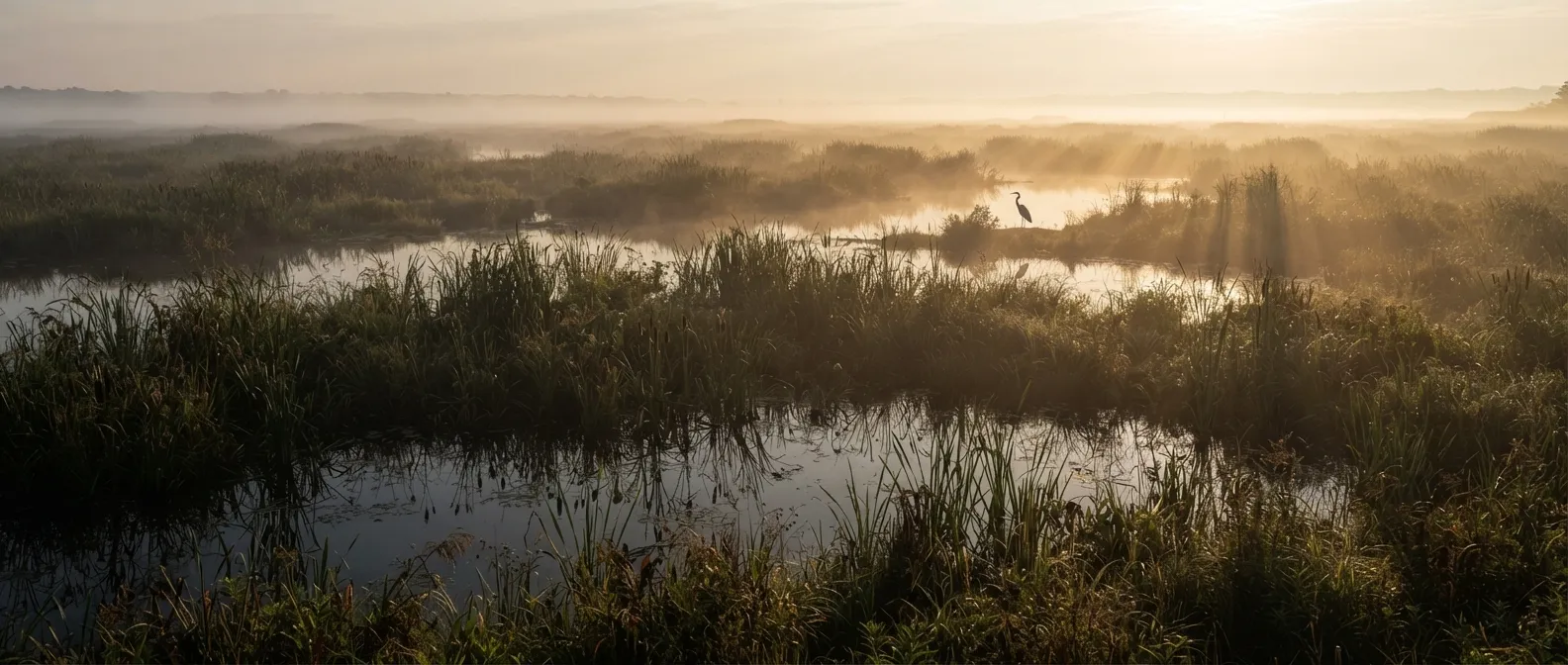
It’s 10:00 AM, you’ve been walking for twenty minutes in a meadow that seemed firm, and your foot just sank up to your calf in black water that smelled sweetly of grass a second ago. In front of you, the vegetation continues as far as the eye can see, all identical: no trail, no relief, no landmark. A marsh will almost never kill you instantly. It wears you down, cools you off, infects you, loses you — and it’s the sum of these small things, never dramatic drowning, that makes the real stories.
Moving around: stick before foot
You don’t cross a marsh like you cross a forest. What supports your weight one meter further ahead won’t necessarily support your weight here, and the eye can’t tell the difference between a solid tuft and a sheet of water covered in grass that gives way. The rule that comes up in every account by wetland guides, from the Poitevin Marsh to Scottish bogs, is always the same: probe before putting your foot down, using a stick, a pole, anything long enough to test the ground one meter ahead without committing your body.
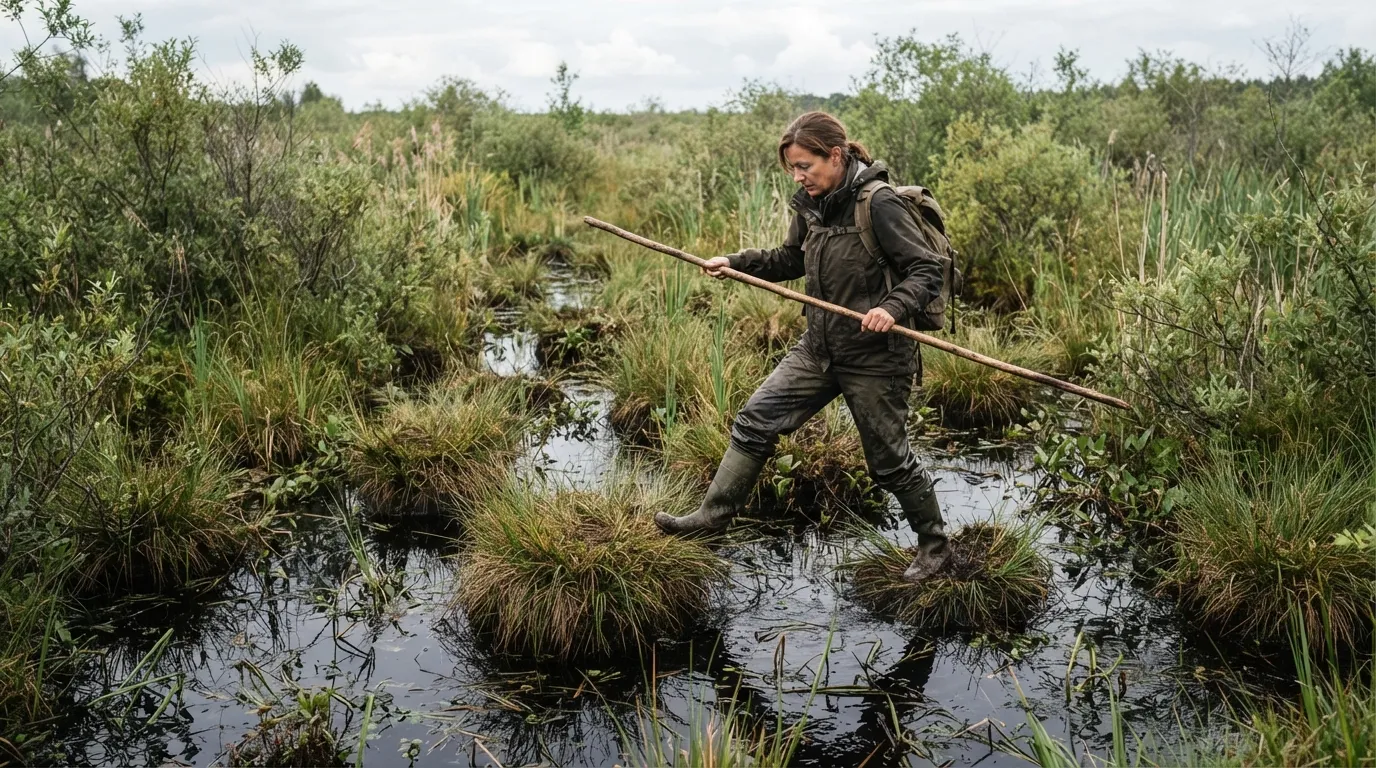
In European peat bogs and wet meadows, much of the ground relies on tussocks (touradons): clumps of purple moor-grass, a grass species that stacks up on its own roots and old dead leaves year after year, forming mounds from 40 cm to over a meter high. These tussocks form because water levels fluctuate heavily with the seasons: the plant grows taller to stay above water, and the accumulating dead leaves decompose even slower due to the acidity of the environment. The result: a series of firm mounds separated by water or soft mud. The local technique in the peat bogs (the “sagnes”) of the Monts de Lacaune in Tarn boils down to one sentence: step from tussock to tussock, never in the gaps between them.
The “never go alone” rule isn’t just blanket caution: in an area where everything looks identical and a single misstep can trap a leg, a companion who can get help or simply extend a stick changes everything. If you sink anyway — into mud, quicksand, or a waterlogged peat pocket — the technique to get out (lie down, distribute weight, work one leg at a time, never thrash around) is detailed in the guide on quicksand: it applies almost identically to marsh entrapment.
Water: abundant, never drinkable as-is
The marsh paradox: you’re surrounded by water and can still get dehydrated, because this stagnant water, packed with organic matter and often animal urine, is among the most dangerous to drink untreated in the entire survival world.
Two threats constantly lurk in stagnant water:
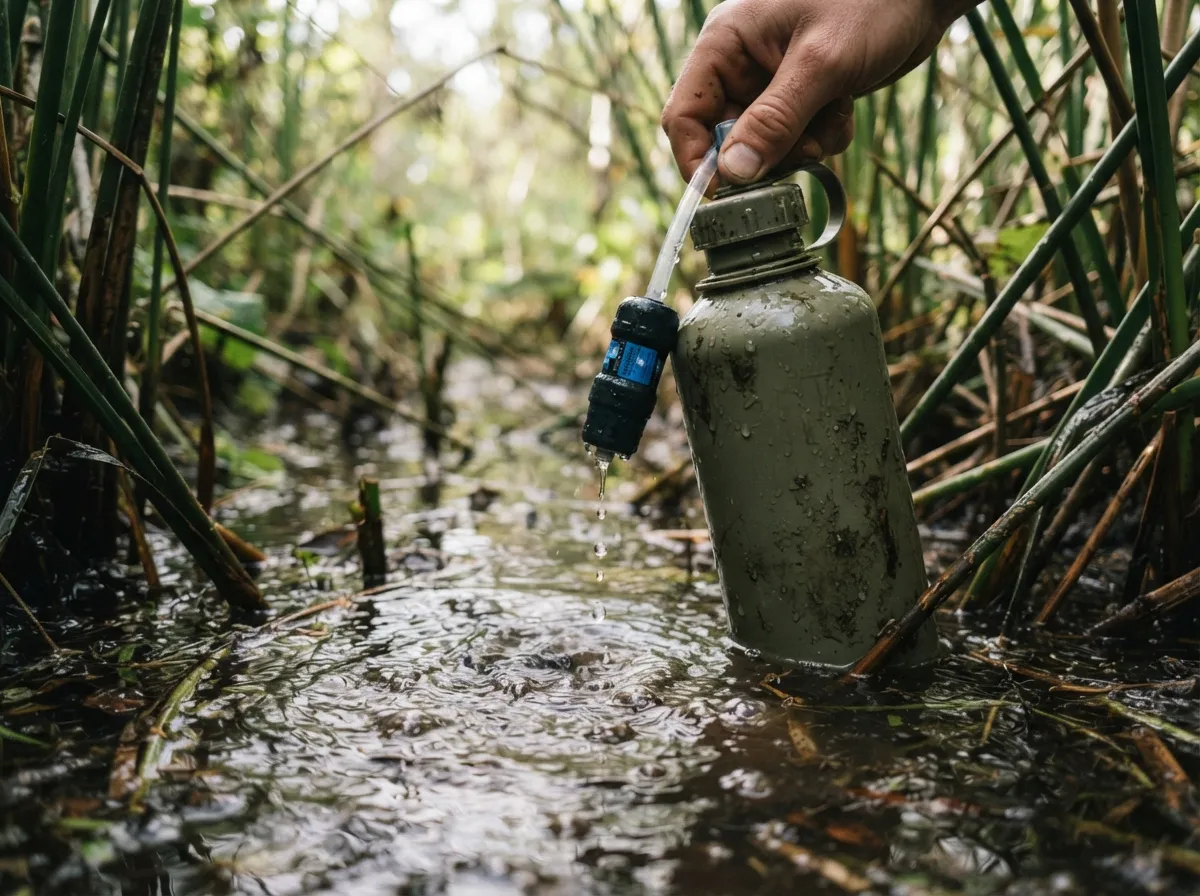
- Giardiasis (the parasite Giardia, nicknamed “beaver fever” in North America): its cysts survive nearly three months in cold water. It causes chronic diarrhea that can last for weeks if untreated. Boiling kills the cysts; commercial water filters generally state sufficient effectiveness against this parasite, but iodine is more reliable than chlorine alone.
- Leptospirosis: a bacterium surviving for months in fresh water and muddy soil, transmitted through rodent urine and other infected animals via broken skin or mucous membranes. Incubation takes 4 to 14 days, initial symptoms resemble the flu, and 5 to 20% of severe untreated cases can be fatal due to kidney failure. French regional health agencies advise wearing boots, never walking barefoot in mud or stagnant water, and covering any open wound with a waterproof bandage before entering the water.
The practical rule remains the same as in any other environment: bring water to a rolling boil, or filter it then chemically treat it, systematically — even water that looks clear on the surface, because danger is almost never visible to the naked eye.
Fire: wood is up high, never in the peat
Making a fire in a marsh poses a simple problem: there’s almost never dry deadwood on the ground, because the ground itself is soaked. The solution is the same as in a rainy forest — look for suspended deadwood, still attached to trees or bushes lining the marsh, never lying in the mud. The feather stick, natural tinder, and lighting techniques are identical to those detailed in the Fire module; what changes here is where to place the fire once lit.
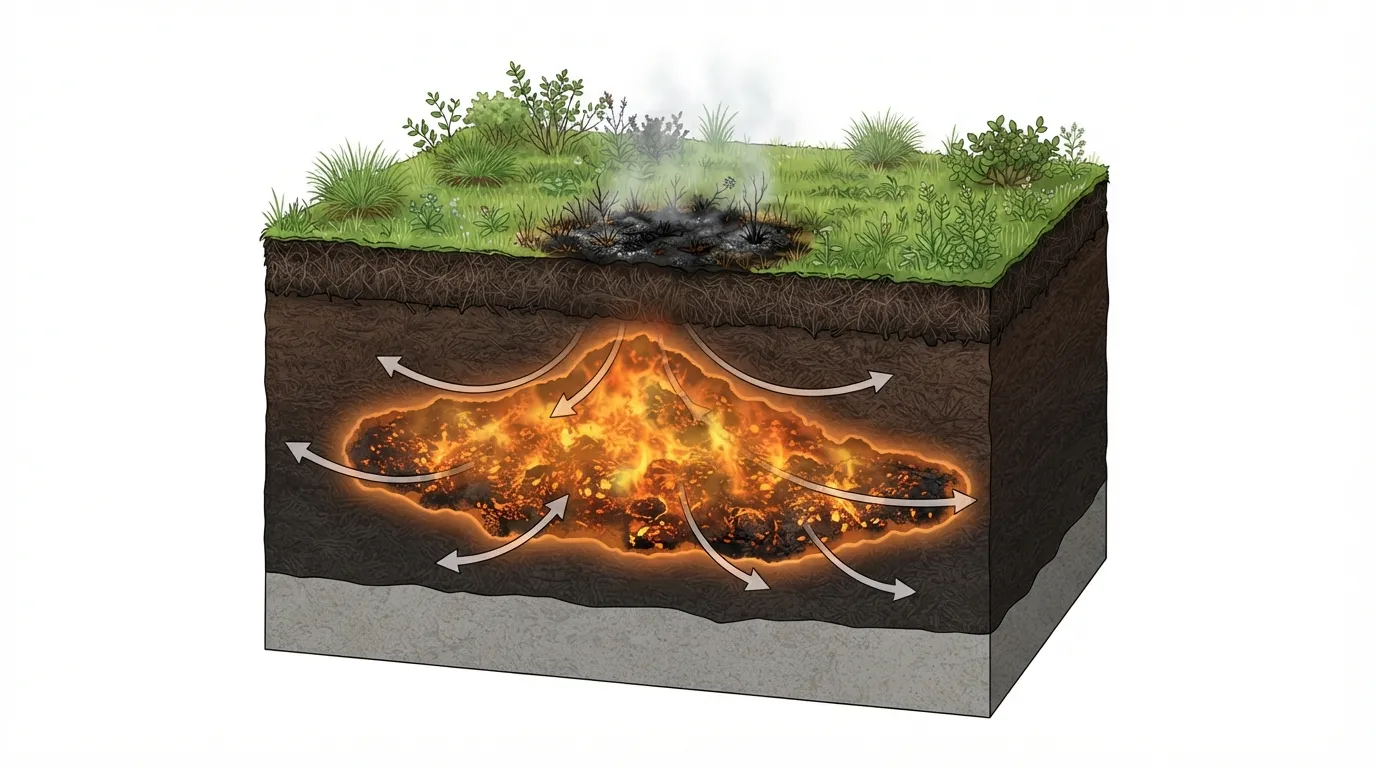
FM 21-76, the US Army survival manual, gives the same instruction as for the Dakota fire in forests: strictly avoid root and peat soils for any campfire, precisely because they can smolder for days unnoticed. In practice, when in a marsh, look for an elevated, mineral spot — a platform of green wood, a log, a rock — rather than the organic ground itself.
Shelter: far from the ground, far from rising water
The principle found in all cultures living permanently in wetlands — Marsh Arabs of Iraq, Seminoles of the Everglades, residents of Brière — is the same: never sleep at water level. The Marsh Arabs (Ma’dan) of southern Iraq have built artificial islands from woven reeds called kibasha for millennia, similar to 5,000-year-old Sumerian depictions. On these, they erect large vaulted reed houses, mudhif, built entirely without nails or screws. The Seminoles of the Everglades, retreating deep into the marsh after 19th-century wars rather than face forced removal, developed the chickee: a raised platform on stilts with a palm thatch roof and no walls — high enough to stay dry when water levels rise, open enough to let air circulate in Florida’s humid heat.
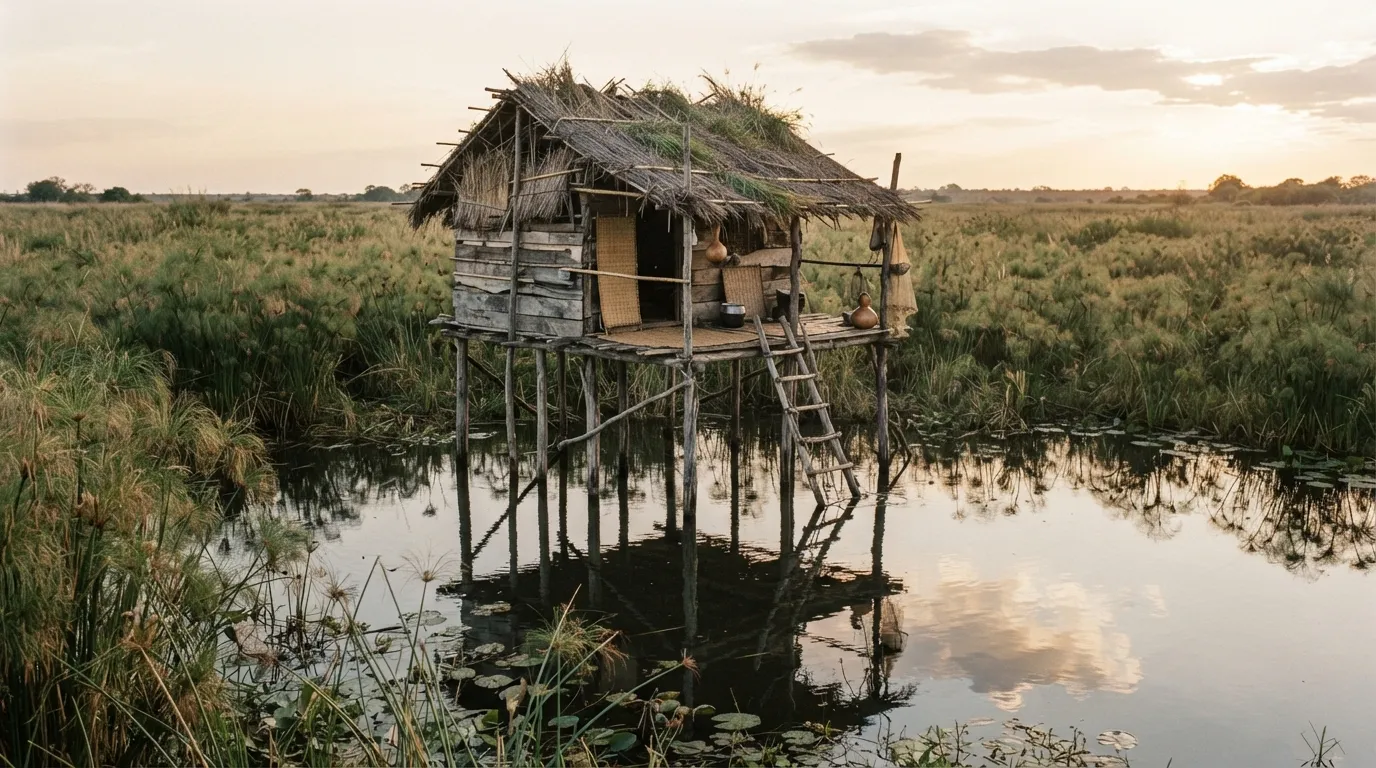
When improvising, keep three principles in mind: find the highest available point (an islet, a bank, a stump), build a platform using branches or logs to isolate yourself from the damp ground and the cold it drains, and never skip a mosquito net or fine mesh stretched around your sleeping gear — in a marsh, bug nuisance isn’t just uncomfortable, it deprives you of sleep and can transmit diseases (see below).
- Locate the driest, highest point nearby: a bank, a stump, a tree island (in the Everglades, these hammocks are groves raised just a few dozen centimeters).
- Cut or gather sturdy logs and branches, enough to build a ground frame then a deck.
- Build the frame on supports (stumps, large rocks, short driven stakes) to elevate the deck at least 20-30 cm above the highest observed water level.
- Weave or lay thin branches across to create a solid floor, followed by a layer of dry vegetation or moss as insulation.
- Set up a tarp or sloped branch roof, plus a mosquito net if you have one, fully enclosing the sleeping area.
Eating in a marsh
Contrary to its hostile appearance, a marsh is one of the most generous environments for wild plant foods — provided you know where to look.
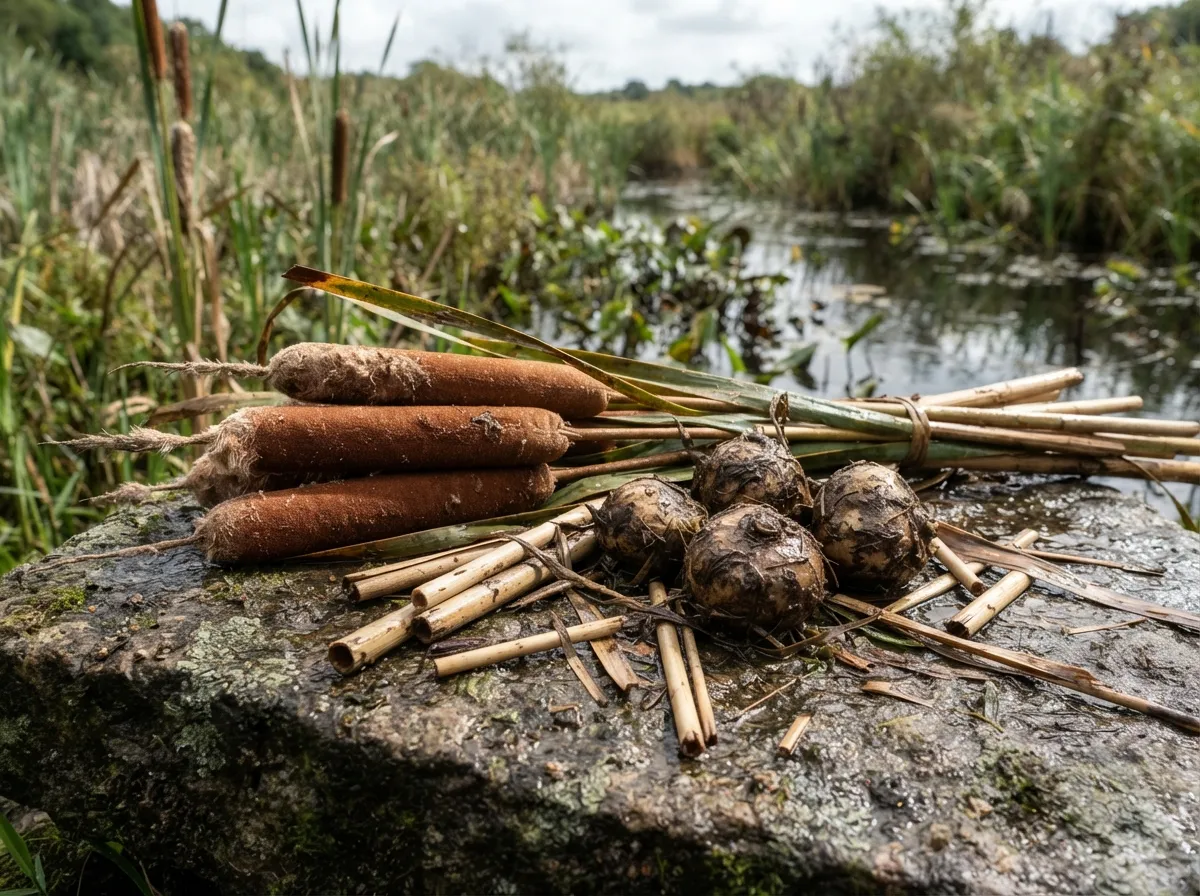
- Cattail, broadleaf arrowhead (wapato, the marsh potato), and yellow water-lily are among the most reliable wetland plants: their cooked tubers and rhizomes have sustained entire populations. Arrowhead tubers notably helped the Lewis and Clark expedition survive the winter of 1805-1806 in North America, and Algonquian peoples harvested tubers that naturalist Peter Kalm observed as early as 1749 as being “as big as a fist.” Detailed guides for each plant — identification, preparation, look-alikes — are available on their dedicated pages: cattail and reed, arrowhead, yellow water-lily, common reed.
- Frogs, crayfish, and eels are classic protein sources in temperate wetlands, but harvesting them is strictly regulated: in France, catching green frogs and white-clawed crayfish is protected or regulated depending on season and region, and eel fishing (a critically endangered species) is subject to strict quotas. In a real survival situation, legality takes a back seat to survival — but on a outdoor trip or training course, these regulations fully apply.
- Waterfowl (ducks, coots) follow standard hunting regulations: permits, open seasons, protected species. A marsh rich in birds is often a protected nature reserve, prohibiting capture even outside survival scenarios.
Mosquitoes: the true silent danger
Biologically speaking, a marsh is a mosquito factory: stagnant water, heat, decomposing organic matter — everything they need to lay eggs. The nuisance is real, but the health risk is just as real, carrying a specific history in France.
In the early 20th century, malaria (“marsh fever”) was still endemic in the Camargue, transmitted by Anopheles mosquitoes. Nobel laureate Alphonse Laveran, on a mission around Aigues-Mortes in 1899, noted the heavy infestation and urged larva destruction, quinine use, and draining the worst areas. The disease gradually disappeared from mainland France between 1945 and 1975 thanks to these efforts — though non-parasite-bearing Anopheles mosquitoes still exist today in certain French wetlands, including the Camargue, Dombes, and Corsica.
Today’s risk goes by a different name: West Nile virus, transmitted by Culex mosquitoes in a bird-mosquito cycle where humans are merely incidental hosts. It circulates in Europe today, with documented outbreaks in France since 2000. About 80% of infected people show no symptoms; severe forms (encephalitis, meningitis) affect less than 1% of cases but can leave lasting neurological damage.
Protection remains uniform everywhere: long sleeves and light-colored clothing at dusk (peak hours for most marsh mosquitoes), repellent, sleeping net, and emptying or avoiding stagnant water right near camp.
What crawls and what bites
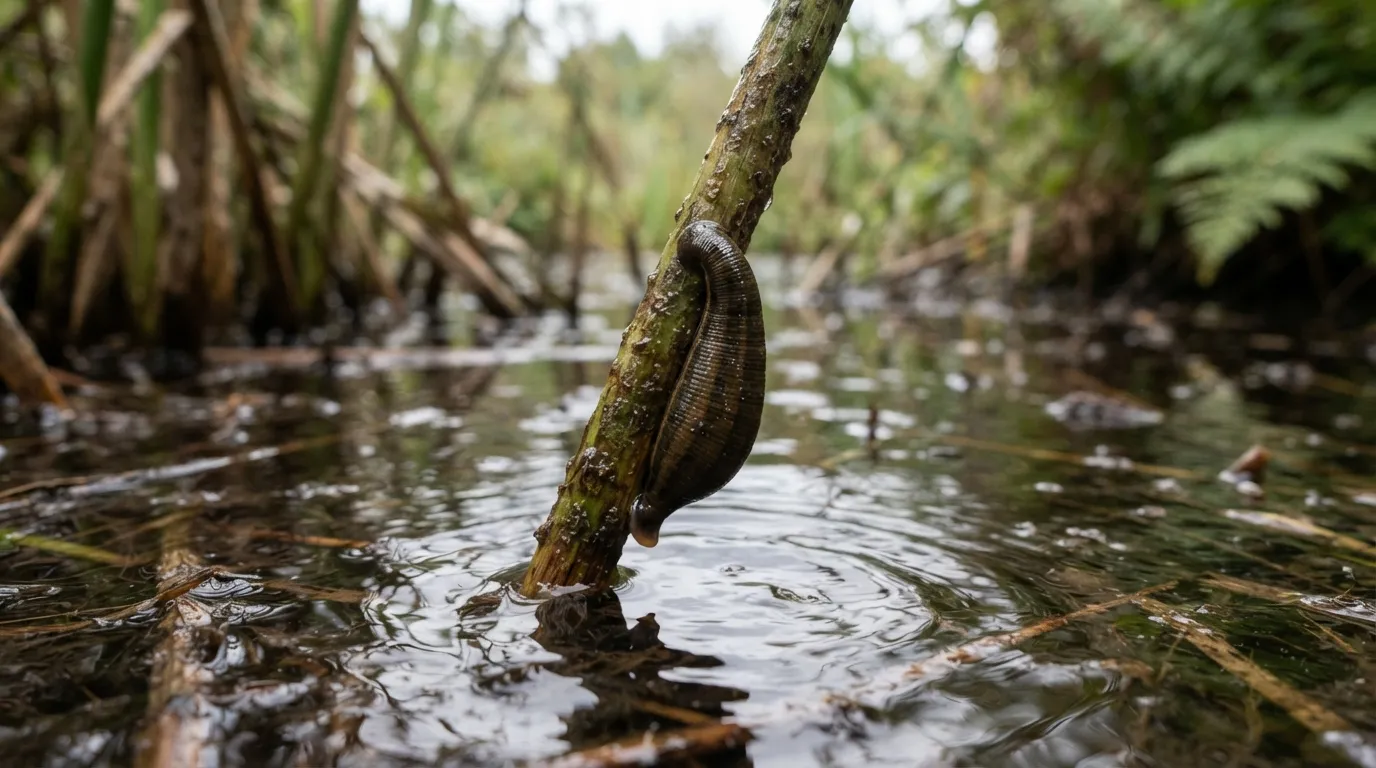
- Leeches mainly live in stagnant fresh water in temperate northern hemisphere lakes and ponds. They attach via two suckers and feed anywhere from twenty minutes to a few hours before dropping off full. You simply detach them by hand — no painful bite, very low disease transmission risk, and the primary danger is a mild allergic reaction in a small minority of people. Burning the leech or pouring salt over it works, but often causes it to regurgitate into the wound, slightly increasing infection risk: you’re better off letting it finish or peeling it off with a finger, without yanking hard.
- Water snakes are found on almost every continent; in France, the grass snake swims very well but is harmless. Elsewhere, some tropical relatives are venomous: as anywhere, check where you place your hand on a bank or log before leaning on it.
- Alligators and crocodiles inhabit specific wetlands: the American alligator in the Everglades and southeastern US, various crocodile species across Africa, South Asia, and the Sundarbans. They play a vital ecological role — in Florida, alligators dig water holes that retain water through the dry season, sheltering an entire food web — but remain apex predators capable of killing humans. The universal rule in these areas: never swim at dusk or night, never approach a nest, and maintain a safe distance from the water’s edge.
- Wild boars frequently use temperate wetlands to wallow and cool off; they are more skittish than aggressive unless injured, cornered, or with piglets — the same caution applies as in the forest.
Mangroves: the forest walking in the sea
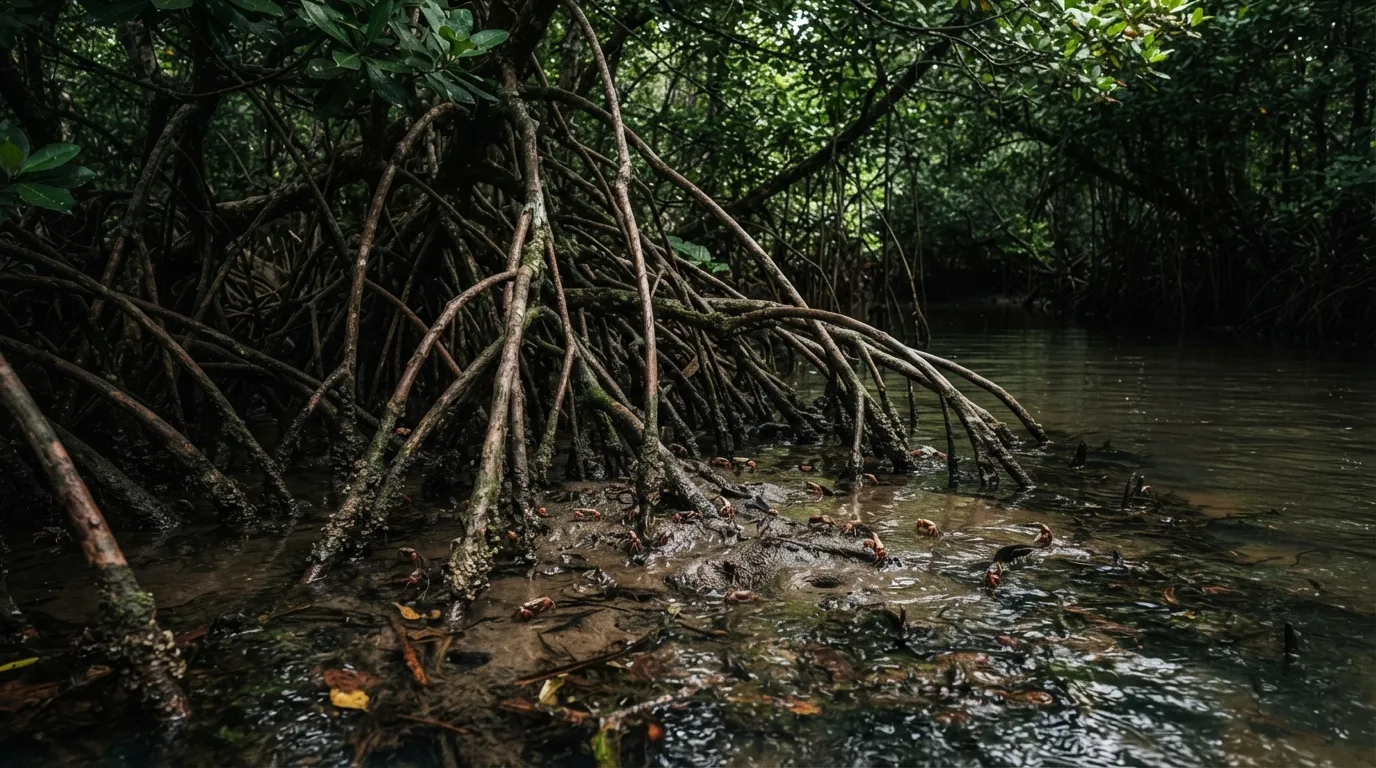
A mangrove is a marsh breathing to the rhythm of the tides: mangrove trees (Rhizophora, Avicennia, Laguncularia depending on the region) are submerged at high tide and exposed at low tide, adapting their root systems in two distinct ways. Prop roots on red mangroves elevate the trunk above the mud and absorb oxygen through fissures in their bark. Pneumatophores on black mangroves are small vertical roots poking out of the mud like snorkel tubes, sometimes by the thousands around a single tree, covered in tiny pores.
This root network makes travel painfully slow and exhausting: mangroves form what ecologists literally describe as a “nearly impenetrable barrier,” hosting swarms of mosquitoes and biting insects. They also house specialized crab species, including fiddler crabs — recognizable by the single oversized claw on males — and various edible crab species harvested by tropical coastal communities. The water, salt or brackish, is obviously never drinkable untreated.
The world’s largest mangroves — led by Indonesia, followed by Brazil and Australia — cover roughly 150,000 km² throughout the tropics. The Sundarbans, straddling Bangladesh and India, make up the largest continuous mangrove forest in the world and house a Bengal tiger population that actively hunts humans: wild honey collectors venturing into the forest during the open season (April to June) face several fatal attacks every year — one of the rare places on Earth where a large predator still routinely views humans as prey.
Peat bogs: the soil that remembers everything
A peat bog forms when a wetland accumulates more dead plant matter century after century than it can decompose: sphagnum moss, capable of holding massive amounts of water even when dead, acidifies the environment to the point of stopping decomposition almost entirely. The result is soil that literally “remembers” everything falling into it.
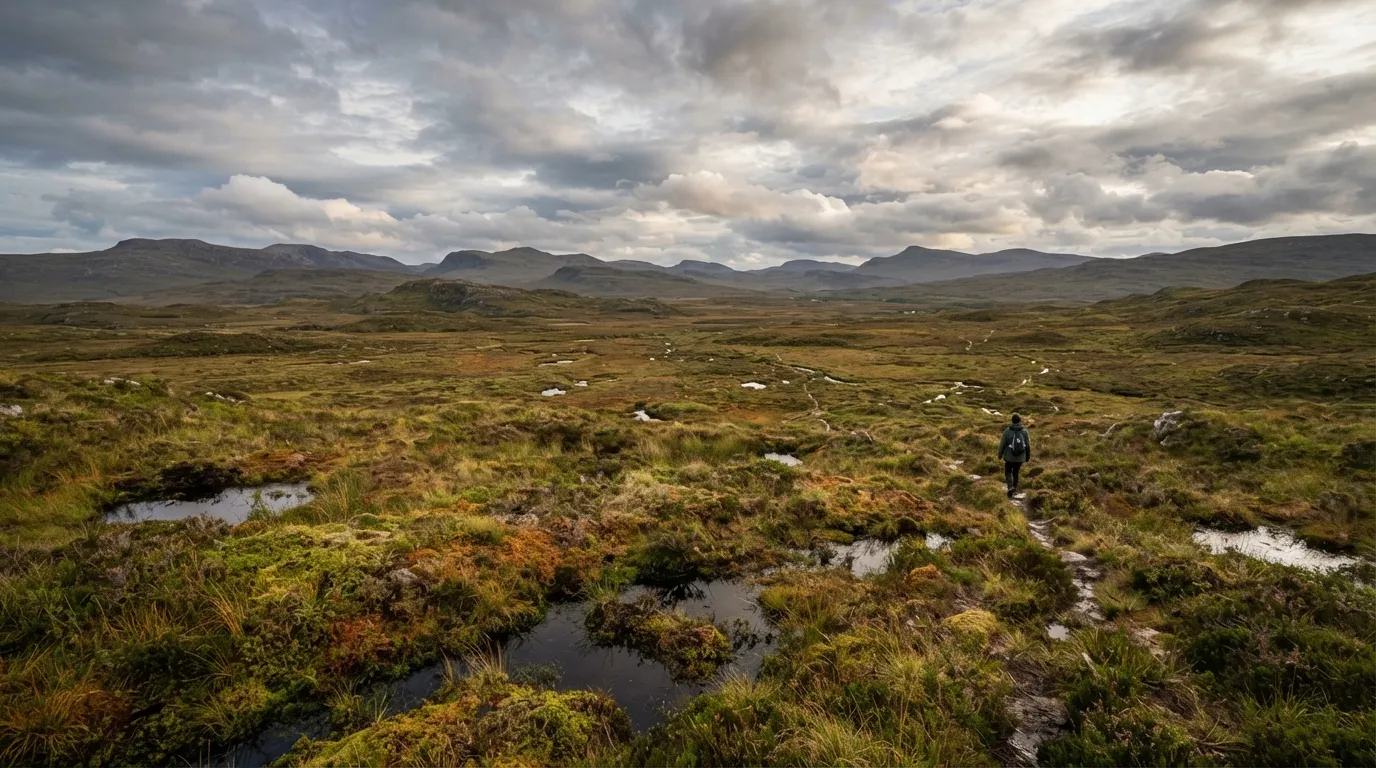
The world’s largest peat bogs sit between 50 and 70 degrees north latitude — Canada, Russia, Scandinavia, the Baltic states — alongside major tropical exceptions in Indonesia, which alone holds about 60% of tropical peatlands. In Western Europe, Scotland and Ireland are covered in them, featuring dangerous quaking bogs: a floating mat of vegetation resting on open water sometimes several meters deep. It quivers meters around each step and can collapse instantly — a far more sudden threat than sinking slowly in quicksand, as detailed in the guide on quicksand.
This complete lack of decay is why, over the past two centuries, dozens of remarkably preserved bog bodies have been uncovered across Northern Europe — Denmark, Germany, the Netherlands, Britain, Ireland. The most famous, Tollund Man, discovered in Denmark in 1950, was still wearing his wool cap and the rope used to strangle him two thousand four hundred years earlier: the bog’s acidity (close to vinegar), lack of oxygen, and cold water temperatures (below 4°C, typically early winter) tanned his skin like leather, even preserving finer facial details.
Famous marshes around the world
| Temperate marsh (Poitevin, Camargue, Brière) | Northern peat bog (Scotland, Ireland, Scandinavia) | Tropical mangrove (Sundarbans, etc.) | |
|---|---|---|---|
| Ground | mud, channels, occasionally firm ground between waterways | vegetation mat, sometimes floating on open water | mud between roots, nearly impenetrable |
| Drinking water | never without treatment | never without treatment (acidic, brown, but filterable) | never — often salty on top of it |
| Main animal threat | mosquitoes, leeches, leptospirosis | falling through floating mat, hypothermia | tigres (Sundarbans), crocodiles, mosquitoes |
| Fire | possible on high dry ground | avoid almost everywhere (peat) | nearly impossible, wood always soaked |
| Navigation | difficult, everything looks identical | difficult, frequent fog | very difficult, permanently low visibility |
The Poitevin Marsh, France’s second-largest wetland, is a landscape fully shaped by human hands since the Middle Ages: a network of canals (“conches”) dug to drain and farm a former ocean bay. The Camargue, the Rhône river delta, alternates between freshwater lagoons and salt marshes, harboring France’s highest concentration of grey herons and marsh harriers alongside its Loire neighbor, the Brière — 40,000 hectares of peat bog behind Loire dikes, where locals navigate flat-bottomed boats (chalands or blins) using push-poles, every cottage parked right beside its own tiny canal.
In the US, the Everglades form a unique “river of grass”: a sheet of water dozens of kilometers wide flowing from Lake Okeechobee toward Florida Bay at a crawl.
Early European explorers considered it as unexplored as “the heart of Africa”; the Seminoles, entrenched inside, were never defeated or fully removed. In southern Africa, the Okavango Delta in Botswana is a massive wetland born in the middle of the Kalahari Desert: people travel in a mokoro, a traditional dugout canoe carved from a single trunk, propelled with a pole by a guide standing in the back who carefully plans routes to avoid hippos — territorial, aggressive, and blamed for more fatal attacks on humans in Africa than lions or crocodiles, even if comparative species statistics remain hard to verify. The Sundarbans, spanning India and Bangladesh, are the largest continuous mangrove forest on Earth and the only place where a big cat still regularly hunts humans. Brazil’s Pantanal, the world’s largest tropical wetland, holds the highest jaguar density on the planet — jaguars that, uniquely among big cats, actively hunt caimans in open water, some even surviving the devastating megafires of 2020 by taking refuge along riverbanks where prey and water remained.
Navigating when everything looks the same
One of the least dramatic traps in a marsh is also one of the most reliable: walking in circles without realizing it, because uniform vegetation, a flat horizon, and the lack of topography erase all visual landmarks used elsewhere. A GPS or a compass set to a fixed bearing is, in this specific environment, far more reliable than reading the terrain — there is simply nothing to read. Lacking electronics, physically marking your route (a bright ribbon tied at eye level, a visible pile of branches) every few dozen meters remains the best method to realize you’re looping back, a signal the brain almost always misses in such repetitive scenery.
Real case: the mud that saved lives
On December 29, 1972, Eastern Air Lines Flight 401 crashed into the Everglades near Miami after a single burnt-out light bulb — meant to signal that the landing gear was down — distracted the crew while the autopilot disengaged unnoticed. Out of 176 people on board, 101 died, but 75 survived the impact in the marsh. A counterintuitive detail emerged from reports and testimonies: the thick Everglades mud absorbed part of the impact, preventing more passengers from bleeding to death on site — at the cost, later, of infections complicating recovery for many survivors sitting submerged while waiting for rescue in the dark, surrounded by alligators and mosquitoes, before helicopters arrived.
Frequently asked questions
Can you drink marsh water if it looks clear?
No, never without treating it, even if it looks crystal clear. Marsh water can carry Giardia cysts that survive nearly three months in cold water, as well as leptospirosis bacteria, which survive for months in muddy soil and fresh water. A rolling boil or filtration paired with chemical treatment are the only reliable methods.
Why should you never build a fire on peat?
Because dried surface peat can catch fire unnoticed and keep smoldering underground, dozens of centimeters deep, for weeks, resurfacing far from the original campfire. Scientists call this a “zombie fire”: it is extremely difficult to extinguish completely, even after visible surface flames are gone.
How do you cross a marsh without getting stuck?
By systematically probing the ground ahead with a stick before stepping down, and walking from firm tussock to firm tussock rather than stepping in the soft gaps between them. Never enter alone, and know how to escape entrapment — lie flat, spread your weight, never thrash — before you actually need to.
Does malaria still exist in France?
No, local transmission gradually vanished between 1945 and 1975 thanks to drainage and mosquito control campaigns. Anopheles mosquitoes, theoretically capable of transmitting it, still inhabit wetlands like the Camargue, but without the Plasmodium parasite, there is no disease. The current health risk in these areas is West Nile virus.
What should you do if a leech attaches to your skin?
Simply peel it off by hand, without burning it or salting it: those methods often make the leech vomit into the wound, slightly raising infection risks. A leech will also drop off on its own once full after twenty minutes to a few hours; the main risk remains a mild allergic reaction in a minority of people.
What’s the difference between a marsh, a bog, and a mangrove?
A marsh is a freshwater or brackish wetland with dense herbaceous plants, usually in temperate climates. A bog (peat bog) is a specific wetland where accumulated dead plant matter, slowed by acidic conditions, forms a thick peat layer that can burn underground or form floating mats. A mangrove is a tropical or subtropical coastal wetland forest flooded by tides, where specialized trees (mangroves) grow aerial roots to breathe in salt-saturated soil.
Summary
- Always probe the ground ahead with a stick before stepping down, moving firm tussock to firm tussock — never enter a high-risk zone alone.
- Marsh water is never drinkable raw: giardiasis and leptospirosis don’t give warnings; boiling or chemical treatment is non-negotiable.
- Never build a fire on or near peaty soil: dry peat can smolder underground for weeks and resurface far from your campsite.
- The main health threat in temperate marshes today isn’t malaria (eradicated in mainland France since the 1970s) but West Nile virus, carried by a different mosquito species.
- Marshes, bogs, and mangroves share a core survival strategy — shelter high up, away from rising water — but each holds a unique hazard: smoldering peat, collapsing mats, or prowling predators.
Going further
- FM 21-76, US Army Survival Manual — water and wetland chapters, free on Archive.org.
- Wilfred Thesiger, The Marsh Arabs (1964) — the landmark ethnographic account of life in southern Iraq’s marshes.
- Wikipedia (EN), Everglades — full history of the “river of grass” and its exploration.
- Parc naturel régional de Brière, natural environments presentation — exploring an accessible major French marsh.
Sources for this module (23)
- Wikipédia — Tourbière
- Wikipédia — Mangrove
- Wikipédia — Touradon
- Wikipedia (EN) — Marsh Arabs
- Wikipedia (EN) — Bog body
- Wikipedia (EN) — Everglades
- Wikipedia (EN) — Eastern Air Lines Flight 401
- Wikipedia (EN) — West Nile fever
- Wikipedia (EN) — Giardiasis
- Wikipedia (EN) — Leech
- Wikipedia (EN) — Seminole
- Wikipedia (EN) — Cajuns
- Wikipedia (EN) — Sagittaria
- Wikipedia (EN) — Mokoro
- ARS Nouvelle-Aquitaine — Baignade en eau douce et leptospirose
- RTBF — Feu de tourbière : pourquoi ça brûle sous le sol
- France 3 Bourgogne-Franche-Comté — Feux zombies, tourbières du Doubs
- Sciencepost — Marais Poitevin : classé en 1979, la tourbe mise à sec
- Parc naturel régional de Brière — Milieux naturels
- WWF — Sundarbans : les communautés locales récoltent le miel et protègent les tigres
- Investing.com/Reuters — Les jaguars mangeurs de caïmans survivent aux incendies du Pantanal
- FM 21-76, US Army Survival Manual (chapitres eau et zones humides)
- Wikipédia — Sables mouvants (physique de la liquéfaction, tourbières tremblantes)
Continue in "By environment"
The temperate forest
The most generous environment in the world can also swallow you in ten minutes: here is how to read it instead of fearing it.
Mountains: Where the Weather Decides for You
The weather changes in thirty minutes, altitude works against you, the terrain is unforgiving: the signs to read before it's too late.
Snow, extreme cold, and the Far North: surviving at minus 30
Cold doesn't kill you: humidity, exhaustion, and panic do. What you need to know to stay alive below zero.