Ada Blackjack: Two years on Wrangel Island, the sole survivor
A 23-year-old seamstress, hired to sew, finds herself alone on an Arctic island—and learns to hunt, trap, and tend to the sick to stay alive.
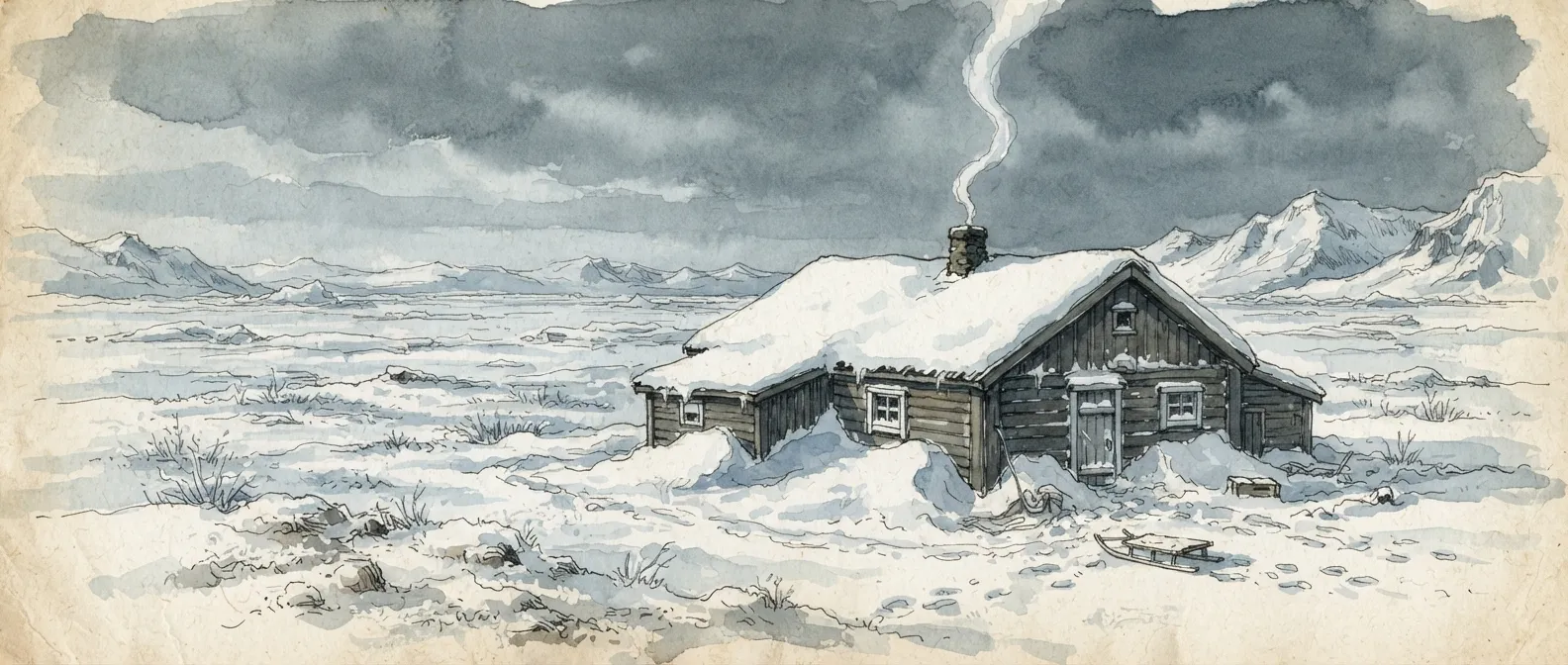
It is already dark for most of the day on Wrangel Island, somewhere in the winter of 1922-1923. Inside the cabin, a man coughs and can no longer walk: scurvy has ravaged his gums and legs. The three other men left weeks ago across the ice pack, heading toward Siberia to find help. No one will come back for them for a long time—if anyone ever comes back at all. Ada Blackjack, hired as a seamstress, is alone with a dying man, a rifle she barely knows how to use, and a cat as her only companion.
What happened
In 1921, the explorer Vilhjalmur Stefansson organized an expedition to Wrangel Island, an uninhabited Russian territory north of Siberia, intending to claim it for Canada, and then, after the Canadian government refused to back him, for Great Britain—a move that would trigger a diplomatic incident. He recruited four ill-prepared young men: Allan Crawford (Canadian, expedition leader, student in geology and paleontology), Lorne Knight, Fred Maurer, and Milton Galle (Americans). To cook and sew their gear, he hired Ada Blackjack in Nome, Alaska, a young Iñupiaq woman of about 23.
She joined the team in early September 1921, before the group landed on the island on September 15. Ada didn’t come out of a taste for adventure: her son Bennett, who had tuberculosis, was placed in an orphanage because she lacked the funds to pay for his care, and this contract was one of the few opportunities to afford his medical treatment. She had also been led to believe that other Indigenous people from Alaska would be part of the crew—which turned out not to be true.
The first year went reasonably well. But driftwood ran scarce, and Stefansson struggled to raise the money needed for resupply. In September 1922, a relief ship finally approached the island—and could not dock: the sea ice blocked access. The team realized they would have to endure a second winter without reinforcements or fresh provisions.
On January 28, 1923, Crawford, Maurer, and Galle set out on foot across the frozen Chukchi Sea, about 150 km toward Siberia, to find help. They left Ada alone with Knight, who was too weak to follow. None of the three men were ever seen again.
Knight suffered from scurvy, a severe deficiency in vitamin C that causes gums to swell and bleed, weakens joints, and eventually immobilizes the body entirely. Ada cared for him alone for months, with no medical supplies, using only what the island could provide. He died on June 23, 1923.
Ada was then left entirely alone on the island for two more months, with only the expedition’s cat, Vic, for company. During this time, she learned to hunt foxes, set traps, sew reindeer skin parkas, and shoot the rifle herself—skills she had never needed to perform while the men were there to hunt. On August 19, 1923, a ship chartered by Stefansson, carrying Harold Noice (a former colleague of the explorer), found her alive. She was the sole survivor of the five expedition members—along with the cat.
What she did
She learned out of necessity, not choice. Before the expedition, Ada had never hunted, shot a rifle, or trapped foxes: her role was strictly limited to cooking and sewing. The disappearance of the three men and Knight’s illness forced her to acquire, in a matter of weeks, skills that had taken others years to master. This is a documented phenomenon in survival psychology: under the pressure of vital need and with no way out, learning accelerates dramatically, driven by what researchers call adaptive stress—to be distinguished from paralyzing stress, where no action seems possible.
She nursed Knight alone, day after day, without seeing him improve. Scurvy isn’t cured with willpower: it requires vitamin C, which was almost non-existent in the camp’s diet of dried meat and canned goods. Without understanding exactly why Knight’s body was deteriorating despite her care, she kept feeding him, watching over him, and assisting him for months until his death. Staying beside a sick person you cannot cure, with no other human presence to share the emotional load, is a psychological ordeal in its own right—distinct from the physical ordeal of cold or hunger.
She maintained a daily routine after Knight’s death. Many survival accounts of long-term solitary isolation emphasize this point: without a structured day—hunting, tending the fire, repairing gear, feeding the cat—the mind unravels faster than the body. Ada continued to set traps, hunt seals, and maintain the cabin for two full months after her companion died, alone on an island with no other human being.
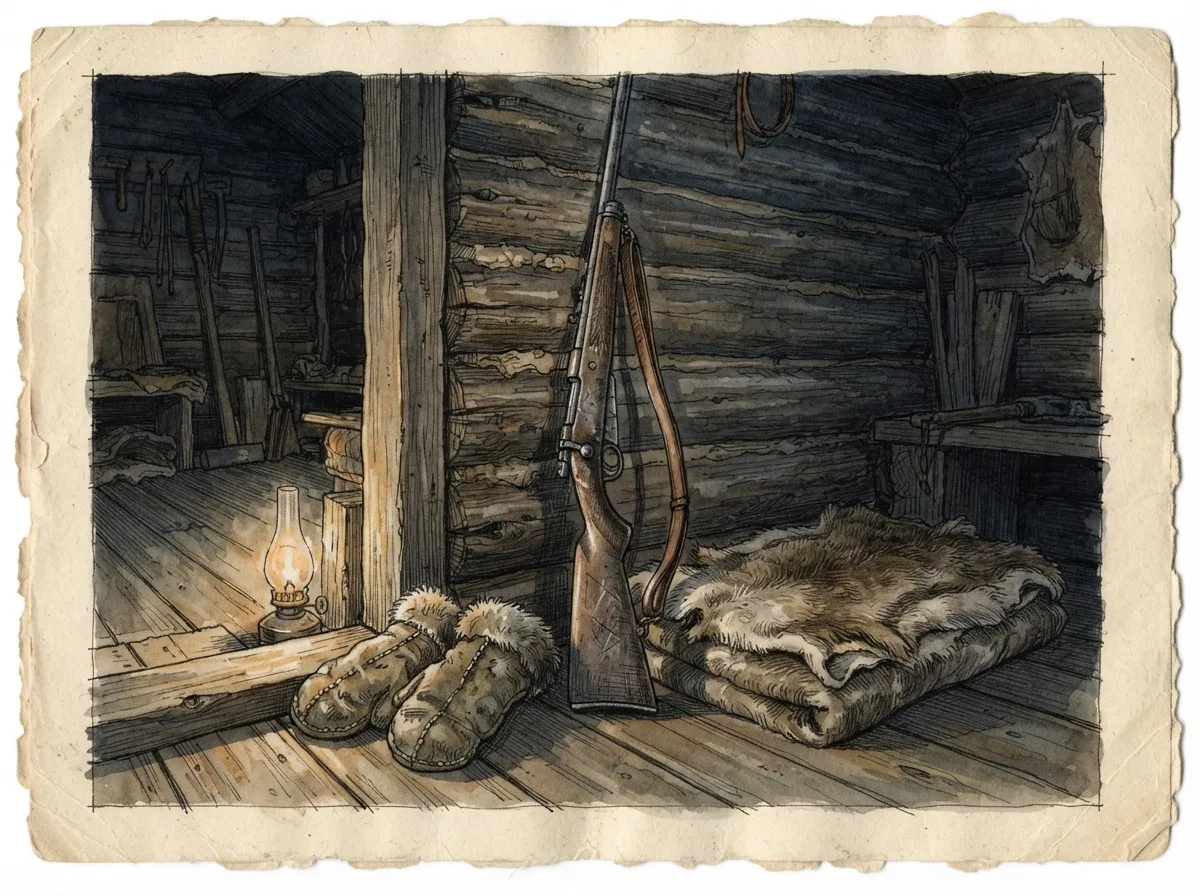
She kept a weapon close at hand. Polar bears roam Wrangel Island, and a solitary woman in an isolated cabin with dried meat nearby was a potential target. Learning to load and aim the rifle wasn’t a secondary skill: it was a prerequisite for survival against a predator capable of busting through a door.
What saved her
- The rapid acquisition of vital skills she had never practiced before—hunting, trapping, shooting—without which she would have had no food or defense against predators, as highlighted in the guide on dangerous wildlife.
- Maintaining a daily routine despite complete isolation, which preserved her mental stability over months without any human contact—a mechanism detailed in the guide on mindset.
- Mastering extreme cold and winter autonomy, in a climate where a single mistake regarding shelter or fire can kill within hours—see the guide on winter and extreme cold.
- Caring for a sick companion without knowing how to cure him, which extended Knight’s survival by several months and spared him a solitary death—applying the same principles found in the guide on wilderness first aid.
- The presence of Vic the cat, often cited in accounts of extreme isolation as a factor that, while not replacing human companionship, still structures daily life and eases loneliness.
What we learn from it
- A skill you have never practiced can be learned quickly out of real necessity—but it’s much better not to wait for that moment. Before venturing into remote environments, learning at least the basics of fire-making, navigation, and first aid reduces the number of things you’ll have to improvise in an emergency.
- Resupply is as vital a link as your equipment. Any expedition or trek that relies on external resupply must always account for what happens if that resupply fails once—not just if it is delayed.
- Maintaining a daily routine is a core mental survival technique. Setting simple, repeatable tasks for yourself—tending the fire, checking supplies, basic personal hygiene—delays psychological collapse far better than passively waiting for rescue.
Frequently asked questions
Who was Ada Blackjack?
An Iñupiaq woman from Alaska, hired in 1921 as a seamstress and cook for an expedition sent by explorer Vilhjalmur Stefansson to Wrangel Island in the Arctic. She became the sole survivor of the five-member team after spending two years there.
Why did she agree to join the expedition?
To earn enough money to pay for medical care for her son Bennett, who had tuberculosis and was placed in an orphanage due to her lack of funds. She was also led to believe, incorrectly, that other Indigenous Alaskans would join the expedition.
How did Lorne Knight, the man she cared for, die?
From scurvy, a severe vitamin C deficiency that progressively damages the gums, blood vessels, and joints, eventually leaving the person completely bedridden. Ada cared for him alone for months, but was unable to prevent his death on June 23, 1923.
Did she really learn to hunt and shoot all by herself?
Yes. Before the expedition, her role was strictly limited to sewing and cooking. After the three men left in January 1923 and Knight became incapacitated, she had to learn how to handle a rifle, set fox traps, and hunt seals to feed and defend herself.
What happened to the three men who left to get help?
Crawford, Maurer, and Galle left the island on January 28, 1923, to try to cross the frozen Chukchi Sea to Siberia. None of the three men were ever found.
Going further
- Jennifer Niven, Ada Blackjack: A True Story of Survival in the Arctic (2003)—the definitive biography, drawn from the journals and archives of the expedition.
- Peggy Caravantes, Marooned in the Arctic (2016)—an accessible account of her story, focusing on the two years spent on the island.
- The video “Ada Blackjack: The Seamstress Who Became the Only Survivor” (JBO Production, in English) traces the full timeline of the expedition, from the departure in Nome to her rescue.
- The archives of the Stefansson expedition, consulted by polar historians, remain the primary source for verifying dates and decisions made on the island.
Key takeaways
- The 1921 Wrangel Island expedition, organized by Stefansson to claim territory that was already Russian, ended in disaster due to a lack of reliable resupply.
- Ada Blackjack, hired as a seamstress, had to learn on her own to hunt, trap, and shoot a rifle after three men left and the fourth fell ill.
- She cared for Lorne Knight, who had scurvy, for months, though she could not prevent his death on June 23, 1923.
- She survived alone, with only Vic the cat for company, for another two months before being rescued on August 19, 1923.
- Out of the five expedition members, she was the only one to return alive—proving that a skill acquired in an emergency, if learned quickly enough, can keep you alive.
Sources for this module (4)
Continue in "Survivor stories"
Aron Ralston: 127 hours trapped in a canyon
An arm trapped under a boulder, five days without rescue, and a decision no manual teaches: cutting oneself to live.
Juliane Koepcke: 11 Days Alone in the Jungle After the Crash
Seventeen years old, alone after falling three kilometers into the Amazon jungle, she followed a single rule: walk toward water.
Steven Callahan: 76 days adrift on a raft
A crash in the night, a sailboat sinking in a matter of minutes, and 76 days on a tiny raft reinventing survival.