Aron Ralston: 127 hours trapped in a canyon
An arm trapped under a boulder, five days without rescue, and a decision no manual teaches: cutting oneself to live.
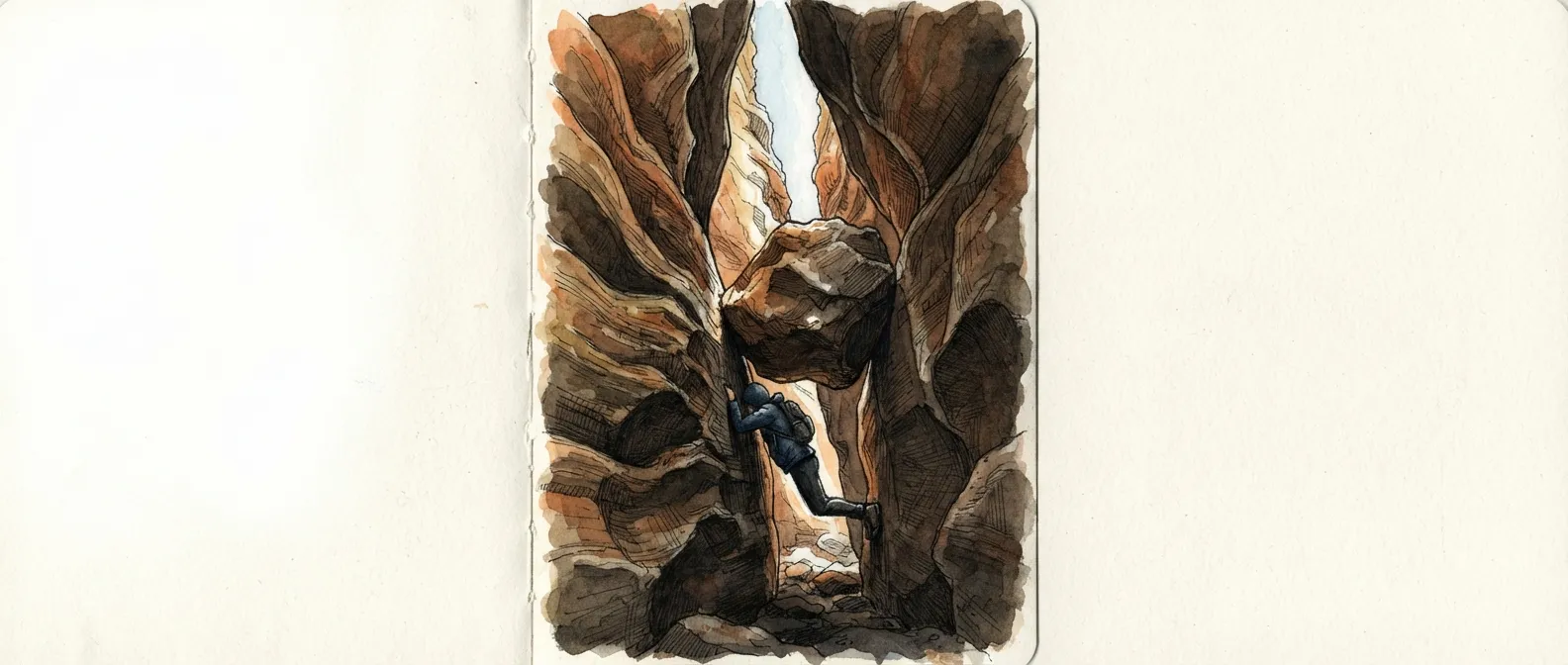
It’s a little past 2:00 PM on Saturday, April 26, 2003, when Aron Ralston places his hand on a sandstone boulder wedged between the walls of a narrow slot in Blue John Canyon, Utah. He is descending solo, as he does almost every weekend; he didn’t tell anyone, neither his employer nor his mother, exactly where he planned to go. The rock, as large as a washing machine, shifts under his weight. His left hand takes the initial blow, and then his right hand ends up crushed against the wall, trapped by roughly 360 kilograms of stone. He pulls, he pushes, he screams into the mineral silence of the canyon. Nothing moves a millimeter. He checks his watch. Without knowing it yet, he has just entered the one hundred and twenty-seven hours that will change everything.
What happened
Blue John Canyon is a slot canyon, so narrow in places that you have to squeeze through sideways. Ralston has just lost the use of his dominant hand, miles from the nearest road, in a corner almost nobody visits. Here is what his own account, published in 2004, and subsequent reconstructions have established.
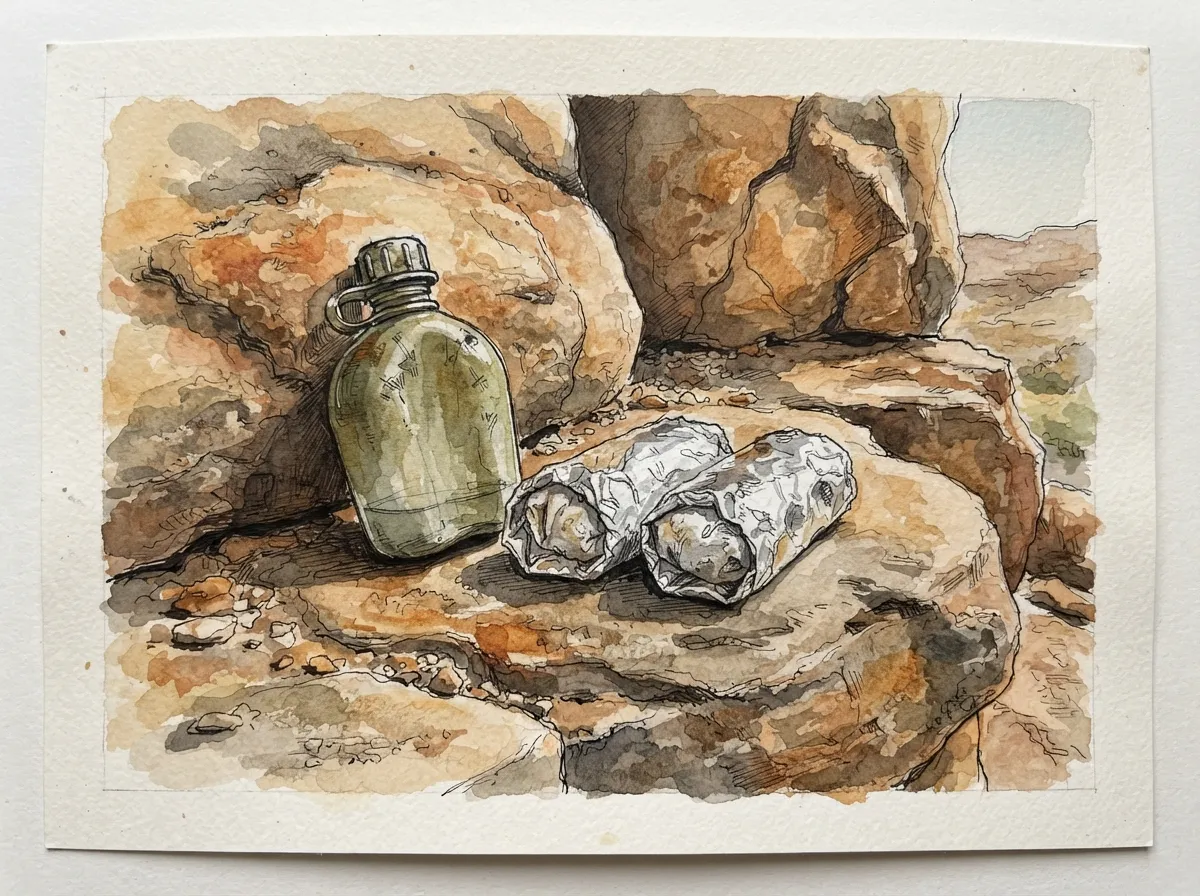
Saturday, April 26, late afternoon. The boulder shifts and crushes his right forearm against the canyon wall. Ralston has with him about 350 ml of water, two burritos, a rope and canyoneering carabiners, a small video camera, and a cheap multi-tool with a dull 5 cm blade.
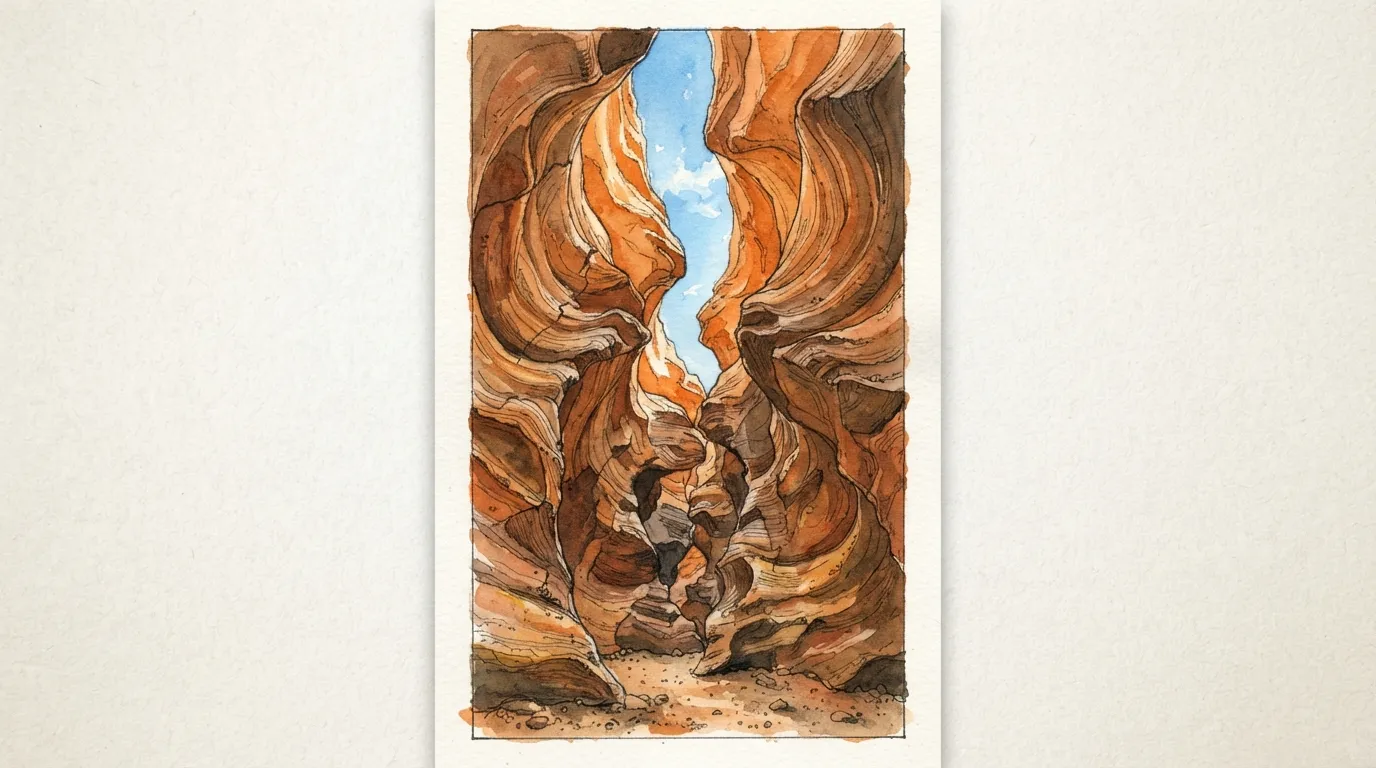
Days 1 to 3 (April 26–28). He first tries what seems reasonable: chipping away at the rock around his arm with his blade, building a makeshift pulley system with his rope and carabiners to hoist the boulder—several hundred kilos that no human arm can move alone. Nothing gives. He rations his water by the sip and his two burritos by the bite.
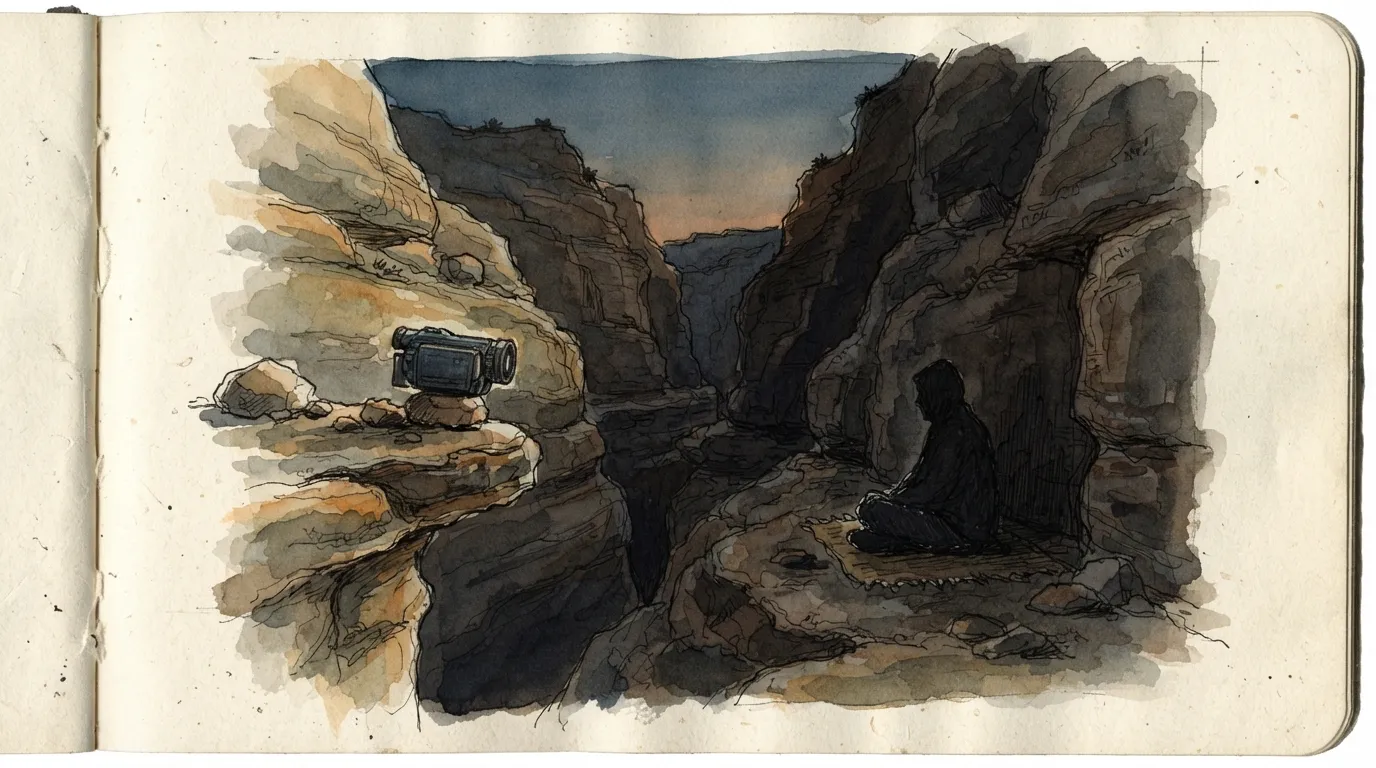
Day 4 (April 29). Convinced he will die on the spot, he records video farewell messages to his parents and future children, then carves his name, date of birth, and a presumed date of death into the sandstone wall.
Day 5 (April 30). His water ran out the previous day. To slow down dehydration, he drinks his own urine—a last-resort action that actually yields almost no usable hydration.
Night of April 30 to the morning of May 1 — Day 6. Ralston experiences a vivid vision: a young blond boy he understands to be his future son, playing with him despite his missing arm. From this, he gains a sudden certainty: he is going to live, and to live, he must sacrifice that arm. This mental breakthrough unlocks a mechanical idea he hadn’t considered before—snapping the two forearm bones using leverage against the rock, rather than trying to saw through them.
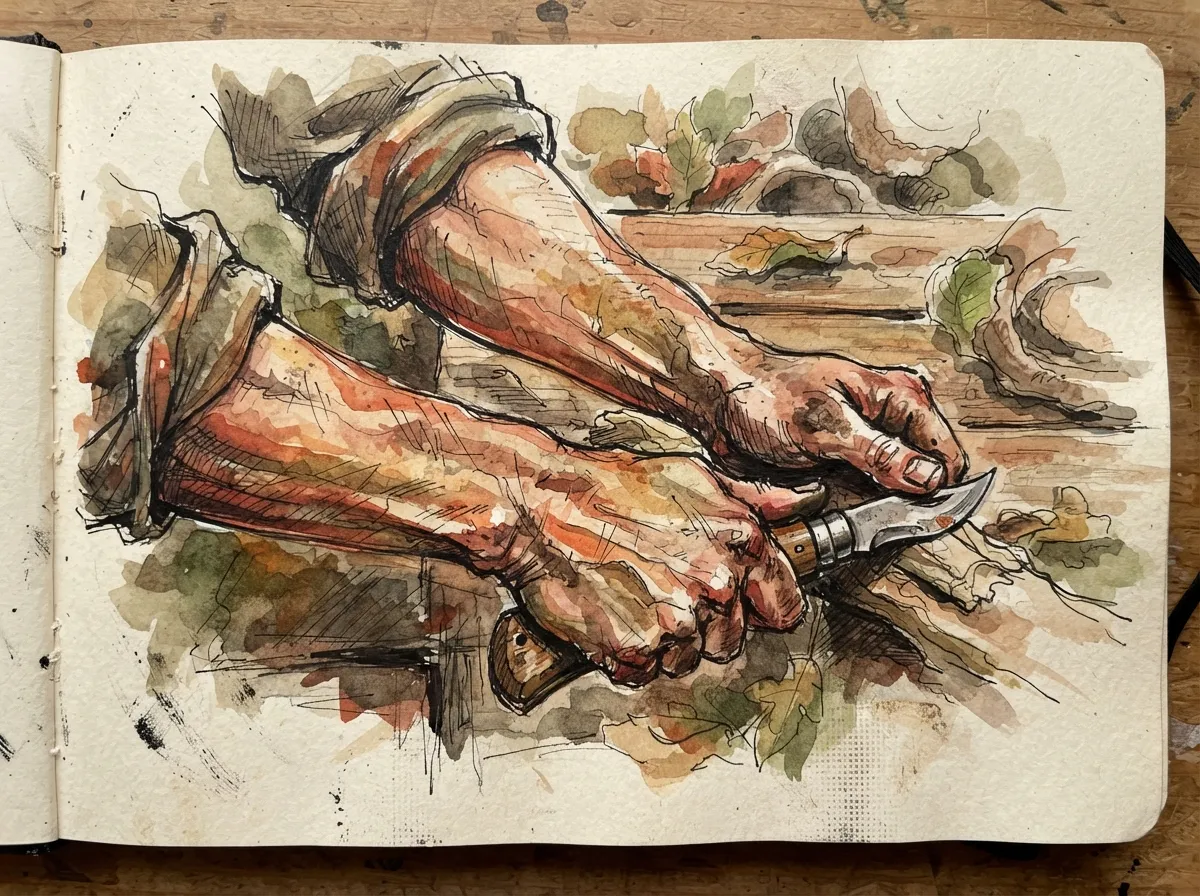
He breaks his radius, then his ulna, improvises a tourniquet using the hydration hose from his CamelBak, and proceeds to cut through tissue and tendons one by one with the dull blade, deliberately saving the main arteries for the absolute end. The process takes a little over an hour.
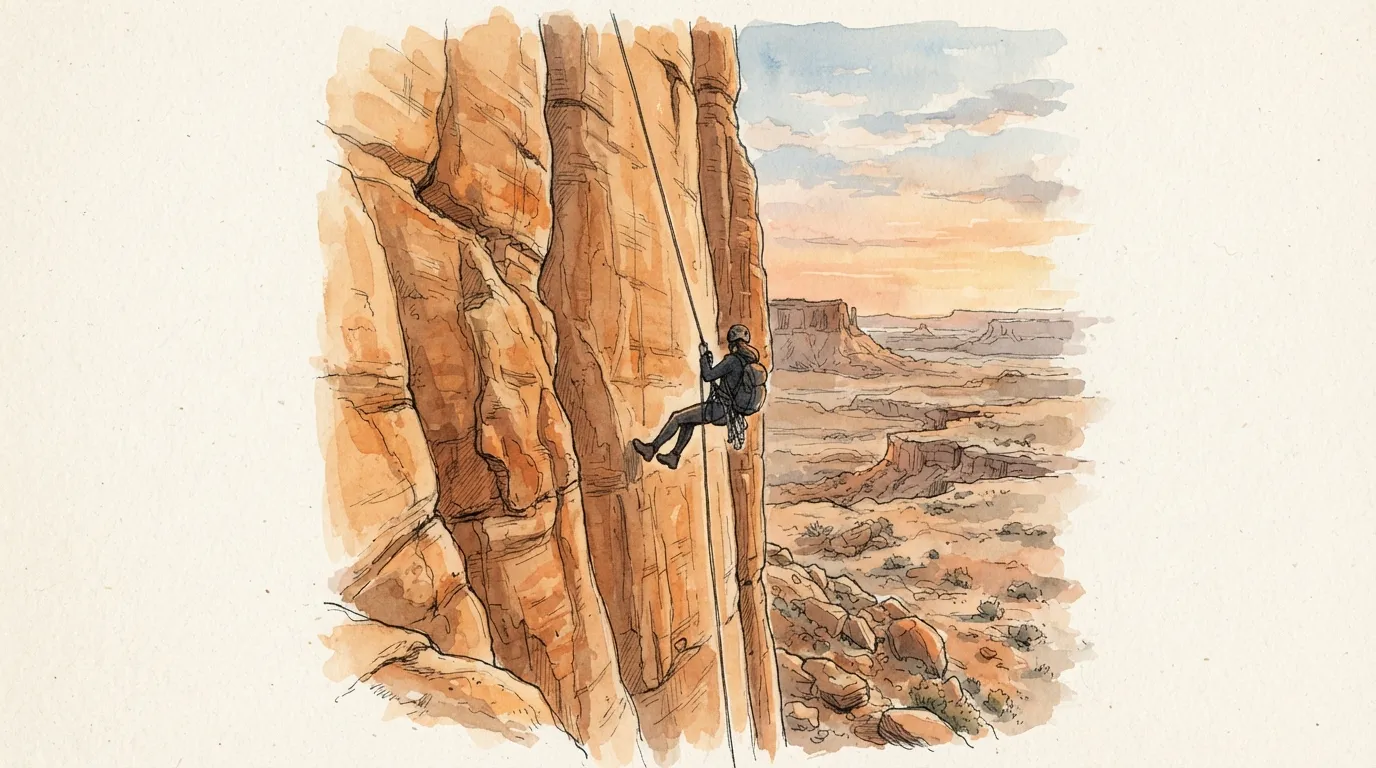
Once free, he wraps his stump in a plastic bag, climbs up and out of the narrow slot, and still has to rappel down a vertical 20-meter wall—using one hand, with the rope gear he had brought for his hike.
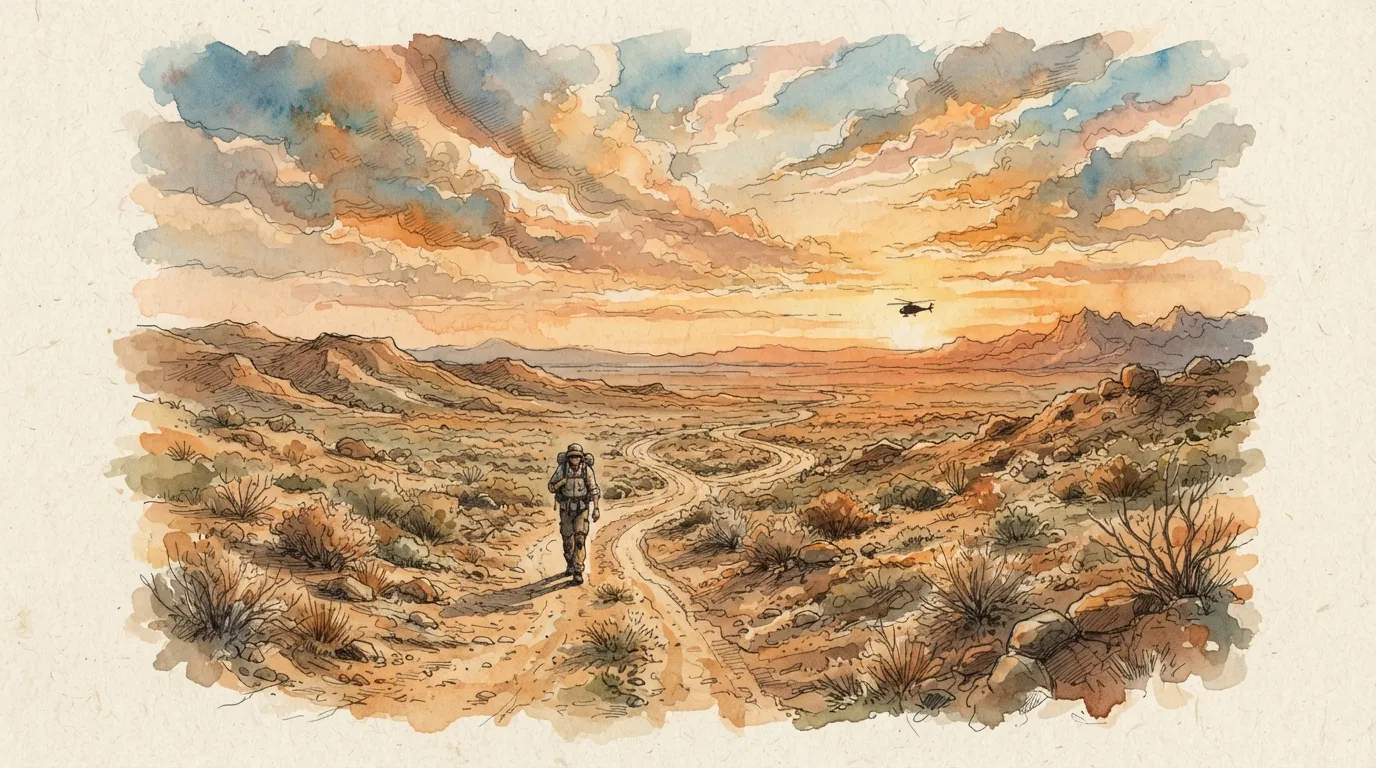
He then hikes alone through the desert. After about ten kilometers, he runs into a family of Dutch hikers, Eric and Monique Meijer and their son, who give him food and water and raise the alarm. Minutes later, a rescue helicopter—already airborne because his family and employer had reported him missing the day before—spots him and evacuates him to Moab Hospital. He has lost 18 kg and about a quarter of his blood volume. Two days later, thirteen national park rangers, a winch, and a hydraulic jack are required to move the boulder and recover his forearm, which is later cremated.
What he did right
Ralston’s story is fascinating precisely because almost nothing he did was pure instinct: every step was a conscious decision, made with whatever clarity he had left.
Exhausting all reversible solutions first. For three days, he didn’t touch the idea of amputation. He tried brute force, leverage, chipping stone with his blade—anything that might free him without permanent damage. Physiologically, this is the correct sequence: the human body can endure several days without food, and the priority isn’t to cut quickly, but rather not to waste a reversible option by rushing into an irreversible one.
Rationing without lying to himself. 350 ml of water for five days in the Utah desert, where daytime temperatures easily top 25 °C, is far below what the body needs. Ralston had no margin of safety: what he managed was the pace at which he depleted that margin, not the margin itself.
Preparing for death without giving up on life. The video farewells and carving his name on the rock were not a surrender. Many extreme survival accounts describe this same mechanism: consciously accepting the possibility of death frees up mental bandwidth that was previously consumed by panic—and that focus becomes available again to observe, adapt, and keep trying.
Cutting in the correct sequence. Breaking the bone first—a step that doesn’t cause external bleeding—then slicing through soft tissue, while leaving the primary arteries for the very end: this follows the exact logic taught in wilderness medicine for traumatic amputations, where hemorrhage, not pain, is the immediate killer.
Keeping going after freeing himself. Unstuck and severely weakened, he kept making active choices: rappelling single-handedly down a cliff rather than waiting in place for an unlikely passerby when no one knew where to look for him.
What saved him
Disciplined water and food rationing
Without it, he wouldn’t have survived five days. Understanding how the body distributes its water reserves, and why thirst is a poor indicator of actual danger, is knowledge to master before heading out—not in the middle of a crisis. See the guide on water.
The mental shift from waiting to action
Ralston could have waited for an unlikely rescue crew; in a canyon almost no one visits, waiting meant a slow, guaranteed death. Recognizing the moment to stop hoping and start taking action—even an extreme one—is a psychological shift you can prepare for. See the guide on mindset.
Technical rope skills
Freeing his arm would have been pointless if he couldn’t subsequently rappel down a 20-meter cliff using only one hand. The canyoneering gear and technical skills he packed for his trip ultimately became his escape equipment. See the guide on knots and ropes.
Complete solo self-rescue
Applying a tourniquet, managing a major wound, deciding to move instead of staying put: every action in that final hour was a solo self-rescue maneuver, executed with zero bystanders or outside guidance. See the guide on solo self-rescue.
A chance encounter, and a search already underway
Ralston wasn’t saved purely by luck: his family and employer had already reported him missing, and the family of hikers he met on the trail connected the dots within minutes. His final rescue was as much a product of that safety net as it was of his own willpower. See the guide on rescue and signaling.
Key lessons
1. Taking thirty seconds to share your plan costs nothing; failing to do so can cost an arm—or your life. This was Ralston’s initial mistake, and he has repeated it in nearly every interview since: nobody knew he was in Blue John Canyon that day. A simple text to a friend with your planned route and return time reduces rescue response times by days—and completely changes the risk calculus on the ground, since that delay is precisely what makes waiting unbearable.
2. A minimal emergency kit must allow for a tourniquet, even when solo. Ralston improvised his using his pack’s hydration tube. A wide strap and a simple cinching mechanism tucked into any daypack weigh next to nothing and change everything if you ever need to stop heavy bleeding without help.
3. Break the impossible down into tiny steps. Ralston didn’t simply wake up one morning and decide “I’m going to cut off my arm.” He decided to break a bone, then cut one piece of tissue, then another, one step at a time. Faced with an overwhelming crisis, the right question is never “how do I solve everything?”, but “what is the next minute’s task?”—a technique shared by almost all isolated survivors.
Frequently asked questions
How did Aron Ralston cut his arm off?
He first broke both forearm bones (the radius and ulna) by twisting his arm against the trapped boulder, then used the dull 5 cm blade of a cheap multi-tool to cut through muscles, tendons, and finally the arteries. The whole process took a little over an hour on May 1, 2003, after five days of being trapped.
Why didn’t he call for help?
Blue John Canyon had no cellular coverage in 2003, and Ralston did not carry a satellite beacon—gear that was rare and expensive for a solo hiker at the time. External rescue relied entirely on someone noticing he was missing and knowing where to look, which he hadn’t told anyone.
How long was Aron Ralston trapped?
Precisely one hundred and twenty-seven hours—just over five days—from late Saturday afternoon, April 26, to Thursday morning, May 1. This duration provided the title for both his book and the movie.
Is the movie 127 Hours accurate?
Ralston himself called it so factually accurate that it feels almost like a documentary framed as a drama. A few minor details were condensed—such as his initial encounter with two female hikers—but the overall timeline, actions, and key dialogue closely match his 2004 memoir.
What happened to Aron Ralston after the accident?
He continued mountaineering and climbing with a prosthetic arm. In 2005, he became the first person to solo-climb all 53 of Colorado’s “14ers” (peaks over 14,000 feet / 4,267 meters) in winter. He married in 2009 and had a son in 2010. Today, he always leaves his itinerary with someone before setting out.
Going further
- Aron Ralston, Between a Rock and a Hard Place (Atria Books, 2004) — Ralston’s autobiography, providing a minute-by-minute account in his own words.
- 127 Hours (2010), directed by Danny Boyle, starring James Franco as Ralston — nominated for six Academy Awards in 2011, including Best Picture and Best Actor.
- Europe 1 interview, “L’amputation était devenue une évidence,” where Ralston reflects on his sixth-day decision.
- Katie Couric interview, detailing how he came up with the idea of breaking his bones before attempting to cut.
Sources for this module (6)
- Wikipédia EN — Aron Ralston
- Wikipédia FR — Aron Ralston
- Wikipédia EN — 127 Hours (film)
- Aron Ralston, Between a Rock and a Hard Place, Atria Books, 2004
- Europe 1 — « L'amputation était devenue une évidence » (interview vidéo)
- Katie Couric — The Man Behind '127 Hours' Explains Doing the Unthinkable (interview vidéo)
Continue in "Survivor stories"
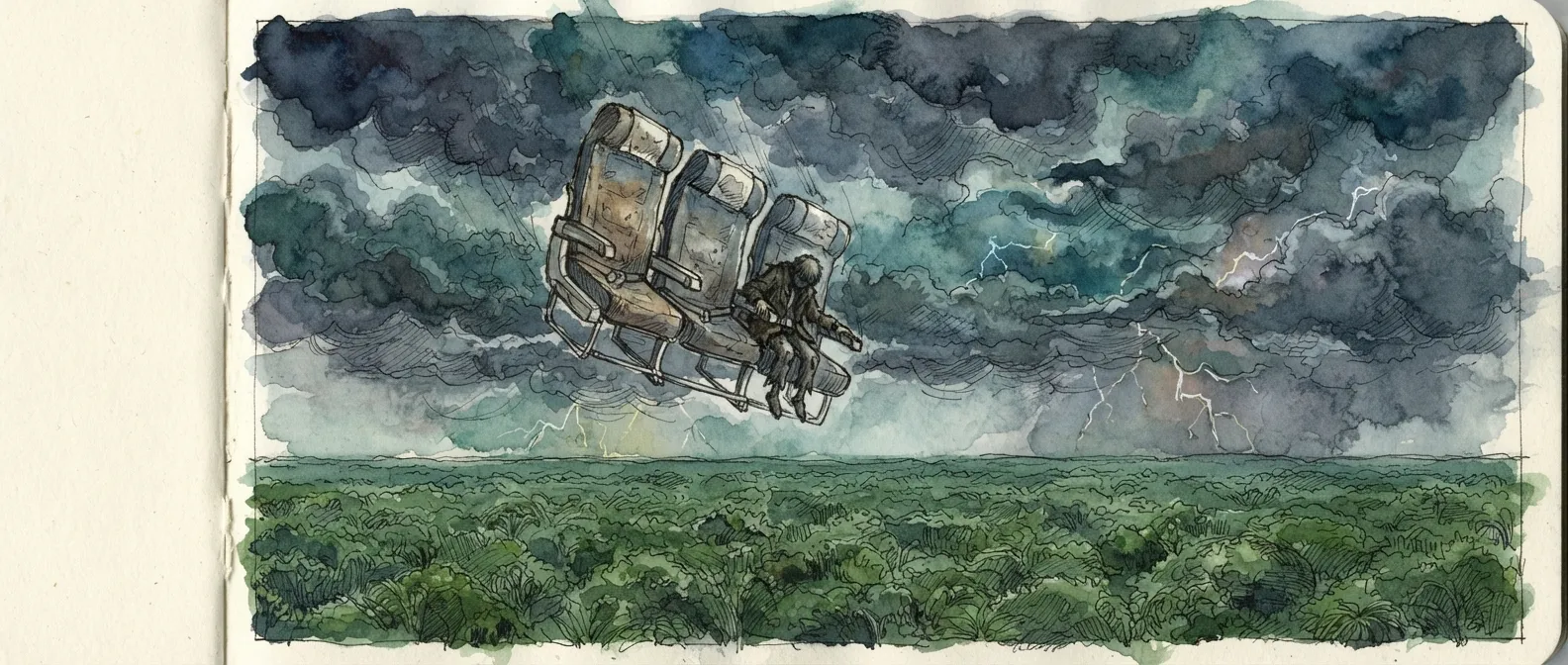
Juliane Koepcke: 11 Days Alone in the Jungle After the Crash
Seventeen years old, alone after falling three kilometers into the Amazon jungle, she followed a single rule: walk toward water.
Steven Callahan: 76 days adrift on a raft
A crash in the night, a sailboat sinking in a matter of minutes, and 76 days on a tiny raft reinventing survival.
José Salvador Alvarenga: 438 Days in the Pacific
Out fishing for two days, he drifted for 438 days across the Pacific, alone after the death of his crewmate.