Poon Lim: 133 days alone on a raft, the Atlantic record
A torpedoed cargo ship in the dead of night, a 2.40-meter raft, and a man who crafts his tools with whatever he has in his pockets.
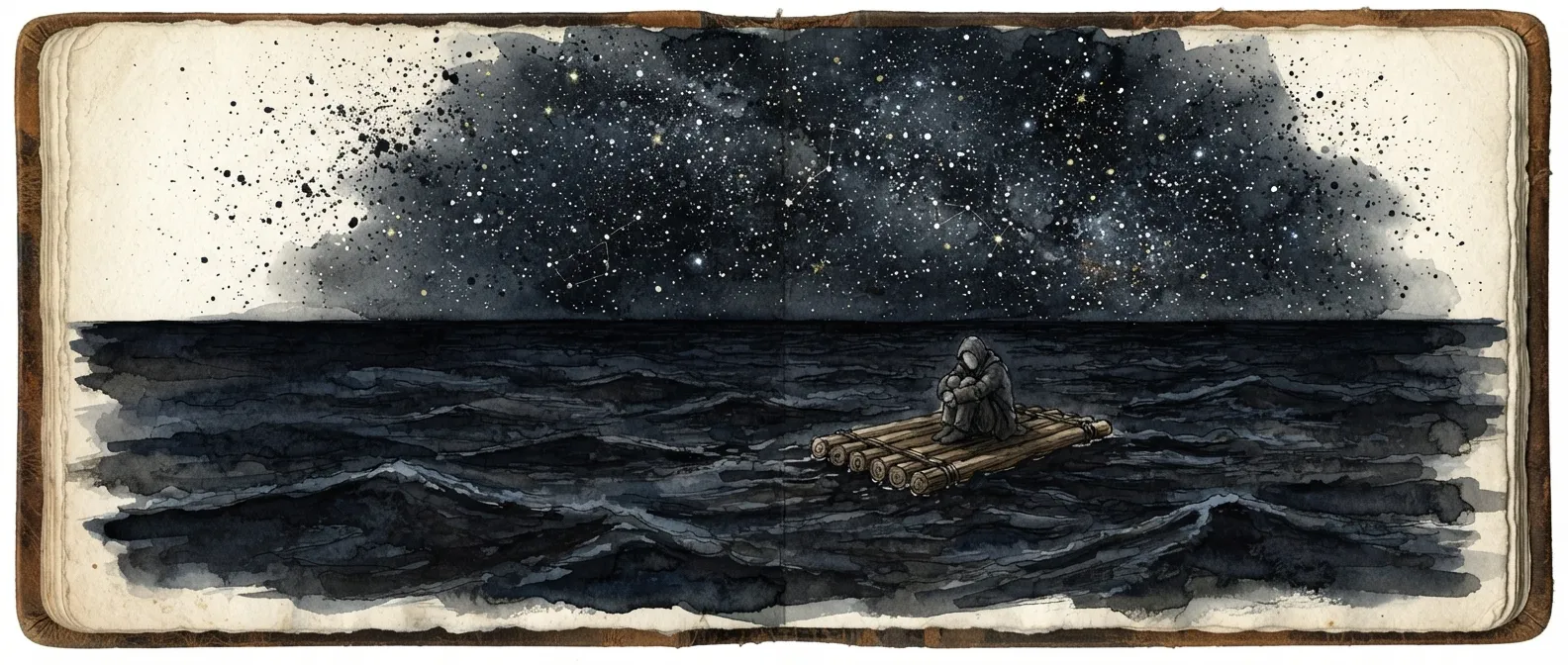
It’s shortly after midnight on November 23, 1942, somewhere in the South Atlantic. The SS Benlomond is pushing forward alone in the dark when two dull detonations shake the hull seconds apart: two German torpedoes have just struck. The deck lists, the water rises faster than the screams. Poon Lim, a second steward on board, cannot swim well. He grabs a life jacket, jumps, and hauls himself onto a wooden raft already drifting away from the wreckage. Around him, nobody answers anymore.
What happened
The SS Benlomond, a merchant ship belonging to the Scottish Ben Line company, was crossing the South Atlantic on the night of November 22 to 23, 1942, when the German submarine U-172 spotted it and fired two torpedoes. The ship sank in a matter of minutes, about 400 km north of the Brazilian coast. Dozens of crew members died that night in the sinking or in the hours that followed, drowned or unable to reach a lifeboat. Poon Lim, a Chinese sailor in the British Merchant Navy working as a second steward, was the sole survivor.
He climbed onto a 2.40-meter wooden survival raft equipped with basic supplies: fresh water, hardtack biscuits, a little chocolate, pemmican, condensed milk, and lime juice—this last detail was no coincidence; in 1942, it was already a known remedy against scurvy on British Merchant Navy ships, a direct legacy from 18th-century sailors. A flashlight and flares completed the equipment.
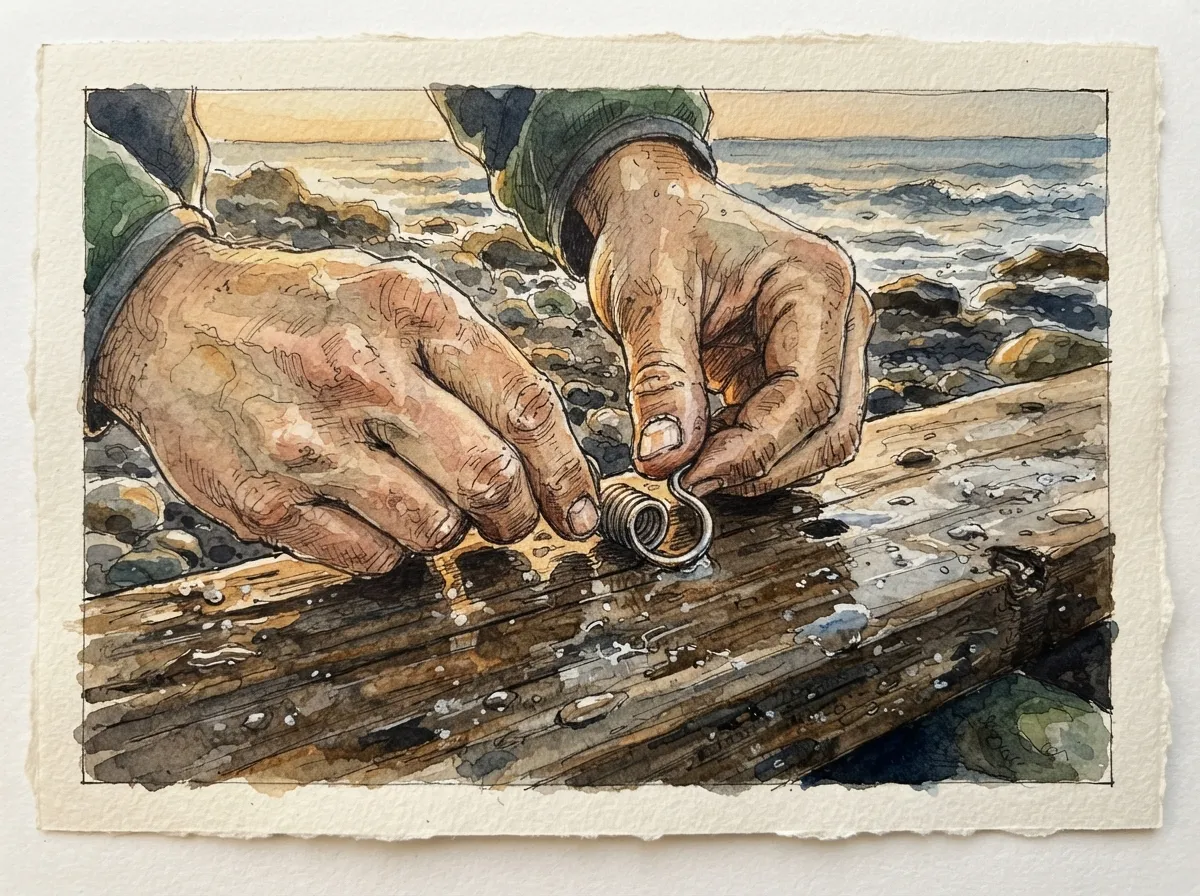
During the first few days, Poon Lim rationed what he had. He knew the raft’s supplies would last only a short time against what lay ahead, and that he would very quickly need to learn to feed and hydrate himself differently. He improvised a rainwater collector by stretching the canvas of his life jacket into an awning, which also provided shade from the sun. He took apart the spring from his flashlight to make a hook, unraveled a piece of hemp rope to make a line, and crushed biscuits to use as bait. His first catches were fish, then seagulls that landed on the raft: he killed them, salted their meat in seawater, and dried it in the sun—a preservation method similar to jerky.
One day, he attracted a shark with seagull remains and managed to haul it aboard. The animal immediately attacked him on the raft; Poon Lim knocked it unconscious using an empty water container, cut it open, and drank the blood from its liver—an extreme act, but one that provided liquids and fats at the exact moment he lacked them most.
For weeks, several cargo ships crossed his path without stopping, despite his calls in English. An US Navy patrol plane eventually spotted him and dropped a marker buoy, but a storm prevented any rescue in the aftermath. He kept drifting.
On April 5, 1943, three Brazilian fishermen found him about 16 km off the coast of the state of Pará, near the mouth of the Amazon River. It had been 133 days since he left the wreck of the Benlomond. He had lost about 9 kg, but he walked into the hospital under his own power.
What he did
What stands out in Poon Lim’s story isn’t a single stroke of luck: it’s a sequence of logical decisions, executed in the order of their importance.
He rationed before he felt hungry. From the very first days, he split his supplies rather than consuming them based on his appetite. This is the instinct most often missing in castaways: the human body copes much better with a gradual calorie deficit than with abrupt starvation following a phase of wastefulness. By stretching the raft’s water and food over the first few weeks, he bought the time needed to set up a regular fishing routine before running completely dry.
He repurposed every object into multiple tools. The flashlight spring became a hook, the hemp rope became a line, the life jacket served as flotation, shade, and a rain collector all at once. This economy of means wasn’t aimless cleverness: on a bare raft, every item that can serve two purposes doubles your chances of survival at no extra cost.
He drank the blood from the shark’s liver without hesitation. The act sounds shocking, but it followed precise physiological logic: the liver concentrates directly assimilable fluids and lipids at a time when Poon Lim’s body suffered a severe deficit of both. It’s not an action to recommend in every situation—animal blood also contains proteins that tax kidneys already weakened by dehydration—but in his case, at that stage of the ordeal, the benefits outweighed the risks.
He kept calling out to ships, even after repeated rejections. Psychologically, this was perhaps the hardest decision: every passing ship that didn’t stop was a heartbreak that could easily make someone give up hope. Poon Lim kept watching the horizon and shouting, refusing to let the indifference of others dictate his mental state.
What saved him
- Rationing discipline, starting on day one rather than waiting until hunger became unbearable—the same core principle that governs water management in survival situations, detailed in the guide on water.
- Crafting fishing tools from whatever was on board, an improvised hook and line, without which no steady supply of protein would have been possible—see the guide on field protein for these same principles applied to improvised fishing.
- Systematic rainwater collection, the only reliable source of fresh water in the open ocean, where all visible water is salty and unfit for direct drinking—expanded upon in the guide on sea survival.
- Mental fortitude in the face of repeated rejections by passing ships, which could have shattered his drive to keep watching and signaling—a mechanism covered in the guide on mindset.
- Final rescue by local fishermen rather than a large vessel, a reminder that small coastal boats often spot what cargo ships, focused on their course, miss entirely.
What we learn from it
- Ration starting on day one, not when supplies run low. A hiker who gets lost with a half-empty canteen should apply this exact instinct: divide what remains by the number of days you expect to endure, not by your urge to drink when thirsty.
- An everyday item often hides a secondary function. A headlamp, a shoelace, a survival blanket: before writing them off as useless for a given task, ask yourself what else they could do—a hook, a line, a water collector.
- Being seen doesn’t guarantee being rescued. Ships passed right by Poon Lim without stopping. The practical lesson: never rely on a single signal or a single witness, and keep generating more—this is the foundational principle of using multiple signaling methods, detailed in the guide on wilderness first aid.
Frequently asked questions
How did Poon Lim survive 133 days on a raft?
He strictly rationed the raft’s water and food from day one, then made a fishhook out of his flashlight spring, caught seabirds and dried them into jerky, and collected rainwater by stretching the canvas of his life jacket as an awning.
Did ships pass near him without rescuing him?
Yes, several cargo ships crossed his path without stopping despite his calls in English. A US Navy patrol plane spotted him and dropped a marker buoy, but a storm prevented rescue at that time. He was eventually picked up by three Brazilian fishermen, not a major vessel.
Did he really drink a shark’s blood?
Yes. He lured a shark using seagull remains, hauled it aboard, beat it to death with a water container after it attacked him, and drank the blood from its liver to get fluids and fats his body desperately needed.
How long can you survive without water at sea?
Without fresh water, only a few days—often fewer than five. This is why collecting rain was vital for Poon Lim: the surrounding seawater is salty and only accelerates dehydration if drunk directly.
What is his legacy today?
His 133 days remain one of the longest documented solo drifts on a raft. The Royal Navy incorporated his methods—improvised fishhooks, rainwater collection, strict rationing—into its survival manuals for sailors.
Going further
- Jennifer Niven documents comparable drift survival stories in her works on polar and maritime survival; for a deep dive into 20th-century sea survival accounts, the archives of the Royal Navy and Ben Line remain the most complete source on Poon Lim.
- Science fiction writer Alfred Bester noted that Poon Lim’s ordeal influenced the character of Gully Foyle—a castaway surviving alone in space—in his novel The Stars My Destination (1956), showing just how deeply this story impacted the era.
- The video documentary “Le naufragé qui a survécu seul en mer pendant 133 jours” by François Calvier (HDS channel, in French) reconstructs the full timeline from the sinking to the rescue.
- His own quote, spoken when told he held the record for solo survival on a raft, sums up the cost of his ordeal better than any commentary: “I hope no one ever has to break that record.”
Key takeaways
- The SS Benlomond sank in minutes on November 23, 1942, after being torpedoed by U-172; Poon Lim was the sole survivor.
- He endured 133 days on a 2.40-meter raft thanks to strict rationing, a hook made from a flashlight spring, and a rainwater collector improvised from his life jacket.
- Ships saw him without stopping: he was finally saved by three Brazilian fishermen on April 5, 1943, 16 km off the coast of Pará.
- He lost 9 kg during his drift and was awarded the British Empire Medal by King George VI.
- His techniques were integrated into Royal Navy survival manuals—the most concrete proof that methodical improvisation under pressure can become standard doctrine.
Sources for this module (4)
Continue in "Survivor stories"
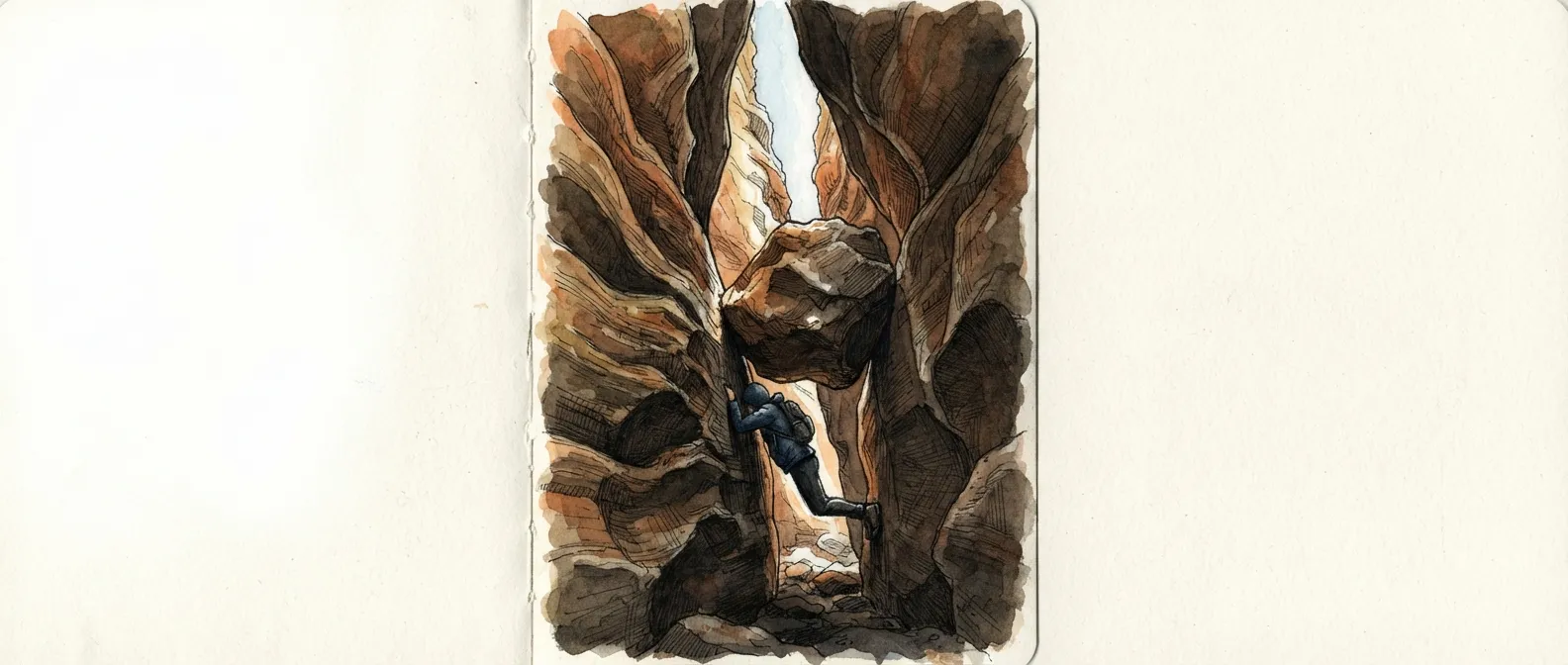
Aron Ralston: 127 hours trapped in a canyon
An arm trapped under a boulder, five days without rescue, and a decision no manual teaches: cutting oneself to live.
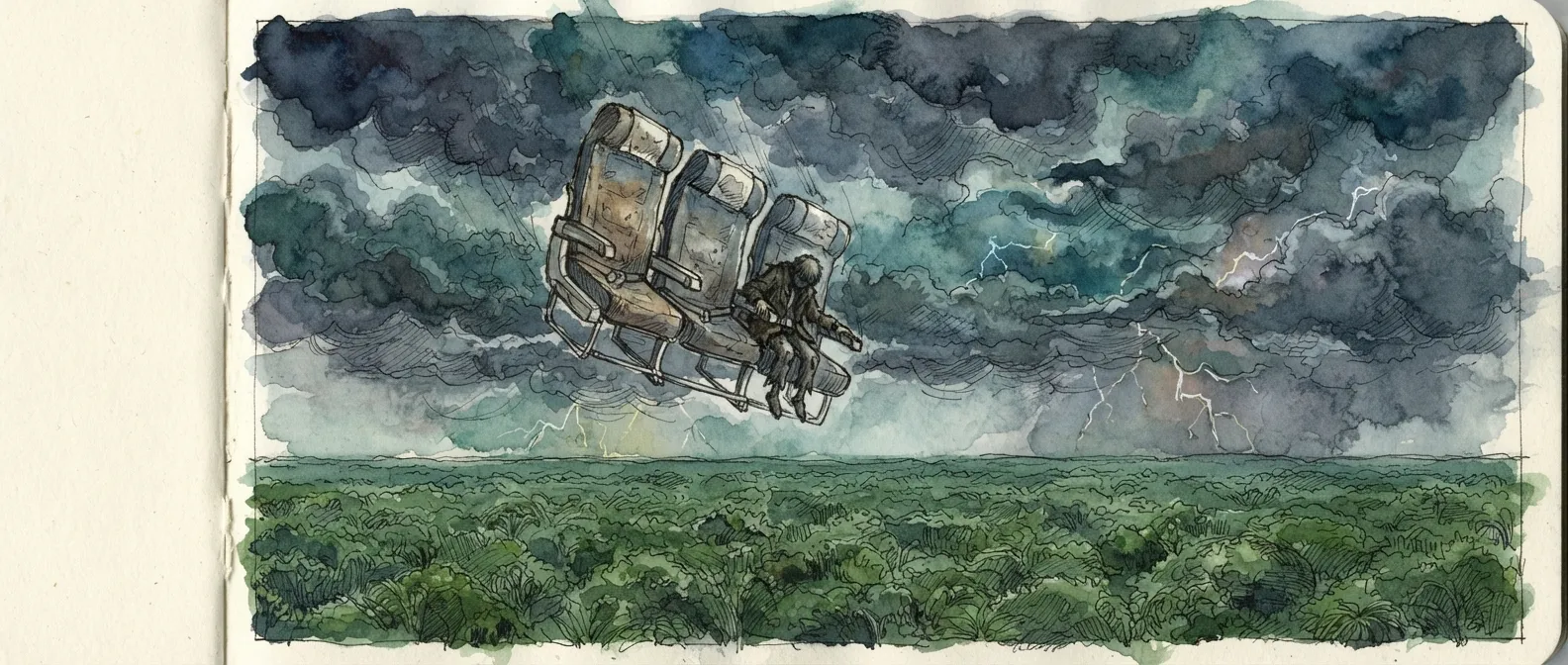
Juliane Koepcke: 11 Days Alone in the Jungle After the Crash
Seventeen years old, alone after falling three kilometers into the Amazon jungle, she followed a single rule: walk toward water.
Steven Callahan: 76 days adrift on a raft
A crash in the night, a sailboat sinking in a matter of minutes, and 76 days on a tiny raft reinventing survival.