Beck Weathers: Left for Dead Twice on Everest
Blind, hypothermic, abandoned twice in the snow at 8,000 meters — yet standing back up, yet returning home.
He has been lying in the snow for hours, somewhere above 7,900 meters, on the south face of Everest. He can’t see anything — his cornea, weakened by an eye operation years earlier, warped under the combined effects of freezing cold and lack of oxygen. Two Sherpas came, looked at him, assumed he was dead, and left. The storm keeps howling. In a few hours, something inside his body is going to shift, without any doctor ever truly being able to explain how.
What happened
On May 10, 1996, Seaborn Beck Weathers, a 49-year-old Texan pathologist, was part of the commercial Adventure Consultants expedition led by New Zealand guide Rob Hall, pushing toward the summit of Everest. Years earlier, Weathers had undergone a radial keratotomy — a surgical procedure to correct nearsightedness using fine incisions in the cornea. At high altitude, hypoxia and low atmospheric pressure warped his weakened corneas: Weathers found himself functionally blind long before reaching the summit.
Rob Hall ordered him to wait at a spot called “The Balcony”, at around
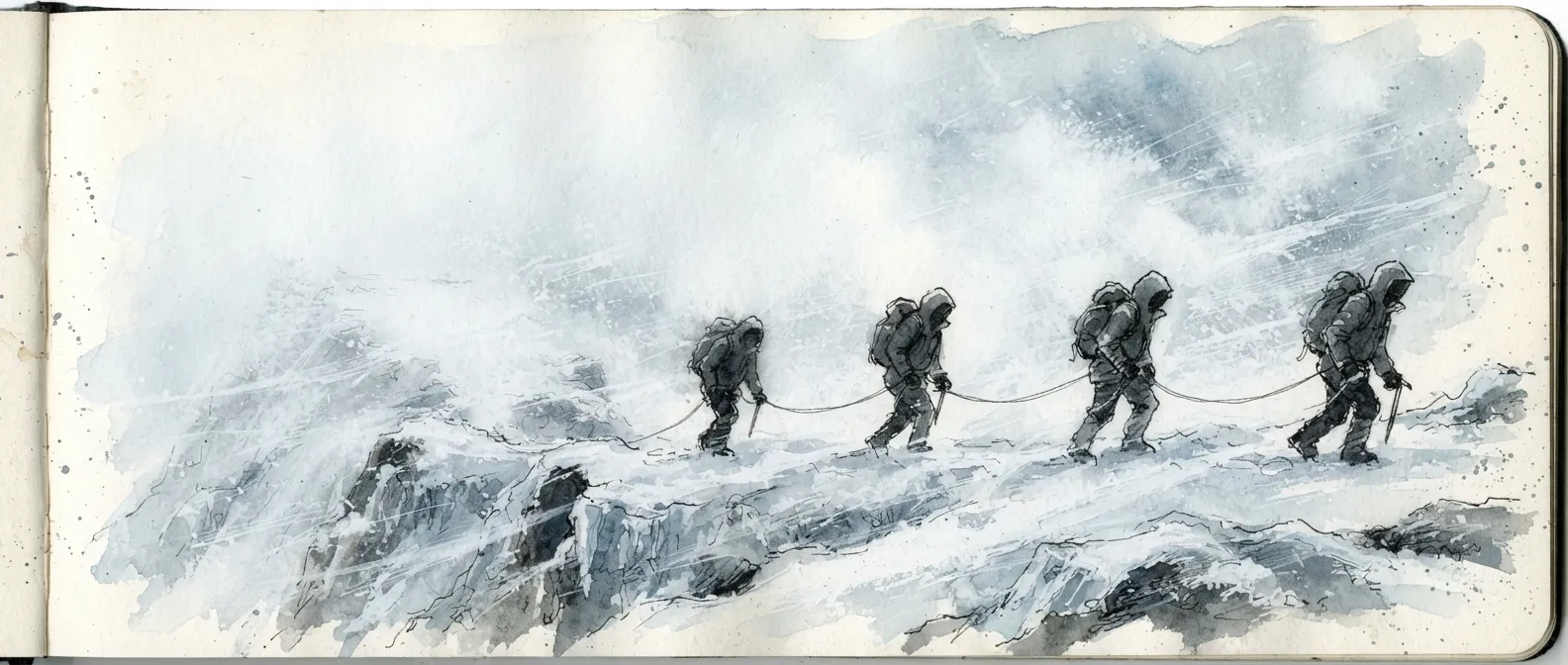
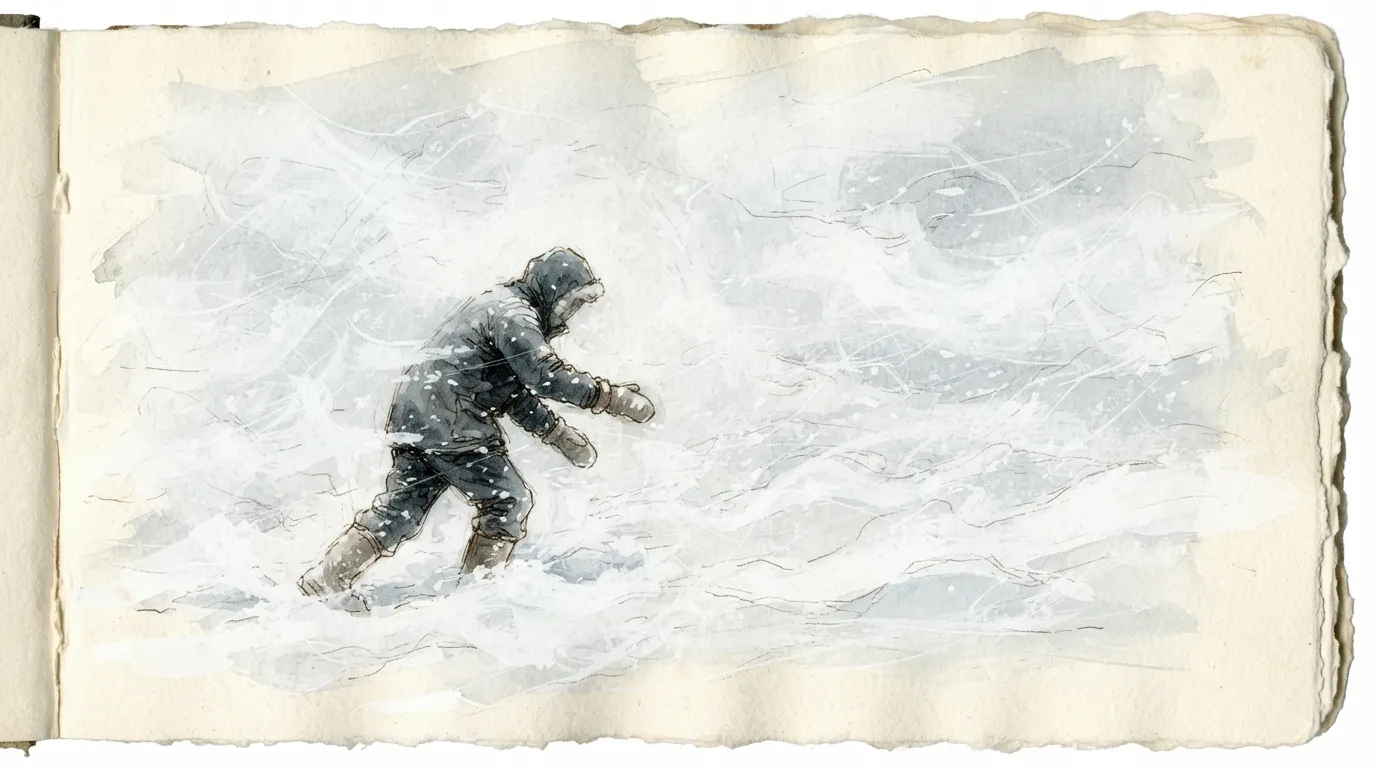
In the afternoon, a violent storm broke out. Disoriented in the whiteout, the group couldn’t find Camp IV on the South Col anymore. They ended up stranded about twenty meters from a cliff, with zero visibility. After several hours, exhausted and hypothermic, Weathers was left behind with Japanese climber Yasuko Namba and a few others while the rest of the group headed off to get help.
He spent the night of May 10 to 11 alone in the snow, in the blizzard, over
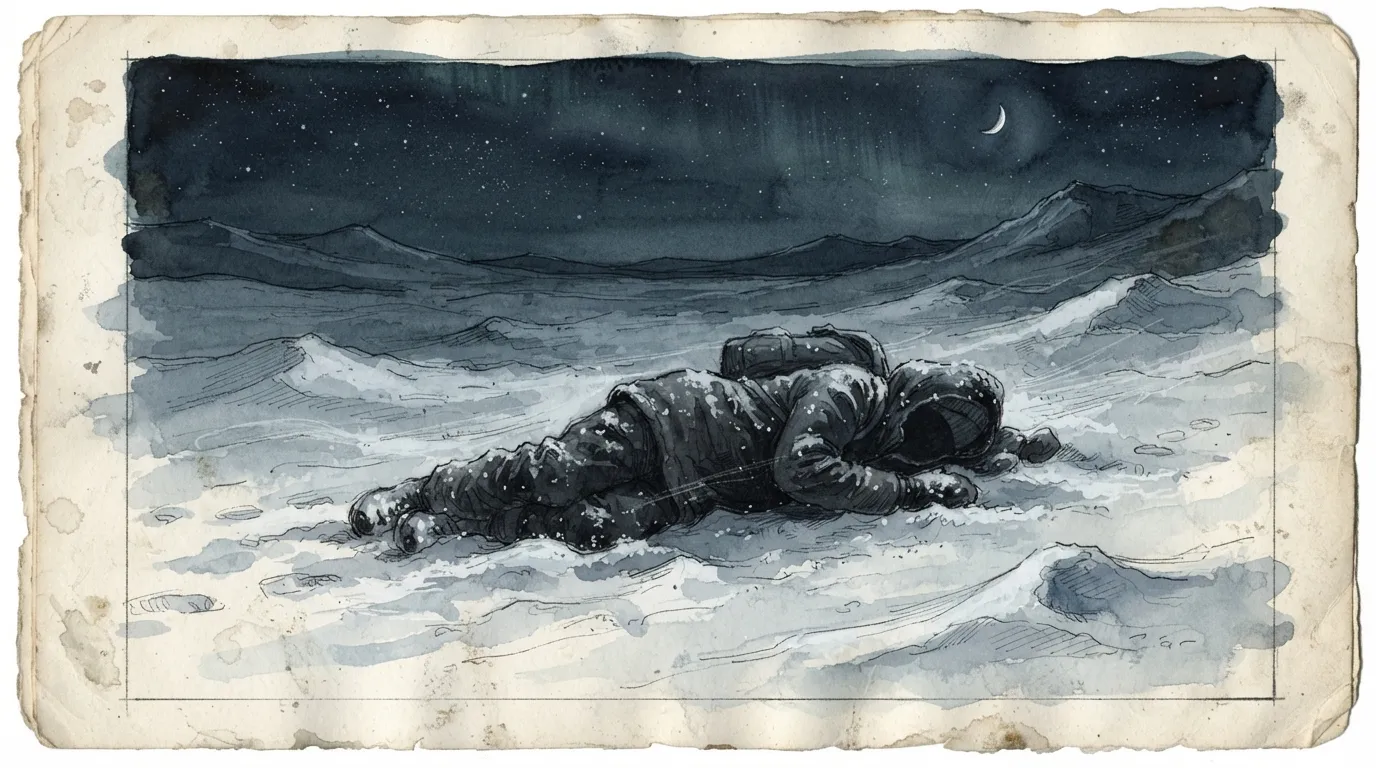
On the morning of May 11, climber Stuart Hutchison and two Sherpas found him alongside Namba: both were in an extreme stupor, judged too close to death to be brought down without putting other lives at risk. They were left where they were a second time.
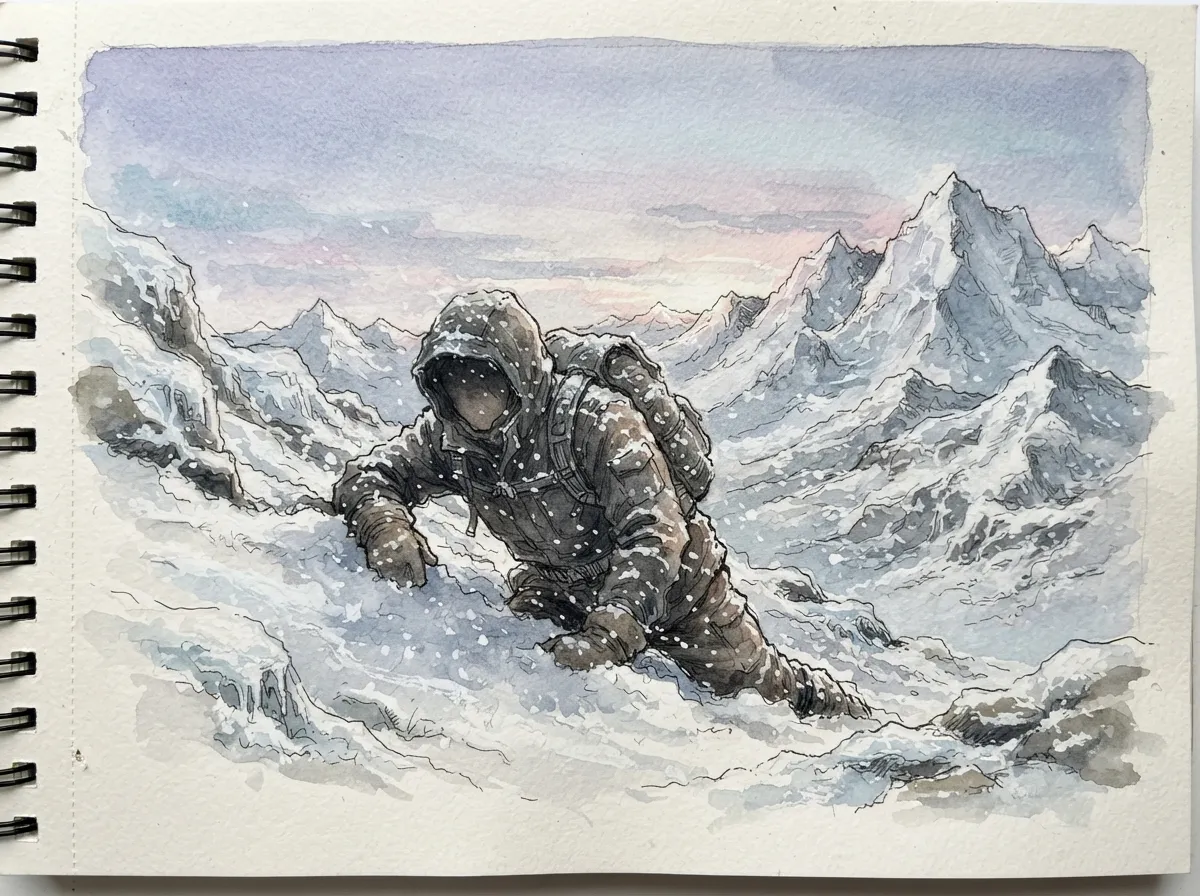
Later that day, with no witnesses around, Weathers regained consciousness. He pulled himself out of his hypothermic coma, stood up, and walked alone back to Camp IV, right before the stunned eyes of the entire team who believed he was dead.
His frozen hands were described as looking “like porcelain”; a surgeon who examined him later called them “the hands of a dead man.” Yasuko Namba died on the South Col, near 7,900 meters, without ever waking up.
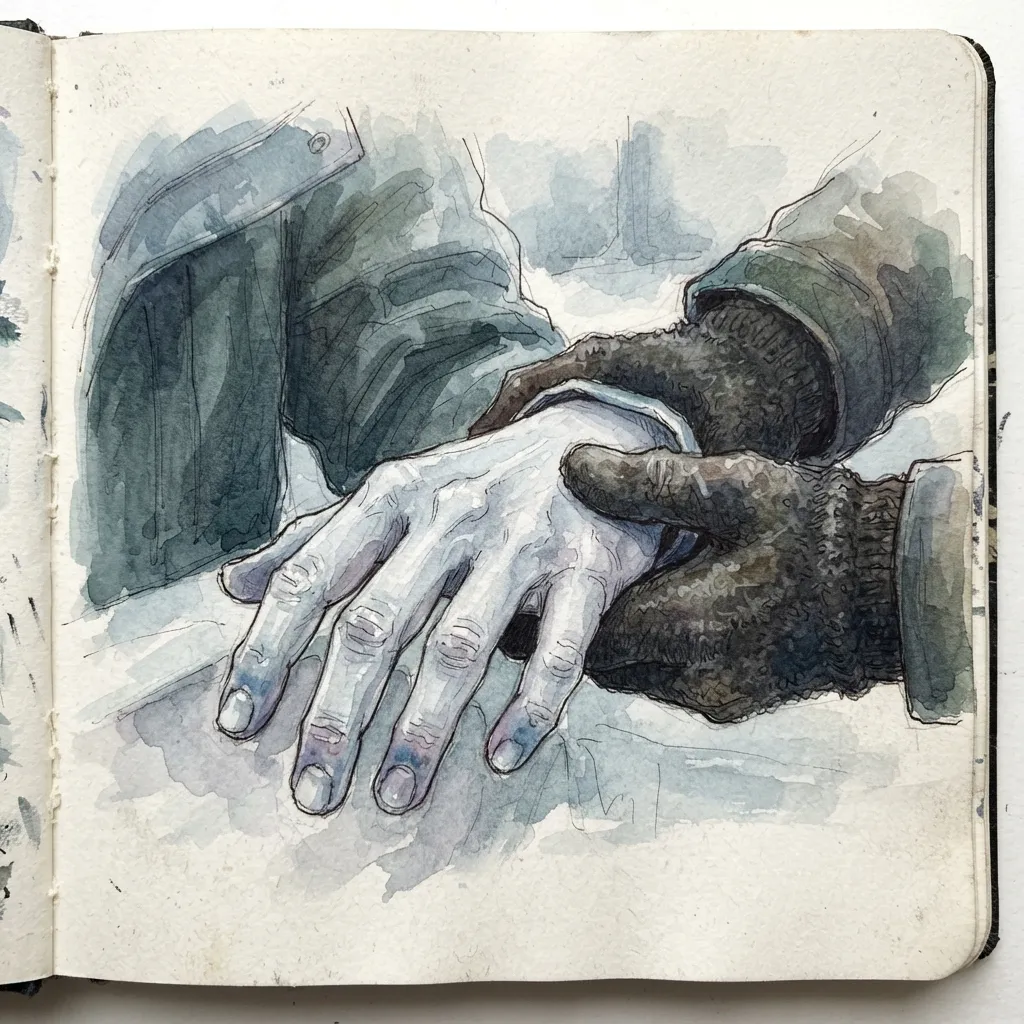
Two days later, with the help of eight climbers who escorted him down to Camp II, Weathers was evacuated in one of the highest helicopter rescues ever attempted at the time, alongside Taiwanese climber Makalu Gau, another survivor of the storm.
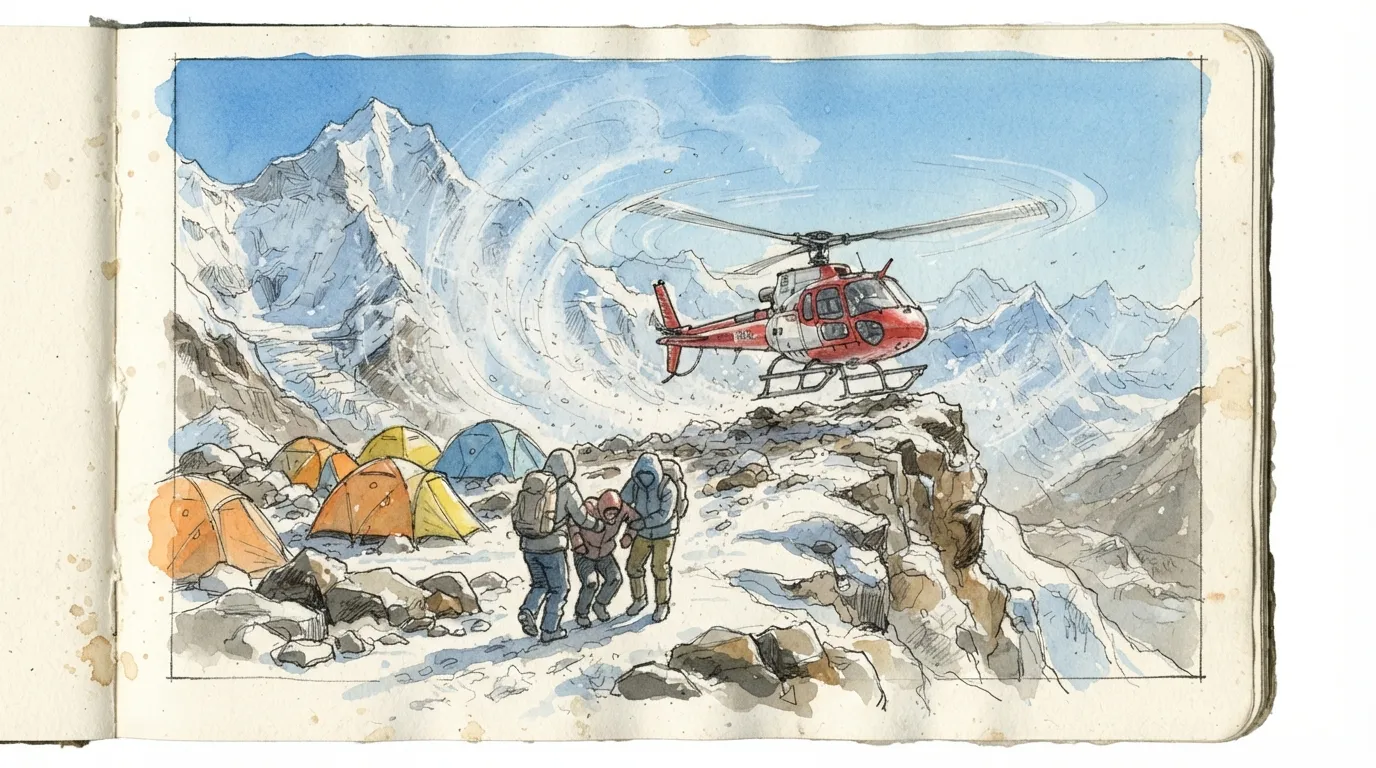
The toll on his body was severe: amputation of his right arm below the elbow, all fingers and the thumb on his left hand, parts of both feet, and a total nasal reconstruction using tissue harvested from his ear and forehead.
What he did
Waiting at the Balcony, as instructed. This wasn’t a mistake: it was following orders from an experienced guide in a situation where his own sight was compromised. The disaster came from the fact that Hall never made it back down — Weathers was left waiting, motionless, in extreme cold, for far longer than planned, which drastically deepened his hypothermia even before the storm struck.
Heading down with Mike Groom’s group. Once it became clear that Hall wasn’t coming back, Weathers chose not to sit there indefinitely and joined the descending group — a sound decision on its own, which was then swept up by a storm no climber had anticipated with such severity.
The sudden survival surge out of the hypothermic coma. This is the hardest part to explain medically. Severe hypothermia at this stage normally leads to either death or major brain damage — not a functional awakening allowing someone to stand up and walk. Yet, in a flash of partial consciousness, Weathers faced what he later described as the simplest choice of his entire life: lie there and die, or get up and try to make it to shelter. He got up.
Walking straight toward camp despite near-total blindness. Seeing virtually nothing, he navigated using the wind, the slope, and a general direction kept in memory, until he spotted the tents of Camp IV. He didn’t seek refuge in sitting still to wait for his sight to magically return: he kept moving, despite compounding his frostbite, because staying put was a far greater risk.
Not wasting time protecting his hands at the expense of moving. Obsessively focused on reaching shelter, he didn’t take time to warm or shield his already damaged hands — a tradeoff that cost him amputations, but likely kept him moving long enough to reach camp alive.
What saved him
- The physical surge that made him stand up despite severe hypothermia. A biological mechanism still poorly understood, but one that only helped because he made the raw decision to move — see mindset in survival.
- Recognizing, upon waking, a binary choice with no middle ground: move or die. Trying to warm up where he lay would never have worked at that stage — see the real impact of cold on the human body in cold, in degrees and minutes.
- The relative proximity of Camp IV once he stood up, within walking distance even while virtually blind — proving why knowing your terrain layout matters, as detailed in surviving in the mountains.
- The helicopter rescue organized as soon as weather windows opened, aided by eight climbers who carried him down to an altitude where a chopper could land — see first aid in remote areas.
- The hard decision by other climbers not to attempt a suicidal rescue in the middle of the blizzard, returning instead as soon as conditions permitted — a grueling choice explored in injured, alone, no signal.
Lessons learned
- An old medical history detail can turn critical at high altitude. Any prior eye, heart, or lung surgery must be disclosed before heading into high-altitude terrain or remote treks — something Weathers didn’t know before setting out. See mountain trekking.
- Severe hypothermia isn’t an automatic death sentence, but you can never count on luck. Prevention remains your only solid plan: stay dry, keep moving, insulate yourself from the ground and wind before your core drops to critical levels. See surviving extreme cold.
- Obeying simple instructions given by a guide or leader saves lives — and optimism (“it’ll get better later”) is one of the deadliest mental traps in the mountains. Weathers followed Hall’s orders; the lethal danger came from the unexpected, not disobedience. Every hiker should take away the same rule: listen to experience over ego, even when you feel like pushing on. See mindset in survival.
Frequently asked questions
Why did Beck Weathers go blind on Everest?
He had undergone radial keratotomy, an eye surgery to correct myopia using incisions in the cornea. At high altitude, the drop in atmospheric pressure and oxygen scarcity warped his weakened corneas, rendering him functionally blind long before reaching the top.
How did he survive after being left for dead twice?
After spending a full night in the snow in a roaring storm and dropping into a deep hypothermic coma, he regained consciousness on his own, without outside help, stood up, and stumbled back to Camp IV. This recovery remains an extraordinary case in mountain medicine, as hypothermia at this level almost universally leads to death or severe brain damage.
What permanent physical injuries did Beck Weathers sustain?
His right arm was amputated below the elbow, along with all fingers and the thumb on his left hand, as well as parts of both feet. His nose, destroyed by severe frostbite, was surgically reconstructed using tissue harvested from his ear and forehead.
Why was his helicopter evacuation historical?
Beck Weathers and Makalu Gau, another storm survivor, were evacuated from Camp II after being helped down by eight climbers. It was considered one of the highest helicopter rescue operations ever attempted at the time, operating in thin air that severely degrades helicopter rotor lift.
What happened to Beck Weathers after the accident?
He returned to his medical career as a pathologist and shared his story in his book Left for Dead: My Journey Home from Everest (2000). His survival was also chronicled in Jon Krakauer’s Into Thin Air, the documentary Storm Over Everest, and the feature film Everest (2015), where he was portrayed by Josh Brolin.
Going further
- Beck Weathers, Left for Dead: My Journey Home from Everest (Villard, 2000) — his personal account.
- Jon Krakauer, Into Thin Air (Villard, 1997) — the most famous account of the 1996 tragedy.
- Storm Over Everest, PBS documentary detailing the storm and rescues.
- Everest (2015), feature film starring Josh Brolin as Beck Weathers.
Sources for this module (6)
Continue in "Survivor stories"
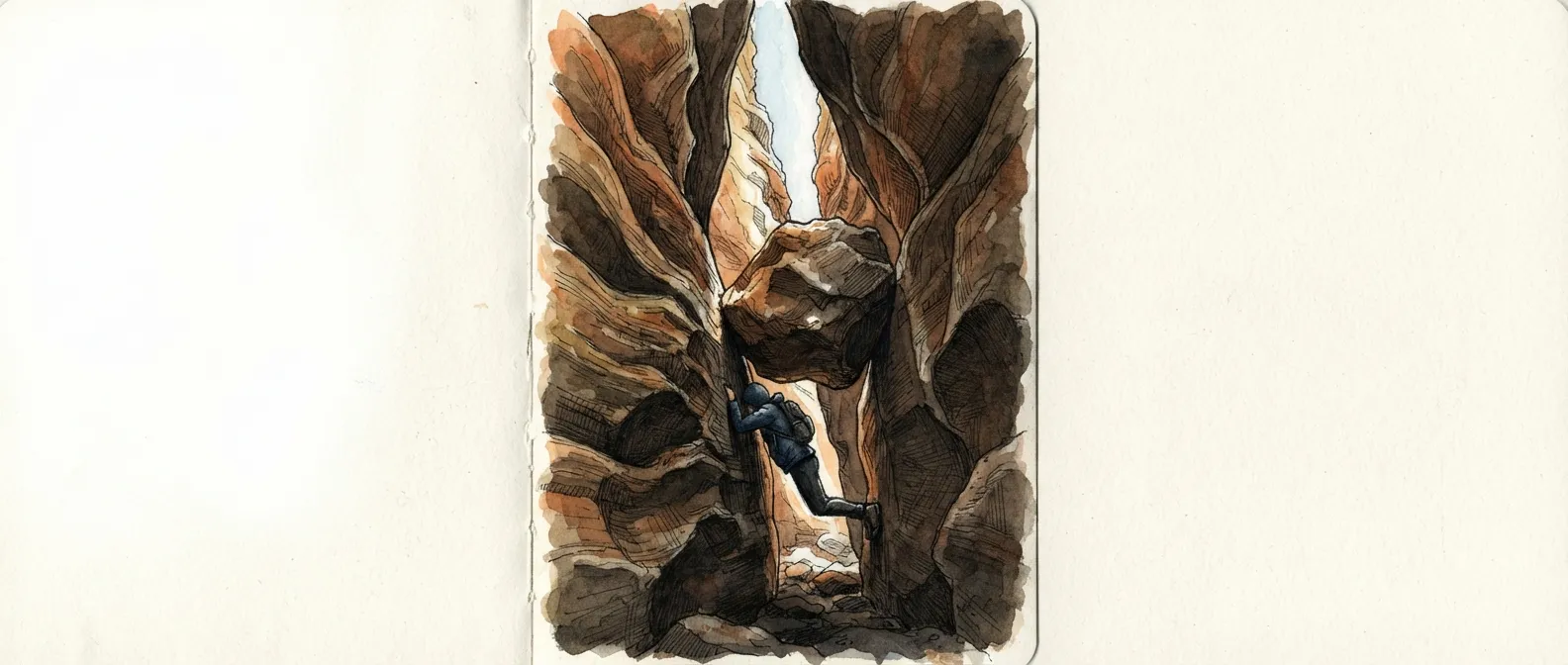
Aron Ralston: 127 hours trapped in a canyon
An arm trapped under a boulder, five days without rescue, and a decision no manual teaches: cutting oneself to live.
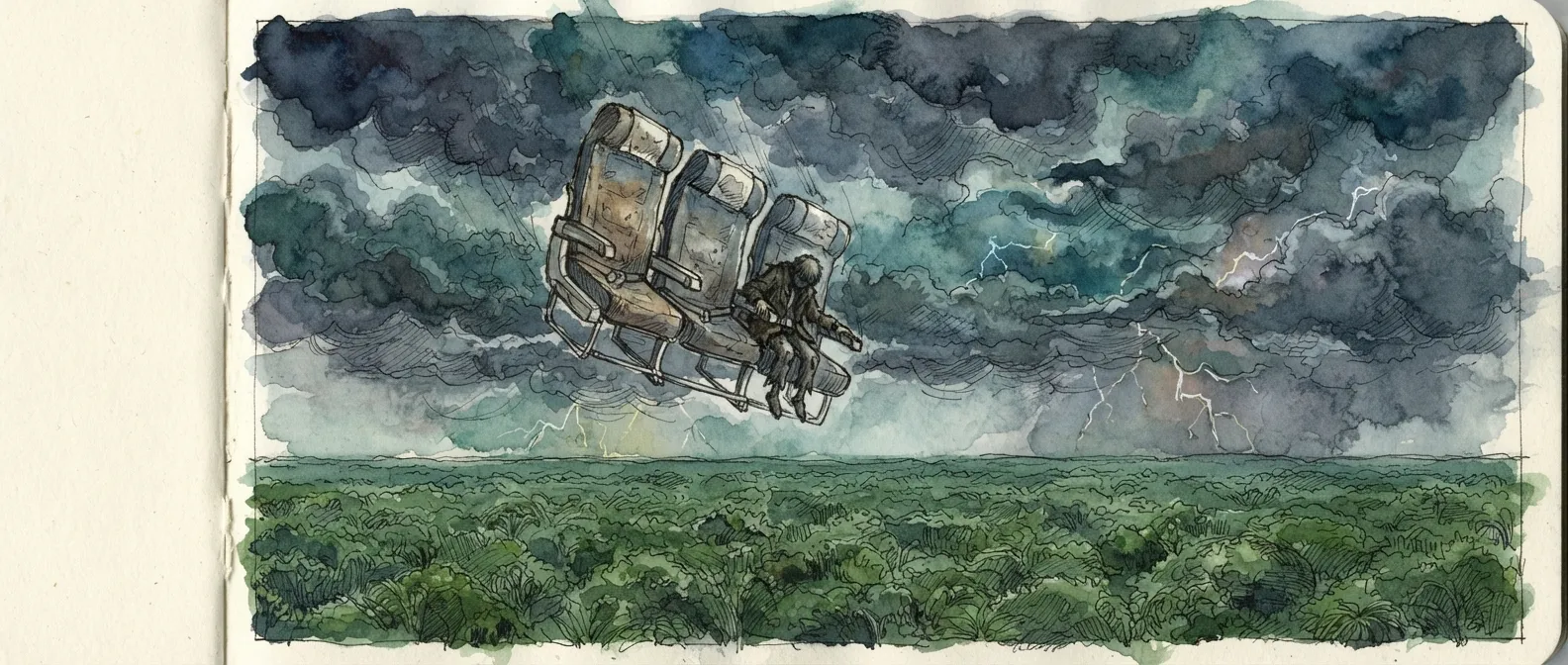
Juliane Koepcke: 11 Days Alone in the Jungle After the Crash
Seventeen years old, alone after falling three kilometers into the Amazon jungle, she followed a single rule: walk toward water.
Steven Callahan: 76 days adrift on a raft
A crash in the night, a sailboat sinking in a matter of minutes, and 76 days on a tiny raft reinventing survival.