Yossi Ghinsberg: 3 Weeks Alone in the Bolivian Amazon
In 1981, a 22-year-old Israeli backpacker survives three weeks alone in the Bolivian jungle after a raft shatters in the rapids.
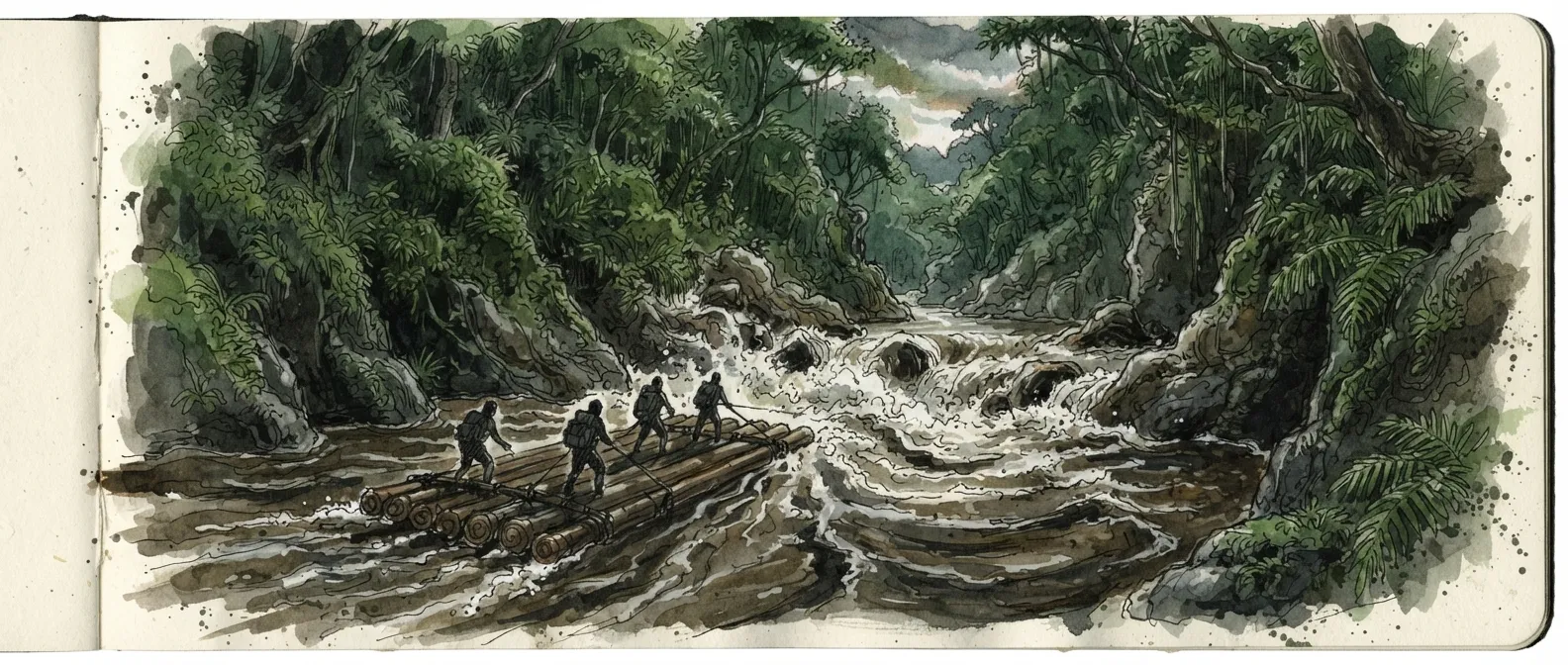
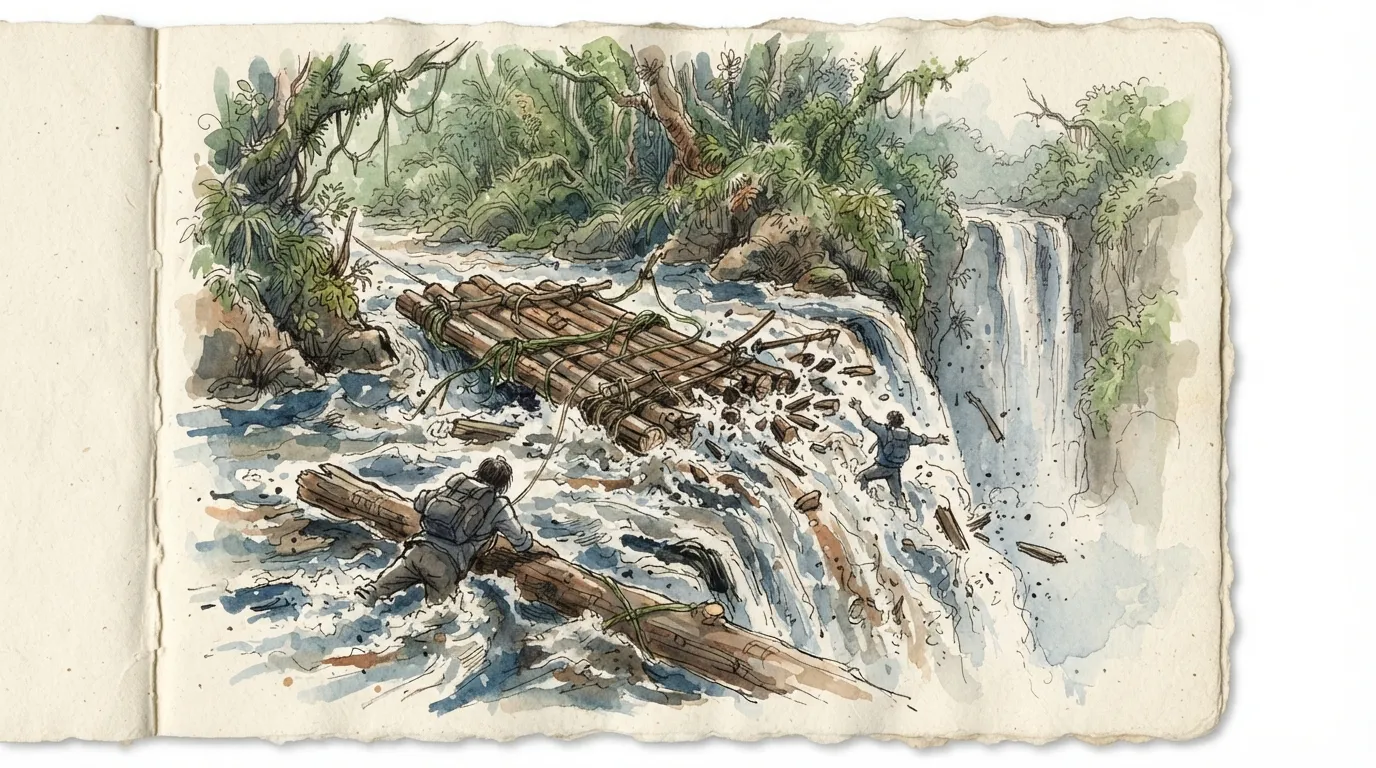
The raft slams into a rock, flips, and the current swallows it whole. Yossi Ghinsberg has nothing left under his feet: no wood, no Kevin, just the muddy brown water of the Tuichi rolling him toward a waterfall he didn’t see coming. He breaks the surface once, twice, swallows water, grabs at nothing. When the river finally spits him out onto a gravel bar, he is entirely alone. No pack, no knife, no matches: everything went down with the raft. He’s 22 years old, days of hard walking away from the nearest trail, and the only man who actually knew where the group was heading, Karl, isn’t even in the boat. He doesn’t know it yet, but he has just entered the three weeks that will alter his life forever.
What Happened
1981, La Paz. Yossi Ghinsberg, 22, fresh out of the Israeli Navy, is backpacking across South America, inspired by Papillon, Henri Charrière’s famous escape memoir. In Colombia and then Bolivia, he strikes up a friendship with Markus Stamm, a Swiss schoolteacher, and later meets Karl Ruprechter in La Paz. Karl, an Austrian presenting himself as a geologist, talks tantalizingly of an isolated tribe and an undiscovered gold deposit deep in an unexplored stretch of the Tuichi basin. A fourth traveler joins the expedition: Kevin Gale, an American photographer. None of the four knew each other before this trip.
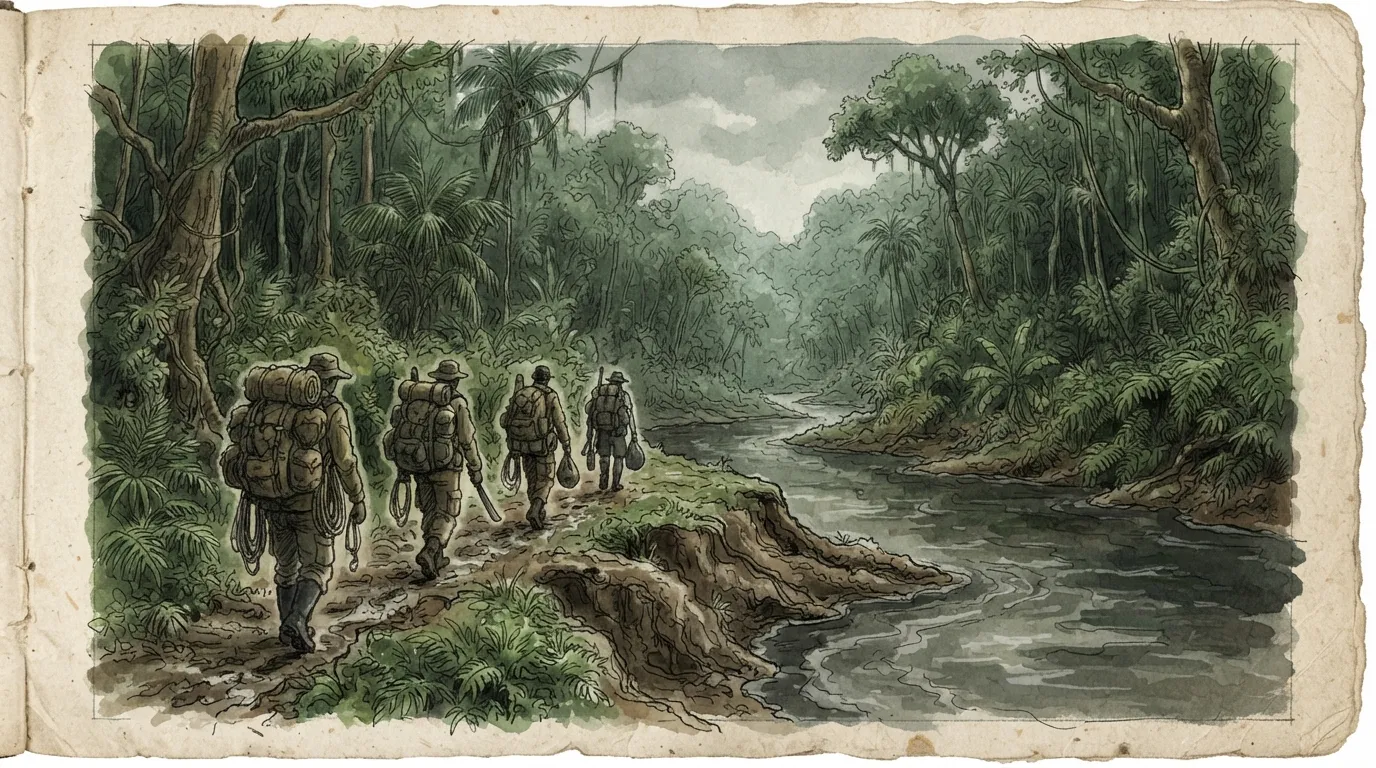
The group flies to Apolo and treks down to the village of Asariamas, right at the confluence of the Tuichi and Asariamas rivers. Their first push toward Karl’s promised hidden village quickly fails: running low on food, they are forced to eat monkey meat, which Markus refuses, leaving him weakened. The group backtracks to Asariamas. Karl then pitches a new plan: build a raft to float down the Tuichi to the old Curiplaya gold mine, and from there continue downstream to Rurrenabaque. With help from local villagers, they build a balsa wood raft.
At the confluence with the Ipurama River, Karl finally comes clean: he admits he can’t swim and flatly refuses to navigate the San Pedro Canyon, a treacherous stretch of rapids and falls further down the Tuichi. This critical liability, kept secret since day one, resurfaces at the worst possible moment. The group splits up. Karl and Markus set off on foot toward the upstream village of Ipurama, planning to trek back to La Paz via a different route; Kevin and Yossi decide to push ahead on the raft. The four men promise to reunite in La Paz before Christmas.
Kevin and Yossi’s raft sweeps toward a waterfall, loses control, and breaks apart. Kevin manages to scramble to the bank; Yossi is swept right over the drop. He spends four grueling days hacking his way back upriver looking for his partner before realizing he is entirely on his own—no pack, no knife, no matches, all lost in the wreck.
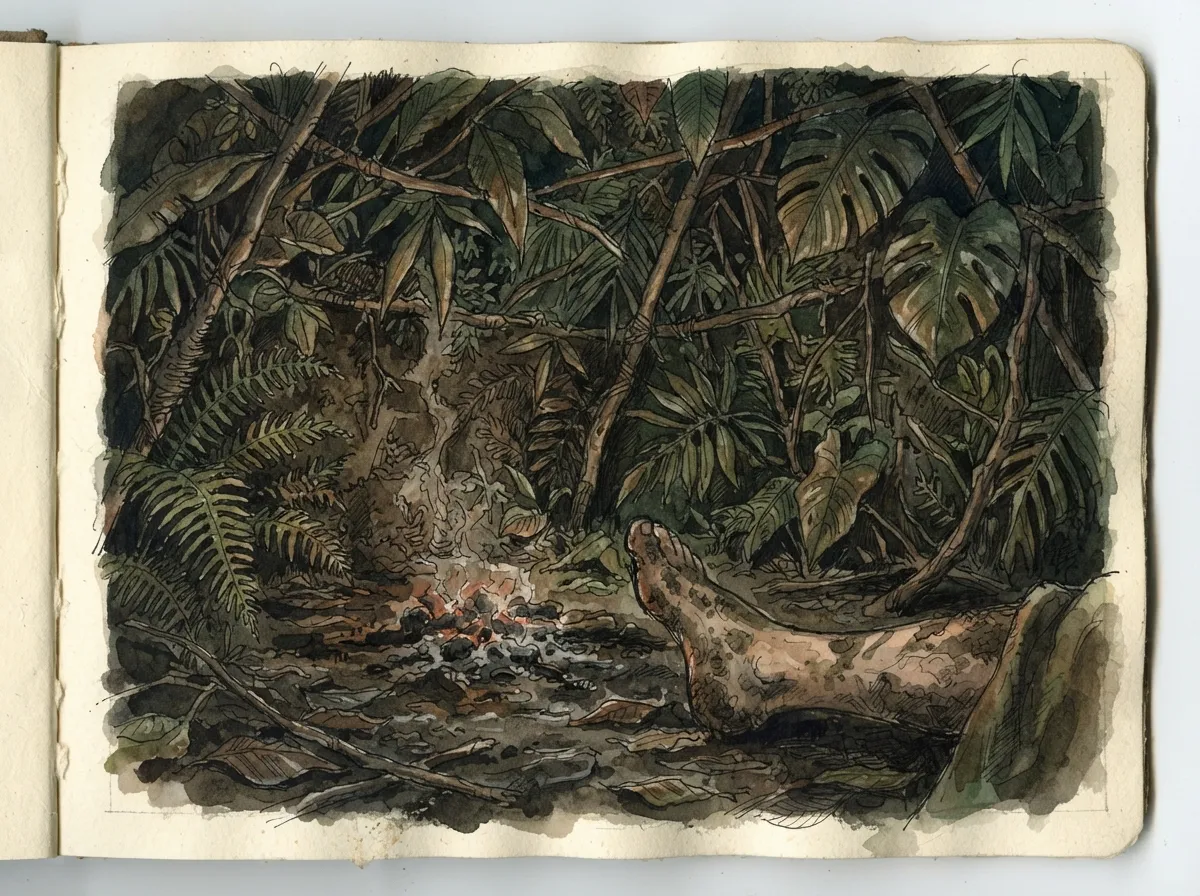
So begins three weeks alone in an unmapped wilderness, during one of the worst rainy seasons the region has seen in decades. In the second week, a flash flood nearly drowns him; twice he sinks waist-deep into treacherous bogs. For five straight days, he finds absolutely nothing to eat. His feet, constantly soaked, start rotting away from a severe fungal infection. He suffers recurring hallucinations of an imaginary woman with whom he claims to “sleep” next to every night.
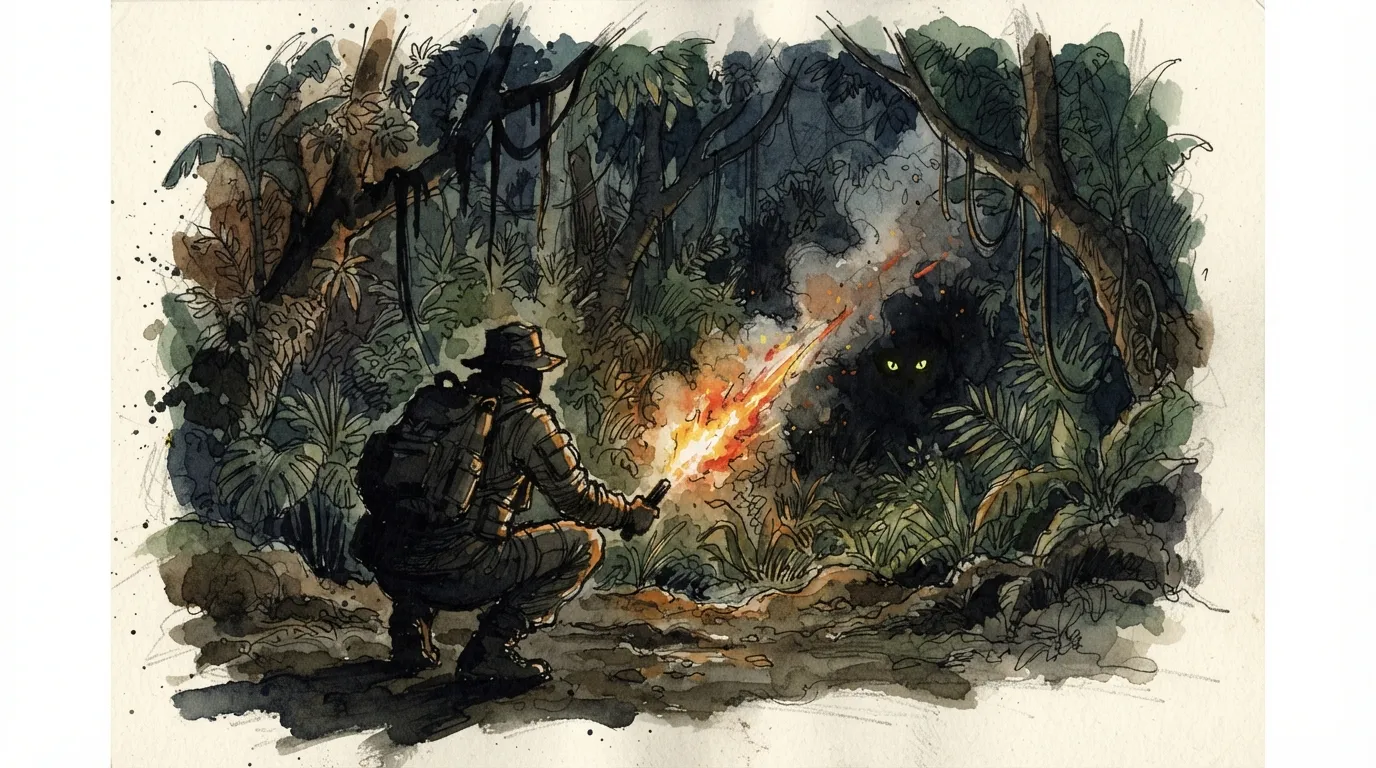
Around the sixth day, a jaguar approaches his makeshift camp while he sleeps. Unarmed, with no knife and no campfire burning, Ghinsberg improvises: he grabs a can of insect repellent and a pocket lighter he found tucked in his clothing, turning the aerosol spray into a improvised blowtorch to drive the predator away.
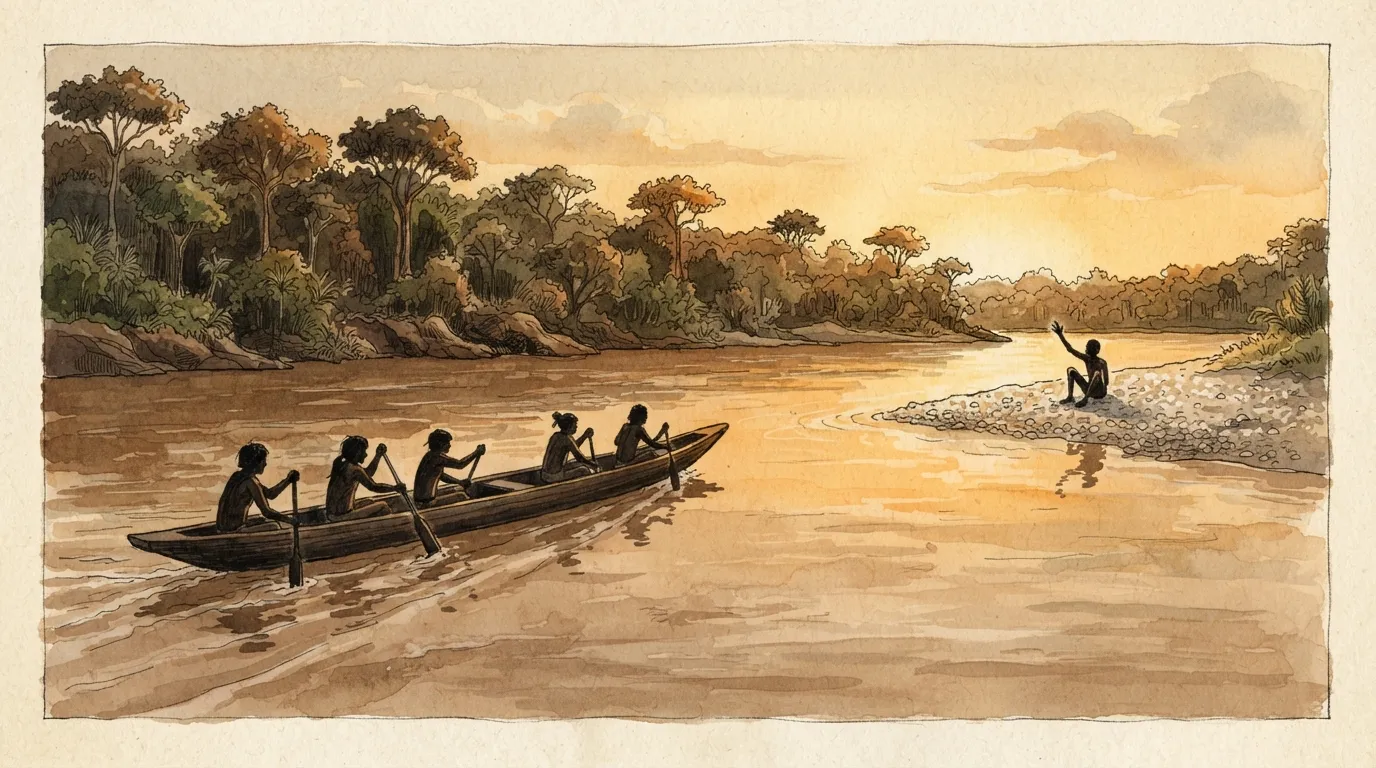
Meanwhile, Kevin was rescued by locals from a nearby village and made it to Rurrenabaque, roughly 190 km from where the raft sank. A charter flight over the area turns up nothing. Certain that Yossi is still alive, Kevin hires a local boat captain and heads back upstream alongside indigenous Uchupiamona hunters led by Abelardo “Tico” Tudela.
They find Yossi alive, three weeks after he disappeared—exactly twenty days according to the tally Ghinsberg maintains today on his website.
He spends the next three months recovering in a hospital. Karl Ruprechter and Markus Stamm never make it back to La Paz. Despite several search expeditions, neither man is ever seen again. The Austrian Embassy later reveals that Karl was no geologist at all, but a fugitive wanted by Interpol.
Ten years later, Ghinsberg returns to the exact same jungle—not to relive his trauma, but to build something lasting. He connects the village of San José de Uchupiamonas, home to the people who helped save his life, with the Inter-American Development Bank, securing funding for an eco-lodge owned and managed directly by the locals. Chalalan Eco-Lodge, located in Madidi National Park, still operates today: it employs around forty villagers and has hosted visitors from all over the world, including heads of state.
What He Did Right (and Wrong)
Spending four days searching for Kevin before accepting he was alone wasn’t unreasonable: abandoning a partner too quickly is an equally fatal mistake. However, that search pulled him further away from his original position, at a time when he had already lost track of where the raft crashed. Initial denial—refusing to accept that you’re stranded alone—is a natural psychological response during the first few hours of a major disaster, but it becomes lethal if it delays building a stable shelter or picking a direction to hike out.
Choosing to keep moving rather than staying put contradicts the cardinal rule taught in most survival courses—stay where you are if someone knows your route. But in this case, nobody knew where the raft had gone down, and Ghinsberg executed what survival manuals treat as the main exception to that rule: follow a watercourse downstream, because a river almost always leads to human civilization eventually. To endure the mental grind of that endless trek, he anchored himself to a simple, concrete goal: reach San José, the nearest village he knew by name. The exact distance didn’t matter; what mattered was having a named destination to keep moving toward.
Facing down the jaguar with a makeshift blowtorch worked in an absolute crisis—but it was a gamble, not a standard tactic. With no other way out, using the only flammable object on hand to repel an approaching predator beats freezing up, even if the move carried a heavy risk of blowing up in his hands.
Allowing his feet to stay continuously wet, on the other hand, was a failure of field care—though a completely understandable one. With no spare dry socks or extra shoes, he had almost no way to break the cycle of endless moisture that eventually ate through his skin.
What Saved Him
Following the current downstream
With no map, no compass, and no reliable landmarks in an uncharted rainforest, the river was his only dependable guide. Waterways naturally flow toward populated areas, as villages in roadless regions are built along riverbanks. See the river guide.
Kevin Gale’s relentless determination
After an initial aerial search yielded nothing, Kevin could have assumed—as most would—that Yossi was dead and that the only logical choice was to go home. Instead, he personally hired a local boat captain and pushed back upriver with native Uchupiamona hunters. Refusing to give up after a failed search when every instinct tells you to stop makes all the difference. See the search and rescue guide.
The Uchupiamona hunters’ deep wilderness expertise
It wasn’t high-tech air sweeps that finally located Yossi, but indigenous hunters reading subtle signs—tracks, river currents, broken foliage—that no outsider could ever interpret. The rescue succeeded as much from local knowledge as it did from Kevin’s stubborn persistence. See the jungle guide.
Improvised action over freezing in place
Whether dealing with a stalking jaguar, a sudden flash flood, or a dangerous bog, Ghinsberg reacted instantly with whatever he had at hand—a spray can, a lighter, quick reflexes—rather than becoming paralyzed by his lack of proper survival gear. See the predator guide.
A clear mental focus over panic
Setting achievable, short-term targets—the next river bend, a fixed destination—keeps your mind focused and motivated when dwelling on the terrifying big picture would otherwise crush your spirit. See the mental resilience guide.
Key Takeaways
1. A safety weakness hidden by a group member must stop the plan, not cause a quick workaround. Karl knew from the start that he couldn’t swim; he kept it quiet until they reached the brink of the most dangerous canyon on the route. When critical information like that emerges at the worst moment, it’s never just a minor detail: it’s a glaring sign that the entire plan needs to be scrapped, not just tweaked on the fly.
2. Following a river downstream is one of the very few true exceptions to “stay put when lost.” This exception applies when nobody knows where to look for you—which was precisely the case here, as a raft wreck in the middle of a wilderness river leaves no fixed location for search parties to target.
3. Constantly wet feet will rot even without freezing weather. Drying your skin, swapping socks, and airing out your feet isn’t about trail comfort—it’s what keeps your feet functional enough to step out the next morning. In Ghinsberg’s case, losing the ability to walk would have ended any chance of making it downriver.
Frequently asked questions
How long did Yossi Ghinsberg survive alone in the Amazon jungle?
Three weeks according to most accounts since his book and Wikipedia entry were published; Ghinsberg himself currently cites exactly twenty days on his official site. Either way, it was roughly three weeks without rescue gear, fire, or weapons.
What happened to Karl Ruprechter and Markus Stamm?
Neither man ever made it back to La Paz, despite multiple search parties launched in the following months. The Austrian Embassy later confirmed that Karl Ruprechter was not a geologist as he claimed, but a criminal wanted by Interpol.
How did Yossi Ghinsberg scare off a jaguar without a weapon?
By improvising a improvised blowtorch: spraying a can of insect repellent past the open flame of a pocket lighter produced a sudden burst of fire, which was enough to spook the animal watching him sleep on his sixth night alone.
Is the movie Jungle (2017) starring Daniel Radcliffe faithful to the real story?
In its broad strokes, yes: Ghinsberg personally advised on the production, and the movie tie-in edition of his book features a foreword by Daniel Radcliffe. Certain narrative details were condensed for screen tempo—most notably the exact timeline of events leading up to the raft construction.
What is the “immersion foot” condition that Ghinsberg suffered in the jungle?
It’s tissue damage caused by continuous, long-term exposure to moisture, causing the skin to soften, break open, and suffer severe secondary infections. Historically known as “trench foot” among soldiers in cold, muddy WWI trenches, it occurs just as easily in warm tropical environments if feet remain constantly soaked.
Going Further
- Yossi Ghinsberg, Jungle: A Harrowing True Story of Survival in the Amazon (W. W. Norton, 2017) — the movie tie-in re-release, originally published in Hebrew in 1985 as Back from Tuichi.
- Jungle (2017), directed by Greg McLean, starring Daniel Radcliffe as Yossi Ghinsberg.
- Gringo Trails (2013), a documentary by Pegi Vail featuring Ghinsberg’s return to Bolivia to visit the community that rescued him.
- Against the Odds, “Lost in the Rainforest” season (Wondery, 2023) — a four-part audio documentary series detailing his three-week ordeal.
Sources for this module (8)
- Wikipedia (EN) — Yossi Ghinsberg
- Wikipedia (EN) — Jungle (2017 film)
- Site officiel — Yossi Ghinsberg, « The Story »
- The Washington Post — Steve Hendrix, Lost and Found (08/09/1998)
- Ami Magazine — Isaac Katz, Lost in the Jungle: The untold story of Kevin Gale (14/03/2018)
- The Jewish Chronicle — Simon Round, I Was Lost In The Amazon Jungle (17/07/2008)
- Yossi Ghinsberg, Jungle: A Harrowing True Story of Survival in the Amazon, W. W. Norton, 2017
- oeco.com.br — Parque Madidi, rico em biodiversidade e em histórias (28/02/2013)
Continue in "Survivor stories"
Aron Ralston: 127 hours trapped in a canyon
An arm trapped under a boulder, five days without rescue, and a decision no manual teaches: cutting oneself to live.
Juliane Koepcke: 11 Days Alone in the Jungle After the Crash
Seventeen years old, alone after falling three kilometers into the Amazon jungle, she followed a single rule: walk toward water.
Steven Callahan: 76 days adrift on a raft
A crash in the night, a sailboat sinking in a matter of minutes, and 76 days on a tiny raft reinventing survival.