Steven Callahan: 76 days adrift on a raft
A crash in the night, a sailboat sinking in a matter of minutes, and 76 days on a tiny raft reinventing survival.
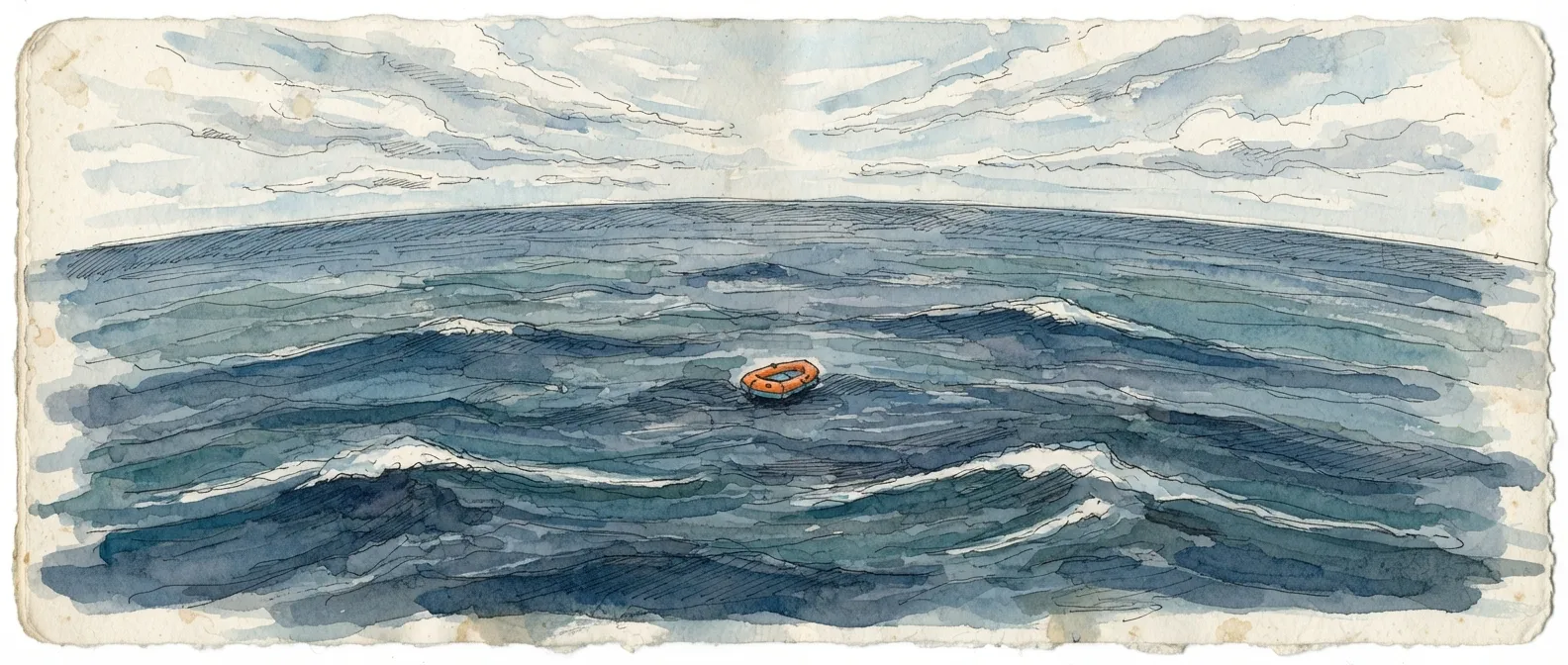
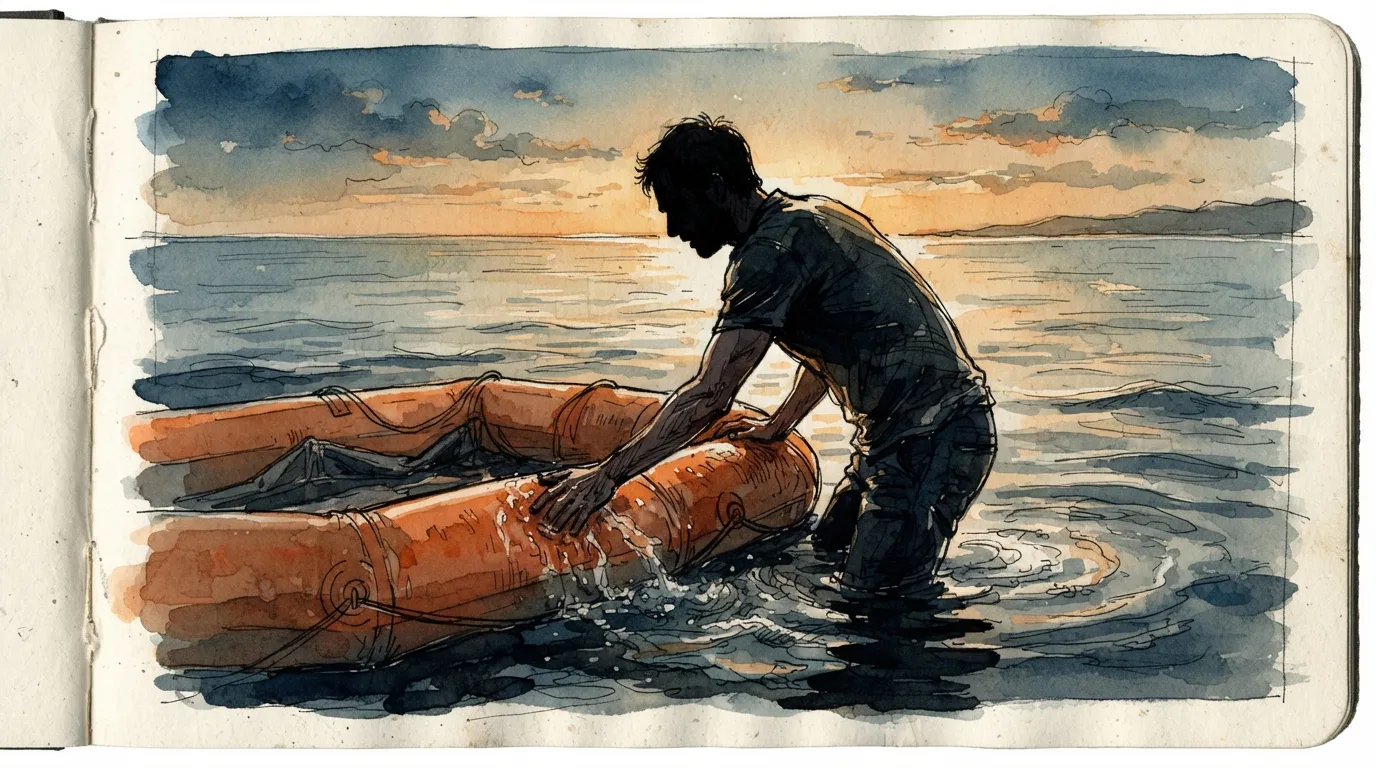
It’s night, a little over a week after leaving the Canaries. Steven Callahan is sleeping in the cabin of Napoleon Solo, the 6.50-meter sailboat he designed and built with his own hands. A dull thump echoes through the hull—he’ll never know for sure what hit him, likely a whale in the dark. Water pours in faster than he can pump it out. He has only a few minutes: grab the emergency grab bag, cast off and inflate the life raft, cut whatever is still linking him to the boat that brought him all the way from Newport. Napoleon Solo sinks before his eyes, somewhere in the middle of the Atlantic. What remains is a 1.80-meter diameter inflatable raft designed for six people, one single man inside, and the ocean stretching out in every direction.
What happened
January 29, 1982. Steven Callahan, 29, an amateur naval architect, sets sail solo from El Hierro in the Canary Islands aboard Napoleon Solo, bound for Antigua. It’s the final major leg of a voyage begun the previous year in Newport, Rhode Island: he designed and built the boat himself.
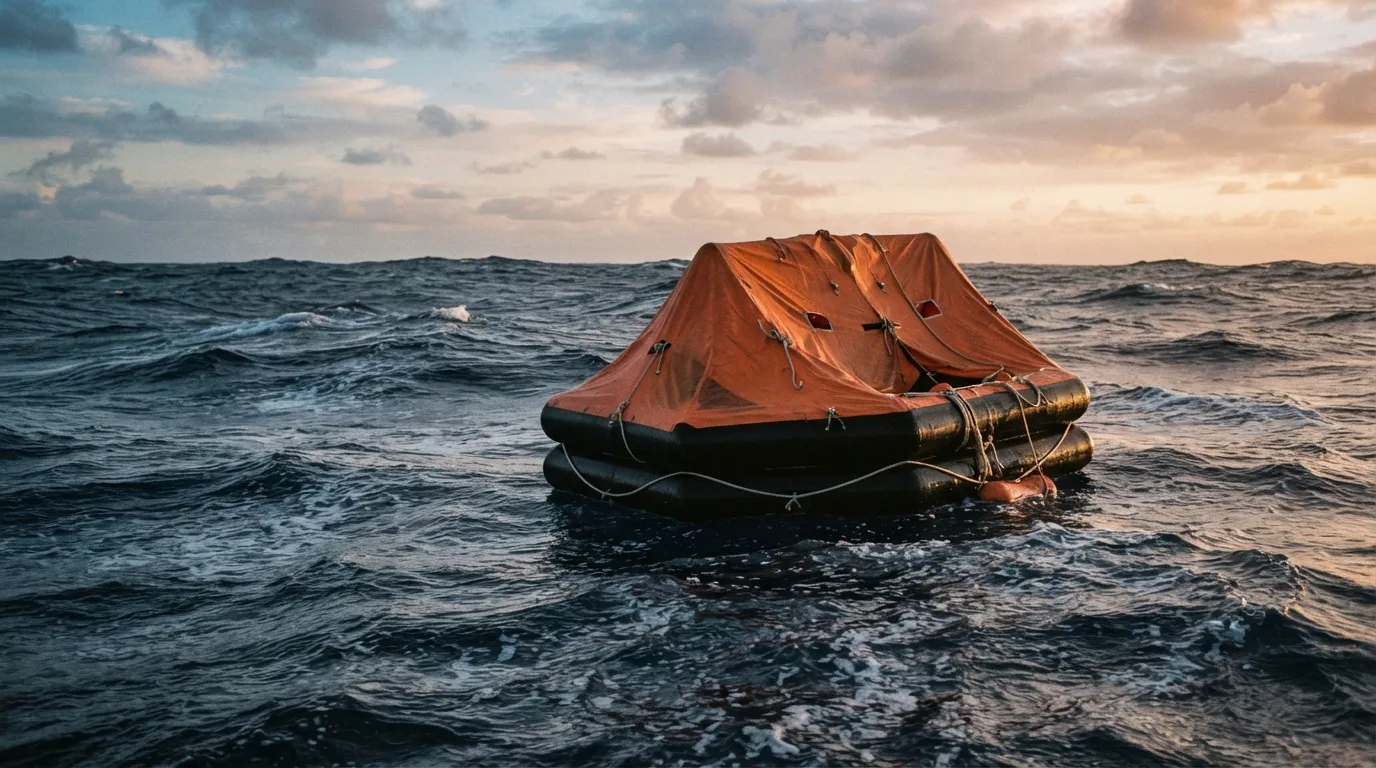
A little over a week later, early February. A night storm, a violent shock against the hull—Callahan long suspects a collision with a whale or another large cetacean, though he never gets proof. The sailboat fills with water faster than he can pump. He manages to grab a survival bag and inflate the emergency raft—an Avon six-person inflatable barely 1.80 m across—before the boat goes down with all hands.
76 days. Carried by the North Equatorial Current and the trade winds, Callahan drifts westward for roughly 1,800 nautical miles—just over 3,300 km—from the central Atlantic toward the Caribbean. He keeps a logbook, rations himself, fishes, and tirelessly repairs the raft carrying him.
April 20–21, 1982. Fishermen off Marie-Galante, south of Guadeloupe, notice birds circling over a spot on the water. They head over and find Callahan at the end of his strength, his body covered in sores opened by the salt. Several cargo ships had passed by without spotting him during those 76 days; in the end, it was birds, not humans, that signalled his location.
After the rescue. Callahan spends six weeks in the hospital. In 1986, he publishes Adrift: Seventy-Six Days Lost at Sea, which stays on the New York Times bestseller list for 36 weeks and becomes a classic in sea survival literature.
What he did
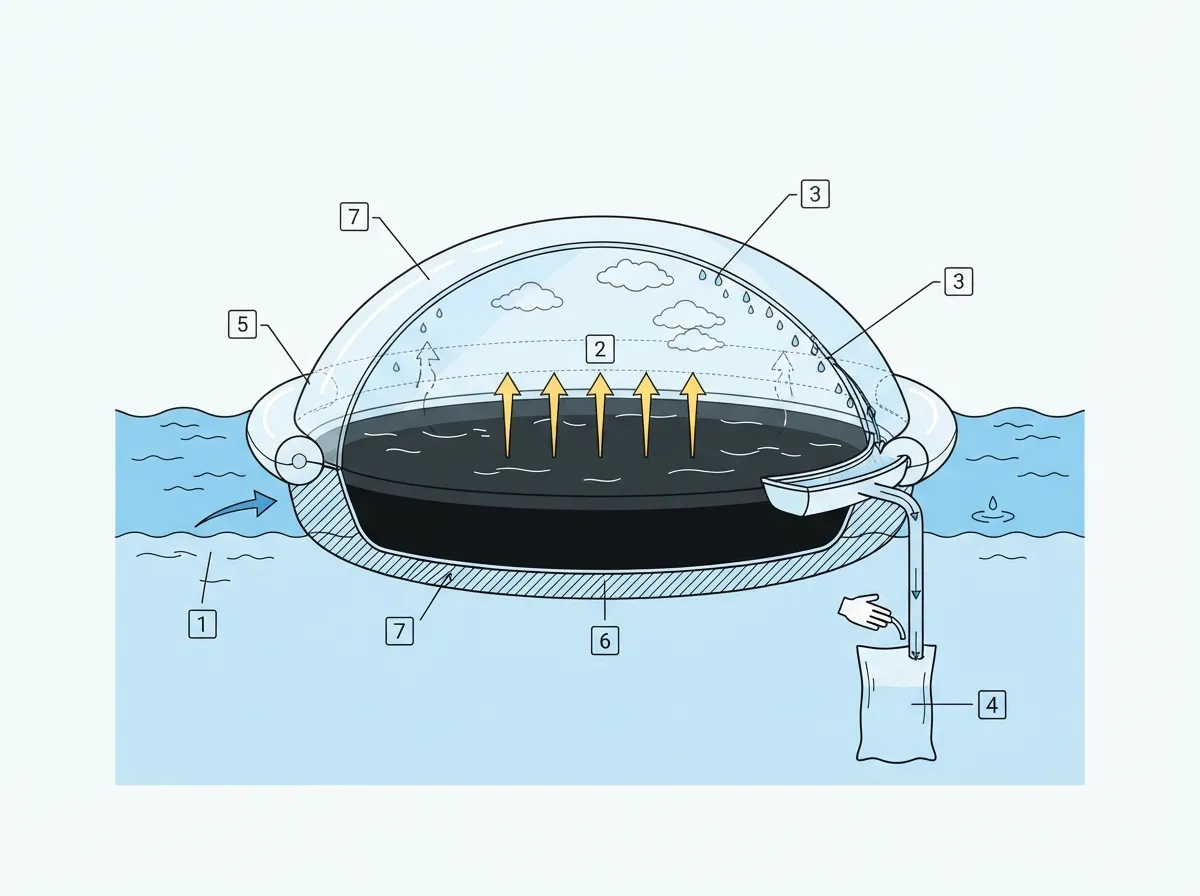
What Callahan did in the minutes following the shipwreck came down to prior preparation: the grab bag was already packed and within arm’s reach before the storm even hit. That reflex—grabbing a ready-made kit rather than improvising in the dark with water rising around him—gave him his only assets: a speargun, flares, and three solar stills. An emergency leaves no time to think: it only leaves time to execute what you’ve already planned.
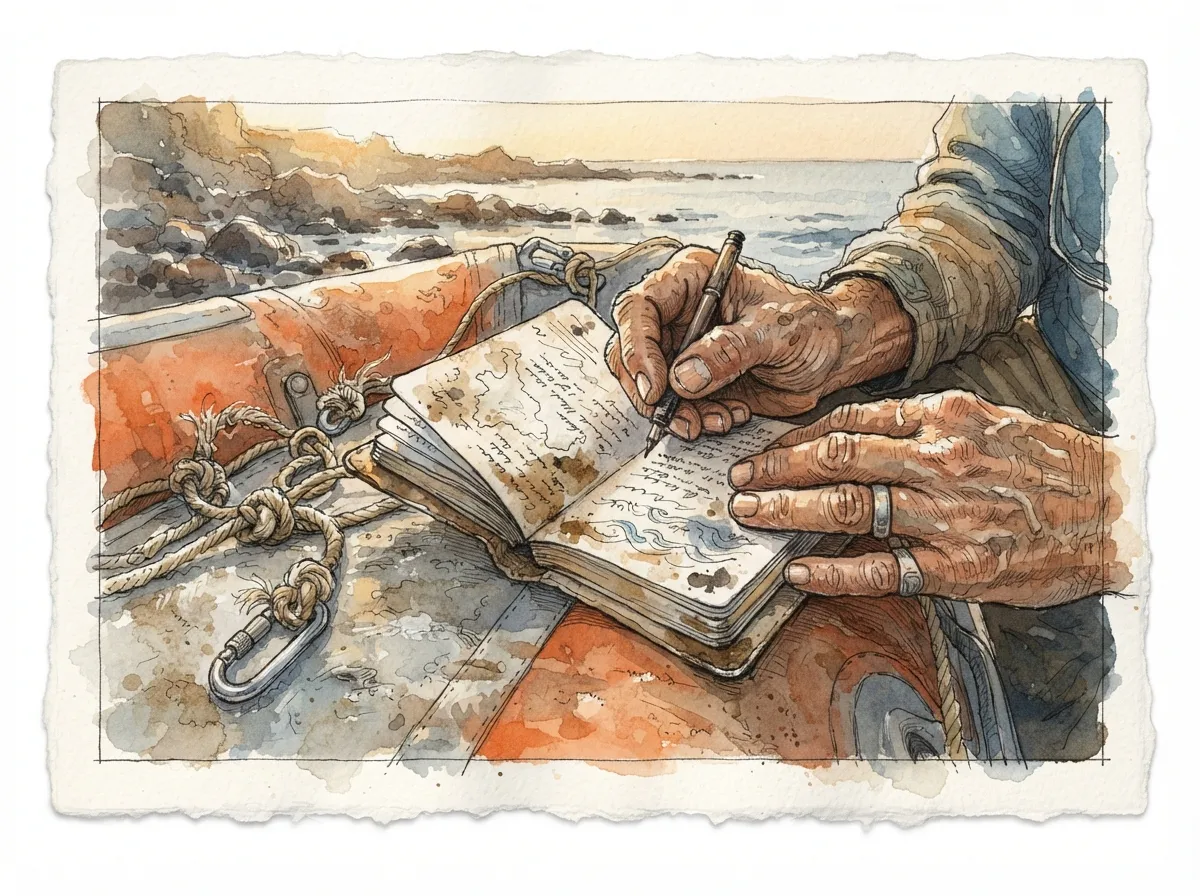
Once on the raft, Callahan forced a routine upon himself that both he and his biographers describe as the real engine of his survival: dead reckoning navigation, fishing, repairs, writing his journal, physical exercise whenever the raft’s condition permitted. Every task, no matter how small, occupied a mind that, if left idle, would have fixated on a single unanswered question: am I going to survive? Literature on acute stress explains this mechanism: a concrete, doable task reduces activity in the amygdala—the brain’s panic center—whereas an abstract, open-ended threat feeds it indefinitely.
The most documented habit remains what Callahan himself describes as a voluntary split personality: he spoke to himself as if he were two people—a “captain” giving sharp commands, and a terrified “crew” tempted to drink all the water at once or give up, who had to obey without argument. It’s no mere anecdote: it’s a classic command technique borrowed from his years of sailing, applied to himself because there was no one else to command. “To give up hope,” he said, “was to give up life.”
After 46 days, he gave his raft a name—“Duckyville,” a “quiet suburb”—and mentally mapped it into sections, complete with a corner set aside for the “butcher shop” where he cut up his catch. Giving yourself an address and spatial order within a 1.80-meter circle might sound absurd; on the contrary, it restores a sense of territory and control to a mind that has lost all of it.
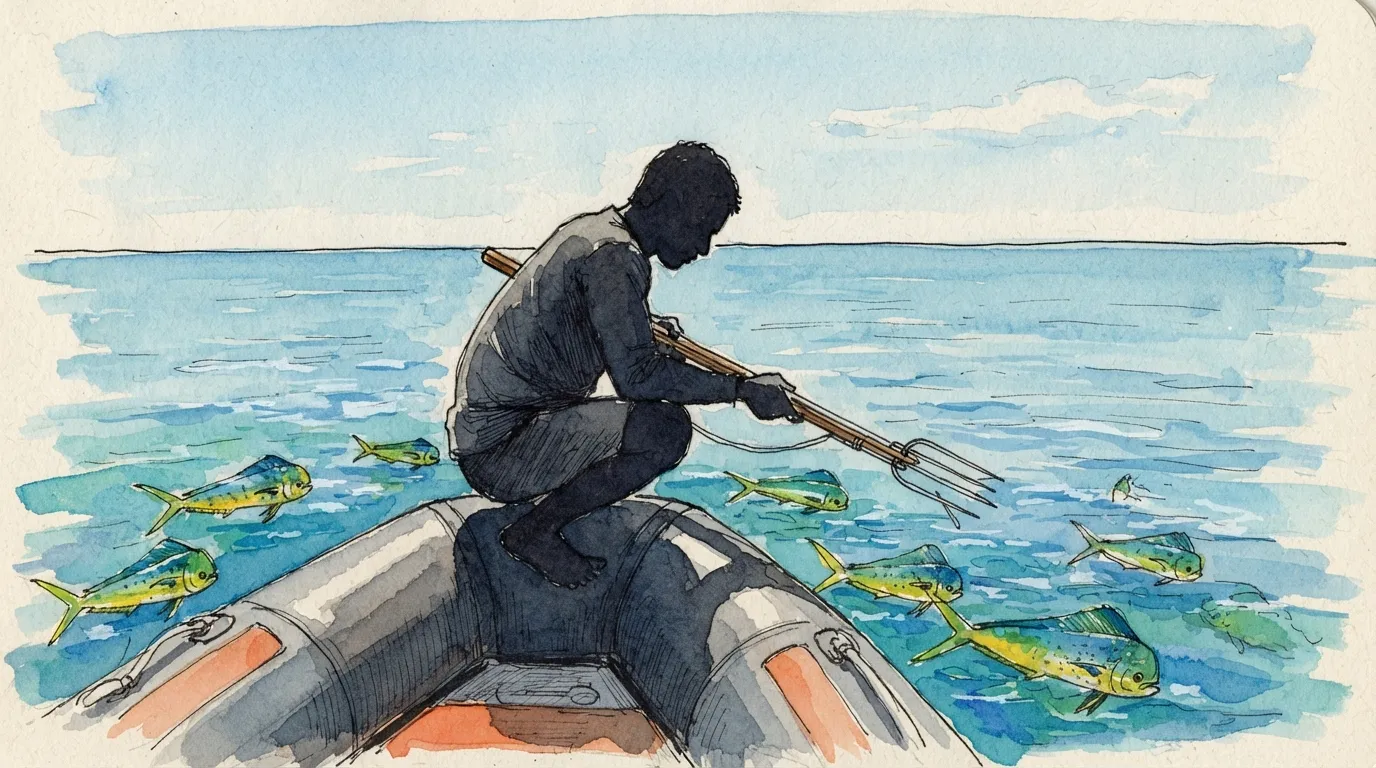
Not all his decisions were flawless. Fishing itself eventually damaged the raft: the mahi-mahi and triggerfish following him like a small floating ecosystem, handled and butchered on board, weakened the fabric and caused air leaks in the outer chambers. Callahan had to locate these tears by feel, as he recounts, patch them using the provided repair kit, and manually pump the raft back up, sometimes several times a day—a chore that, along with working the manual desalinator that tore the skin off his hands, ate into his already scarce sleep. Staying afloat literally cost him hours of rest.
He had also prepared mental mental models before leaving by reading the account of the Robertson family—who survived 38 days adrift in 1972 after killer whales attacked their sailboat. That prior reading gave him, in his own words, a pre-thought scenario: he knew surviving a prolonged shipwreck was possible and roughly what to expect. A mind under stress doesn’t invent new solutions; it plays out what it has already rehearsed, even if only mentally.
What saved him
The grab bag prepared long before the storm. Everything that mattered over the next 76 days—flares, charts, speargun, three solar stills, a reserve of food and water—fit into a bag Callahan packed and kept within arm’s reach long before the storm hit. He improvised nothing in the heat of the moment: he executed a pre-arranged plan. See the survival kit guide: what saves a castaway or a hiker is almost never a stroke of luck found on site; it’s what you already chose to bring and learned to use.
Freshwater, never seawater. Three solar stills and rainwater collection provided him with barely half a liter of water a day, later supplemented by a hand-pump desalinator—enough to survive, not enough to be comfortable. Callahan, by his account, never gave in to the temptation of drinking seawater: it contains 3 to 3.5% salt, while human kidneys can’t produce urine saltier than 2%, meaning you lose a net amount of water with every gulp. See the water guide for the full physiology and collection methods.
Fishing, and a whole ecosystem under the raft. The mahi-mahi and triggerfish tailing the raft like a shadow, the flying fish that occasionally landed right inside, the barnacles growing on its underside: Callahan turned this forced companionship into a permanent pantry, spearing what he could with a makeshift rig and supplementing it with whatever washed aboard. See the survival food guide for improvised fishing techniques.
Routine and a split mindset. A daily journal, physical exercise, dead reckoning navigation, scheduling tasks hour by hour rather than waiting for an imaginary rescue date, and that internal “captain” commanding a terrified “crew”: this is what Callahan himself, and researchers studying his case years later, point to as the single most critical factor in his psychological survival. See the mindset guide for the full method.
Being visible, even when no one is looking. Several cargo ships passed nearby without ever spotting him, despite his flares. In the end, birds circling above the raft—drawn by the same tiny ecosystem feeding him—caught the eye of fishermen off Marie-Galante. See the rescue and signalling guide: visibility isn’t just about firing a flare at the right second, it’s built passively, day after day.
Lessons learned
Test your gear before you need it, not during the emergency. Callahan had to slash open a solar still with a knife mid-drift just to figure out how to use the other two. The same rule applies to any hiker: a stove never lit at home, a water filter never tested, a lighter never tried in the rain are gambles, not equipment. One hour testing gear calmly at home beats figuring it out in a storm.
Give yourself hourly tasks, not a rescue deadline. Fixating on a specific timeline sets you up for a breakdown whenever a deadline passes unmet. Callahan, like other long-term survivors, structured his days around fixed routines: checking positions, fishing, making repairs, taking water rations. A lost hiker can do the exact same thing: swap “when will they find me?” for “what am I doing for the next hour?”.
Ration on day one, not when supplies run low. The classic mistake is consuming normally while supplies look plentiful, then cutting back drastically once panic sets in—at the worst possible moment, when your body is already exhausted and your judgment impaired. Callahan imposed strict water rationing within his first few hours on the raft, long before knowing how long he’d be out there. Taking the initiative early, far more than any late burst of willpower, builds your margin of survival.
Frequently asked questions
How did Steven Callahan’s boat sink?
Napoleon Solo, the 6.50-meter sailboat Callahan designed and built himself, struck something in the night about a week after leaving the Canaries in January 1982. Callahan long suspected a collision with a whale, though he could never confirm it. The hull filled with water faster than he could pump, and the boat sank in minutes.
How long did Steven Callahan survive at sea?
76 days, from the sinking in early February 1982 until his rescue on April 20, aboard an inflatable life raft measuring just 1.80 meters across. He drifted roughly 3,300 km across the Atlantic, carried by the equatorial current and trade winds from the Canaries all the way to Guadeloupe.
What did Steven Callahan eat and drink while adrift?
Water distilled by three solar stills and collected rainwater, totaling barely half a liter a day. For food, he speared mahi-mahi and triggerfish trailing the raft, supplementing his diet with landed flying fish and barnacles growing on the hull.
How was Steven Callahan found?
Fishermen off the island of Marie-Galante, south of Guadeloupe, noticed birds circling over a spot on the water on April 20, 1982. Heading over to investigate, they found Callahan, who had lost about a third of his body weight and was covered in sores. Several cargo ships had passed right by him without noticing over the preceding weeks.
What is the “captain and crew” technique used by Callahan?
It’s a deliberate mental split he describes in his book: he spoke to himself as if he were two people—a firm “captain” giving orders and a terrified “crew” forced to obey without debate. This discipline, drawn from his years at sea, helped him keep control over panic-driven urges, like drinking all his freshwater at once.
Further reading
- Steven Callahan, Adrift: Seventy-Six Days Lost at Sea (1986) — the original book, a 36-week New York Times bestseller, available for digital borrow on archive.org.
- Steven Callahan, Capsized: The True Story of Four Men Adrift for 119 Days (1992) — another shipwreck story, told from the outside by a survivor turned narrator.
- 76 Days Adrift (2024), a documentary produced with Ang Lee, director of Life of Pi—whose fishing scenes drew heavy inspiration from Callahan’s account.
- Laurence Gonzales, Deep Survival: Who Lives, Who Dies, and Why (2003) — the most widely cited psychological analysis of Callahan’s ordeal alongside other survival cases.
Sources for this module (8)
- Wikipedia (EN) — Steven Callahan
- Wikipedia (FR) — Steven Callahan
- Wikipedia (EN) — Adrift: Seventy-six Days Lost at Sea
- Steven Callahan, Adrift: Seventy-Six Days Lost at Sea (1986) — fiche de prêt archive.org
- NPR — Real-Life Shipwreck Survivor Helped 'Life Of Pi' Get Lost At Sea
- Scientific American — Coping strategies of ocean castaways
- Yankee Magazine — Lost at Sea
- Laurence Gonzales, Deep Survival: Who Lives, Who Dies, and Why (Norton, 2003)
Continue in "Survivor stories"
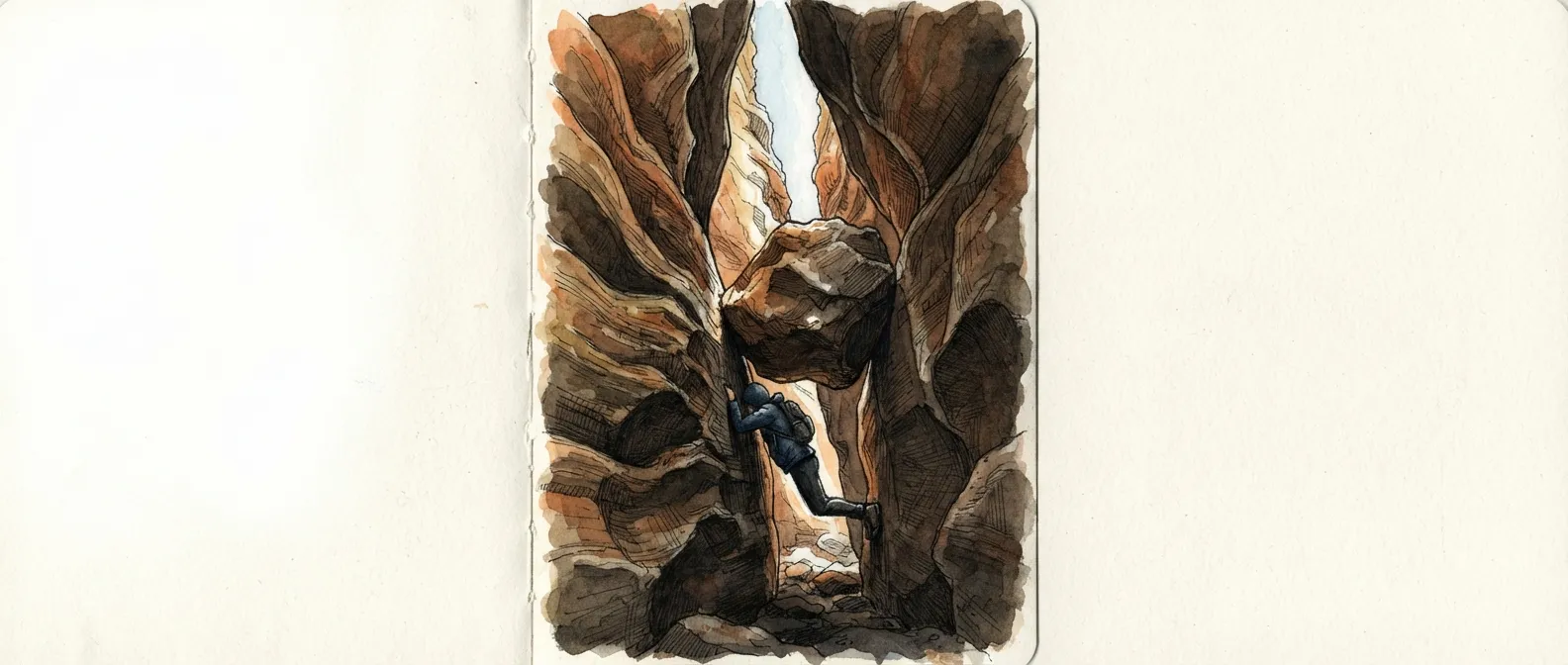
Aron Ralston: 127 hours trapped in a canyon
An arm trapped under a boulder, five days without rescue, and a decision no manual teaches: cutting oneself to live.
Juliane Koepcke: 11 Days Alone in the Jungle After the Crash
Seventeen years old, alone after falling three kilometers into the Amazon jungle, she followed a single rule: walk toward water.
José Salvador Alvarenga: 438 Days in the Pacific
Out fishing for two days, he drifted for 438 days across the Pacific, alone after the death of his crewmate.