Chris McCandless: 113 Days in the Alaska Bus, and One River Too Many
A 24-year-old graduate heads into the Alaska wilderness to live alone. The river he waded across in April keeps him from coming back in July.
On April 28, 1992, Jim Gallien, an electrician from Fairbanks, drops a young hitchhiker at the start of the Stampede Trail near Healy, Alaska. The young man calls himself Alex. He has a .22 rifle, a 10-pound bag of rice, a field guide to the region’s edible plants and light hiking shoes. Gallien offers to drive him back to town to buy proper boots. He refuses. Gallien gives him his own rubber boots and a sandwich, and watches him walk off into the snow. He is the last person to see Chris McCandless alive.
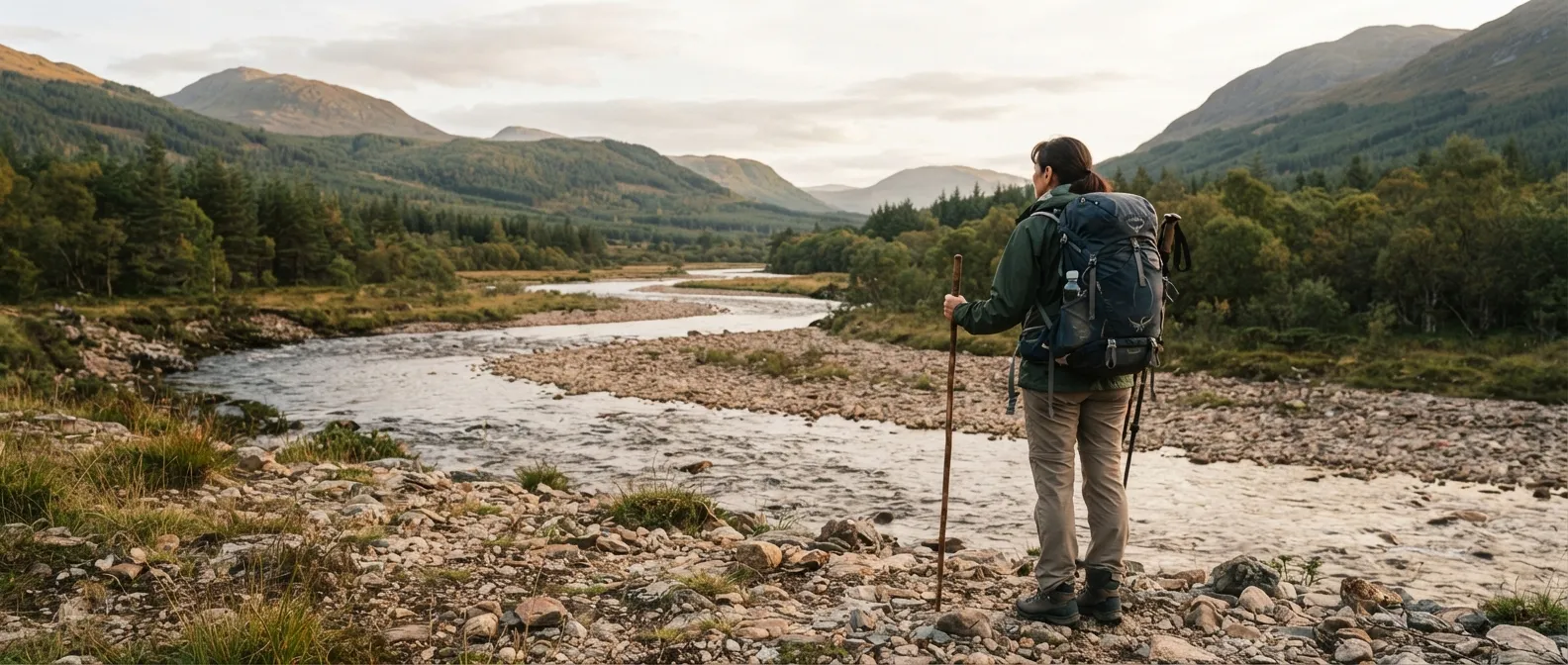
What happened
Christopher Johnson McCandless was born on February 12, 1968, in El Segundo, California. After graduating from Emory University in 1990 (history and anthropology), he gave more than $24,000 in savings to Oxfam, drove off, abandoned his Datsun after a flash flood near Lake Mead, and spent two years on the road as “Alexander Supertramp”. His plan: live alone off the land in Alaska.
About 28 miles (45 km) west of Healy, he found an old bus left in 1961 by road workers: Bus 142, a 1946 International Harvester that hunters used as a shelter. He moved in. In late April he had waded the Teklanika River with no trouble: the water was low and the snowmelt hadn’t started.
Over the summer he hunted small game (squirrels, ptarmigan, porcupines) and gathered berries and roots. On June 9 he shot a moose but couldn’t smoke the meat fast enough: flies laid eggs, the meat spoiled, and he wrote in his journal that he deeply regretted it. In early July he decided to walk out. On July 5 he reached the Teklanika: swollen by snowmelt and rain, it had turned into a wide, freezing torrent. He gave up and went back to the bus.
He stayed at the bus and grew weaker. His last journal entry, on day 107, reads simply: “BEAUTIFUL BLUE BERRIES”. The following days carry only slash marks. He left a note on the door asking any passerby for help, and photographed himself holding a farewell note: “I HAVE HAD A HAPPY LIFE AND THANK THE LORD. GOODBYE AND MAY GOD BLESS ALL!” On September 6, 1992, a hunter looking for shelter found his body in the bus. He weighed about 67 pounds (30 kg). The official cause of death was starvation.
What he did (and didn’t do)
McCandless was neither lazy nor reckless. He hunted, foraged, kept a careful journal and survived more than three months alone. But three decisions, stacked together, closed every door.
He went without a detailed map, on principle: he wanted to discover the land without knowing it in advance. A 1:63,360 map, the kind local hunters use, would have shown the cable over the Teklanika and several ranger cabins within a day’s walk of the bus.
He arrived with too little food for the place. Living by hunting in Alaska takes a lot of calories, and small game is very lean. Northern explorers called it “rabbit starvation”: eating plenty of meat with no fat isn’t enough to meet the body’s needs.
He had no way to alert anyone. No one knew exactly where he was or when he planned to return. His family hadn’t heard from him in two years.
What he was missing
A map, and the will to use it
The cable and the cabins were on the maps. Leaving without them was a choice made for the sake of adventure, not out of ignorance, but it cost him the way back. See the navigation guide.
A plan for the river
The Teklanika is glacier-fed and reacts fast to rain: its flow rises sharply in summer and changes through the day, often lowest early in the morning. Waiting a few days, looking for a wider, shallower spot, or crossing at first light might have been enough. See the river guide.
Fat and reserves
In the cold, fat is the fuel. Rice, lean small game and berries can’t cover the needs of a man who walks, hunts and cuts wood. See the food guide.
Someone who knew
A simple note left with Jim Gallien or his family (place, planned return date) would have triggered a search in August. It’s the simplest rule in all of survival, and the one most often forgotten. See the mistakes that kill.
Key takeaways
1. Terrain changes with the seasons. An easy ford in April can be deadly in July. Before crossing, ask what the river will look like on the way back.
2. Going “with the bare minimum” isn’t going “without a plan”. You can travel light and still carry a map, a return date and a person who knows.
3. The bus kept drawing people in. After two hikers drowned in the Teklanika (in 2010 and 2019) and dozens of rescues, the Alaska National Guard airlifted the bus out on June 18, 2020. It is now kept at the University of Alaska Museum of the North in Fairbanks.
Frequently asked questions
Is Into the Wild a true story?
Yes. Jon Krakauer’s book (1996) and Sean Penn’s film (2007) tell the life and death of Chris McCandless, who starved in 1992 in an abandoned bus on Alaska’s Stampede Trail. The film adds some scenes, but the main events are real.
How did Chris McCandless die?
The official cause is starvation. Whether seeds of wild sweetvetch (Hedysarum alpinum) weakened or partly paralyzed him is still debated among chemists.
Why couldn’t Chris McCandless walk out?
On July 5, 1992, the Teklanika River, which he had waded in late April, was in flood after snowmelt and heavy rain. Without a detailed map, he didn’t know a cable crossing existed a short way downstream.
How long did Chris McCandless live in the bus?
He arrived in late April 1992. His last journal entry is dated day 107, and the count stops at day 113, around mid-August. His body was found on September 6, 1992.
Where is the Into the Wild bus now?
Removed by the Alaska National Guard on June 18, 2020, it was handed over to the University of Alaska Museum of the North in Fairbanks.
Further reading
- Jon Krakauer, Into the Wild (1996): the reference book.
- Into the Wild, directed by Sean Penn (2007), starring Emile Hirsch.
- Carine McCandless, The Wild Truth (2014): his sister’s book about Chris’s childhood.
Sources for this module (6)
- Wikipedia (EN) — Chris McCandless
- Wikipedia (EN) — Stampede Trail
- Britannica — Christopher McCandless
- The Georgia Straight — Into the Wild adventurer may have missed river crossing by one day (Oregon State University study, 2022)
- Jon Krakauer, Death of an Innocent, Outside, January 1993
- Jon Krakauer, Into the Wild (Villard, 1996)
Continue in "Survivor stories"
Aron Ralston: 127 hours trapped in a canyon
An arm trapped under a boulder, five days without rescue, and a decision no manual teaches: cutting oneself to live.
Juliane Koepcke: 11 Days Alone in the Jungle After the Crash
Seventeen years old, alone after falling three kilometers into the Amazon jungle, she followed a single rule: walk toward water.
Steven Callahan: 76 days adrift on a raft
A crash in the night, a sailboat sinking in a matter of minutes, and 76 days on a tiny raft reinventing survival.