Joe Simpson: The Cut Rope, the Crevasse, and Three Days Crawling
A broken leg at 6,000 meters, a rope severed with a knife, and a man who chose to descend deeper into the dark for a chance to live.
It’s night, it’s snowing, and Joe Simpson is hanging in midair at the end of a rope, somewhere above 6,000 meters on the west face of Siula Grande in the Peruvian Andes. His right leg is shattered, his tibia driven up into his knee joint. Above, invisible in the storm, his climbing partner feels the snow beneath him giving way, second by second. He has only a knife left and less than an hour and a half of strength remaining. What happens in the next few minutes will become one of the most fiercely debated ethical questions in mountaineering history — and save a life.
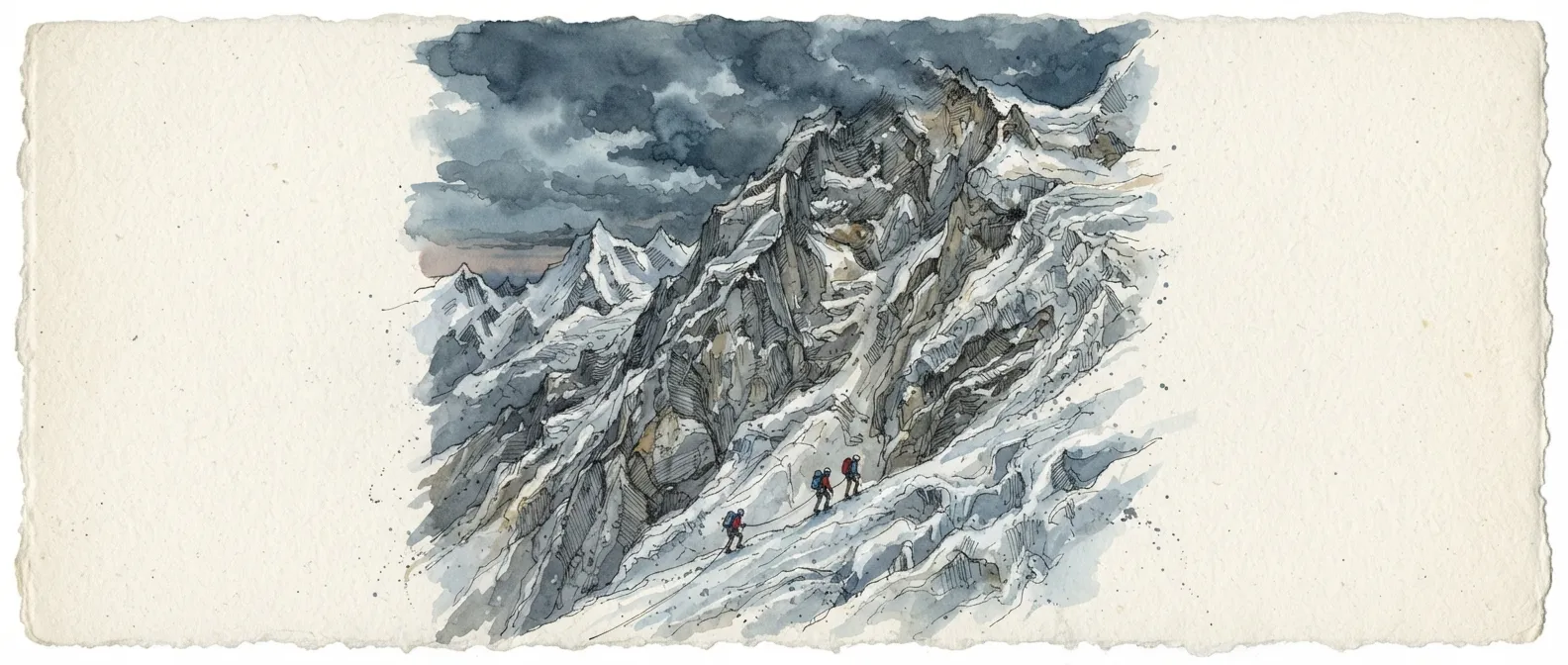
What Happened
In June 1985, two British mountaineers, Joe Simpson (25) and Simon Yates (21), achieved the first ascent of the west face of Siula Grande, a peak in the Huayhuash mountain range in Peru, standing at
Descending the north ridge, Simpson fell off an ice cliff and landed badly: his right leg shattered, crushing his tibia into his knee joint. High in the mountains, far from any rescue, a fracture this severe is almost always fatal for a climber on their own — Yates knew it, but decided to try lowering him down to base camp anyway, rope length by rope length, down a slope of nearly 1,000 meters through the night and a blizzard.
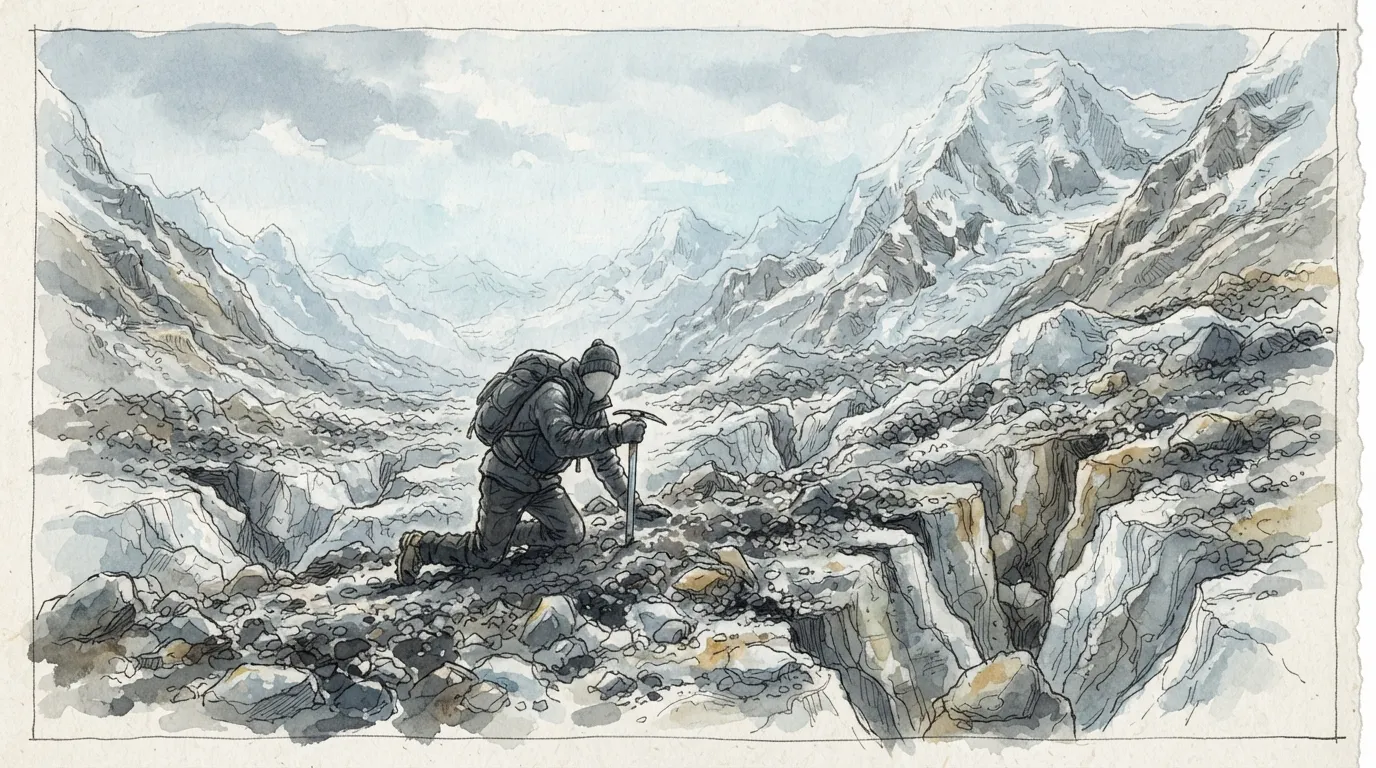
The method: two 150-foot ropes tied together (about 90 meters total), with Yates sitting in the snow acting as a human belay anchor, letting Simpson slide down in stages. Unable to see or communicate with him through the roaring wind, Yates unknowingly lowered Simpson over the lip of a vertical cliff. Simpson found himself dangling in midair, unable to regain a footing, hanging above a crevasse that neither man could see from above.
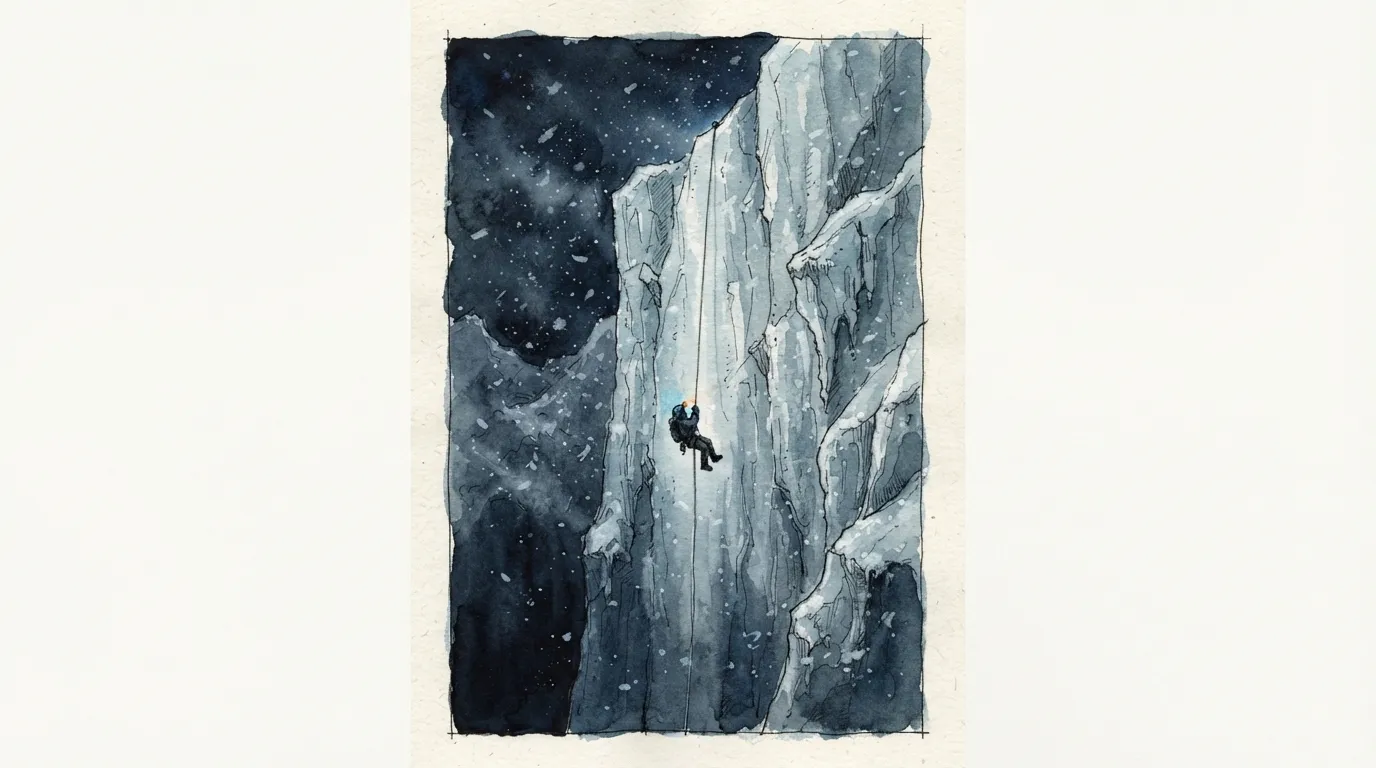
Yates felt his seat in the snow slipping away. He held his position for over an hour and a half, by his own estimation, without knowing if Simpson was alive, dead, or simply stuck. Convinced he was about to be pulled off the mountain and that both men would die, he cut the rope with his knife.
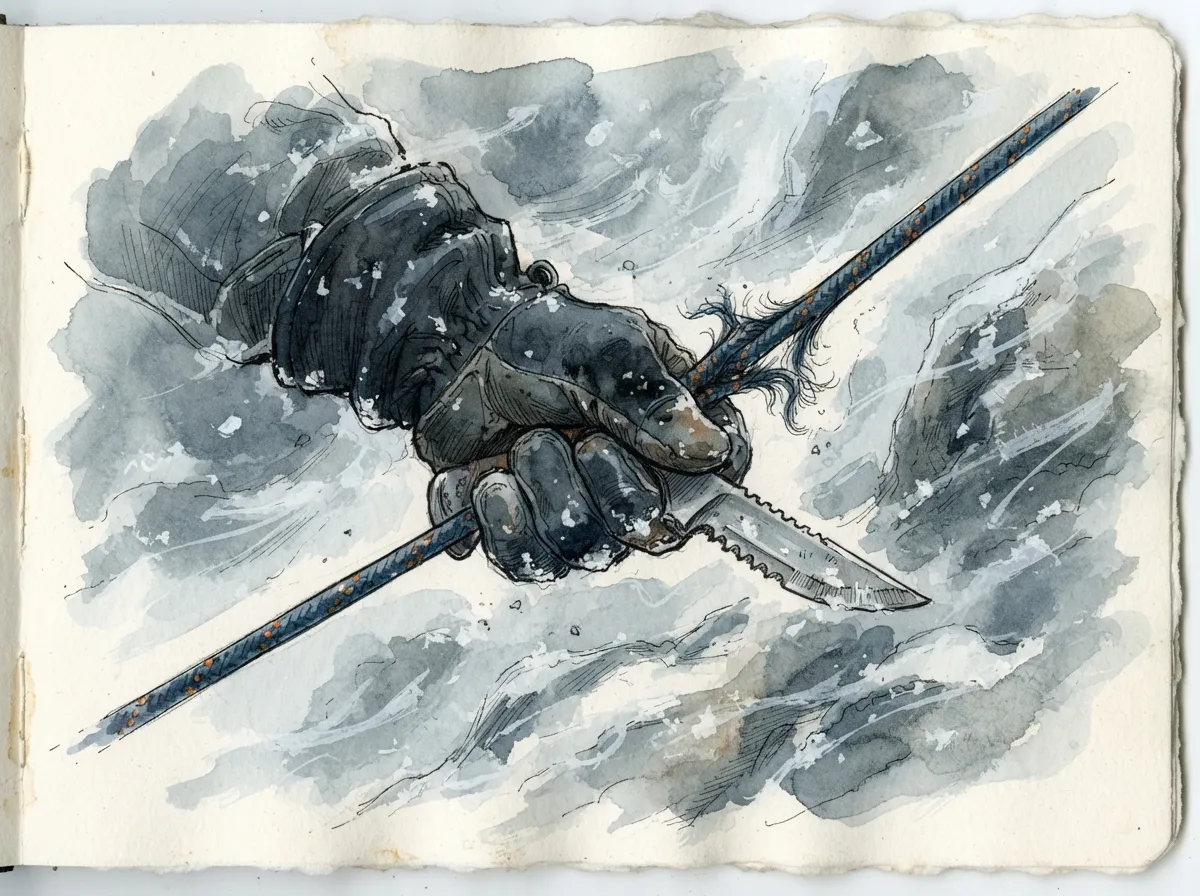
Simpson fell more than
Simpson, however, had survived the fall: the bottom of the crevasse wasn’t solid ground, but a snow bridge that cushioned his impact.
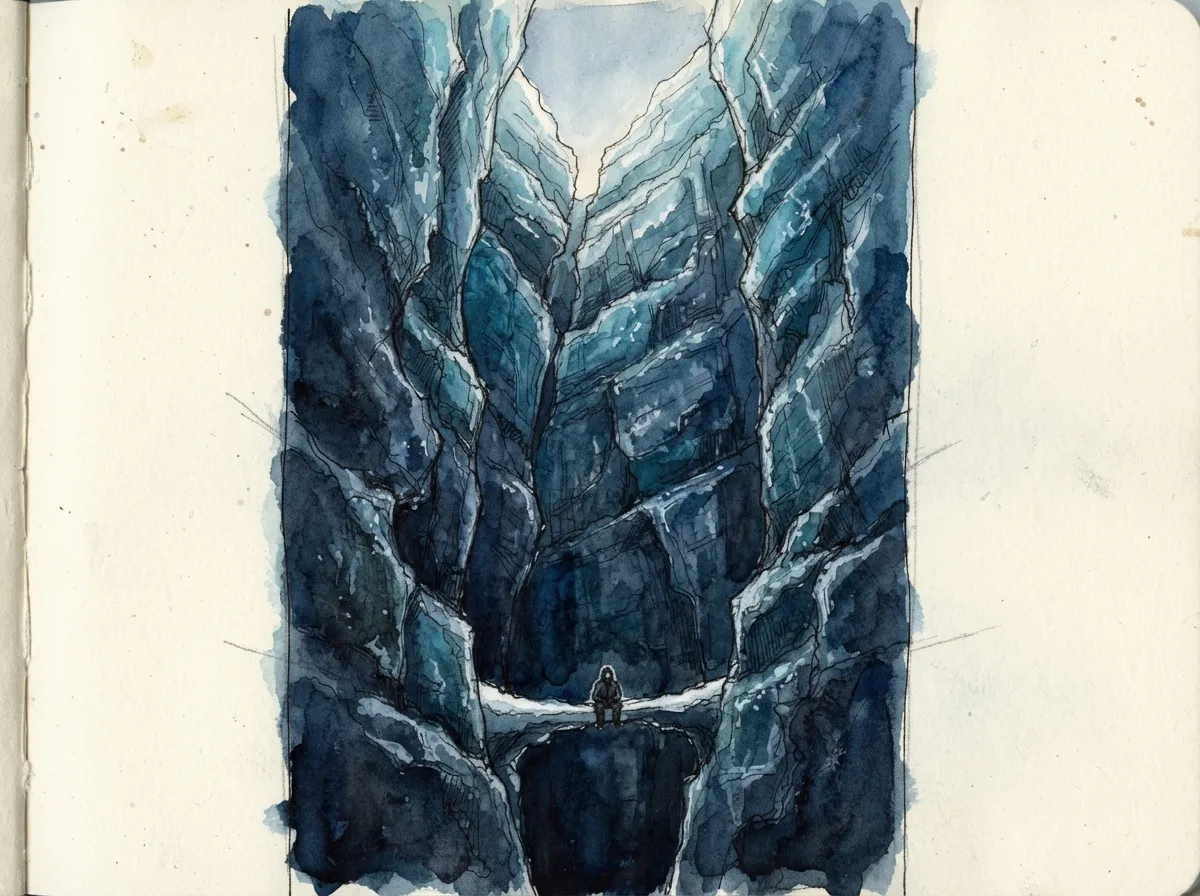
For three days, without food or water, his leg broken, he dragged himself out of the crevasse and crawled and hopped across roughly 8 kilometers of glacial moraine and crevasse-riddled ice to reach base camp. He made it to camp just hours before Yates and the expedition’s third member, Richard Hawking, were scheduled to pack up and leave, both having assumed Simpson had died days ago.
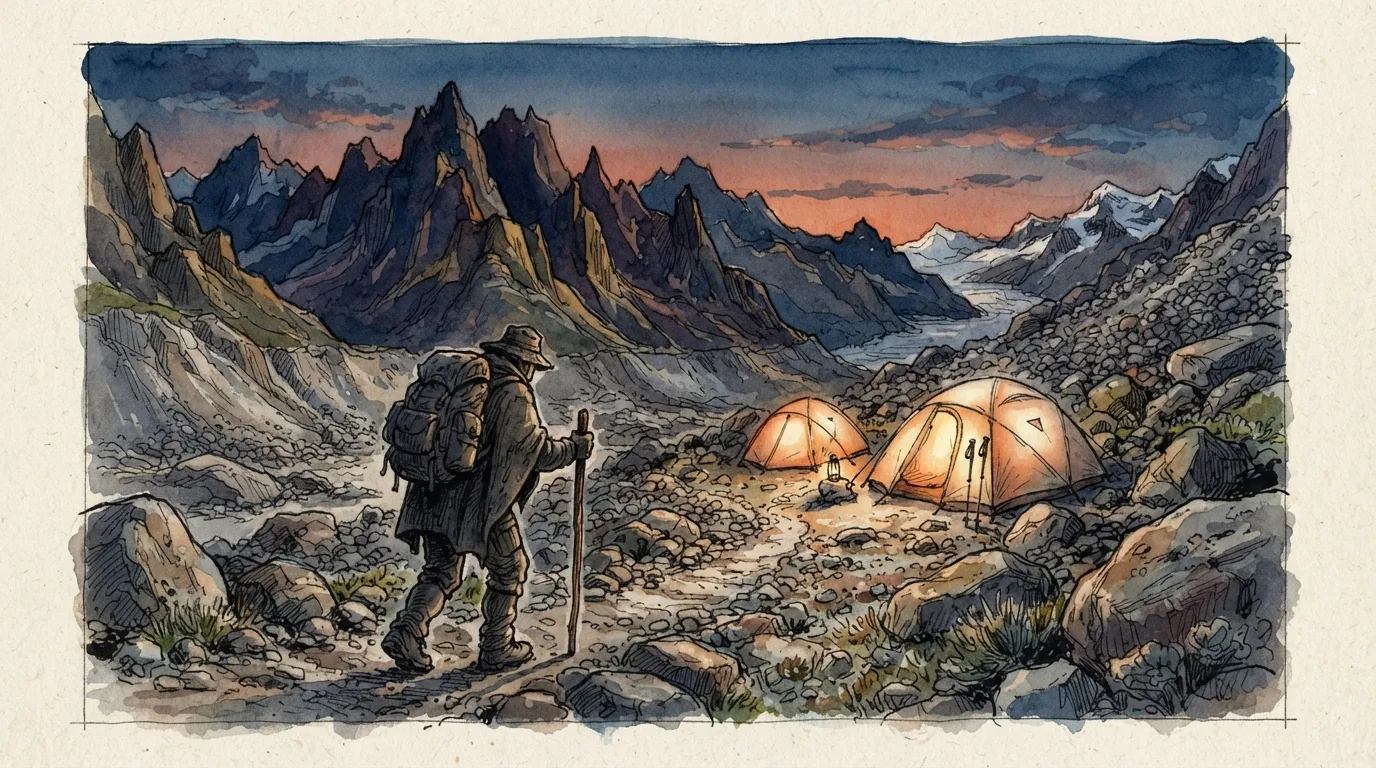
He would undergo six surgeries and was told he would never climb again. Yet, he returned to mountaineering as early as 1987. His account, published in 1988 under the title Touching the Void, was adapted in 2003 into a critically acclaimed docudrama directed by Kevin Macdonald.
What He Did
Yates’s decision: cutting the rope. This act remains one of mountaineering’s ultimate taboos — you never cut a partner’s rope. But the physical reality left no other rational way out: Yates was actively being dragged from his position by Simpson’s weight hanging in space, anchored only in soft snow that was gradually giving way beneath him. With zero visibility and no communication through the blizzard, he couldn’t know if Simpson was alive, nor could he pull him up. Staying tied meant almost certain death for both men; cutting the rope gave at least one of them a chance. The climbing community judged Yates harshly for years — yet Simpson himself always publicly defended the move as the only logical choice under the circumstances.
Simpson’s decision: descending deeper into the crevasse. After landing inside, the instinctual response would have been to try climbing back up toward the light, toward the surface. Simpson did the exact opposite: using what little rope he had left, he lowered himself even further down into the darkness to search for a way out, rather than exhausting himself against a vertical wall of ice impossible to scale with a broken leg and no partner. This counterintuitive choice allowed him to find a slope that led back up toward daylight on the other side of the crevasse.
Managing by short targets. Across eight kilometers of broken terrain, the overall distance was psychologically crushing — a thought Simpson described as capable of destroying any will to keep moving. Instead, he set extremely close, achievable targets: reach that rock, that ice hump, in twenty minutes. Once there, he set another. Breaking a daunting task into a series of micro-victories is a proven technique for mental control under extreme stress: it maintains a sense of agency and progress where the big picture only breeds despair.
Never stopping for long. Dehydrated, slipping deeper into hypothermia, dragging a shattered leg, Simpson knew that stopping for too long — to sleep, to yield to exhaustion — could be fatal. He pushed forward through the pain, aware that immobility in those conditions was a far more certain killer than movement.
What Saved Him
- Choosing to go deeper rather than climbing up out of the crevasse. A cold calculation of what was physically possible, rather than a panic reaction toward the surface — see moving in mountain terrain.
- Mentally breaking down the ordeal. Setting targets a few minutes ahead instead of dwelling on the remaining eight kilometers — the core concept of mindset management in survival.
- Refusing to stop for extended rests. Prolonged immobility in the freezing cold while severely dehydrated would likely have killed him before reaching camp — check out actual human limits in documented time limits.
- Lucid self-assessment of his own capabilities, injured and alone, with no audience or second opinion — a classic scenario covered in self-rescue when injured and alone.
- Yates’s decision to cut the rope. An act that prevented two certain deaths and handed Simpson his only slim chance at survival — a grim reminder that ropes, if misused or trapped, can become the threat rather than the solution: see knots and cordage.
Key Lessons
- A broken leg in glacial terrain, solo, is almost always a death sentence. That’s why you never venture onto a crevasse-filled glacier or exposed face without a team: even with a partner it’s extremely dangerous, but alone, your odds drop to near zero. See mountain travel and rope work on glaciers.
- Breaking an overwhelming ordeal into short goals is a true survival technique, not just self-help advice. It applies to any crisis where the total distance or time feels insurmountable — an exhausted, lost, or injured hiker can use it the exact same way. See survival mindset.
- In a dead-end scenario, the most counterintuitive fix is sometimes the only way out. Simpson didn’t try to climb toward what seemed logical — the light, the surface — but appraised what was physically feasible with what he had left. An injured or lost hiker needs to ask the same cold question: what can I actually do right now, not what feels obvious.
Frequently asked questions
How did Joe Simpson break his leg?
While descending Siula Grande’s north ridge, he slipped off an ice cliff and landed heavily, crushing his right tibia up into his knee joint. This happened in June 1985, right after reaching the summit with Simon Yates.
Why did Simon Yates cut the rope?
He was lowering Simpson down when Simpson slipped over a sheer drop, hanging in space without Yates knowing it. Anchored only in soft, giving snow, Yates was slowly being pulled off the mountain himself. He held on for over an hour and a half before cutting the rope to avoid both of them sliding to their deaths.
Did Joe Simpson really survive falling into a crevasse?
Yes: he plummeted over 60 meters, but the bottom was actually a snow bridge that absorbed the impact. He then chose to rappel deeper into the darkness to find a side slope out, since scaling the vertical ice wall above was impossible.
How long did it take Joe Simpson to crawl back to base camp?
Three days, without food or water, with a shattered leg, crawling and hopping over roughly 8 kilometers of glacial moraine and cracked ice. He reached camp just hours before his companions were preparing to pack up and leave, convinced he was dead.
Did Simon Yates and Joe Simpson stay in touch after the accident?
Yes. Simpson always publicly defended Yates’s move as the only rational call in that situation, and both men continued to speak together about the event in interviews and lectures for decades.
Going Further
- Joe Simpson, Touching the Void (Jonathan Cape, 1988) — the original book written by the survivor himself.
- Touching the Void (2003), award-winning docudrama directed by Kevin Macdonald — an accurate retelling featuring interviews with both climbers.
- Joe Simpson Interview, SHAFF (Sheffield Adventure Film Festival), BritRock Films — the story told in the survivor’s own words.
Sources for this module (6)
- Wikipedia (EN) — Touching the Void (book)
- Wikipedia (EN) — Touching the Void (film)
- Wikipedia (EN) — Joe Simpson (mountaineer)
- Wikipedia (EN) — Earworm (section sur Touching the Void et Boney M)
- Joe Simpson, Touching the Void (Jonathan Cape, 1988)
- Touching the Void, film documentaire de Kevin Macdonald (2003)
Continue in "Survivor stories"
Aron Ralston: 127 hours trapped in a canyon
An arm trapped under a boulder, five days without rescue, and a decision no manual teaches: cutting oneself to live.
Juliane Koepcke: 11 Days Alone in the Jungle After the Crash
Seventeen years old, alone after falling three kilometers into the Amazon jungle, she followed a single rule: walk toward water.
Steven Callahan: 76 days adrift on a raft
A crash in the night, a sailboat sinking in a matter of minutes, and 76 days on a tiny raft reinventing survival.